

Views: 222 Author: Loretta Publish Time: 2026-01-01 Origin: Site


Content Menu
● What Is a Hydraulic Hose Connection?
● Why Connection Methods Matter
● Main Types of Hydraulic Hose Connection Methods
>> Threaded Hydraulic Hose Connections
>>> Threaded Connection Installation Steps
>> Flange Hydraulic Hose Connections
>>> Flange Installation Essentials
>> Quick-Connect Hydraulic Hose Fittings
>>> Using Quick-Connects Correctly
>> Crimp Hydraulic Hose Connections
>> Barbed Hydraulic Hose Connections
● Choosing the Right Connection Method
● Hydraulic Hose Safety and Installation Best Practices
● Expert Design Tips for TPU Lay-Flat Hose Systems
● Practical Use Cases by Industry
● FAQs
>> 1. Which hydraulic hose connection method is the most reliable for high pressure?
>> 2. Can quick-connect couplings be used in high-pressure hydraulic systems?
>> 3. How often should hydraulic hose connections be inspected?
>> 4. What is the most common cause of leaks at hydraulic fittings?
>> 5. Are barbed fittings suitable for TPU lay-flat hose?
Hydraulic hose connection methods directly determine system safety, uptime, and lifecycle cost. Choosing and installing the right fittings—threaded, flange, quick connect, crimp, and barbed—prevents leaks, protects equipment, and keeps operators safe.[1]
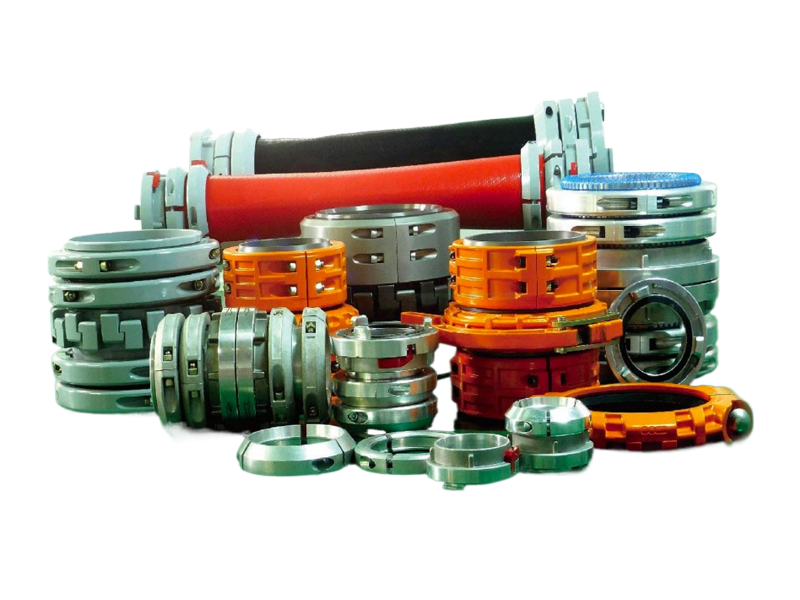
Hydraulic hose connections are the interfaces between hoses and components such as pumps, valves, cylinders, and manifolds, designed to contain high-pressure fluid without leakage during operation. A typical connection includes a hose, an end fitting, and a sealing mechanism such as a metal seat, O-ring, or barb with clamp.[2][1]
- System safety: High-pressure leaks can cause injection injuries, fire hazards, and serious equipment damage.[3]
- Performance and efficiency: Micro-leaks and pressure losses reduce actuator speed, torque, and positioning accuracy, lowering productivity.[4]
- Lifecycle cost: Correct fittings and routing significantly extend hose life and reduce maintenance and replacement frequency.[5]
For engineering-driven TPU lay-flat hose systems, optimized connection design is critical to support long runs, rapid deployment, and high-duty cycles in demanding environments.[6]
Threaded fittings use male and female screw threads to create a mechanical joint that contains pressure and aligns components. They may rely on thread interference, metal cones, or O-rings to seal.[7][1]
Advantages:
- Highly versatile for pipes, tubes, and hoses across many size and pressure ranges.[1]
- Compatible with numerous standards such as NPT, BSPP, JIC, ORFS, and SAE.[7]
- Suitable for permanent or semi-permanent joints when correctly torqued.[1]
Limitations:
- More prone to loosening under vibration if not locked, supported, or re-checked.[5]
- Cross-threading, over-tightening, and mixing thread standards are common leak sources.[8]
- Pipe thread (e.g., NPT): Tapered threads that seal by deformation plus sealant; best for permanent joints.[1]
- Flare / cone (e.g., JIC, SAE flare): Metal-to-metal sealing surfaces that allow repeated assembly with proper torque.[1]
- O-ring face and boss (ORFS, ORB): Soft-seal designs offering excellent leak resistance and vibration tolerance.[7]
1. Identify standard and size with thread gauges and seat inspection to prevent mismatches and hidden leaks.[7]
2. Select compatible hose and fittings based on pressure, fluid, and temperature ratings.[2]
3. Apply sealant correctly: use PTFE tape or compound only on tapered pipe threads, never on sealing faces or O-rings.[1]
4. Align and hand-tighten before applying a wrench to reach the recommended torque without over-stressing threads.[8]
5. Pressurize and leak-test while checking for sweating, drips, and rotation under load.[3]
Flange connections use a 4-bolt clamping system with a flat or raised sealing face and typically an O-ring for high-pressure joints on pumps, valves, and manifolds.[9]
Advantages:
- Ideal for very high pressure and large hose sizes where threads would be bulky or weak.[9]
- Excellent resistance to vibration and side-loads when properly supported and torqued.[9]
Limitations:
- Require more space and access for bolts and tools, which can challenge compact layouts.[9]
- Incorrect torque sequence may distort the flange and compromise sealing.[10]
- Split flange: Two halves clamping the hose flange and bolted to the mating port.[2]
- Flat-face flange (code 61): Smooth sealing surface with O-ring for medium to high pressure.[9]
- Raised-face flange (code 62): Raised sealing area focused on the O-ring to support higher pressures.[9]
- Clean flange faces and O-rings, and inspect for scratches, dents, or embedded particles.[3]
- Insert bolts and tighten in a cross pattern with a torque wrench to ensure even loading.[10]
- Re-check torque after initial pressurization if recommended by the supplier.[9]
Quick-connect fittings enable tool-free connection and disconnection of hydraulic circuits, typically using push-to-connect or sleeve-retract mechanisms with internal valves.[11]
Advantages:
- Fast changeover of tools, attachments, and auxiliary circuits without special tools.[11]
- Reduced fluid loss and contamination when using modern flat-face styles.[11]
Limitations:
- Some models have lower pressure ratings than permanent fittings if misapplied.[11]
- Sensitive to contamination; debris on mating surfaces can damage internal components.[3]
- Push-to-connect: Simple push action, mainly for low-pressure hydraulic or pneumatic lines.[12]
- Ball-lock couplers: Sleeve and locking balls provide secure medium- to high-pressure couplings.[13]
- Flat-face couplers: Minimize oil loss, air ingress, and spill risk, commonly used on modern equipment.[11]
- Depressurize both circuits before connecting to avoid coupling difficulty and seal damage.[13]
- Keep dust caps on and clean the faces before each connection cycle.[3]
- Push or pull until a clear click is felt and verify by a gentle pull test.[11]
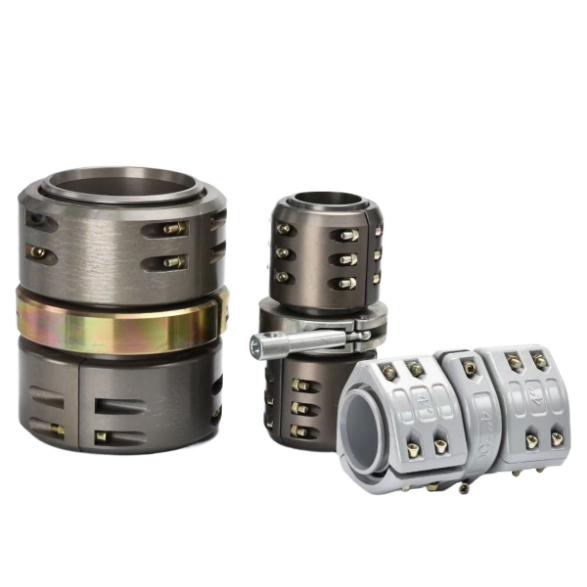
Crimp fittings form permanent hose assemblies by compressing a ferrule around the hose and fitting shank using a calibrated machine.[14]
Advantages:
- High reliability in high-pressure, high-cycle service when process and dimensions are controlled.[14]
- Factory-level consistency with defined dies, settings, and inspection criteria.[6]
Limitations:
- Not designed for repeated disassembly; replacement requires cutting off and re-crimping.[14]
- Requires crimping equipment and trained personnel or certified assembly partners.[6]
1. Cut the hose squarely to the specified length with a suitable hose saw.[6]
2. Clean hose bore and fittings to remove rubber dust, wire particles, and oil.[6]
3. Insert the fitting to full depth and mark the insertion line to detect pull-out.[15]
4. Select the correct die set and target crimp diameter according to manufacturer charts.[14]
5. Crimp in a single smooth cycle and measure final diameter to confirm tolerance.[14]
6. Pressure test the assembly before it enters service.[10]
Barbed fittings use multi-ridge profiles that grip the hose inner diameter, normally secured with clamps or ferrules.[11]
Advantages:
- Simple construction with easy field assembly and minimal tooling.[11]
- Well suited to low- and some medium-pressure return, drain, and auxiliary lines.[16]
Limitations:
- Not recommended for the highest pressures or severe impulse duty.[16]
- Creep or relaxation can reduce clamping force over time if not correctly specified.[5]
Typical Uses:
- Low-pressure hydraulic returns, coolant and lubrication loops, and portable transfer lines.[11]
- Selected TPU lay-flat applications operating at modest pressures and short duty cycles.[16]
A structured approach such as STAMPED helps ensure each assembly is correctly specified.[5]
Factor | What to Consider | Impact on Connection Choice |
Size | Hose ID/OD and port sizes | Drives selection between threaded, flange, and barbed solutions. |
Temperature | Fluid and ambient range | Affects seal elastomer, plating, and hose cover. |
Application | Mobile, industrial, mining, TPU lay-flat deployment, vibration level | Determines need for permanent crimp, flange, or quick-connect flexibility. |
Material | Fluid type and chemical exposure | Guides material choice: carbon steel, stainless, brass, or polymer. |
Pressure | Working and peak pressure plus impulse profile | High-pressure, high-impulse systems favor crimp and flanges. |
Ends | Port standards and required interfaces | Must match equipment ports and regional thread norms. |
Delivery | Assembly location, field service, lead time | Influences use of pre-assembled crimped lines or field-attachable options. |
Combining permanent crimped or flanged ends with modular quick-connects often gives a strong balance between reliability and serviceability in demanding operations.[14]
Safe connection design integrates correct fitting selection with routing, support, and maintenance.[10]
- Avoid twisting and kinking: Twisted hoses experience severe stress and shortened life while transferring torsion to fittings.[6]
- Respect minimum bend radius: Bends that are too tight near fittings lead to tube cracks and cover failures.[10]
- Prevent abrasion: Use clamps, guides, and protective sleeves to keep hoses away from sharp edges and hot surfaces.[6]
- Support heavy hoses: Proper clamps limit side-load on fittings in line with recommended practices.[10]
- Inspect and maintain: Regular visual checks for leaks, corrosion, and cover damage support long service life.[5]
For quick-connect circuits, standardizing coupler sizes and color-coding circuits helps prevent misconnections and pressure mismatches.[11]
Engineering-driven TPU lay-flat solutions benefit from connection strategies tailored to long distance transfer, frequent relocation, and demanding duty cycles.[4]
- Combine reinforced TPU lay-flat hose with crimped or flanged ends at main manifolds for secure high-pressure performance.[14]
- Implement modular quick-connect segments for rapid setup, relocation, and maintenance in construction, mining, or emergency applications.[11]
- Offer standardized connection and adapter kits aligned with major international thread and flange standards to simplify integration.[7]
- Validate assemblies with pressure, temperature, and vibration testing to meet or exceed relevant guidelines.[10]
Targeted use cases help readers connect abstract methods to real-world operations.[4]
- Construction equipment: Crimp and flange connections for working circuits, with flat-face quick-connects for attachments and tools.[4]
- Mining and dewatering: Crimped ends and flanged manifolds on pumps, with quick-connect or barbed segments for temporary runs.[14]
- Agriculture: Quick-connect and barbed fittings on lower-pressure lines, threaded fittings on tractors and implements.[13]
- Industrial plants: Mixed flange and threaded ports combined with custom crimped assemblies for presses and injection machines.[1]
To ensure that upcoming projects benefit from reliable, leak-free hose assemblies with connection methods matched to real operating conditions, decision-makers can move beyond off-the-shelf components. For applications involving TPU lay-flat hose and demanding hydraulic or fluid transfer environments, it is time to review current designs, identify high-risk joints, and define the optimal mix of threaded, flanged, crimp, quick-connect, and barbed interfaces. Reach out now to share project parameters, request engineering support, and specify tailored hose assemblies that are ready for installation and long-term service.[10]
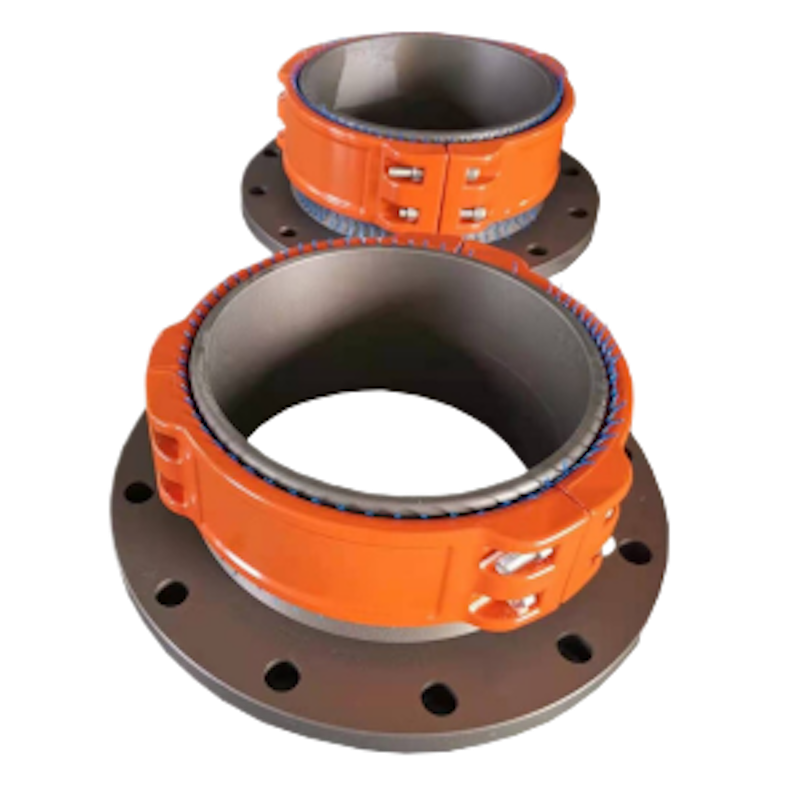
For high-pressure and high-impulse applications, properly crimped fittings and 4-bolt flange connections are generally the most reliable because they distribute mechanical loads evenly and rely on controlled torque and crimp diameters.[14]
Quick-connect couplings designed for high-pressure service can operate safely when their pressure rating, materials, and seal compatibility match the circuit requirements. Proper selection and contamination control are essential for durability.[11]
Inspection frequency depends on duty cycle, but critical circuits typically require scheduled visual checks that include routing, cover wear, corrosion at fittings, and signs of leakage, with more frequent inspections in harsh conditions.[5]
Frequent causes include incorrect fitting type or standard, cross-threaded or over-torqued joints, worn or incompatible O-rings, contamination on sealing surfaces, and hoses installed with twist or excessive bending near the ends.[8]
Barbed fittings can be used on TPU lay-flat hose for low- to medium-pressure service such as temporary transfer or return lines, while higher-pressure or mission-critical circuits are better served by crimped or flanged connections.[16]
[1](https://omega1.com/the-3-most-common-connection-methods-for-hydraulic-fittings/)
[2](https://www.magisterhyd.com/faq/basics-of-hydraulic-hose-fittings/)
[3](https://thefloridavillager.com/2025/01/hydraulic-hose-safety-tips-for-a-proper-installation/)
[4](https://morelandhose.com/how-hydraulic-hoses-work-in-construction-equipment/)
[5](https://nahad.org/ensuring-hydraulic-hose-safetythrough-preventive-maintenance/)
[6](https://gushanrubber.com/assembling-hydraulic-hose/)
[7](https://brennaninc.com/fitting-identification-introduction/)
[8](https://www.malonespecialtyinc.com/hydraulic-hose-safety-best-practices-for-preventing-failures/)
[9](https://www.hydraulicsdirect.com)
[10](https://www.gates.com/content/dam/documents-library/operating-manuals/safe-hydraulics-pocket-guide-en.pdf)
[11](https://www.titanfittings.com/articles/hose-end-fittings-types-and-uses)
[12](https://www.fokca.com/blog/the-6-most-common-connection-methods-for-hydraulic-fittings.html)
[13](https://www.youtube.com/watch?v=4u9XRsW9T28)
[14](https://ibtinc.com/ultimate-guide-hydraulic-hose-fittings/)
[15](https://dlnr.hawaii.gov/mk/files/2017/01/Freitas-S-18-a.pdf)
[16](https://www.pehelhydraulic.com/what-specify-hydraulic-hose-fittings.html)


