

Views: 222 Author: Loretta Publish Time: 2026-01-23 Origin: Site


Content Menu
● How NPSM Threads Work in Real Systems
● Key Design Features of NPSM Threads
● NPSM vs NPT: A Practical Comparison
>> Structural and Functional Differences
● Why NPSM and NPT Are Not Interchangeable
● Typical Applications of NPSM Threads
● How to Identify NPSM Threads in the Field
>> Visual and Dimensional Checks
>> Practical Identification Steps
● When to Choose NPSM Thread Fittings
● Step-by-Step: Installing an NPSM Connection Correctly
● NPSM Threads in Hydraulic, Pneumatic, and TPU Hose Systems
● Take the Next Step: Specify Reliable NPSM Connections for Your Hose Systems
>> 1. What is NPSM thread used for?
>> 2. Is NPSM the same as NPT?
>> 3. Can I seal NPSM threads with PTFE tape alone?
>> 4. How do I tell if I have NPSM or BSPP?
>> 5. Are NPSM threads suitable for high-pressure hydraulics?
NPSM (National Pipe Straight Mechanical) thread is a straight, non-sealing pipe thread system used to create precise, reliable mechanical connections, typically sealed with gaskets or O-rings rather than the threads themselves. It is widely applied in hydraulic, pneumatic, water, and general industrial systems where frequent assembly, disassembly, and alignment accuracy are critical.
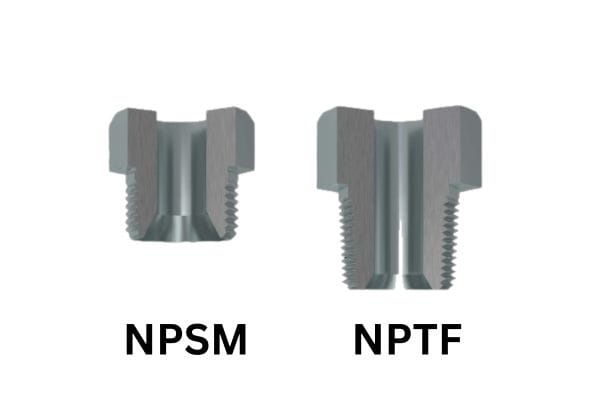
NPSM stands for National Pipe Straight Mechanical, a straight (parallel) pipe thread defined in ANSI/ASME B1.20.1 for general-purpose inch pipe threads. Unlike tapered NPT, NPSM threads maintain a constant major and minor diameter along the full thread length, so the threads themselves do not generate sealing pressure.
- N – National, indicating it follows American National Standard pipe thread rules.
- P – Pipe, meaning it is designed for pipe and fluid connection systems.
- S – Straight, describing the parallel thread form with zero taper.
- M – Mechanical, emphasizing that the primary function is a strong mechanical connection rather than thread-to-thread sealing.
Because NPSM is a non-sealing straight pipe thread, it almost always relies on an additional sealing surface, such as a cone, gasket, O-ring, or flat face at the end of the fitting, to achieve leak-tight performance.
NPSM male and female components have matching straight threads that provide axial alignment and mechanical retention, while the seal forms on a separate, designed interface. In a typical swivel connection, the NPSM female has a 30-degree internal seat and a straight thread that mates with a male fitting with a 30-degree chamfer, allowing the metal-to-metal or elastomer-assisted contact to create the seal.
During installation:
- The male NPSM fitting is threaded into the NPSM female swivel until the sealing surfaces approach contact.
- Final tightening compresses the 30-degree seat, gasket, or O-ring, creating a leak-tight joint while the threads simply hold and position the components.
- Because the threads are not tapered, over-tightening is less likely to deform the thread form, but it can still damage the sealing cone or elastomer.
This architecture allows repeatable assembly and disassembly without progressive thread deformation, which is especially valuable in test stands, maintenance ports, and connection points on flexible elements such as TPU lay-flat hoses.
NPSM uses a 60-degree Unified screw thread form, with flat peaks and roots, but zero taper along its length. ANSI/ASME B1.20.1 defines its pitch diameters, thread depths, and gaging requirements for common nominal pipe sizes.
Important characteristics include:
- Straight (parallel) thread with zero taper along the fitting length.
- 60-degree included angle, identical to NPT, simplifying tooling and gaging.
- Shared threads-per-inch values with NPT for the same nominal size, such as 1/8-27, 1/4-18, 3/8-18, 1/2-14, and 1-11.5 TPI, though the engagement and sealing principles differ.
NPSM design separates mechanical engagement from pressure sealing. Common sealing implementations include:
- 30-degree cone seat in the female swivel, mated to a 30-degree male chamfer.
- Elastomeric O-ring captured in a groove on the male or female side.
- Flat-face arrangement with a gasket, such as fiber, PTFE, or elastomer, compressed between end faces.
This modular sealing concept allows engineers to tune the connection to a wide range of media, temperatures, and working pressures by changing the seal type and material while keeping the same threaded envelope.
NPSM and NPT are often confused because they share the same nominal sizes and thread pitch, but their geometry and use cases are quite different.
Aspect | NPSM Thread | NPT Thread |
Thread type | Straight (parallel) pipe thread with zero taper. | Tapered pipe thread, typically 1:16 taper. |
Primary function | Mechanical connection; sealing via cone, gasket, or O-ring. | Pressure-tight seal primarily through thread interference, often with sealant. |
Sealing location | 30-degree or 45-degree seat, O-ring, or gasket at the end face. | Flanks and roots of threads; taper generates radial interference. |
Pressure capability | Typically medium to low pressure; limit determined by seal design and material. | Well-suited for higher pressure and high sealing-integrity applications. |
Repeated assembly | Very good; threads suffer less deformation, seals can be renewed. | Repeated tightening may deform threads and degrade sealing performance. |
Typical media | Water, lubricants, hydraulic oil, air in controlled conditions. | Gas, water, steam, and other fluids where tight sealing is critical. |
Because of these differences, NPSM and NPT are not interchangeable. Even though they can share thread pitch and angle for a given nominal size, a tapered NPT male forced into a straight NPSM female will not seat correctly and can cause misalignment, galling, and leaks.
From a standards perspective, NPT and NPSM belong to separate series with distinct functional roles and gaging methods. The difference in taper angle and pitch diameter profile means the male and female forms are designed to engage differently under load.
Key incompatibilities include:
- Taper mismatch: A tapered NPT thread only partially engages in a straight NPSM female, resulting in insufficient flank contact and poor sealing geometry.
- Sealing philosophy: NPT depends on thread interference to seal, while NPSM expects a separate sealing surface. Mixing them leaves neither system operating as intended.
- Safety and compliance risks: Using mismatched threads can violate code requirements in pressure systems and lead to premature failure, leakage, or even blow-off under pressure.
For teams specifying fittings on TPU lay-flat hoses, pumps, or manifolds, strict adherence to thread standards and connection types is essential for long-term reliability and regulatory compliance.
NPSM threads are widely used wherever precise alignment, frequent reconnection, and adaptable sealing are more important than obtaining sealing solely from the threads.
Common use cases include:
- Hydraulic systems, including cylinder ports, pump connections, manifolds, and hose assemblies that rely on swivel connections or O-ring face seals.
- Pneumatic systems, such as air tools, compressed air distribution, and control panels where leak-tight seals are achieved with cone seats or O-rings.
- Industrial equipment like pumps, valves, instrumentation, and test benches that must be connected and disconnected regularly.
- Water and utility systems, including medium-pressure water lines and flexible hose connections for equipment hookups.
For TPU lay-flat hose systems, NPSM can be paired with flanged or quick-connect terminations to create modular hose sets for irrigation, dewatering, chemical transfer, or temporary bypass lines.
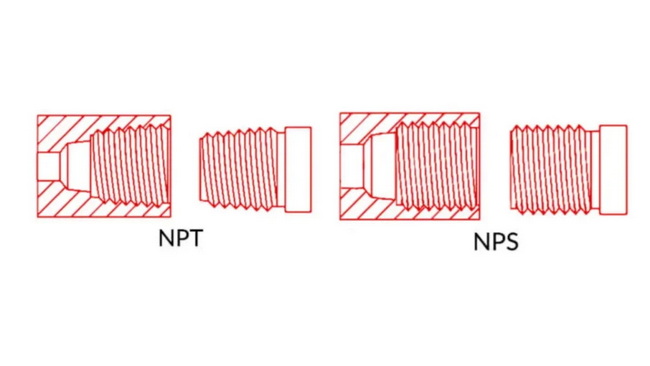
Accurate thread identification prevents cross-threading, leaks, and unsafe assemblies, especially in facilities and fleets that mix multiple thread standards.
Key steps for identifying NPSM threads include:
- Check thread type by using calipers to confirm that the male thread outside diameter or female inside diameter is essentially constant over several threads, indicating a straight form.
- Measure threads per inch using a thread gauge and compare with recognized NPSM tables for sizes such as 1/8-27, 1/4-18, 3/8-18, 1/2-14, and 1-11.5.
- Inspect the seat by looking into female swivels for a 30-degree internal seat, which is common on NPSM female fittings.
A simple field procedure:
1. Measure the outside diameter of the male or the inside diameter of the female at the first full thread.
2. Use a thread pitch gauge to determine threads per inch and compare against NPSM data for that nominal size.
3. Inspect for a 30-degree seat or O-ring groove and verify that the thread does not visibly taper along its length.
Thread identification kits that combine pitch gauges, calipers, and seat-angle gauges make it easier to distinguish NPSM from NPT, BSPP, and metric straight thread systems.
Selecting NPSM fittings is a design decision driven by pressure, maintenance strategy, and the type of sealing you want to use.
You should prioritize NPSM fittings when:
- The system operates at low to medium pressure and does not depend on thread deformation for sealing.
- Connections will be frequently assembled and disassembled, such as for seasonal deployment of TPU lay-flat hose lines or mobile pumping units.
- The sealing method uses O-rings, gaskets, or cone seats rather than relying solely on thread sealant.
- You need excellent alignment and repeatable orientation, for example when aligning hoses, sensors, or manifolds.
For very high pressure or safety-critical gas containment, a properly designed NPT, NPTF, or other high-integrity sealing system may be more appropriate, depending on codes and manufacturer guidelines.
This practical checklist helps technicians and engineers achieve consistent sealing performance.
1. Confirm thread type
Ensure both male and female ends are NPSM, with matching threads per inch and compatible seat geometry.
2. Inspect sealing surfaces
Check 30-degree cones, chamfers, gaskets, or O-rings for damage, contamination, or deformation before assembly.
3. Apply appropriate lubricant or sealant
For cone-seat or O-ring designs, use only manufacturer-approved lubricants. Avoid depending on thread sealant to compensate for damaged sealing surfaces.
4. Hand-tighten for alignment
Engage threads by hand until the joint seats lightly, ensuring that there is no cross-threading or binding.
5. Torque to specification
Use a torque wrench where recommended. Overtightening can crush seats or O-rings even though the threads themselves are straight.
6. Pressure test and monitor
After installation, pressure-test the system and check for weeping at the seat, hose end, or joint interface.
For TPU lay-flat hose assemblies, this procedure is especially important because hoses often experience dynamic flex, surge loads, and outdoor temperature variations.
In hydraulic systems, NPSM is often used in swivel adapters and hose ends where the hose or component must rotate slightly without loosening the threaded connection. The combination of straight threads and 30-degree seats makes it easier to maintain alignment and prevent twisting of flexible hoses such as TPU lay-flat designs.
In pneumatic circuits, straight threads reduce stress concentration at the entry point of flexible tubing, while cone or O-ring seals provide sufficient airtightness for industrial and automation environments. When used on TPU lay-flat hoses for air or low-pressure liquid transfer, NPSM connections can be combined with modular couplings and manifolds to allow rapid deployment and recovery in the field.
If your projects involve hydraulic or pneumatic circuits, TPU lay-flat hoses, or modular industrial piping, choosing the right NPSM fittings and sealing strategy is critical to long-term reliability and safety. Review your current connection standards, identify where straight-thread mechanical joints with cone or O-ring seals can improve maintainability, and work with a trusted manufacturer or engineering partner to specify NPSM-based assemblies that match your pressure, media, and lifecycle requirements.
Contact us to get more information!
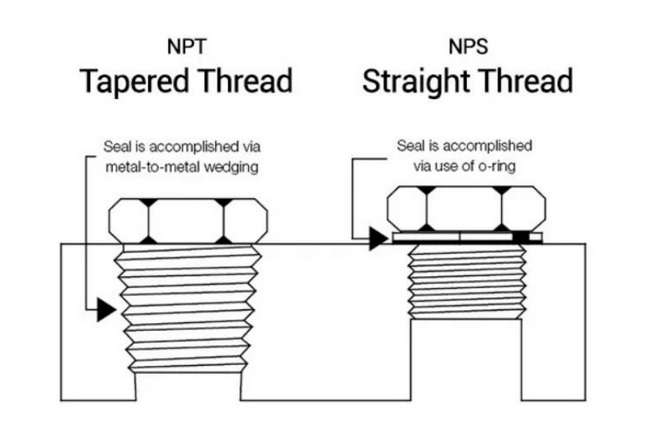
NPSM thread is used for mechanical pipe connections where sealing is handled by a cone, O-ring, or gasket rather than the threads themselves. Typical applications include hydraulic, pneumatic, water, and general industrial systems that require reliable alignment and frequent reconnection.
No. NPSM is a straight pipe thread, while NPT is a tapered pipe thread. They differ in geometry, sealing mechanism, and pressure capability, and should not be mixed in critical piping systems because they are not designed to work together.
PTFE tape on NPSM threads may help reduce minor weeping, but the primary seal should always be a properly designed seat, O-ring, or gasket. NPSM threads are not intended to serve as the sole sealing surface, so relying only on tape or paste can result in leaks.
Both NPSM and BSPP are straight threads, but they differ in thread pitch, diameter, and seat geometry. The most reliable method is to use a thread pitch gauge and calipers, then compare measurements with reference charts, and inspect the internal seat angle to confirm the standard.
NPSM threads can be used in many hydraulic applications when paired with appropriate seat and seal designs. However, for very high pressure or safety-critical conditions, it is often better to select thread and sealing systems specifically engineered for those pressures, following relevant standards and manufacturer recommendations.
https://www.asme.org/codes-standards/find-codes-standards/b1201-pipe-threads-general-purpose-inch
https://www.armechalloys.com/pdf/ansi-b1-20-1.pdf
https://www.engineeringtoolbox.com/american-standard-straight-pipe-threads-d_1520.html
https://www.unifiedalloys.com/p/pipe-threads
https://www.sircoindustrialerie.com/pdf/thread-types.pdf
https://www.laikehydraulics.com/npt-vs-npsm-what-s-the-difference/
https://cntopa.com/npsm-thread-vs-npt-thread-whats-the-difference.html
https://www.depatie.com/thread-identification-types-guide
https://hydraxio.com/npsm-vs-npt/
https://www.strongflex.com/what-is-npsm-thread/


