

Views: 222 Author: Sunmoon Publish Time: 2026-05-18 Origin: Site


TPU Drag Hose generally delivers higher drag resistance and longer service life on rough terrain than NBR Drag Hose, but NBR still has a solid place where extreme oil exposure and cost control are priorities. As a Chinese layflat hose manufacturer like Sunmoon, the most competitive solution often comes from matching material to your field conditions instead of treating TPU or NBR as "one‑size‑fits‑all". [sunhose]
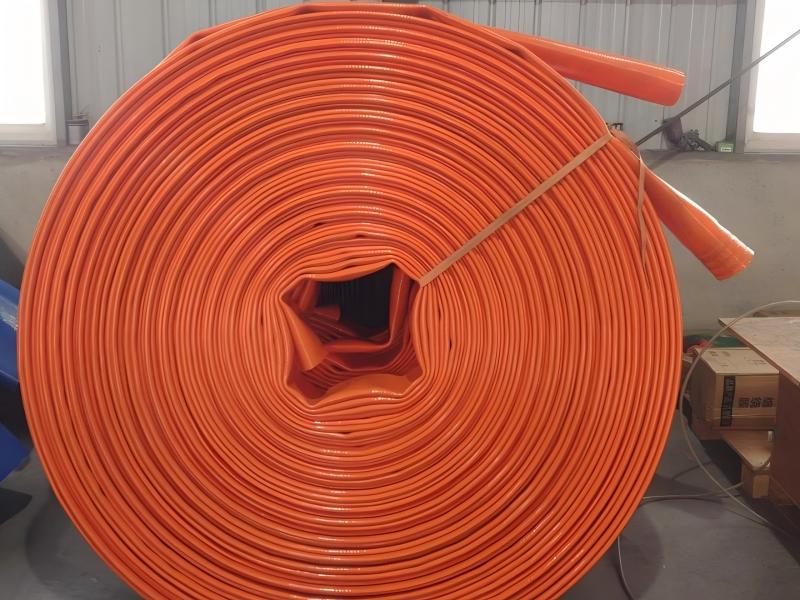
When you pull several hundred meters of drag hose over gravel roads, harvested stubble, or rocky fields, every extra Newton of drag forces your pump, tractor, and operators to work harder. In my experience working with agricultural and industrial clients, the critical question is not only "Which hose is stronger?" but "Which hose keeps its drag resistance low and predictable after thousands of passes across harsh ground?". [hengsindustrial]
In this article, I will compare TPU drag hose and NBR drag hose from a practical, field‑tested perspective, focusing on rough‑terrain drag resistance, lifecycle economics, and how manufacturers like Sunmoon can customize constructions for liquid manure transfer, water transfer, mining slurry, and oilfield use. [alibaba]
- TPU (Thermoplastic Polyurethane) drag hoses use a TPU cover and tube, usually with a high‑tensile polyester reinforcement. [sunhose]
- NBR (Nitrile Rubber) drag hoses typically use a synthetic rubber blend based on NBR with woven textile reinforcement to withstand pressure and pulling forces. [jafirehose]
From a materials engineering standpoint, TPU shows 4–5 times better abrasion resistance than commonly used rubber covers, which directly impacts drag resistance on coarse ground. Meanwhile, NBR excels in oil and fuel resistance, which is why NBR drag hoses remain popular in petrochemical transfer and oily environments. [orientflexhose]
- TPU drag hose: lighter, smoother surface, and less tendency to pick up deep cuts, so drag forces stay more stable over time. [sunhose]
- NBR drag hose: heavier and robust against oil and hot fluids, but can develop more surface roughness under severe abrasion, which gradually increases drag. [jafirehose]
On rough terrain, that difference in surface condition after months of use is often more important than the brand‑new friction coefficient you see on lab data sheets. [orientflexhose]
When a drag hose is pulled over gravel, stones, stubble, or compacted soil, drag resistance is driven by three main factors:
1. Surface roughness of the hose (micro‑cuts, gouging, embedded particles). [hengsindustrial]
2. Contact area and load, largely determined by hose diameter, wall design, and internal pressure. [sunhose]
3. Dynamic stiffness and flexibility, affecting how easily the hose "flows" around obstacles instead of fighting them. [sunhose]
Because TPU maintains a smoother, harder surface under abrasion, the friction coefficient against rough ground tends to remain lower over time than NBR, which can soften and roughen in the wear zone. [hengsindustrial]
| Aspect | TPU Drag Hose | NBR Drag Hose |
|---|---|---|
| Abrasion resistance (cover) | 4–5× higher than common rubber covers on drag hose tests [hengsindustrial] | High, but typically lower than premium TPU compounds [sunhose] |
| Typical outer surface over time | Stays relatively smooth, less gouging [sunhose] | Becomes more rough and matte under heavy wear[sunhose] |
| Effect on drag on rough terrain | Drag remains lower and more consistent across seasons [sunhose] | Drag tends to rise as surface roughens and cuts accumulate [sunhose] |
| Weight per meter | Significantly lighter layflat design [sunhose] | Heavier, more mass to pull [sunhose] |
In long manure‑drag lines on rough fields, I regularly see operators reporting simpler pulling, fewer traction issues, and lower fuel consumption when upgrading from NBR‑based drag hoses to TPU systems, especially once the hoses pass the first full season of use. [orientflexhose]
Existing industry data for layflat hoses show that TPU hoses are positioned at the high end for abrasion resistance and puncture resistance, supporting long service life in harsh outdoor conditions. NBR hoses, by contrast, are very strong in high‑pressure, high‑temperature, and oil‑rich environments, but the cover can wear faster on aggressive, sharp substrates. [sunhose]
Common failure modes on rough terrain include:
- Surface wear‑through to reinforcement.
- Cutting from stones, metal scraps, or stubble.
- Kinking fatigue near couplings during turns.
Because TPU combines high tensile strength with better cut and abrasion resistance, it typically takes longer to reach these failure modes in drag applications, especially when the hose is repeatedly hauled over crushed rock or compacted tracks. [sunhose]
From a procurement perspective, many buyers initially focus on unit price per meter, where NBR can sometimes appear cheaper up front. However, if you account for: [jafirehose]
- Number of drag campaigns per year.
- Expected years in service.
- Downtime cost of a hose failure mid‑season.
then a TPU drag hose often delivers lower cost per pumped cubic meter, even with a slightly higher initial investment. This is particularly true for large‑scale slurry or water transfer projects running long continuous lengths. [sunhose]
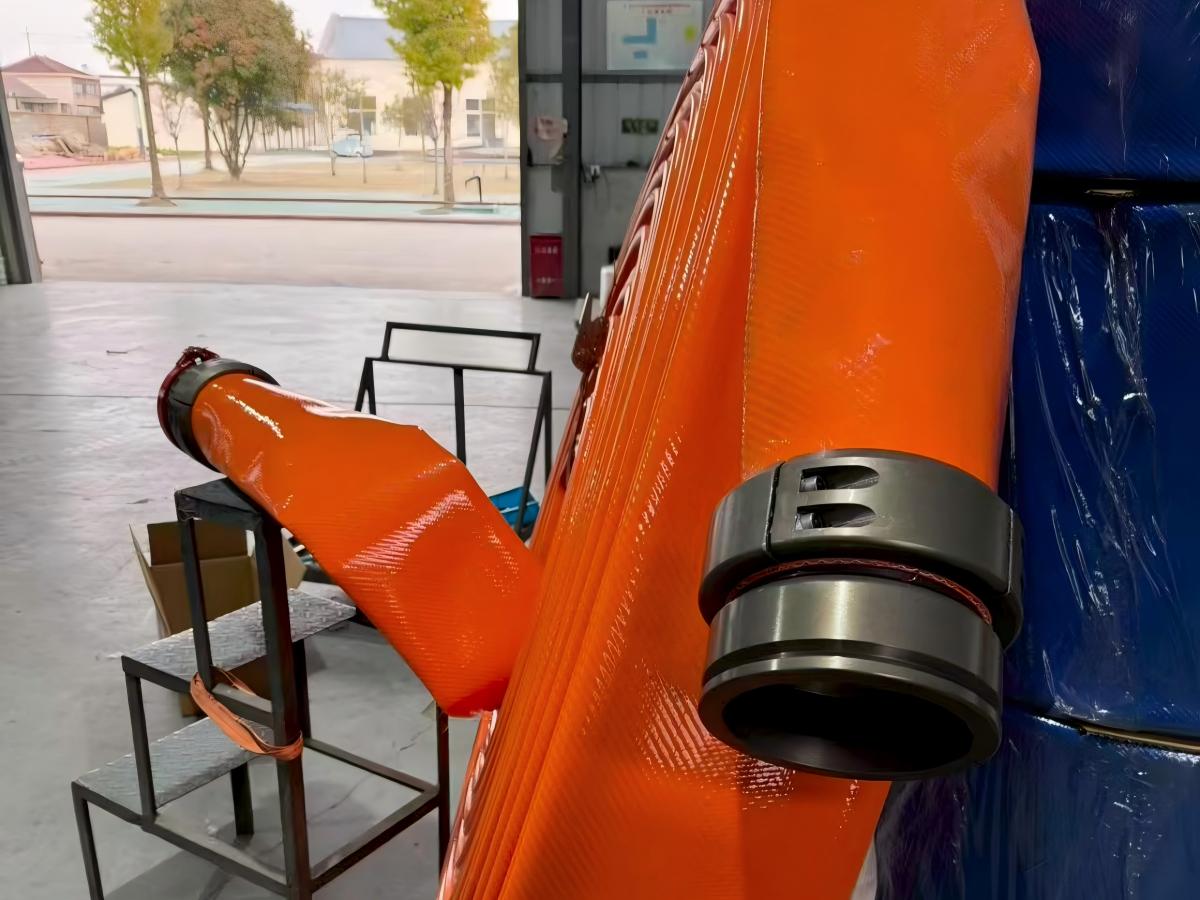
- TPU drag hose supports a wide temperature range, typically down to about –46 °C and up to around +80 °C in many specialized TPU layflat designs, while offering strong resistance to oils, fuels, and a wide range of chemicals. [hoseinc]
- NBR drag hose offers excellent oil and fuel resistance, making it a trusted choice for refineries, fuel depots, and oily slurries. [jafirehose]
If your drag operation involves high‑temperature hydrocarbons or continuous contact with aggressive fuels, an NBR‑based drag hose is still a very logical choice, even if drag resistance on rough terrain is not quite as optimized as high‑grade TPU. [sunhose]
- TPU drag hose sweet spots:
- Long manure draglines across mixed soils and gravel tracks.
- Mining and dewatering projects with sharp, abrasive rubble surfaces.
- Agricultural water transfer where tractors pull hoses across rough headlands. [orientflexhose]
- NBR drag hose sweet spots:
- High‑temperature oil and fuel transfer on compacted or smoother ground.
- Industrial environments where oil saturation is high but terrain is less aggressive (e.g., concrete yards). [jafirehose]
As a manufacturer, Sunmoon can guide customers to TPU for rough‑terrain drag priority and to NBR where fluid chemistry and temperature are the primary constraints. [alibaba]
Use this simple framework when choosing between TPU and NBR drag hose in real projects:
1. Define the dominant risk
- Is your main risk ground abrasion and long pulling distance, or chemical/temperature severity? If abrasion and drag are dominant, start with TPU as your baseline. [hengsindustrial]
2. Map your terrain
- Rate terrain from 1 (smooth) to 5 (extremely harsh: rocks, rubble, sharp stubble).
- For level 3–5 terrains, TPU's superior abrasion performance is usually worth the premium. [sunhose]
3. Quantify line length and duty cycle
- The longer and more frequently you pull, the more you benefit from lower drag and lighter weight. [hengsindustrial]
4. Cross‑check fluid properties
- For manure, water, and standard fertilizers, TPU performs very well.
- For hot fuels or extreme oil content, confirm NBR compatibility with your supplier. [hoseinc]
5. Discuss customization with Sunmoon
- Ask about reinforcement design, wall thickness, and cover hardness tuning to optimize drag resistance for your specific terrain and pulling technique. [alibaba]
A European contractor operating dragline manure injection on rocky, hilly fields switched from a standard NBR drag hose to a premium TPU drag hose similar in construction to Sunmoon's TPU layflat line. Over two seasons, they reported fewer hose changes, smoother pulling on steep sections, and more stable fuel consumption, even though unit cost per meter was higher at purchase. [orientflexhose]
Beyond the base polymer, reinforcement and hose profile design strongly influence drag performance:
- High‑tensile polyester reinforcement, as commonly used in TPU layflat hoses, provides excellent tensile strength without excessive weight. [sunhose]
- A well‑controlled outer diameter and ovality helps the hose "roll" and "slide" instead of plowing into rough surfaces. [sunhose]
- Consistent wall thickness reduces local bulges, which can snag on obstacles and increase drag. [sunhose]
Sunmoon can leverage these parameters to engineer custom TPU drag hoses optimized specifically for rough terrain drag – not just generic layflat constructions. [alibaba]
Regardless of material, operators can preserve low drag by:
- Avoiding high‑speed dragging over sharp edges such as culverts or concrete steps.
- Using correct pressure to keep the hose properly pressurized when in use, reducing flattening against obstacles.
- Inspecting and rotating sections so that highly worn areas are not always in the same spot. [hengsindustrial]
When these practices are combined with TPU's natural abrasion advantage, the result is a very stable drag profile over the full life of the hose. [orientflexhose]
| Decision factor | Recommended choice | Rationale |
|---|---|---|
| Primary concern: drag on rocks, gravel, stubble | TPU drag hose | Highest abrasion resistance and smoother long‑term surface sunhose |
| Primary concern: hot oils or fuels | NBR drag hose | Outstanding oil/fuel resistance and heat tolerance sunhose |
| Very long drag distances (>1 km) | TPU drag hose | Lower weight and better handling reduce pulling effort sunhose |
| Budget‑sensitive, moderate terrain | NBR or TPU hybrid | Balanced performance; discuss with Sunmoon for custom spec sunhose |
| Mining or dewatering with sharp rock | TPU drag hose | Excellent cut and abrasion resistance in harsh ground conditions sunhose |
For most rough‑terrain drag applications, my professional recommendation is to start with TPU drag hose as the default, then shift to NBR only when fluid chemistry or extreme service temperatures demand it. [sunhose]
As a dedicated Chinese manufacturer of NBR layflat hose, TPU layflat hose, and drag hose products, Sunmoon is in a strong position to tailor constructions for your exact terrain, fluid, and handling requirements. Customization options typically include: [alibaba]
- Material compound tuning for cover and tube (TPU hardness, rubber blend formulation).
- Reinforcement selection (polyester, aramid, or hybrid yarns).
- Wall thickness and diameter designs to balance pressure rating, drag, and handling.
- Color and branding to improve visibility and on‑site asset management.
If your project involves long‑distance drag over rough or mixed terrain, asking specifically for a TPU drag hose optimized for abrasion resistance and low drag will usually give you the best lifecycle performance. For operations dominated by hot oils or fuels on less aggressive surfaces, a custom NBR drag hose can still be the most reliable solution. [jafirehose]
Choosing between TPU drag hose and NBR drag hose is not just a materials question; it is a terrain, fluid, and lifecycle cost decision. To get the best drag resistance and reliability on your rough terrain, share details of your field conditions, line lengths, and operating fluids with Sunmoon's technical team.
By collaborating early in the design phase, you can specify the right TPU or NBR construction, reinforcement, and diameter that will minimize drag forces, reduce downtime, and deliver a better ROI over the full life of your hose system. [alibaba]
1. Which is better for drag resistance on rocky ground, TPU or NBR?
TPU drag hose usually offers better drag resistance on rocky or abrasive terrain because of its higher abrasion resistance and smoother long‑term surface condition. [hengsindustrial]
2. Is NBR drag hose still a good choice if my terrain is rough?
Yes, NBR drag hose can still perform well on rough ground, but it may experience faster cover wear and increasing drag compared with TPU under the same conditions. [jafirehose]
3. How does hose weight affect drag resistance?
Heavier hoses require more pulling force, so TPU's lighter construction generally helps reduce drag and energy consumption over long distances. [orientflexhose]
4. When should I choose NBR instead of TPU?
You should consider NBR drag hose when fluids contain hot oils, fuels, or aggressive hydrocarbons where its oil and heat resistance are critical design drivers. [sunhose]
5. Can Sunmoon customize hoses for specific terrains and fluids?
Yes, Sunmoon can adjust materials, reinforcement, wall thickness, and dimensions to optimize either TPU or NBR drag hose performance for your terrain and operating conditions. [alibaba]
1. Sunhose. "PVC vs. Rubber vs. TPU Layflat Hoses: Why They Cater to Different Needs." 2025. Available at: [https://www.sunhose.com/blog/layflat-hoses-decoded-why-pvc-rubber-and-tpu-cater-to-different-needs/] [sunhose]
2. Sunhose. "TPU Layflat Hose." Product and technical specifications. Available at: [https://www.sunhose.com/tpu-layflat-hose/] [sunhose]
3. Alibaba. "SUNMOON 12\" TPU Layflat Large Diameter Water Hose." Product listing. Available at: [https://www.alibaba.com/product-detail/SUNMOON-12-tpu-layflat-large-diameter_60656834854.html] [alibaba]
4. Orient / Related Sources. "TPU Layflat Drag Hose." Technical description of abrasion resistance and tensile properties. Available at: [https://www.hengsindustrial.com/portfolio-items/tpu-layflat-drag-hose/] and [https://www.orientflexhose.com/project/tpu-drag-hose/] [hengsindustrial]
5. JA Fire Hose. "TPU Lay Flat Hose vs Nitrile Rubber for Mining Dewatering." 2026. Technical analysis of abrasion resistance and performance in mining applications. Available at: [https://www.jafirehose.com/news/industry-news/tpu-lay-flat-hose-vs-nitrile-rubber-mining-abrasion.html] [jafirehose]
6. Hose Inc. "TPU Hose, Lay Flat Hose, Fracking Hose." Application overview for TPU hoses in high‑volume water transfer and chemical service. Available at: [https://www.hoseinc.com/tpu-layflat-hose.html] [hoseinc]


