

Views: 222 Author: Sunmoon Publish Time: 2026-05-13 Origin: Site


In field projects where every hour of setup time and every kilogram of logistics weight matters, TPU layflat hose has fundamentally changed how engineers think about temporary and semi‑permanent pipelines compared with traditional PE (HDPE) pipe. From my experience working with global water transfer, mining and emergency projects, the biggest differentiators are flexibility, deployment speed and the total cost of moving, installing and retrieving the system. [jinluohose]
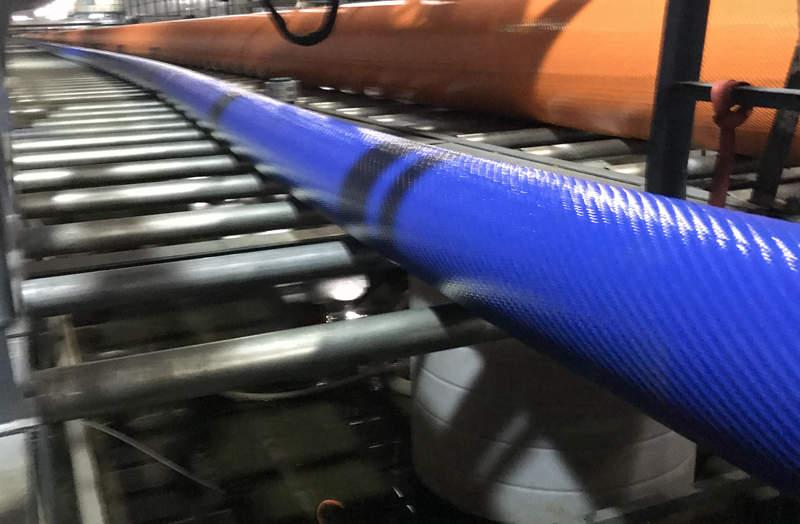
For mobile, long‑distance fluid transfer (water, slurry, oil, chemicals), TPU layflat hose is designed to be rolled, unrolled and relocated quickly, while PE pipe is engineered as a rigid, structural pipeline. In practical terms, that means TPU layflat systems shorten project timelines and reduce on‑site labor, especially in challenging terrains where PE pipe requires more joints, fittings and heavy equipment. [richkindhose]
TPU layflat hose is made from thermoplastic polyurethane through extrusion and reinforced weaving, then formed into a flat profile that becomes round under pressure. It is widely used for high‑pressure water transfer, oil and fuel transfer, agriculture irrigation, mining dewatering, firefighting and emergency flood control. [sinohose]
Key properties of TPU layflat hose: [jafirehose]
- High flexibility even after long‑term bending and pressurization
- Excellent abrasion and cut resistance on rough ground
- Strong chemical and oil resistance
- Stable performance in wide temperature ranges
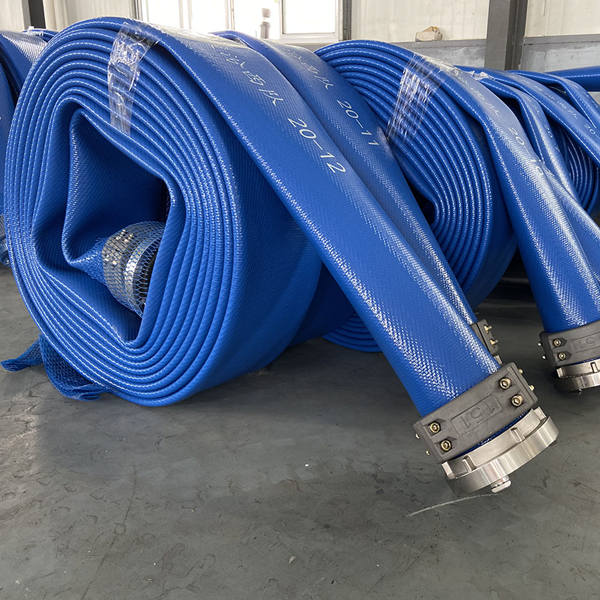
- Lightweight with compact coil size for storage and transport
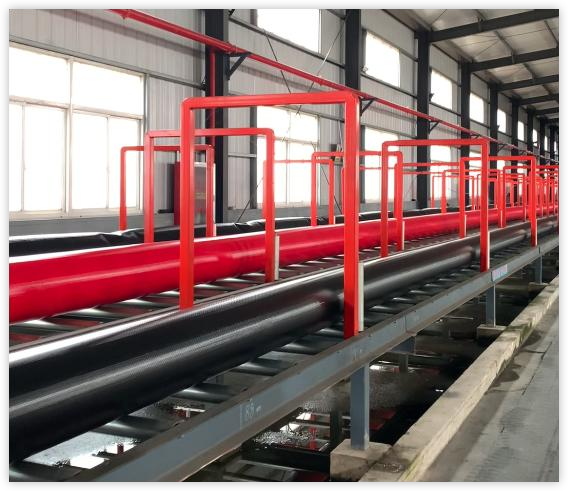
PE pipe (commonly HDPE) is a rigid thermoplastic pipeline produced via extrusion and supplied in straight lengths or coils, then joined by fusion or mechanical couplers. It is widely used in municipal water, gas, sewage and buried infrastructure. [venair]
Typical PE pipe characteristics: [mti-global]
- Rigid structure with defined bending radius
- High internal pressure capability and long design life when buried
- Good chemical resistance for many water and wastewater applications
- Requires fittings, welding machines and more civil work for alignment and support
Where TPU Layflat and PE Overlap
In many water transfer projects—such as mining, oilfield water injection or large‑scale irrigation—both TPU layflat hoses and PE pipes can technically do the job. The decision comes down to how often the system moves, deployment speed, terrain and how much you can spend on logistics and heavy equipment. [jafirehose]
TPU layflat hose is engineered to lie flat on the ground and flex freely around obstacles, making it ideal for rough, temporary routes. Even under repeated bending and pressure cycles, TPU maintains structural integrity and flexibility better than many conventional pipeline materials. [jinluohose]
By contrast, PE pipe: [venair]
- Has a larger minimum bending radius
- Requires careful routing and supports to avoid kinking and stress
- Is more sensitive to misalignment when laid above ground
In field deployments, this translates into faster route finding with TPU layflat hose, especially over uneven or rocky terrain where rigid pipe alignment is slow and labor‑intensive. [richkindhose]
High‑quality TPU layflat hose maintains flexibility in both high‑heat and freezing conditions, significantly reducing the risk of cracking or sudden failure. This performance stability under thermal cycling is a major reason why TPU layflat hoses are adopted for emergency and outdoor operations. [sinohose]
PE pipe also has good temperature resistance, but in above‑ground applications differential expansion, UV exposure and thermal stress may demand additional supports and protection measures. In dynamic, exposed environments, TPU's balance of elasticity and strength gives it an advantage for reliability and ease of handling. [mti-global]
One of the strongest arguments for TPU layflat hose is logistics efficiency. A single long coil can replace multiple shorter rigid pipe sections, cutting truckloads and warehouse footprints. TPU layflat hose is lightweight and can be tightly rolled, which reduces both transport cost and handling efforts. [jafirehose]
PE pipe, on the other hand: [richkindhose]
- Requires more space per meter in transport
- Typically needs lifting equipment for larger diameters
- Involves more loading/unloading cycles and staging time
For large water transfer projects, reports show TPU layflat systems can save substantial logistics cost compared with heavy rigid pipes, especially when routes exceed several kilometers. [marketreportanalytics]
Because TPU layflat hose can be unrolled directly from a reel or pack, field teams can deploy 2,000–3,000 meters per day in wild environments, significantly shortening project schedules. PE pipe installation in similar conditions involves aligning lengths, welding or coupling joints, pressure testing each section, and often building temporary supports or trenching. [venair]
This difference is especially visible in: [jafirehose]
- Emergency flood control and firefighting
- Short‑term bypass lines around existing infrastructure
- Seasonal irrigation networks that must be installed and removed every year
In my work with mobile water transfer systems, switching from rigid PE to TPU layflat typically reduces deployment and retrieval time by days, not hours, on multi‑kilometer projects. [jafirehose]
When the job ends, TPU layflat hose can be drained, cleaned, and quickly rolled back onto reels for the next project. Its resistance to abrasion, aging and environmental fatigue supports repeated deployment cycles with less performance degradation. [jinluohose]
PE pipe can also be reused, but: [mti-global]
- Disassembly and stacking take longer
- Scratches and impact damage on rigid walls can accumulate and require inspection
- Storage requires larger yards and better organization to avoid warping
This is why industries that move from one site to another—such as oilfield services, mining contractors and emergency response teams—are shifting more kilometers of temporary line to TPU layflat solutions. [marketreportanalytics]
TPU layflat hose offers outstanding abrasion resistance and can be dragged over rough ground during deployment without rapid wear. Its elasticity helps absorb external forces, reducing the risk of cracks or sudden ruptures under physical stress. [sinohose]
Rigid PE pipes, when used above ground or in mobile operations, are more vulnerable to point impacts, sharp edges and improper support, which can induce cracks or local stress concentrations. In rugged surroundings, TPU's combination of toughness and flexibility delivers a more reliable life cycle. [jafirehose]
Modern TPU layflat hoses are formulated for strong chemical resistance, UV stability and resistance to aging and fatigue, especially in oil, fuel and aggressive water conditions. This reduces breakdowns and replacement frequency, maintaining continuous, efficient operation in demanding environments. [marketreportanalytics]
PE pipe also shows good chemical and UV resistance, particularly in buried or partially protected installations, which is why it is a common choice for municipal infrastructure. For exposed, mobile and chemically varied applications, TPU layflat often delivers more predictable performance across different media and climates. [jinluohose]
Industry guidelines emphasize implementing structured hose management programs—design basis, procurement auditing, tagging, inspection intervals, and replacement criteria—to maintain flexible hose reliability and safety. TPU layflat hoses fit naturally into such programs, as they are easier to tag, roll out for visual inspection, and test in a controlled way compared to long rigid pipe systems. [h2tools]
For PE pipelines, integrity management often focuses on weld quality, buried conditions and non‑destructive testing, which can be more complex and slower to execute for temporary or semi‑temporary systems. [h2tools]
When comparing TPU layflat hose with PE pipe, it is critical to go beyond unit price and evaluate total cost of ownership: [richkindhose]
- Material cost per meter
- Transport and storage costs
- Deployment and retrieval labor
- Required machinery (welders, excavators, cranes)
- Maintenance, inspection and replacement frequency
- Downtime cost due to failure or slow change‑outs
While PE pipe may have a lower purchase price per meter in some regions, TPU layflat frequently wins on transport, labor and downtime savings, especially in mobile or remote projects. [jafirehose]
Consider a 10 km temporary water transfer line for a mining dewatering project over uneven ground:
- With PE pipe, you need multiple truckloads of pipe, fusion machines, trained welding crews and possibly trenching or supports to handle elevation changes. Setup may take several weeks. [venair]
- With TPU layflat hose, you can deliver fewer coils, unroll directly along the route, connect with fewer couplings and pressure test more quickly, compressing the schedule into days instead of weeks. [sinohose]
Field reports and market analyses for oil and water transfer indicate that this shift toward flexible TPU layflat systems is driving robust market growth, with global TPU layflat hose demand forecast to expand steadily through 2030 and beyond. [marketresearch]
TPU layflat hose is usually the preferred solution when you need: [jafirehose]
- Rapid deployment and retrieval
- Long distance temporary transfer (kilometers)
- Frequently relocated systems (oilfield, mining, construction)
- Challenging terrain with frequent alignment changes
- Limited access for heavy machinery
- High abrasion risk on rough ground
- Emergency response: firefighting, flood control, disaster relief
PE pipe remains a strong candidate when the system is: [mti-global]
- Buried or semi‑permanent (years of service)
- Part of municipal water, gas or sewage networks
- Operating at stable pressures with limited relocation
- Supported by existing welding infrastructure and civil works
In other words, TPU layflat hose excels in dynamic, mobile, project‑based operations, while PE pipe is optimized for fixed infrastructure.
Drawing on flexible hose guidelines and field best practices, you can further improve reliability and efficiency when deploying TPU layflat hose: [h2tools]
1. Right‑size diameter and length
Choose the smallest internal diameter that still achieves your flow rate to enhance flexibility and reduce weight per meter. [venair]
2. Plan hose routing with elevation and obstacles in mind
Use vertical connections where possible and avoid tight corners or pinch points that may stress couplings. [venair]
3. Use proper supports and anchoring at connection points
Place the first rigid support at an appropriate distance from tanks or pumps to avoid excessive deflection and mechanical stress. [mti-global]
4. Implement a documented hose management program
Tag each hose section, define inspection intervals, and plan proactive replacement cycles based on service conditions. [h2tools]
5. Design for safety in case of rupture
Consider shutoff valves, anti‑whip restraints and leak detection to mitigate risks in high‑consequence applications. [h2tools]
These practices help you leverage the inherent advantages of TPU layflat hose while aligning with modern mechanical integrity and quality assurance expectations. [mti-global]
| Aspect | TPU layflat hose | PE pipe (HDPE) |
|---|---|---|
| Structure | Flexible, lies flat when not pressurized sinohose | Rigid cylindrical pipe venair |
| Flexibility | Excellent bending and ground adaptability jinluohose | Limited bending, larger radius venair |
| Deployment speed | Very fast; 2,000–3,000 m per day reported in field use richkindhose | Slower; requires jointing, alignment and more equipment richkindhose |
| Logistics | Lightweight coils, high volumetric efficiency richkindhose | Heavier and bulkier per meter richkindhose |
| Terrain suitability | Ideal for uneven, rough and temporary routes jinluohose | Best for straight, supported or buried routes venair |
| Abrasion resistance | Outstanding; designed for rough ground contact jinluohose | More sensitive to local impact and scraping venair |
| Chemical/UV resistance | Excellent, including fuels and many chemicals jinluohose | Good for many water/waste applications venair |
| Reusability | High; easy to roll, transport and redeploy richkindhose | Reusable but harder to move and store venair |
| Best use case | Mobile, temporary and long‑distance transfer jinluohose | Permanent or semi‑permanent infrastructure venair |
As a specialized Chinese manufacturer focused on TPU layflat hose and other flat hoses, Sunmoon supports global customers who need custom‑engineered flexible pipeline solutions rather than generic off‑the‑shelf products. Based on current industry trends, the TPU layflat hose market is expanding on the back of oil, mining, agriculture and emergency service demand, and buyers increasingly look for suppliers who combine material expertise with customization capability. [sunmoonhose]
By working with a dedicated TPU layflat manufacturer, project owners can optimize: [sunmoonhose]
- Hose diameter, wall thickness and working pressure
- Material formulation for specific media (water, slurry, oil, chemicals)
- Coupling types and quick‑connection systems
- Coil lengths tailored to deployment equipment and site constraints
This level of customization is crucial for turning theoretical advantages of TPU layflat hose into measurable project savings in time, logistics and lifecycle cost. [jinluohose]
When you design your next fluid transfer system, you can use this simple checklist:
1. How often will the line be moved?
- Frequent or seasonal relocation → strongly favor TPU layflat hose. [richkindhose]
2. Is the route long and uneven?
- Many elevation changes, obstacles, or rough ground → TPU layflat handles flexibility better. [jafirehose]
3. Do you have limited heavy equipment on site?
- If access is difficult or expensive, TPU's lightweight coils reduce dependency on cranes and welders. [sinohose]
4. What is the expected service life?
- Multi‑year buried infrastructure → PE pipe remains competitive. [venair]
- Project‑based or temporary → TPU layflat yields better economics. [marketreportanalytics]
5. What media and conditions are involved?
- Abrasive, chemically aggressive or temperature‑fluctuating conditions → TPU layflat's durability and resistance provide extra safety margin. [jafirehose]
If you are planning a water transfer, dewatering, oil and fuel transfer or emergency pipeline project, choosing TPU layflat hose over PE pipe can unlock major gains in flexibility, deployment efficiency and lifecycle cost. By partnering with a specialist like Sunmoon, you can configure a custom TPU layflat system—diameter, pressure rating, material, connections—that matches your terrain, fluid and operational schedule. [marketreportanalytics]
You can now:
- Share your project length, flow rate and terrain profile for a tailored TPU layflat design
- Compare a Sunmoon TPU layflat configuration directly against your current PE pipe setup
- Request samples or trial sections for on‑site evaluation
For engineering‑driven projects where mobility and speed matter, TPU layflat hose is no longer an alternative to PE pipe—it is the new baseline. [jinluohose]
Q1: Is TPU layflat hose safe for high‑pressure applications compared with PE pipe?
A1: High‑quality TPU layflat hoses are designed for demanding high‑pressure applications and offer excellent tensile strength and abrasion resistance, making them suitable alternatives to rigid pipes in many scenarios when correctly sized. Proper design, safety factors and hose management programs further enhance safety. [sinohose]
Q2: How many times can I reuse TPU layflat hose?
A2: With correct handling, inspection and storage, TPU layflat hoses can be deployed and retrieved many times thanks to their resistance to aging, fatigue and environmental stress. Actual reuse cycles depend on pressure, media, terrain and maintenance practices. [jafirehose]
Q3: Does TPU layflat hose work in freezing temperatures?
A3: Yes, TPU layflat hose maintains flexibility and performance in freezing conditions better than many traditional pipeline materials, which reduces the risk of cracking or sudden failure. This makes it attractive for seasonal and cold‑climate operations. [jinluohose]
Q4: Is PE pipe still better for buried lines?
A4: For long‑term buried infrastructure, PE pipe remains a proven solution with good chemical resistance and structural stability. TPU layflat hose is typically preferred for above‑ground, mobile and temporary systems where flexibility and deployment speed are critical. [richkindhose]
Q5: How should I choose between different TPU layflat hose grades?
A5: Selection should be based on working pressure, media type, temperature range, terrain conditions and required service life, and it is best done in cooperation with a specialized manufacturer who can fine‑tune material formulation and reinforcement. This ensures the hose design matches your risk profile and operating environment. [sunmoonhose]
1. Jinluo Hose – "Why is TPU Layflat Hose ahead of traditional pipe materials in durability". https://www.jinluohose.com/news/industry-news/why-is-tpu-layflat-hose-ahead-of-traditional-pipe-materials-in-durability.html
2. Richkind Hose – "Why more customers choose TPU layflat hose to transport water in the wild". https://www.richkindhose.com/3.html
3. JAFirehose – "TPU Layflat Hose Logistics: Weight, Coil Diameter & Storage". https://www.jafirehose.com/news/industry-news/tpu-layflat-hose-logistics-weight-coil-diameter-storage.html
4. Sunmoon – "What Impacts the Lifespan of Industrial Hoses (and Why TPU Layflat Hose Lasts Longer)". https://www.sunmoonhose.com/what-impacts-the-lifespan-of-industrial-hoses-and-why-tpu-layflat-hose-lasts-longer.html
5. Sinohose – "Key Features of TPU Layflat Hose". https://www.sinohose.com/key-features-of-tpu-layflat-hose.html
6. APO Research – "Global TPU Layflat Hose Market Analysis and Forecast 2024‑2030". https://www.marketresearch.com/APO-Research-Inc-v4273/Global-TPU-Layflat-Hose-Forecast-38899630/
7. Venair – "Design and connection of a flexible hose for cargo tanks". https://venair.com/en/resources/technical-guides/flexible-hose-load-tanks
8. China‑Layflat‑Hose – "TPU Layflat Hose product page". https://china-layflat-hose.com/products/tpu-layflat-hose.html
9. JAFirehose – "The Ultimate Guide to TPU Lay Flat Hoses: Benefits, Uses, and Selection Tips". https://www.jafirehose.com/news/industry-news/the-ultimate-guide-to-tpu-lay-flat-hoses-benefits-uses-and-selection-tips.html
10. APO Research – "Global TPU Layflat Hose Industry Growth and Trends Forecast to 2031". https://www.marketresearch.com/APO-Research-Inc-v4273/Global-TPU-Layflat-Hose-Growth-40363358/
11. MTI Global – "Reliability Guidelines for Flexible Hoses". https://www.mti-global.org/participate/public-library/flexible-hose-reliability-guide
12. H2Tools – "Safety issues using flexible hoses that are continuously pressurized". https://h2tools.org/faq/safety-issues-using-flexible-hoses
13. MarketReportAnalytics – "Future Forecasts for TPU Layflat Hose for Oil Transfer". https://www.marketreportanalytics.com/reports/tpu-layflat-hose-for-oil-transfer-162771


