

Views: 222 Author: Loretta Publish Time: 2026-01-22 Origin: Site


Content Menu
● Understanding Industrial Hose Lifespan
● Key Factors That Impact Industrial Hose Lifespan
>> 1. Hose Material and Construction
>> 2. Conveying Medium (Fluid Compatibility)
>> 3. Temperature (Medium and Environment)
>> 4. Environmental Exposure (Ozone, UV, Moisture, Abrasion)
>> 5. Operating Conditions: Pressure, Velocity, and Pump Speed
>> 6. Installation, Handling, and Storage Practices
● Typical Service Life by Material (Rubber, PTFE, TPU)
● Why TPU Layflat Hoses Offer Extended Lifespan
>> 1. Superior Abrasion and Puncture Resistance
>> 2. Robust Weather and UV Performance
>> 3. Wide Temperature Range and Dimensional Stability
>> 4. Lightweight Design and Operational Efficiency
>> 5. Sustainability and Lifecycle Cost Advantages
● Practical Strategies to Extend Hose Life (Including TPU Layflat)
>> Step 1: Choose the Right Hose from Day One
>> Step 2: Install Correctly and Avoid Mechanical Abuse
>> Step 3: Control Pressure, Temperature, and Pump Speed
>> Step 4: Maintain and Inspect Regularly
>> Step 5: Store Hoses in Optimal Conditions
● Frequently Asked Questions (FAQ)
>> Q1: How often should industrial hoses be replaced?
>> Q2: Are TPU layflat hoses suitable for high-pressure applications?
>> Q3: What is the main difference between TPU and PVC layflat hose?
>> Q4: How can I quickly check if my hose is still safe to use?
>> Q5: Does proper storage really make a noticeable difference to hose life?
Industrial hose lifespan is determined by a combination of material selection, conveyed medium, environmental exposure, operating conditions, and maintenance practices. When these factors are optimized, and especially when advanced materials such as TPU layflat hose are used, service life can be significantly extended while reducing downtime and total cost of ownership.
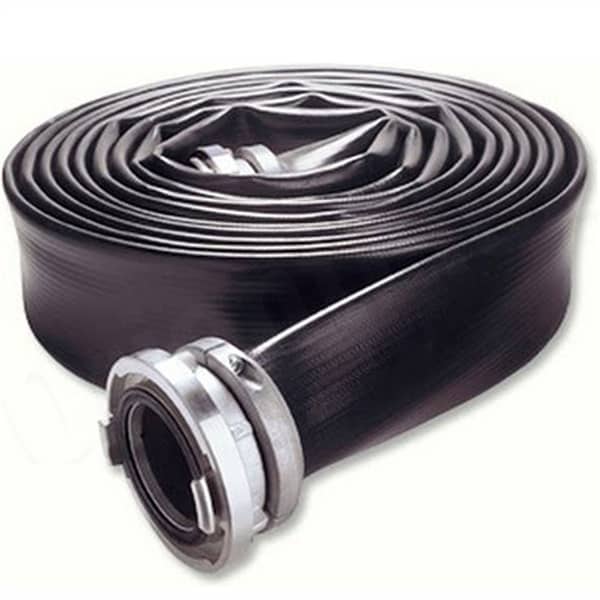
Industrial hoses are flexible connectors used for fluid transfer in applications such as manufacturing, agriculture, mining, firefighting, chemical processing, and water management. They must withstand pressure, temperature, mechanical stress, and environmental exposure while maintaining flexibility and safety over time.
From an engineering and asset-management perspective, hose lifespan is not a fixed number but a probability window influenced by design, application, and maintenance quality. Choosing the right hose type at the design stage is often the single most effective way to improve system reliability and reduce unplanned failures.
The base material and reinforcement structure directly define mechanical strength, chemical resistance, and aging behavior. Traditional industrial hoses are commonly made from nitrile, EPDM, silicone, fluororubber, SBR, or PTFE, each with a typical service range.
NBR, HNBR, and SBR hoses often provide around 2–5 years of service under normal conditions, while EPDM, silicone, and FKM typically reach 3–5 years. PTFE hoses can often achieve 5–10 years due to excellent chemical and temperature resistance when correctly applied.
Reinforcement (textile, steel wire, or high-strength fiber) increases burst pressure and fatigue resistance, but a poor match between reinforcement design and operating pressure sharply reduces life. For applications involving abrasion, UV exposure, and frequent deployment, modern TPU layflat hoses offer superior wear and puncture resistance compared with conventional rubber or PVC layflat designs.
The conveyed medium can accelerate degradation if it is chemically incompatible with the inner tube material. Fluids that are too aggressive may cause swelling, embrittlement, softening, or cracking, leading to early leakage or catastrophic failure.
Key considerations include pH, solvent content, oil or fuel type, and additives, all of which must match the hose's chemical compatibility profile. Slurries and highly abrasive media demand inner layers with outstanding abrasion resistance, where TPU-lined and TPU layflat hoses often outperform standard rubber or PVC in long-distance transfer.
Operating with the wrong hose–fluid pairing not only shortens hose life but can also contaminate the product stream and create safety or regulatory issues.
Temperature is one of the most critical drivers of hose aging. When the fluid or ambient temperature exceeds the recommended range, thermal cracking, hardening, or excessive softening will progress rapidly.
High temperature promotes oxidation, thermal cross-linking, and accelerated rubber aging, especially in steam and engine-compartment applications. Low temperature can stiffen certain plastics and rubbers, reducing flexibility and increasing the risk of kinking and cover cracking under bending.
Engineered TPU hoses can typically operate from low sub-zero temperatures up to around 90–100 °C while maintaining flexibility, making them suitable for many outdoor and mobile operations where temperature variation is significant.
External conditions often determine whether a hose reaches its expected life or fails early. Critical environmental drivers include ozone and UV radiation, moisture and humidity, and mechanical abrasion.
Ozone and UV exposure cause surface cracking and oxidation, especially in conventional rubber covers, and long-term outdoor storage without protection accelerates this effect. Prolonged exposure or immersion in humid environments can extract soluble components from rubber and promote hydrolysis, reducing elasticity and strength. Abrasion from dragging hoses across gravel, concrete, or steel edges is a common cause of cover wear and puncture.
TPU layflat hose is engineered with excellent abrasion and weather resistance and, in many tests and field applications, resists wear and puncture significantly better than rubber or PVC, especially in mining, dewatering, and irrigation lines that are frequently moved across rough terrain.
Industrial hoses are designed for a maximum working pressure and safety factor, and operating near or above that limit shortens service life. Pressure spikes, water hammer, and pulsating flow introduce cyclic fatigue that can cause reinforcement failure well before the theoretical design life.
Pump speed is another key factor. Higher pump speed increases turbulence, friction, and cyclic loading, which accelerates internal erosion and fatigue, especially in slurry and high-velocity water lines. Operating hoses within their rated pressure and velocity envelope, with surge control and proper pump sizing, is essential for long-term reliability.
Even the best hose fails early if installed or stored incorrectly. Typical issues include tight bending radius, twisting, kinking, dragging, and poor routing through equipment or structures.
Best practices include respecting the minimum bend radius and avoiding twisting the hose during installation. Using proper clamps, guides, and supports prevents chafing and crushing in dynamic systems. Storing hoses in a clean, cool, dry, shaded area away from electrical equipment, oil, chemicals, and direct sunlight further protects them from premature aging.
TPU layflat hoses roll compactly on reels and are lighter than many rubber hoses, which simplifies handling and helps reduce mechanical abuse during deployment and retrieval.
The following table summarizes typical service-life ranges under normal operating conditions, assuming correct selection and maintenance. Actual performance depends heavily on application, environment, and duty cycle.
Hose Material / Type | Typical Service Life | Key Strengths | Common Limitations |
NBR / HNBR rubber | 2–5 years | Good oil resistance; widely used in fuel and hydraulic lines | Moderate weather and ozone resistance; can harden under heat |
EPDM rubber | 3–5 years | Excellent hot water and steam resistance; good weathering | Limited oil resistance; not ideal for hydrocarbons |
Silicone rubber | 3–5 years | Very good high/low temperature flexibility | Lower tear resistance; higher cost |
FKM / FPM (Viton) | 3–5 years | Strong chemical and high-temperature resistance | Premium cost; not necessary for non-aggressive media |
SBR rubber | 2–5 years | Economical general-purpose rubber | Limited oil and ozone resistance; ages faster outdoors |
PTFE | 5–10 years | Outstanding chemical resistance and temperature stability | Less flexible; can kink if mishandled; higher initial cost |
TPU hose / TPU layflat | Approximately 4–10 years (application-dependent) | Excellent abrasion, puncture, and UV resistance; wide temperature range; lightweight; recyclable | Higher initial cost than PVC or basic rubber; requires correct fittings and handling |
Indicative ranges only; real-world life depends on pressure, temperature, cycles, and maintenance.
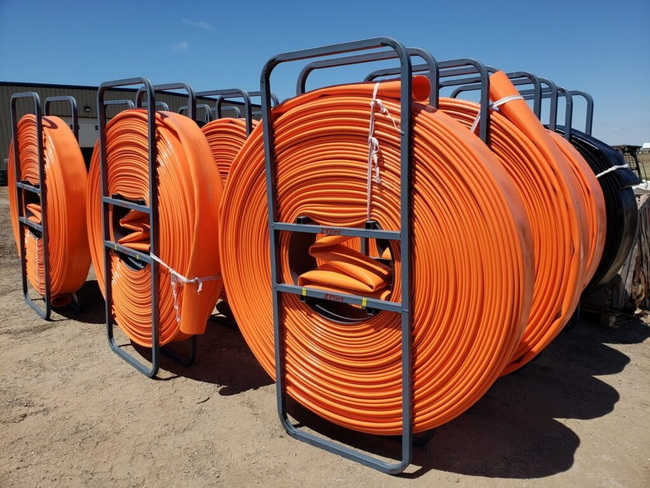
TPU's microstructure gives it outstanding resistance to surface wear and gouging compared with PVC and many rubber compounds. In field operations where hoses are dragged over gravel, concrete, and metal edges, such as in agriculture, mining, and dewatering, TPU layflat hoses maintain wall thickness and integrity significantly longer.
This leads to fewer unplanned shutdowns caused by pinholes, leaks, or burst failures in high-movement applications, directly improving uptime and safety.
UV and ozone are common causes of early cracking in traditional rubber covers. TPU layflat hoses are engineered with excellent weatherability, maintaining flexibility and surface integrity under long-term outdoor exposure.
In many outdoor irrigation and firefighting installations, TPU hoses retain performance over multiple seasons where lower-grade PVC hoses become brittle within months. This extended outdoor durability makes TPU an ideal choice for users operating in harsh climates or demanding environments.
TPU layflat hoses typically operate from low sub-zero conditions up to around 90–100 °C without losing flexibility or suffering from embrittlement. This provides a stable flow path in applications that experience strong diurnal swings or seasonal temperature changes.
Because TPU maintains its elastic properties across this range, it is less prone to cracking under repeated pressurization cycles and roll or unroll operations, which is critical for mobile units and temporary pipelines.
TPU layflat hoses often feature a thin but strong lining combined with a lower material density than many rubber alternatives. This can reduce total hose weight by roughly one third without sacrificing pressure capability.
Lighter hose assemblies reduce manual handling effort and the risk of damage during deployment and retrieval. They also allow longer continuous lengths on a single reel, lowering the number of connection points and potential leak paths in the system.
TPU is more easily recyclable than many rubber blends and can be formulated with fewer hazardous additives, which aligns with modern sustainability and ESG targets. When combined with a longer service life and lower failure rate, the total lifecycle cost per operating hour is often significantly lower than that of conventional hoses.
Industry experience indicates that TPU hose systems can last up to several times longer than comparable rubber hoses in abrasive environments, making them a compelling choice for operators focused on reliability, safety, and environmental performance.
Start by clearly defining application conditions, including fluid type, temperature, pressure, flow rate, cycle frequency, and environment. This information should guide the selection of hose material, reinforcement, and safety factor.
Use manufacturer compatibility charts to match hose material with chemicals and temperature range. For harsh, mobile, or abrasive operations, prioritize TPU layflat hoses to minimize surface wear and UV damage over time.
Maintain the bend radius above the minimum recommendation and avoid twisting or kinking during installation. Incorrect routing can create stress concentrations and localized fatigue in the hose wall.
Use guides, rollers, or protective sleeves at sharp corners or high-friction contact points, especially where hoses cross roads, rocks, or trench edges. For TPU layflat hoses, hose reels for deployment and retrieval help control movement and reduce dragging on aggressive surfaces.
Operate within the rated working pressure and temperature for each hose and avoid continuous use at the upper limit of its design envelope. Install pressure relief valves or accumulators where pressure spikes and water hammer are known risks.
Size pump speed correctly to maintain appropriate flow velocity. Excessive speed and turbulence accelerate internal erosion and fatigue, particularly in slurry and high-velocity water lines. Reducing unnecessary pump speed can significantly extend hose service life.
Establish a preventive maintenance routine rather than waiting for visible leaks or failures. Regular visual inspections should check for cuts, bulges, cracks, blisters, exposed reinforcement, corrosion on fittings, and changes in flexibility.
Flush hoses periodically to remove residues, especially for chemicals, slurries, or food-grade media. Replace damaged hoses promptly instead of running to failure and document inspection dates, observations, and replacements in a maintenance log. For TPU layflat hoses, many manufacturers offer repair solutions for localized damage, which can further reduce lifecycle costs.
Clean and fully drain hoses before storage to prevent internal moisture, microbial growth, or chemical attack. Residues left inside the hose can harden, corrode, or contaminate future batches of fluid.
Store hoses in a cool, dry, shaded, and well-ventilated area, away from direct sunlight, ozone sources, and chemicals. Avoid tight coils, severe bends, or stacking that crushes the hose structure. TPU layflat hoses can be stored flat or on reels in their natural coil, which helps maintain their integrity for the next deployment.
If your operation depends on reliable fluid transfer, upgrading to engineering-grade TPU layflat hoses is one of the most effective ways to increase service life, reduce unplanned downtime, and control total cost of ownership. Optimized selection, correct installation, and disciplined maintenance will further amplify these benefits across your entire hose network.
Contact the Sunmoon engineering team today to evaluate your current hose configuration, identify high-risk lines where TPU layflat can deliver measurable gains, and design a tailored hose solution that matches your pressure, temperature, chemical, and environmental requirements. Reach out now for a free application assessment and a customized TPU layflat hose recommendation, and start extending the lifespan of your industrial hose assets with confidence.
Contact us to get more information!
Replacement intervals depend on material, duty cycle, and environment, but many operators plan inspections at least quarterly and replace high-risk hoses every 2–5 years even if no obvious damage is visible. Critical safety hoses may follow stricter original equipment manufacturer or regulatory replacement intervals.
Properly engineered TPU layflat hoses can reach high working and burst pressures, often exceeding those of comparable rubber layflat hoses when correctly specified. Always follow the manufacturer's pressure ratings and use compatible couplings and fittings.
TPU layflat hoses typically offer higher abrasion resistance, better low-temperature flexibility, and longer outdoor life than PVC hoses. PVC hoses are more cost-oriented and suited to lighter-duty, short-term applications, while TPU is the better fit for demanding, long-term, or abrasive deployments.
Perform a visual inspection for cuts, bulges, cracks, blisters, exposed reinforcement, and leaks at fittings, and verify that operating pressure and temperature remain within the hose label or datasheet limits. If there is any doubt about the condition, remove the hose from service and consult your hose supplier or engineering team.
Correct storage in a cool, dry, shaded, and clean environment can significantly slow aging from UV, ozone, and moisture, often adding years to the usable life of rubber and TPU hoses. Poor storage, by contrast, can damage or age a hose before it ever enters service, leading to early failures and higher replacement costs.
1. https://www.strongflex.com/what-impacts-the-lifespan-of-industrial-hoses/
2. https://hoses.co.uk/how-to-maintain-and-extend-the-lifespan-of-your-industrial-hoses/
3. https://www.orient-hose.com/tpu-layflat-hose-has-huge-advantages/
4. https://www.sunhose.com/layflat-hoses-decoded-why-pvc-rubber-and-tpu-cater-to-different-needs/
5. https://www.orientflexhose.com/what-affects-the-service-life-of-rubber-pipes/
6. https://www.orientflexhose.com/project/tpu-layflat-hose/
7. https://www.papagenogroup.com/news/Differences-between-PVC-Layflat-Hose-and-TPU-Layflat-Hose-173.html


