

Views: 202 Author: Sunmoon Publish Time: 2026-07-10 Origin: Site


Content Menu
● Introduction: Choosing the Right TPU Layflat Hose for Mining Dewatering
● Understanding TPU Layflat Hoses in Mining Applications
>> Key Advantages of TPU Layflat Hoses
● 6" vs 8" Layflat Hose: Core Differences
>> Pressure Loss and Efficiency
● Practical Application Scenarios
>> When to Choose a 6-Inch Layflat Hose
>> When to Choose an 8-Inch Layflat Hose
● Industry Insight: Real-World Performance Feedback
● Cost Analysis: Initial Investment vs Long-Term Value
>> Operational Cost Considerations
● Hydraulic Optimization Strategy (Expert Perspective)
● Customization Matters: Why OEM/ODM Services Are Critical
● Installation and Maintenance Best Practices
>> Maintenance Recommendations
● Emerging Trends in Mining Dewatering Hoses
>> Key Trends
● How to Choose: Decision Checklist
● FAQ
>> 1. What is the main difference between 6" and 8" layflat hoses?
>> 2. Which hose size is more cost-effective?
>> 3. Can TPU layflat hoses handle abrasive materials?
>> 4. How long do TPU layflat hoses last?
>> 5. Is customization necessary for mining hoses?
Selecting between a 6-inch vs 8-inch TPU layflat hose is a critical decision in mining dewatering operations. From my experience working with industrial fluid transfer systems and consulting B2B buyers, this choice directly affects flow efficiency, energy consumption, operational costs, and system reliability.
For mining contractors, EPC companies, and procurement managers, the question is not simply about size—it is about matching hydraulic performance with real-world site conditions.
As a specialized Chinese manufacturer, Sunmoon has supported global clients with customized dewatering hoses and layflat solutions, and this guide integrates both engineering principles and field feedback to help you make a data-driven decision.
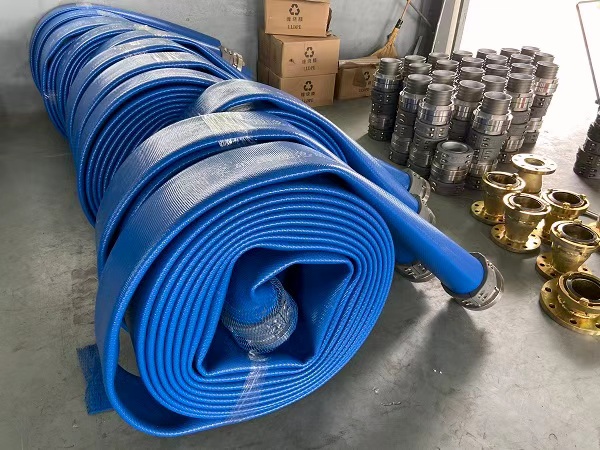
TPU (Thermoplastic Polyurethane) layflat hoses are widely used in mining due to their superior performance under harsh conditions.
- High abrasion resistance, ideal for slurry and sediment-heavy water
- Excellent flexibility, even in low temperatures
- Lightweight structure, reducing transportation and installation effort
- Compact storage, minimizing logistics costs
- Strong pressure resistance, suitable for long-distance pumping
Compared to PVC or rubber hoses, TPU offers a longer service life and lower total cost of ownership, which is crucial in mining environments where downtime is expensive.
The primary distinction lies in flow capacity, pressure dynamics, and operational efficiency.
Flow capacity increases significantly with diameter due to the relationship between pipe size and cross-sectional area.
- A 6-inch hose typically supports medium flow rates and is ideal for shorter distances
- An 8-inch hose can deliver up to 70–80% higher flow volume, depending on pump configuration
This makes the 8-inch hose more suitable for large-scale dewatering projects.
Friction loss decreases as diameter increases.
- 6-inch hose: higher friction loss, requiring more pump energy
- 8-inch hose: lower friction resistance, improving energy efficiency
In long-distance pumping systems, this difference translates into substantial energy savings over time.
- 6-inch hose: lighter, easier to deploy manually
- 8-inch hose: heavier but reduces the number of hose lines required
For projects with limited labor or tight installation spaces, the 6-inch option may offer practical advantages.
A 6-inch TPU hose is optimal for:
- Small to medium mining sites
- Short-distance water transfer
- Temporary or emergency dewatering
- Sites with limited manpower
Example: A quarry operation requiring rapid deployment across uneven terrain often benefits from the flexibility and portability of 6-inch hoses.
An 8-inch TPU hose is better suited for:
- Large-scale mining operations
- Long-distance pumping systems
- High-volume water removal
- Permanent or semi-permanent installations
Example: Open-pit mining projects typically use 8-inch hoses to handle continuous high-flow drainage efficiently.
Based on customer feedback from mining projects in Southeast Asia and Africa:
- Clients using 8-inch hoses reported up to 25% reduction in pump runtime
- Maintenance frequency decreased due to lower internal friction and wear
- However, teams noted higher initial logistics and handling requirements
Meanwhile, users of 6-inch hoses highlighted:
- Faster deployment time
- Lower upfront cost
- Greater flexibility in complex terrain
This reinforces the idea that application context matters more than size alone.
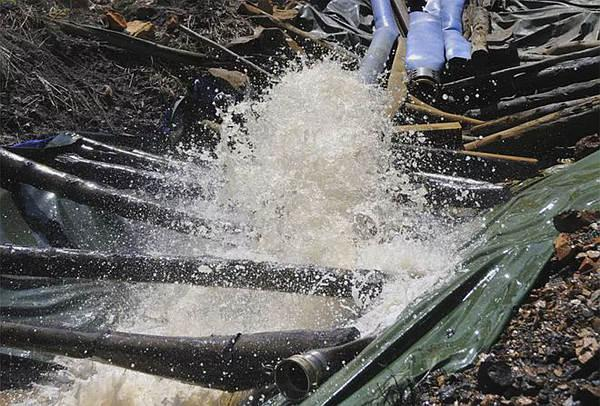
- 6-inch hoses are generally 15–30% cheaper per meter
- 8-inch hoses require higher transportation and storage costs
- Energy consumption: lower in 8-inch systems
- Maintenance: reduced in larger diameter hoses
- Labor: fewer hose lines needed for the same flow
Over time, many large mining operations find that 8-inch hoses deliver a better ROI, despite higher upfront costs.
One common mistake in mining dewatering is selecting hose size without evaluating the entire system.
1. Pump capacity and discharge pressure
2. Total pipeline length
3. Elevation changes
4. Water composition (clean vs slurry)
A properly optimized system may even combine both sizes:
- Use 8-inch hoses for main transmission lines
- Use 6-inch hoses for branch distribution or final discharge points
This hybrid approach can significantly improve overall system efficiency and flexibility.
Not all mining environments are the same. Standard hoses may not meet specific operational needs.
Sunmoon provides custom TPU layflat hose solutions, including:
- Diameter and pressure rating adjustments
- Reinforcement layer optimization
- Anti-abrasion and chemical-resistant coatings
- Custom lengths and coupling systems
Customization ensures:
- Better compatibility with existing equipment
- Reduced installation time
- Improved durability under specific conditions
- Avoid sharp bends to reduce pressure loss
- Use proper couplings to prevent leakage
- Ensure stable ground placement to avoid abrasion
- Regular inspection for wear and damage
- Clean hoses after slurry use
- Store in dry, shaded environments
Proper maintenance can extend hose lifespan by 30–50%.
The industry is evolving with new technologies and demands.
- Higher pressure TPU materials for deeper mining operations
- Smart monitoring systems integrated with pipelines
- Increased demand for lightweight, high-strength hoses
- Sustainability focus: longer lifespan reduces material waste
Manufacturers like Sunmoon are investing in material innovation and production efficiency to meet these trends.
Before selecting between 6-inch and 8-inch hoses, evaluate:
- Required flow rate
- Pump specifications
- Distance and elevation
- Budget constraints
- Labor availability
A structured evaluation ensures you choose the most cost-effective and efficient solution.
If you are planning a mining dewatering project and need expert guidance, Sunmoon offers tailored TPU layflat hose solutions designed for your exact requirements.
Contact our team today to receive:
- Customized product recommendations
- Technical consultation
- Competitive pricing for bulk orders
The main difference is flow capacity and efficiency. An 8-inch hose delivers higher flow with lower friction loss, while a 6-inch hose is lighter and easier to handle.
For small projects, 6-inch hoses are more economical. For large-scale operations, 8-inch hoses offer better long-term ROI due to energy savings.
Yes, TPU hoses have excellent abrasion resistance, making them suitable for slurry and sediment-heavy water.
With proper maintenance, they can last 3–5 years or longer, depending on operating conditions.
In many cases, yes. Customization ensures optimal performance, durability, and compatibility with your system.
1. https://www.sciencedirect.com/topics/engineering/fluid-flow-pipes
2. https://www.engineeringtoolbox.com/pipe-friction-d_947.html
3. https://www.mining-technology.com
4. https://www.plasticstoday.com/materials/thermoplastic-polyurethane-overview


