

Views: 258 Author: Sunmoon Publish Time: 2026-07-09 Origin: Site


Content Menu
● Understanding Frac Water Transfer Infrastructure
● How Ground Surface Fracking Hoses Work
● How Buried Steel Lines Are Designed and Installed
● Environmental Impact: Direct Disturbance vs. Reversible Footprint
>> Land and Habitat Disturbance
>> Water and Soil Contamination Risk
● Lifecycle Emissions and Sustainability
>> Manufacturing and Materials
>> Installation and Decommissioning Emissions
● Leak Risk Profiles: Expert View
● Regulatory and ESG Alignment
● Practical Field Example: Layflat Hose in Shale Gas Operations
● Operational Best Practices to Minimize Environmental Impact
● Ground Surface Fracking Hose vs. Buried Steel Lines: Key Environmental Differences
● Sunmoon's Expert Perspective: Designing Lower‑Impact Hose Systems
● When Should Operators Prefer Ground Surface Hose?
● How Sunmoon Can Support Lower‑Impact Frac Water Transfer
● Call to Action: Design a Cleaner Water Transfer System
● FAQs
Ground surface fracking hose systems and buried steel lines each play a critical role in modern frac water transfer, but they differ sharply in environmental impact, operational risk, and long‑term sustainability. Ground‑deployed frac water transfer hose solutions—especially high‑pressure TPU layflat hose from specialized manufacturers like Sunmoon—can significantly reduce disturbance, leakage risk, and lifecycle emissions when engineered and operated correctly, while buried steel pipelines tend to offer durability at the cost of higher upfront environmental footprint and reduced flexibility. [sunmoonhose]
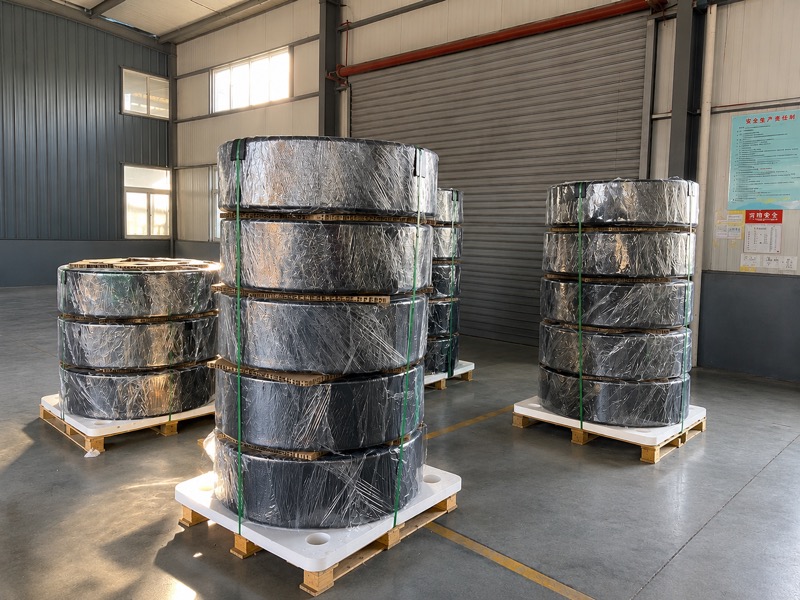
Hydraulic fracturing relies on large‑volume water transfer over long distances between source points, storage ponds and well pads. Operators typically choose between ground surface fracking hose networks (often using layflat hoses) and buried steel lines or HDPE/poly pipelines as their primary infrastructure. Each option creates a different environmental profile across construction, operation and decommissioning phases. [asoehose]
From an industry practitioner's perspective, engineering teams no longer evaluate only cost and flow rate; they now assess ecosystem disturbance, leak probability, carbon footprint and regulatory alignment as equal decision drivers. This shift is pushing more projects to reconsider traditional buried steel lines and explore modular, surface hose systems that can be installed and removed quickly with minimal ground alteration. [hondotx]
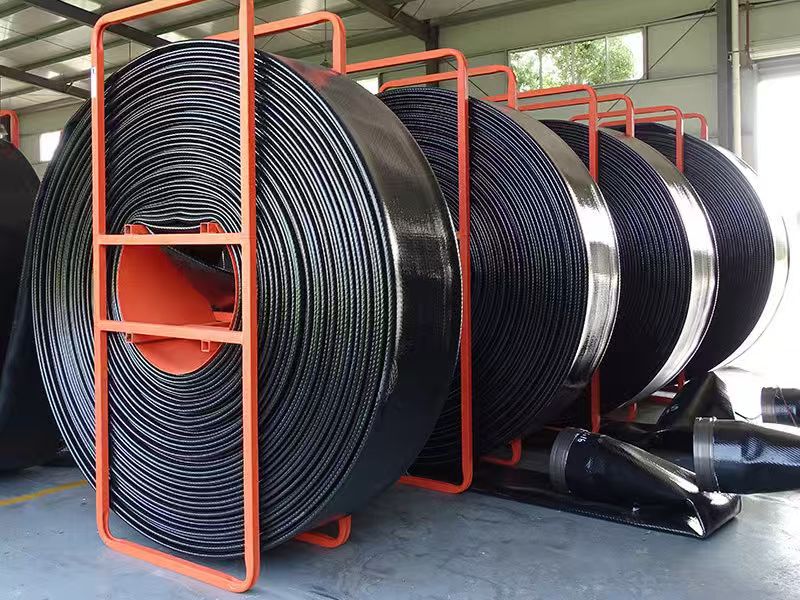
Ground surface fracking hoses are typically high‑pressure layflat hoses made from TPU or advanced synthetic materials, deployed above ground along pre‑planned corridors. These systems are connected via camlock or dedicated metal couplings and can reach dozens of kilometers with relatively fast setup and demobilization times. [sunmoonhose]
Because the hoses are flexible and modular, they can be re‑routed around sensitive habitats, wetlands or cultural sites without heavy trenching or permanent grading. This agility is one of the core environmental advantages: operators can design water routes that respect local biodiversity and seasonal conditions instead of cutting a fixed pipeline through every obstacle. [asoehose]
Buried steel lines are rigid pipelines installed below ground, typically in excavated trenches, often with protective coatings and cathodic protection systems to mitigate corrosion. Construction requires removing topsoil, reshaping terrain, and sometimes building permanent right‑of‑way access roads for maintenance and inspection. [zh.wikipedia]
From a civil engineering standpoint, buried pipelines can deliver high flow rates and long service life, but they lock the landscape into a fixed configuration. Once the line is in place, changing well pad layouts or decommissioning fields is more complex and usually involves further excavation, dewatering, and waste handling—each stage contributing additional environmental load. [hondotx]
- Ground surface fracking hose
- Minimal or no trenching.
- Uses existing roads and corridors where possible.
- Lines can be laid above ground and removed after completion, allowing faster habitat recovery. [sunmoonhose]
- Buried steel lines
- Require trenching and removal of vegetation along the pipeline route.
- Create long‑term disturbance zones and potential barriers for wildlife movement.
- Soil compaction and altered drainage patterns can persist after operations. [zh.wikipedia]
From a field‑operations view, the reversible footprint of surface hose is a decisive environmental advantage: once a campaign ends, hoses are rolled up, and the corridor can be rehabilitated with far fewer interventions than a buried steel line. [asoehose]
Leak scenarios differ significantly:
- Surface hose networks: Leaks are visible and typically detected quickly, especially with modern monitoring and pressure control. [hondotx]
- Buried steel lines: Subsurface leaks can travel laterally in soils or aquifers before detection, increasing the risk of unnoticed contamination. [asoehose]
This visibility factor means ground surface fracking hose systems can support more proactive containment, such as secondary berms, liners, and rapid clamp‑off procedures that prevent large releases. With buried lines, operators rely heavily on instrumented leak detection, which is effective but not infallible, and repairs almost always require excavation. [hondotx]
Buried steel pipelines carry a high embodied energy and carbon cost due to steel smelting, forming and transport. In contrast, modern TPU layflat hoses used for frac water transfer are engineered to balance durability with lower weight, resulting in reduced transport emissions per kilometer of deployed line and easier reuse across multiple projects. [zh.wikipedia]
When a single hose string can be redeployed repeatedly across fields and basins, the effective lifecycle emissions per job drop sharply. This reuse is harder to achieve with buried infrastructure, which is tied to a specific route and regulatory approval. [sunmoonhose]
- Surface hoses: Require fewer heavy machines, shorter construction windows, and lighter logistics than trenching for buried steel lines. [sunmoonhose]
- Buried lines: Depend heavily on earthmoving equipment, backfill operations and multiple site visits, all adding to diesel consumption and local air emissions. [asoehose]
As more operators track scope‑1 and scope‑2 emissions tied to water transfer, the low‑impact deployment profile of surface hoses becomes a measurable advantage in ESG reporting and investor communications. [zh.wikipedia]
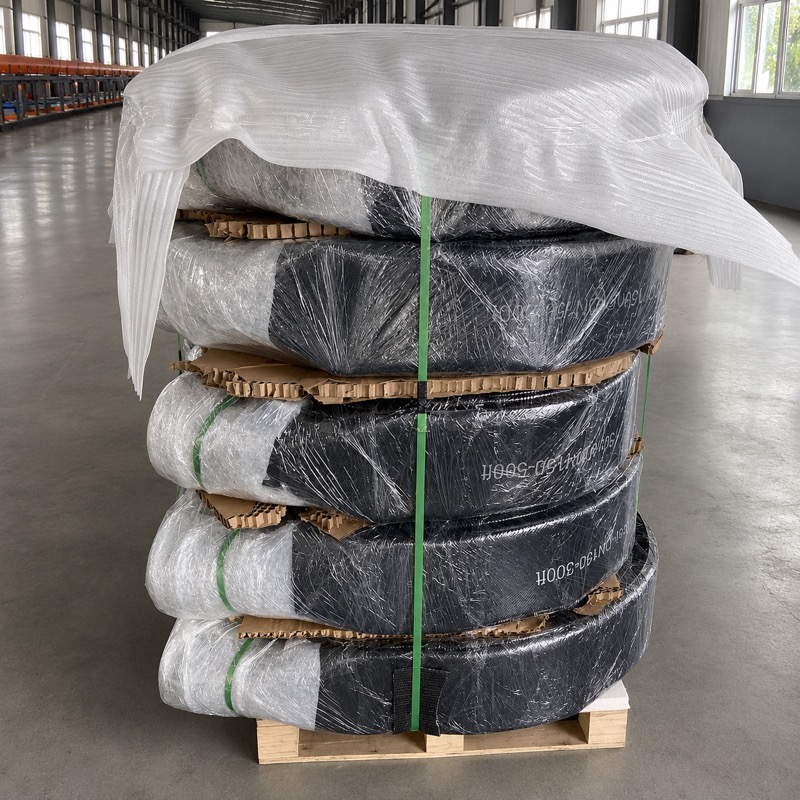
From an engineering risk‑management perspective, leakage is not just a mechanical failure; it is a combined function of materials, joints, monitoring and accessibility. [hondotx]
- Ground surface fracking hose
- Modern TPU hose with reinforced textile structure is designed for high internal pressure and tensile loads, providing excellent sealing at couplings when installed with proper procedures. [patents.google]
- Visual inspection along the line is straightforward, allowing crews to identify bulges, damage or damp spots early. [sunmoonhose]
- Buried steel lines
- Steel offers high intrinsic strength but is vulnerable to corrosion, coating failures and third‑party damage over time. [asoehose]
- Inspections are instrument‑driven (pigging, pressure tests, monitoring), and small leaks may remain underground longer if thresholds are not exceeded. [hondotx]
For long runs, industry analyses increasingly highlight that modular hose systems with robust coupling technology can present a lower practical leak risk in short to medium‑term projects than fixed buried infrastructure, provided that maintenance and monitoring are well managed. [sunmoonhose]
Regulators and investors are progressively linking water transfer choices to environmental stewardship, community impact and ESG scoring. Projects that adopt ground‑surface infrastructure with transparent leak monitoring and rapid remediation protocols are often viewed more favorably than those that create permanent disturbance through buried steel lines. [zh.wikipedia]
Because ground surface fracking hose networks are temporary and reversible, they can help operators:
- Shorten permitting cycles for linear infrastructure.
- Demonstrate adaptive management of sensitive areas.
- Reduce long‑term liabilities associated with pipeline abandonment or removal. [asoehose]
Buried pipelines can still be compliant and responsible, but they demand more long‑term management plans and closure strategies to satisfy modern environmental expectations. [zh.wikipedia]
Recent shale gas projects using Sunmoon high‑pressure TPU layflat frac water transfer hose have illustrated how surface hose systems can reshape operational and environmental outcomes. By replacing sections of conventional rigid piping with long‑distance layflat strings, operators achieved: [sunmoonhose]
- Faster setup and demobilization around multi‑stage pump stations.
- Reduced need for trenching and backfilling, lowering site disturbance.
- More flexible routing that avoided sensitive topography and habitats. [sunmoonhose]
From the viewpoint of project engineers, this shift improved not just compliance metrics but also stakeholder relations, because communities could see a temporary, removable water route instead of a permanent pipeline corridor. [sunmoonhose]
Regardless of whether you choose surface hoses or buried lines, a best‑practice framework is essential to minimizing environmental risk. [hondotx]
Key steps:
1. Route planning with environmental screening
Map wetlands, habitats, cultural sites and erosion‑prone slopes; prefer reversible surface hose in sensitive zones.
2. Robust containment strategies
Use berms, liners and secondary containment around connections, manifolds and pump stations.
3. Routine inspection and maintenance
Implement scheduled visual walks for hoses and instrumented monitoring for pipelines to identify issues early. [hondotx]
4. Clear emergency response protocols
Train crews to isolate segments and deploy spill containment within minutes of detection.
By combining these steps with technology (pressure sensors, flow meters, SCADA integration), operators can substantially reduce incident rates and environmental exposure, regardless of infrastructure choice. [hondotx]
| Aspect | Ground Surface Fracking Hose | Buried Steel Lines |
|---|---|---|
| Land disturbance | Low, no trenching, reversible footprint (sunmoonhose) | High, trenching and permanent corridor (asoehose) |
| Leak visibility | High, leaks visible on surface (sunmoonhose) | Lower, leaks may remain underground (asoehose) |
| Lifecycle emissions | Lower per project with reusable layflat hose (sunmoonhose) | Higher embodied energy and decommissioning emissions (asoehose) |
| Routing flexibility | High, can avoid sensitive areas (sunmoonhose) | Low, fixed path once installed (asoehose) |
| Decommissioning complexity | Simple removal, quick site recovery (sunmoonhose) | Complex removal or abandonment plans (asoehose) |
| Regulatory and ESG perception | Favorable for temporary, reversible infrastructure (hondotx) | Requires strong long‑term management strategy (asoehose) |
As a specialized Chinese manufacturer of frac water transfer hose and other layflat solutions, Sunmoon focuses on engineering hoses that deliver both operational performance and environmental benefits. From an expert standpoint, three design pillars matter most: [sunmoonhose]
- High‑pressure capability with secure metal couplings to withstand extreme operating conditions while maintaining tight seals. [patents.google]
- Abrasion‑ and chemical‑resistant TPU materials that minimize micro‑leakage and extend service life, enabling reuse across multiple jobs. [sunmoonhose]
- Customizable diameters, wall thicknesses and colors tuned to specific field layouts, monitoring preferences and regulatory requirements. [sunmoonhose]
By offering custom OEM/ODM configurations, Sunmoon helps operators build surface hose networks that match their terrain, regulatory context and ESG targets instead of relying on generic pipeline designs. [sunmoonhose]
Based on practical field experience and emerging ESG trends, ground surface fracking hose is typically the better environmental choice when:
- Project duration is limited to months or a few years, rather than decades.
- Water routes cross ecologically sensitive or culturally important areas.
- Fast deployment and demobilization are a priority.
- Operators want visible infrastructure for easy inspection and community reassurance. [sunmoonhose]
Buried steel lines still make sense for long‑term, high‑throughput corridors in stable environments, provided that strong corrosion control, leak detection, and closure plans are in place. However, the environmental case increasingly leans toward flexible layflat hose solutions in many modern frac scenarios. [asoehose]
For operators evaluating Ground Surface Fracking Hose vs. Buried Steel Lines from an environmental perspective, Sunmoon can collaborate from early planning onward. [sunmoonhose]
Our engineering teams can:
- Analyze field layouts and suggest hose diameters, pressure ratings and coupling schemes that minimize risk and footprint.
- Configure long‑runs fracking hose solutions to reduce the number of joints and potential leak points. [sunmoonhose]
- Provide material and performance data to support ESG reporting and regulatory submissions. [sunmoonhose]
For projects seeking a practical balance between operational efficiency and environmental responsibility, integrating customized layflat hose networks often becomes the most effective middle path.
If your team is reassessing the environmental impact of its frac water transfer infrastructure, now is the time to compare ground surface fracking hose to buried steel lines using real field data and ESG objectives. Sunmoon's specialists can help you model different scenarios and design hose systems that cut disturbance, reduce leak risk and support regulatory compliance, without compromising flow capacity or uptime. [sunmoonhose]
Reach out to explore custom frac water transfer hose solutions tailored to your shale basin, regulatory environment and long‑term sustainability goals.
Q1. Are ground surface fracking hoses suitable for long‑distance water transfer?
Yes. Modern high‑pressure layflat hoses are designed for multi‑kilometer runs and can connect multi‑stage pump stations efficiently when properly engineered. [sunmoonhose]
Q2. Do buried steel lines always have a higher environmental impact than hoses?
Not always, but they generally create more land disturbance and higher embodied emissions. In long‑term corridors with strong leak controls, pipelines can still be viable; hose systems often excel in temporary or sensitive projects. [zh.wikipedia]
Q3. How do operators monitor leaks in ground surface hose networks?
They combine visual inspections along the hose route with pressure and flow monitoring, enabling rapid detection and isolation of abnormal sections. [sunmoonhose]
Q4. Can Sunmoon customize hose solutions for different regulatory regimes?
Yes. Sunmoon provides OEM/ODM configurations, including pressure ratings, diameters and documentation packages aligned with local standards and ESG reporting needs. [sunmoonhose]
Q5. What is the most important factor when choosing between hose and buried steel lines?
The key factor is the project's lifecycle and environmental context: duration, terrain sensitivity, ESG commitments and closure requirements should guide the infrastructure choice more than pure capex alone. [zh.wikipedia]
1. Sunmoon Hose – *How Sunmoon's High‑Pressure TPU Layflat Hose Transforms Shale Gas Water Supply Operations*
<https://www.sunmoonhose.com/how-sunmoon-s-high-pressure-tpu-layflat-hose-transforms-shale-gas-water-supply-operations.html> [sunmoonhose]
2. Sunmoon Hose – *Frac Water Transfer Hose Solutions for Multi‑Stage Pump Stations in Shale Gas Fields*
<https://www.sunmoonhose.com/mi/frac-water-transfer-hose-solutions-for-multi-stage-pump-stations-in-shale-gas-fields.html> [sunmoonhose]
3. Sunmoon Hose – *Long Runs Fracking Hose vs. Modular Piping: Leak Risk Analysis*
<https://www.sunmoonhose.com/mi/long-runs-fracking-hose-vs-modular-piping-leak-risk-analysis.html> [sunmoonhose]
4. Asoe Hose – *Frac Water Transfer Solution*
<https://www.asoehose.com/oil-gas/frac-water-transfer-solution/> [asoehose]
5. Hondotx – *Top 11 Best Practices for Effective Frac Water Transfer*
<https://hondotx.com/blog/frac-water-transfer-best-practices/> [hondotx]
6. Wikipedia – *Hydraulic Fracturing* (Chinese Edition)
<https://zh.wikipedia.org/zh-hans/%E6%B0%B4%E5%8A%9B%E5%8E%8B%E8%A3%82> [zh.wikipedia]
7. Google Patents – *Ultra‑High‑Pressure Acid Fracturing Hose Assembly and Hose*
<https://patents.google.com/patent/CN219623484U/zh> [patents.google]


