

Views: 257 Author: Sunmoon Publish Time: 2026-06-21 Origin: Site


Content Menu
● Understanding High-Pressure Dewatering in Copper Mines
● Why Dewatering Matters More in Copper Mining
● Key Dewatering Challenges in Open-Pit Copper Mines
>> Geology, Hydrogeology, and "Wet" Mines
>> Climate Extremes and Weather Volatility
● Core Components of a High-Pressure Dewatering System
>> 1. Groundwater Control Infrastructure
>> 2. Pumping and Energy Systems
>> 3. Water Conveyance: Pipelines and Layflat Hoses
>> 4. Treatment, Reuse, and Discharge
● Role of High-Pressure Dewatering Hoses in the Pit
>> Why Layflat Hoses Are Gaining Ground
>> What Mine Operators Expect from Hose Suppliers
● Sunmoon's Perspective: Designing Dewatering Hoses for Copper Mines
● Practical Design Considerations for Dewatering Hoses in Copper Pits
>> Matching Hose Specifications to Pump Curves
>> Installing and Routing Hoses for Safety and Longevity
● Emerging Trends: Water, Energy, and Sustainability in Copper Dewatering
>> Balancing Water and Energy Use
>> Next-Generation Dewatering Technologies
● Step-by-Step: Implementing a High-Pressure Dewatering Plan
● Sample Specification Snapshot for Dewatering Hoses
● Why Partnering with a Specialist Hose Manufacturer Matters
● Call to Action: Custom Dewatering Hoses for Your Copper Mine
● Frequently Asked Questions (FAQ)
Copper mines that master high‑pressure dewatering gain a decisive edge in safety, productivity, and water stewardship—especially when they combine sound hydrogeology with reliable, custom‑engineered layflat hoses from partners like Sunmoon. [store.smenet]
Open‑pit copper mines constantly fight groundwater inflows, heavy rainfall, and seepage from surrounding aquifers, all of which can destabilize slopes and disrupt production if not managed effectively. As pits deepen, hydrostatic pressures rise and inflows become more complex, pushing operators toward high‑pressure dewatering systems capable of moving large water volumes safely and continuously. [imwa]
Dewatering is no longer just a "support" activity; for many large copper projects, it is now a major operating cost and a key determinant of mine profitability and schedule reliability. This is why more operators are investing in robust pipelines, high‑pressure layflat dewatering hoses, and integrated water management strategies rather than treating dewatering as an afterthought. [youtube]
Copper mines are particularly water‑sensitive because they combine open pits with water‑intensive processing steps such as crushing, grinding, and flotation. Tailings storage facilities, heap leach pads, and process ponds all act as long‑term "sinks" for water, increasing the overall water footprint over the life of the mine. [worley]
At the same time, many of the world's major copper belts—from parts of Chile and Peru to some regions in Africa—face water scarcity, stricter environmental regulations, and heightened social scrutiny. In this context, high‑pressure dewatering is about much more than keeping the pit dry; it is about maintaining slope stability, protecting downstream communities from tailings dam incidents, and optimizing water reuse to reduce dependence on fresh water sources. [worley]
Many copper deposits are hosted in fractured, porous rock masses with complex fault networks that allow groundwater to move rapidly into the pit. In some well‑documented projects, dewatering costs have become one of the largest operating expenses, with wells and pumps needed long before ore production begins. [youtube]
Groundwater inflows can:
- Increase pore pressures in pit slopes, reducing shear strength
- Cause bench and slope failures if pore pressure is not relieved
- Trigger unexpected inflows when new faults or fractures are intersected
- Raise pump head requirements as pits deepen and lift heights increase
Engineers therefore rely on a combination of deep wells, horizontal drains, pressure‑relief wells, and in‑pit sump pumping, all of which must be connected by pipelines or flexible high‑pressure hoses to central discharge points. [imwa]
Climate variability is amplifying dewatering risks: intense storm events can rapidly fill pits and overwhelm undersized systems. Mines that were designed around historical averages now face more frequent cloudbursts and seasonal shifts, requiring dewatering networks with spare capacity and rapid deployment flexibility. [store.smenet]
In practice, this means:
- Oversizing key trunk lines and head capacity
- Designing modular pump‑and‑hose packages that can be quickly extended
- Using durable layflat hoses for emergency bypasses and storm response lines instead of rigid pipework that is slow to reconfigure [reynoldsbauhm.co]
From an operational perspective, high‑pressure dewatering in copper mines can be broken into four main building blocks. [reynoldsbauhm.co]
- Deep wells and boreholes: Pump water from confined and unconfined aquifers at depth to lower groundwater levels around the pit. [scielo.org]
- Horizontal drains and pressure‑relief wells: Reduce pore pressure in weak or layered slopes, supporting geotechnical stability. [youtube]
- Wellfield monitoring: Track drawdown and inflows to optimize pump placement and capacity. [scielo.org]
Mine operators typically deploy a mix of surface and submersible pumps, often in multi‑stage arrangements to overcome high static heads as pits deepen. Key considerations include: [imwa]
- Required flow rate (m³/h or gpm)
- Total dynamic head (TDH) for each pump train
- Energy efficiency and the balance between water and power consumption
- Reliability and redundancy during peak rainfall events [worley]
This is where high‑pressure layflat dewatering hoses play a strategic role:
- They connect pumps to discharge points, sumps, settling ponds, or treatment plants.
- They can be rapidly deployed, repositioned, and extended as the pit develops.
- They provide a lighter, more flexible alternative to rigid steel pipelines, especially where the pit geometry is still evolving. [sunmoonpipe]
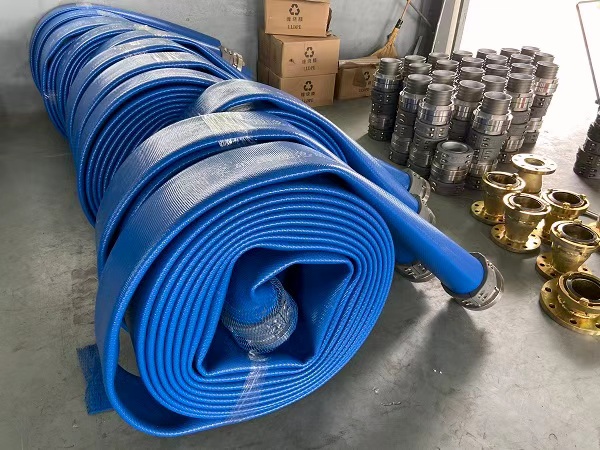
High‑performance TPU or NBR layflat hoses engineered for mining can handle high working pressures, abrasion from solids‑laden water, and harsh UV and chemical conditions. When supported by quality couplings and proper handling practices, they significantly reduce leak risk and downtime. [sunmoonhose]
Dewatered water may contain suspended solids, dissolved metals, or other contaminants, requiring clarification or treatment before reuse or discharge. Modern copper mines typically: [worley]
- Route dewatered flows through settling ponds or clarifiers
- Reuse suitable water in processing or dust suppression
- Manage brine, high‑salinity, or contaminated streams via treatment plants [worley]
In the field, engineers and supervisors increasingly favor layflat hoses for pit and bench dewatering because they combine high pressure capability with flexibility and fast deployment. A typical open‑pit copper application might use: [sunmoonpipe]
- TPU or NBR layflat hoses for main dewatering lines from pumps to headers
- Secondary hoses for bench‑level sumps and temporary bypasses
- Fire‑fighting‑grade hoses for emergency water transfer or dust suppression [sunmoonhose]
Compared with rigid steel pipelines, layflat hoses:
- Reduce installation time and labor
- Are easier to move when the pit wall advances
- Lower the risk of fatigue or weld failures when properly supported
- Enable modular, scalable dewatering layouts that evolve with the mine plan [reynoldsbauhm.co]
From user feedback and procurement reviews, mining buyers consistently highlight a few priorities when selecting dewatering hoses:
- Pressure rating and safety margin that matches pump curves and future depth plans
- Abrasion and cut resistance, particularly where hoses cross rough benches or haul roads
- Temperature and chemical resistance to cope with hot, mineralized, or acidic water
- Reliable couplings and fittings that do not leak under vibration or pressure cycling
- Supplier ability to customize lengths, colors, and branding, and to provide technical support on routing and storage [sunmoonpipe]
This is where experienced manufacturers with a mining focus—such as Sunmoon—can add real value beyond simply selling hose by the meter. [facebook]
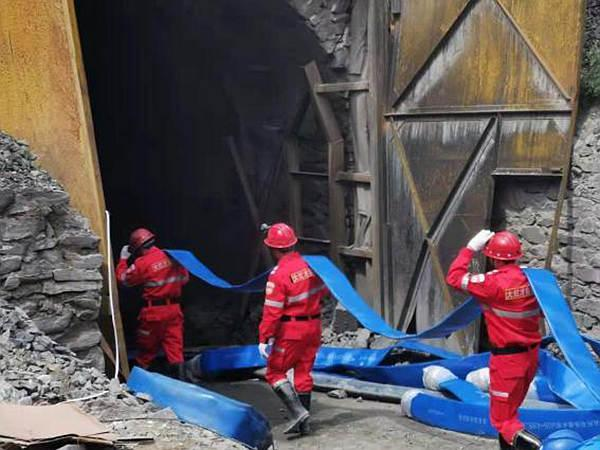
As a Chinese manufacturer specializing in TPU, NBR, and PVC layflat hoses for mining, oil and gas, and emergency drainage, Sunmoon has spent over a decade working with engineers on high‑pressure dewatering requirements. Based in Taizhou, Jiangsu, the company focuses on high‑pressure TPU layflat hoses and aramid‑reinforced products designed for demanding applications such as emergency mine drainage and remote water supply. [facebook]
From an engineering and UX standpoint, our approach includes:
- Collaborative specification: Working with mine dewatering teams to define pressure ratings, safety factors, hose diameters, and duty cycles.
- Application‑specific compounds: Selecting TPU or NBR formulations optimized for abrasion, oil resistance, and flexibility over wide temperature ranges.
- Customization for site logistics: Providing tailored lengths, packaging, and color‑coding systems that make hose identification and deployment faster on busy mine benches. [sunmoonhose]
By integrating feedback from global mining clients, we continuously refine hose structures, reinforcement patterns, and cover designs to reduce kinking, bursting, and field handling issues in real‑world copper operations. [facebook]
To avoid under‑engineering (burst risk) or over‑engineering (unnecessary cost and stiffness), engineers should align hose parameters with pump performance:
- Working and burst pressure: Select hoses with a working pressure comfortably above the maximum pump output, factoring in potential future depth increases.
- Diameter and flow: Choose diameters that minimize friction loss while maintaining manageable handling weights and bend radii.
- Length and segmenting: Balance long continuous runs with practical segment lengths that simplify transport, coupling, and replacement.
Custom hose production allows dewatering teams to align these choices with site‑specific constraints instead of relying on generic products. [reynoldsbauhm.co]
User feedback from mining sites highlights the importance of correct installation practices:
- Avoid dragging hoses over sharp rock edges; use rollers, saddles, or protective sleeves.
- Keep hoses away from high‑traffic haul routes or provide proper crossings.
- Anchor hoses at regular intervals to prevent whipping or surging under pressure spikes.
- Store hoses in shaded or controlled areas when not in use to reduce UV and thermal stress.
Well‑designed routing and handling routines can extend hose lifespans and reduce unplanned downtime from leaks or bursts. [sunmoonpipe]
As ore grades decline and comminution energy rises, copper miners must balance water and energy consumption across the value chain. Dewatering contributes to this equation not only through pump energy use but also through the design of water reuse loops, tailings disposal, and evaporation control. [worley]
Recent industry analysis shows that:
- Finer grinding increases wetted surface area, making water separation and recycling more difficult.
- Wet tailings storage impoundments lose significant water through evaporation and seepage, and they carry large closure liabilities.
- Transitioning to thickened or filtered tailings can reduce water losses but requires different water management and dewatering strategies. [worley]
In this context, efficient, leak‑free hose systems help ensure that every liter pumped is effectively delivered to reuse, treatment, or safe discharge points.
Innovation is also reshaping groundwater control methods:
- Directional drilling and large‑diameter dewatering wells beneath pits can improve drawdown efficiency and reduce the number of wells. [scielo.org]
- Advanced digital models (e.g., FEFLOW) allow hydrogeologists to simulate complex aquifers and optimize dewatering layouts. [youtube]
- Integrated systems combine fixed pipelines with flexible hose‑based branches to adapt quickly as mine geometry changes.
Even as these technologies evolve, flexible high‑pressure hoses remain critical last‑mile connectors between pumps and discharge points, especially in dynamic pit environments. [reynoldsbauhm.co]
From a practical standpoint, a mine operator upgrading dewatering capacity can follow a structured process that blends hydrogeology, engineering, and hose selection.
1. Characterize Hydrogeology
- Map aquifers, faults, and inflow zones.
- Build numerical models to estimate inflows and pressure distributions. [youtube]
2. Define Dewatering Objectives
- Set target drawdown levels for slope stability.
- Establish acceptable pit floor conditions for equipment access. [youtube]
3. Design Wellfield and Pump Layout
- Select well and drain locations based on hydrogeological models.
- Size pumps for expected inflows and future depth extensions. [imwa]
4. Specify Hoses and Pipelines
- Determine hose diameters, pressure classes, and materials (e.g., TPU, NBR).
- Decide where to use permanent pipelines vs. flexible layflat hoses for adaptability. [sunmoonpipe]
5. Implement Installation and Operating Protocols
- Develop standard procedures for hose deployment, protection, and inspection.
- Train field crews on coupling, clamping, and pressure testing routines. [reynoldsbauhm.co]
6. Monitor, Optimize, and Upgrade
- Track drawdown performance, leak incidents, and hose failures.
- Adjust hose layouts and specifications based on real‑world performance feedback. [youtube]
With a partner offering custom, high‑pressure dewatering hoses, mine operators can iterate faster and adapt systems as hydrological and operational realities evolve. [facebook]
The table below summarizes typical specification dimensions that copper mines consider when selecting high‑pressure dewatering hoses, and how a manufacturer like Sunmoon responds.
| Design aspect | Mine operator focus | Sunmoon response |
|---|---|---|
| Working pressure | Fit current and future pump heads with safety margin (imwa) | TPU and NBR layflat hoses engineered for high pressure mining duties (sunmoonpipe) |
| Hose diameter | Optimize flow vs. friction and handling (reynoldsbauhm.co.uk) | Wide range of diameters and customization options (sunmoonpipe) |
| Abrasion resistance | Withstand solids‑laden water and rough terrain (reynoldsbauhm.co.uk) | Specialized compounds and reinforcement for mining environments (sunmoonpipe) |
| Chemical compatibility | Handle mineralized or slightly acidic water (worley) | Material selection guidance based on expected water chemistry (sunmoonpipe) |
| Deployment flexibility | Rapid relocation as pits advance (reynoldsbauhm.co.uk) | Lightweight, flexible layflat design and custom lengths (sunmoonpipe) |
For high‑pressure dewatering in copper mines, hose suppliers are more than just component vendors—they are technical partners in risk management and water strategy. Working with a specialist such as Sunmoon means: [sunmoonhose]
- Access to application‑specific engineering support for hose sizing, layout, and pressure selection.
- Confidence that hoses have been proven in mining, oil and gas, and emergency drainage applications with similar duty cycles. [facebook]
- The ability to align hose and coupling specifications with site standards and global supply chain requirements.
For operators under pressure to improve safety, environmental performance, and cost control, this combination of technical expertise and product reliability is a compelling differentiator. [worley]
If your open‑pit copper operation is facing rising water inflows, deeper pits, or stricter environmental expectations, now is the time to review the robustness and flexibility of your high‑pressure dewatering system. Upgrading from generic hoses and ad‑hoc layouts to a carefully engineered hose network can immediately improve reliability, reduce leak‑related downtime, and support more sustainable water reuse. [store.smenet]
As a dedicated manufacturer of high‑pressure TPU, NBR, and PVC layflat hoses, Sunmoon offers custom dewatering hose solutions tailored to the realities of copper mining around the world. To explore a specification‑driven, site‑specific hose package for your mine, engage your dewatering team, review current inflow challenges, and then reach out to discuss a customized dewatering hose configuration aligned with your pumps, pressures, and future pit plans. [sunmoonhose]
1. Why is high-pressure dewatering so critical for open-pit copper mines?
High‑pressure dewatering keeps pit slopes stable, maintains dry working conditions, and ensures safe access for equipment as pits deepen and groundwater pressures increase. It also supports water reuse strategies, reducing reliance on fresh water in regions where supply is constrained. [youtube]
2. How do layflat hoses compare with steel pipelines for mine dewatering?
Layflat hoses provide greater flexibility, faster installation, and easier relocation as the pit geometry changes, making them ideal for dynamic dewatering layouts. Steel pipelines remain useful for permanent trunk lines, but layflat hoses excel as high‑pressure "last‑mile" connectors to pumps and sumps. [sunmoonpipe]
3. What hose materials work best for copper mine dewatering?
TPU and NBR layflat hoses are widely used because they combine high pressure capability with abrasion and oil resistance, along with good flexibility over wide temperature ranges. Material selection should consider water chemistry, solids content, and expected mechanical wear paths in the pit. [worley]
4. How can mines extend the service life of their dewatering hoses?
Proper routing, protection from sharp edges, regular inspection, and controlled storage conditions have a major impact on hose longevity. Using high‑quality couplings and avoiding over‑pressurization further reduces the risk of premature failures. [reynoldsbauhm.co]
5. What makes Sunmoon a suitable partner for mine dewatering projects?
Sunmoon specializes in high‑pressure TPU and NBR layflat hoses, supplying mining, shale gas, and emergency drainage sectors with customized, application‑specific solutions. The company combines R&D, manufacturing, and global service experience to support reliable dewatering in demanding copper mining environments. [facebook]
1. Worley. "Water considerations for copper mining in the Americas."
https://www.worley.com/en/insights/our-thinking/resources/water-considerations-for-copper-mining-in-the-americas [worley]
2. Worley. "How can copper miners better balance their water and energy consumption?"
https://www.worley.com/en/insights/our-thinking/resources/how-can-copper-miners-better-balance-their-water-and-energy-consumption [worley]
3. Straskraba, V. "Some Technical Aspects of Open Pit Mine Dewatering." International Mine Water Association, 1979.
https://www.imwa.info/docs/imds_1979/IMDS1979_Straskraba_481.pdf [imwa]
4. Graham, D. "From Catchment Hydrology to Dewatering at a Copper Mine." FEFLOW Conference Presentation.
https://www.youtube.com/watch?v=zq8C3aOeFFU [youtube]
5. Beale, G. "An introduction to open pit mine dewatering." GSSA Lunchtime Talk.
https://www.youtube.com/watch?v=n1KbNuP5W6k [youtube]
6. WSP | Parsons Brinckerhoff. "Mine dewatering technology (DWPt) concept."
http://www.scielo.org.za/pdf/jsaimm/v117n3/07.pdf [scielo.org]
7. Reynolds & Bauhm. "Mining Dewatering | Pit & Tunnel Water."
https://reynoldsbauhm.co.uk/mining-dewatering [reynoldsbauhm.co]
8. SME. "Dewatering over 8,000 tpd of Copper Tailings at a Mine Site."
https://store.smenet.org/cdn-1739214576886/216n9jc.pdf [store.smenet]
9. Jiangsu Sunmoon Shale Gas High Pressure Hose Co., Ltd. Company website.
https://www.sunmoonpipe.com [sunmoonpipe]
10. Sunmoon Hose Manufacturing – Company profile.
https://www.sunmoonhose.net [sunmoonhose]
11. Sunmoon Hose Manufacturing – Social profile.
https://www.facebook.com/61578227207800/ [facebook]


