

Views: 283 Author: Sunmoon Hose Manufacturing Publish Time: 2026-07-24 Origin: Site


Content Menu
● Why Temporary Bypass Lines Demand Careful Hose Selection
● When TPU Is the Better Option
● When NBR Is the Better Option
● Why Integrated Hose Systems Add Value
● Manufacturer Capabilities Matter
● A Real-World Decision Example
● Why This Decision Affects Total Cost
● How Sunmoon Supports Oil Transfer Projects
● FAQ
>> 1. Can TPU layflat hose be used for crude oil transfer?
>> 2. Is NBR layflat hose suitable for temporary oil bypass lines?
>> 3. Which hose is better for rough job sites?
>> 4. Do temporary bypass lines need fittings and reels?
>> 5. How do I choose between TPU and NBR?
>> 6. Can Sunmoon make custom hose assemblies?
Temporary oil bypass lines are used when operations cannot stop but the main line needs maintenance, repair, replacement, or rerouting. In crude oil transfer service, the hose must do more than move liquid from point A to point B. It must also handle abrasion, pressure, site movement, chemical exposure, and repeated installation without creating unnecessary downtime.
For this reason, TPU and NBR layflat hoses are often compared side by side. Both can serve in oil-related applications, but they are not equal in every situation. The better choice depends on how the hose will be used, where it will be installed, and how often it will be moved.
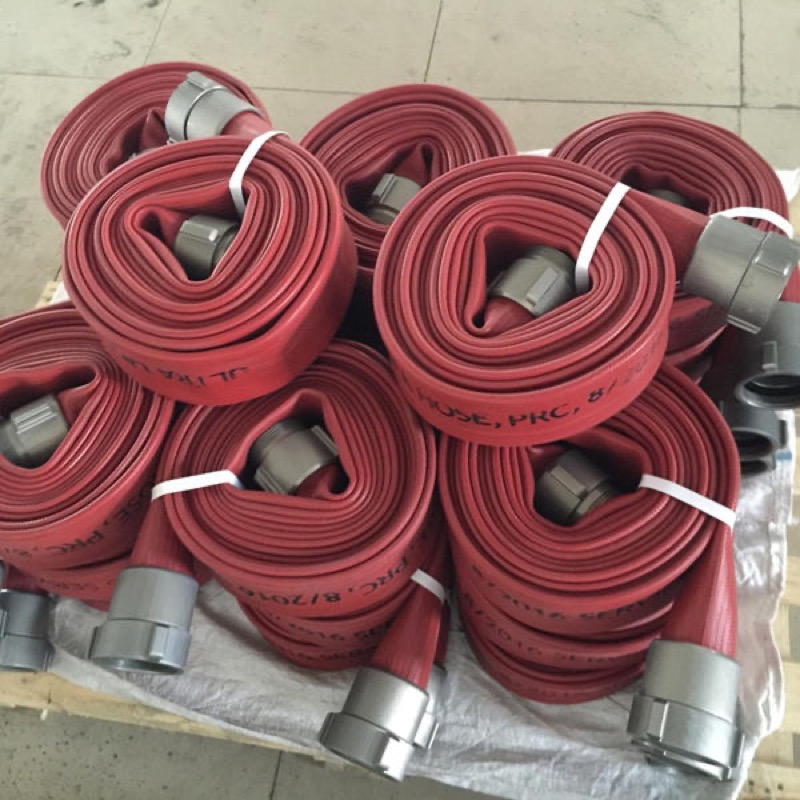
Temporary bypass lines are often installed during shutdowns, emergency repairs, production continuity work, and short-term transfer projects. These lines are expected to perform quickly and reliably, yet they are usually exposed to rougher handling than permanent piping. That makes material choice especially important.
A hose in this service may need to:
- Resist crude oil and related petroleum media.
- Survive dragging, coiling, and repositioning.
- Maintain flow stability during field use.
- Withstand repeated deployment and recovery.
- Support fast connection with fittings and reels.
When a hose fails in a bypass application, the result is not just a replacement cost. It can also mean longer shutdowns, higher labor pressure, and a greater risk of operational disruption.
TPU layflat hose is usually selected for demanding field conditions where abrasion resistance and physical durability matter most. It is well suited to rough terrain, frequent handling, and temporary lines that must be moved often.
NBR layflat hose is more focused on petroleum service. It is commonly used where oil resistance and fuel compatibility are the main priorities.
In simple terms:
- TPU is the stronger choice for mechanical wear and rough handling.
- NBR is the stronger choice for direct oil service and petroleum compatibility.
TPU is a good fit when the bypass line will face heavy external stress. If the hose is laid across rough ground, dragged during installation, or repeatedly moved between sites, TPU usually offers better durability.
TPU is often preferred in these situations:
- Temporary lines on construction or industrial sites.
- Bypass systems that require frequent deployment.
- Projects where cover wear is a major concern.
- Operations that need a longer service life under harsh handling.
Many users also value TPU because it can support integrated system designs with couplings and reel-based handling. That matters when speed and field efficiency are important.
NBR is a strong choice when the main challenge is oil compatibility. It is commonly used for crude oil, fuel oil, and other petroleum transfer duties where the hose needs to remain stable in contact with hydrocarbon media.
NBR is often the better option when:
- The fluid is clearly petroleum-based.
- The routing is controlled and protected.
- Abrasion is not the dominant concern.
- The project values dependable oil resistance above all else.
For temporary oil bypass lines, NBR is especially useful in plant maintenance, controlled transfer corridors, and industrial sites where the hose is not likely to be dragged over harsh surfaces.
If you are choosing between TPU and NBR, start with the real operating conditions rather than the fluid name alone. A hose that is chemically suitable may still fail early if the environment is too aggressive.
Use this checklist:
1. Identify the exact media being transferred.
2. Confirm the route and surface condition.
3. Estimate how often the hose will be moved.
4. Check the required pressure and diameter.
5. Decide whether the system needs couplings, reels, or custom lengths.
6. Match the hose material to the actual field risk, not just the specification sheet.
This approach prevents overbuying in some cases and under-specifying in others.
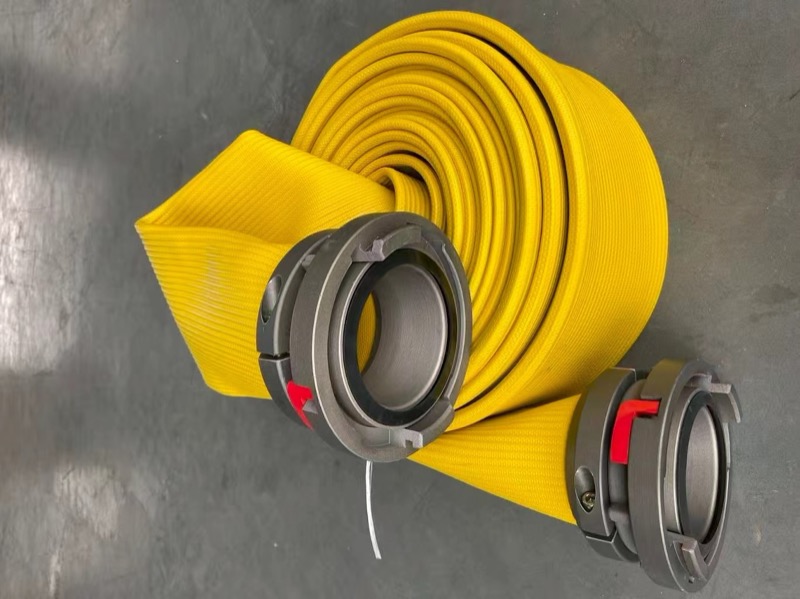
Temporary bypass projects are easier when the hose is delivered as part of a complete system. A hose with the right couplings, reel arrangement, and packaging can save a significant amount of field time.
Integrated systems can help by:
- Reducing installation time.
- Lowering the chance of connection errors.
- Improving transport and storage efficiency.
- Making deployment more predictable.
- Simplifying maintenance and recovery.
For oil transfer projects, this matters because a good hose is only one part of the solution. The fittings, layout, and handling method all influence the final result.
For engineering-grade layflat hose projects, manufacturing capacity and customization are important. Sunmoon Hose Manufacturing operates a 35,000-square-meter production base with 8 standardized automated production lines and an 80-person technical team. That kind of setup is valuable when buyers need custom dimensions, special couplings, or project-specific packaging.
In temporary crude oil bypass work, customization can include:
- Hose length.
- Diameter.
- Pressure requirement.
- Coupling type.
- Reel integration.
- Packaging method for transport or storage.
This is particularly useful when the project is time-sensitive or must fit into an existing industrial layout.
Even a good hose can underperform if it is handled poorly. Temporary bypass lines should be installed with attention to routing, bending, and surface contact.
Good practice includes:
- Keeping the hose away from sharp edges.
- Avoiding unnecessary twisting or kinking.
- Supporting the hose at connection points.
- Inspecting couplings before installation.
- Rechecking the line after pressure build-up.
- Removing any hose that shows cover damage or unusual wear.
These steps are simple, but they help protect both the hose and the operation.
Imagine a temporary crude oil bypass line for maintenance at an industrial site. If the hose will cross uneven ground and be repositioned several times, TPU is usually the safer choice because of its stronger abrasion resistance. If the line will be placed in a protected route and the main concern is oil service compatibility, NBR may be the better fit.
The right answer depends on the actual working environment. That is why temporary transfer systems should be selected as complete operating solutions, not as isolated products.
Many buyers focus only on the initial purchase price. In temporary bypass service, that can be misleading. A lower-cost hose that wears out early, leaks, or is difficult to handle may end up costing more over the full project cycle.
Total value depends on:
- Service life.
- Downtime risk.
- Labor time.
- Replacement frequency.
- Installation efficiency.
In many cases, the more durable hose becomes the more economical option once all operating costs are included.
To make the selection clearer, here is a practical summary:
| Application Condition | Better Fit |
|---|---|
| Rough terrain, dragging, repeated repositioning | TPU |
| Controlled petroleum transfer | NBR |
| Temporary bypass with high wear risk | TPU |
| Oil-focused transfer in protected routing | NBR |
| Fast deployment with reel-based handling | TPU |
| Stable oil compatibility in industrial service | NBR |
This table is not a rigid rule, but it is a useful starting point for procurement and technical review.
Sunmoon Hose Manufacturing supplies TPU Layflat Hose and NBR Layflat Hose for industrial transfer applications, including oil and gas, agriculture, construction, and other engineering uses. The company also provides integrated fittings and reel-related solutions, which can simplify deployment for temporary bypass work.
For buyers, this means one source can support:
- Material selection.
- Hose customization.
- Fittings matching.
- System integration.
- Project-based supply planning.
That is especially helpful when a site needs both performance and delivery coordination.
For temporary crude oil bypass lines, TPU and NBR each solve a different problem. TPU is usually the stronger choice when the hose faces rough handling, abrasion, and frequent movement. NBR is usually the stronger choice when the main requirement is petroleum compatibility and dependable oil transfer performance.
If your project needs a hose that matches real-world field conditions, the best next step is to define the route, media, pressure, and handling method first. Once those details are clear, the right material becomes much easier to choose.
Contact Sunmoon Hose Manufacturing to discuss custom TPU or NBR layflat hose solutions for your crude oil transfer and temporary bypass line projects.
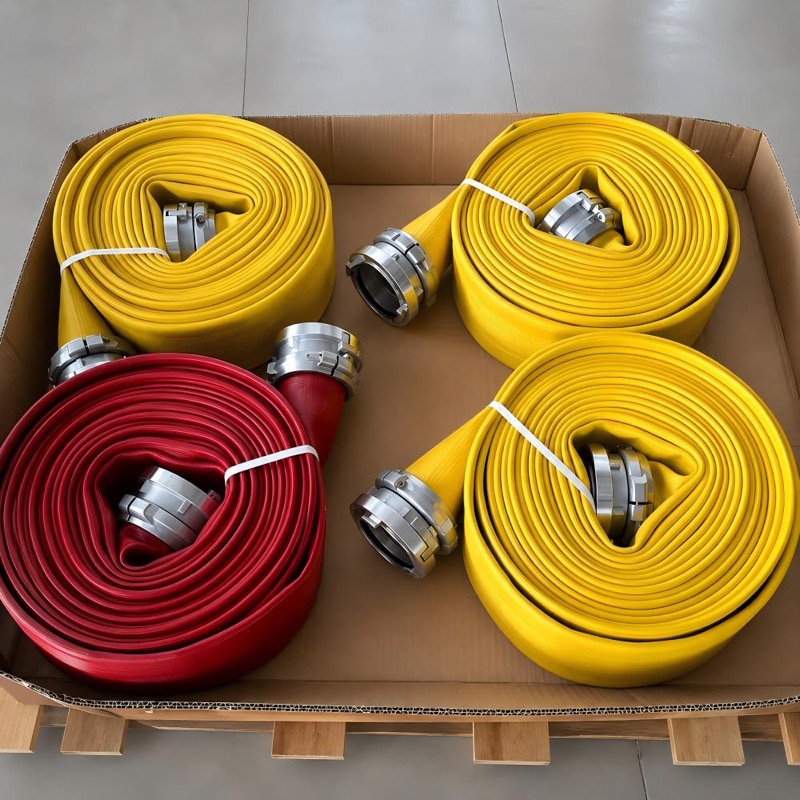
Yes, TPU can be used in crude oil transfer when the application requires strong abrasion resistance and tough field handling. It is especially useful for temporary bypass lines that are moved frequently.
Yes, NBR is suitable when the fluid is petroleum-based and the routing is controlled. It is a practical choice for oil transfer service where oil resistance is the main concern.
TPU is usually better for rough job sites because it handles dragging, coiling, and external wear more effectively.
In most cases, yes. Fittings and reels improve installation speed, reduce mistakes, and make handling easier in the field.
Choose TPU if abrasion and handling damage are the main risks. Choose NBR if petroleum compatibility and oil service performance are the main priorities.
Yes, Sunmoon can support custom hose solutions, including length, diameter, couplings, and system integration for project-specific needs.
1. Sunmoon Hose Manufacturing, "Oil Resistance: TPU Anti-Static Hose vs. NBR Fuel Hose." https://www.sunmoonhose.com/oil-resistance-tpu-anti-static-hose-vs-nbr-fuel-hose.html
2. Sunmoon Pipe, "Products." https://www.sunmoonpipe.com/products/
3. Sunmoon Hose Manufacturing, "Customized TPU Layflat Hose, Oil and Gas Hose, Dewatering ..." https://www.sunmoonhose.com/
4. Sunmoon Hose Manufacturing, "Delivering 8,000 Meters of High-Performance TPU Layflat Hose for Large-Scale Water Transfer." https://www.sunmoonhose.com/delivering-8-000-meters-of-high-performance-tpu-layflat-hose-for-large-scale-water-transfer.html
5. Midwest Hose, "TPU Layflat Hose - Specification Sheet." https://layflat.midwesthose.com/wp-content/uploads/2019/11/QA-TPU-Layflat-Hose.pdf
6. IVG, "Avio Global F Oil." https://www.ivgspa.it/pimtubi.ivgspa.it/storage/private/files/3cb609c3a40285fa68cd54cffbe4f31e8c919c29.pdf
7. Continental/associated petroleum hose documentation for NBR fuel and oil transfer applications. https://www.batind.com.au/Documents/DS-RWPD17.pdf
8. JGB Enterprises product literature for petroleum fuel transfer hose. https://partnertools.echelonsupply.com/commercial/catalogs/Eagle-Flight-Aircraft-Fueling-Hose.pdf


