

Views: 272 Author: Sunmoon Hose Manufacturing Publish Time: 2026-07-22 Origin: Site


Content Menu
● Why Oilfield Dewatering Demands a Faster Hose Solution
● What Makes TPU Layflat Hoses Suitable for Flood Response
● How Dewatering Works at a Drilling Site
● Why TPU Beats Conventional Transfer Systems
>> Practical comparison for oilfield dewatering
● Sunmoon's Engineering Approach
● Selecting the Right Hose Specification
● A Field Example From Emergency Dewatering
● Where TPU Layflat Hoses Create the Most Value
● Conclusion: Build for Speed, Reliability, and Control
● FAQ
>> 1. What is oilfield dewatering?
>> 2. Why are TPU layflat hoses used in oilfield dewatering?
>> 3. Can TPU layflat hose handle rough terrain?
>> 4. What temperature range can TPU layflat hose handle?
>> 5. Is TPU layflat hose only for oilfields?
>> 6. Can Sunmoon customize the hose for different projects?
Oilfield dewatering is one of the fastest ways to restore drilling-site access, protect equipment, and reduce downtime after heavy rain, groundwater intrusion, or surface flooding. For modern oil and gas operations, TPU layflat hoses have become a practical solution because they combine rapid deployment, high flow capacity, abrasion resistance, and easy reel handling in demanding field conditions.
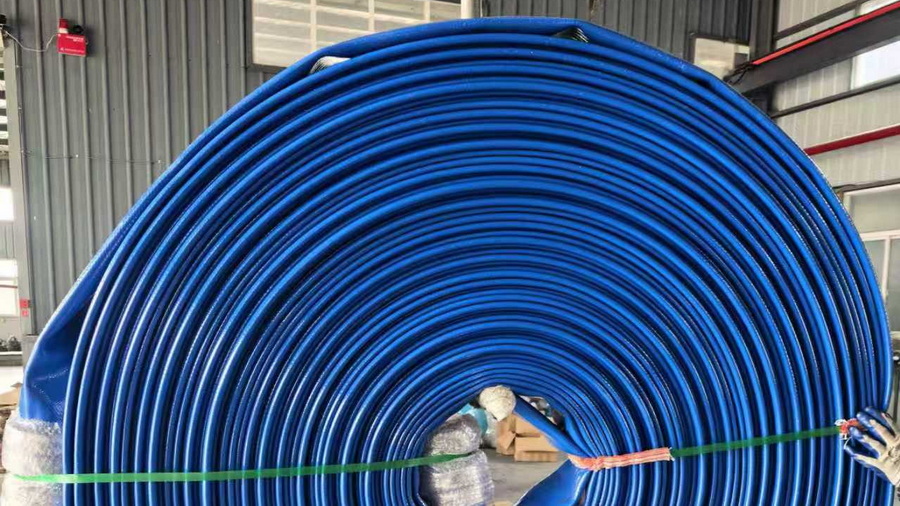
Drilling sites do not have the luxury of slow response times. When floodwater enters a well pad, access roads, containment areas, or pit zones, operations can stall quickly. The longer water remains, the greater the risk to safety, equipment, and production schedules.
A TPU layflat hose system is better suited to emergency dewatering because it can be transported compactly, unrolled quickly, and removed just as fast once the site is stabilized. That speed matters when an operator needs to move large volumes of water away from active drilling zones with minimal labor.
TPU layflat hoses are engineered for harsh industrial environments. TPU construction offers strong abrasion resistance, weather resistance, flexibility in low temperatures, and performance suitable for long-distance liquid transfer. That combination is especially useful in oilfield dewatering, where hoses may drag over gravel, mud, steel edges, or rough ground.
Key advantages include:
- Fast deployment and retrieval, which reduces response time during flooding events.
- High abrasion resistance, which supports longer service life in harsh field conditions.
- Wide operating temperature range, making the hose suitable for cold and hot climates.
- Large-diameter options, which help move high water volumes efficiently.
For oilfield operators, these traits translate into fewer interruptions and a more resilient flood-response plan.
A successful oilfield dewatering setup usually follows a simple operational logic. The goal is to move water from a flooded or saturated area to a safe discharge point as quickly and reliably as possible. In practice, this means choosing a hose system that can handle the site's flow target, pressure needs, and terrain conditions.
A typical deployment may include:
1. Source identification, such as ponded runoff, sump water, or flooded access areas.
2. Pump connection, where the hose links the pump to the discharge or transfer point.
3. Route planning, which avoids traffic lanes, sharp bends, and abrasion points.
4. Hose deployment, often using reel systems or manual layflat placement.
5. Monitoring, to confirm flow stability, coupling security, and hose integrity.
This process is one reason layflat hoses are widely used in water transfer and dewatering operations: they simplify field logistics while keeping flow paths flexible.
Compared with rigid pipe or heavier legacy hose systems, TPU layflat hose is often easier to install and reposition. In flood response, ease of handling is not a minor benefit; it is a major performance factor. A system that requires fewer joints and less setup time can shorten emergency response and reduce the chance of installation errors.
| Factor | TPU Layflat Hose | Rigid Pipe / Heavier Systems |
|---|---|---|
| Deployment speed | Very fast | Slower, more labor-intensive |
| Site flexibility | High | Limited |
| Abrasion resistance | Strong | Varies by material |
| Storage and transport | Compact when flat | Bulky |
| Terrain adaptability | Good for rough and changing terrain | Less adaptable |
| Temporary use | Well suited | Less efficient |
For temporary or emergency flood response, the TPU option is usually the more practical field solution.
Sunmoon Hose Manufacturing focuses on engineering-grade layflat hose solutions for oil and gas, dewatering, and other demanding applications. The company operates from a 35,000 m² production base with standardized automated lines and an 80-person technical team, which supports consistent production quality and customization. That matters for global buyers who need reliable specifications, repeatable performance, and fast customization.
Sunmoon also positions its dewatering hose for rapid-deployment fluid transfer in mining, flood relief, and emergency firefighting, showing that the product family is designed for more than one emergency-use case. For oilfield users, that cross-industry engineering experience can be valuable when site conditions are unpredictable.
Choosing the right hose is not just about diameter. It is about matching the hose to the real operating environment. Buyers should evaluate pressure, flow rate, distance, fluid type, temperature, and site abrasion level before making a decision.
Consider these specification questions:
- What water volume must be moved per hour?
- How far is the discharge point from the flooded area?
- Will the hose be dragged across gravel, rock, or steel?
- Does the site experience cold weather or extreme heat?
- Will the hose be used temporarily or repeatedly over a long project cycle?
TPU layflat hose is used for oilfield water transfer, dewatering, and industrial discharge applications, especially where durability and flexibility are both required. That makes proper sizing and material selection essential for performance and cost control.
A useful way to understand TPU layflat hose performance is to look at real-world emergency use. Sunmoon reports a mine-rescue dewatering project in which high-pressure TPU layflat hose helped reduce response time compared with traditional rigid pipelines, improving operational continuity and safety. While this example comes from mining rather than oil drilling, the operating logic is similar: when water threatens access and productivity, fast fluid movement becomes a site-critical requirement.
That kind of field deployment demonstrates why dewatering systems should be designed for speed, not only for nominal pressure rating. In emergency work, every minute counts.
Even a high-quality hose can underperform if deployed poorly. Oilfield teams should treat setup as part of the engineering solution, not as a simple handoff task. A disciplined installation process helps preserve service life and reduces avoidable failures.
Best practices include:
- Inspect the hose before deployment for cuts, abnormal wear, or damaged couplings.
- Avoid sharp bends and crushed sections that can restrict flow.
- Use compatible fittings and reel systems to improve handling and connection security.
- Keep the hose away from hot surfaces and moving equipment where possible.
- Flush and clean after use if the water contains sand, slurry, oil residue, or chemicals.
These steps improve reliability, especially in long-run water transfer or repeated emergency-response cycles.
TPU layflat hoses are not only useful for flooding events. They also support broader oilfield fluid handling needs, including transfer, discharge, and surface water management. In practical terms, this makes them valuable for operators who want one hose platform that can serve multiple job types.
They are especially useful in:
- Oilfield dewatering and flood response.
- Frac water transfer and surface water management.
- Produced water and industrial discharge.
- Temporary bypass and emergency drainage.
For buyers, this versatility can reduce the need to stock multiple hose types for different site tasks.
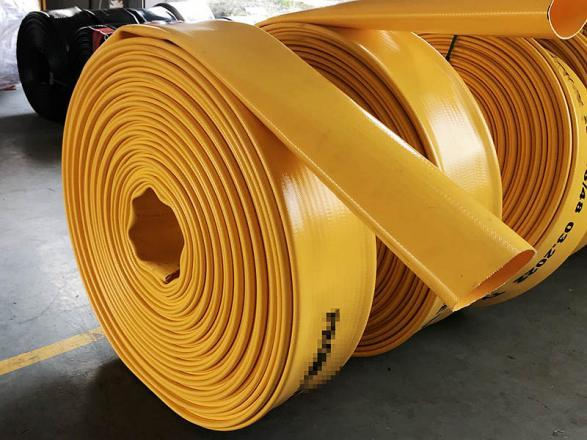
Custom engineering is often the difference between a hose that "works" and a hose that works well in a specific oilfield environment. Sunmoon emphasizes customization and integrated solutions, including fittings and reel systems, which can help buyers reduce compatibility issues and improve field deployment efficiency. That is particularly important for international projects where site standards, pumps, and coupling formats may vary.
Customization may include:
- Diameter selection.
- Length and reel configuration.
- Coupling type.
- Color coding.
- Pressure rating.
- Application-specific reinforcement.
For a dewatering project, these details can directly affect installation speed and operational reliability.
Before placing an order, procurement and operations teams should confirm:
- Operating pressure and burst requirements.
- Hose diameter and total transfer length.
- Fluid characteristics, including sand, sediment, or chemical content.
- Temperature range at the site.
- Storage, reel, and transport needs.
- Delivery timeline and spare-part availability.
This checklist helps align engineering needs with purchasing decisions. It also reduces the risk of buying a hose that looks suitable on paper but fails to perform in the field.
In oilfield dewatering, the best solution is the one that restores control fast. TPU layflat hoses are well suited to rapid flood response because they are lightweight, durable, flexible, and designed for demanding liquid transfer in harsh environments. For drilling sites that need speed, uptime, and safer water management, they offer a strong balance of performance and practicality.
For operations teams and distributors, the strongest purchasing decision is usually a customized system built for the actual site conditions, not a generic hose pulled from inventory. Sunmoon's manufacturing setup, customization capability, and dewatering-focused product line position it as a relevant supplier for these applications. Request a custom TPU layflat hose specification based on your site pressure, diameter, temperature, and deployment needs.
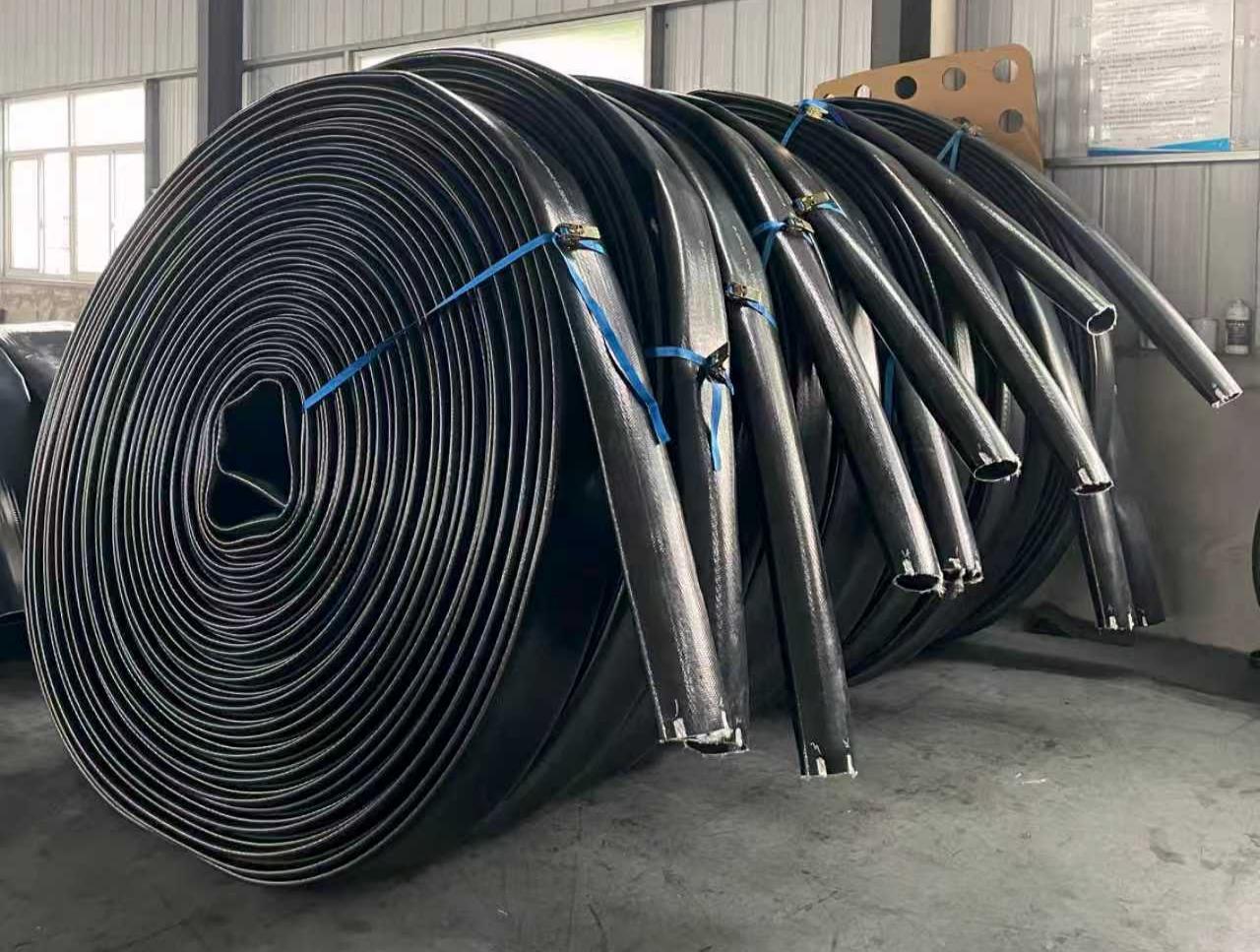
Oilfield dewatering is the process of removing unwanted water from drilling sites, access areas, sumps, or flood-affected zones to restore safe and efficient operations.
They are used because they are lightweight, fast to deploy, abrasion resistant, and suitable for high-volume water transfer in harsh field conditions.
Yes. TPU layflat hose is widely chosen for rough or changing terrain because it is flexible, compact, and more practical to handle than rigid piping systems.
The operating range depends on construction, but TPU layflat hoses are commonly designed to perform in both cold and hot environments.
No. It is also used in mining dewatering, flood relief, wastewater transfer, irrigation, and other industrial fluid transfer applications.
Yes. Sunmoon presents itself as a customized layflat hose manufacturer and offers application-specific solutions, including dewatering and oil & gas hose systems.
- [Sunmoon Hose Manufacturing – Home]
- [Sunmoon – TPU Lay Flat Hose]
- [Kuriyama – Oilfield Layflat Brochure PDF]
- [Hoseinc – TPU Lay Flat Hose / Fracking Hose]
- [Sunhose – TPU Layflat Hose Manufacturer]
- [Midwest Hose – TPU Layflat Hose Specification Sheet]
- [ZYfire – Mining Dewatering TPU Layflat Hose]


