

Views: 222 Author: Loretta Publish Time: 2026-01-13 Origin: Site


Content Menu
● Why Accurate NPT Measurement Matters
● Core Geometry of NPT Threads
● Tools Needed to Measure NPT Fittings
● Step‑by‑Step: How to Measure NPT Fittings
>> Step 1: Confirm the Thread Is Tapered
>> Step 2: Determine the Approximate Nominal Size
>> Step 3: Measure the Outside Diameter (Male) or Inside Diameter (Female)
>> Step 4: Identify Thread Pitch (TPI)
>> Step 5: Compare Measurements to an NPT Table
>> Step 6: Check the Taper and Thread Form (Advanced)
● NPT vs NPTF vs NPSM (Measurement Perspective)
● Avoiding Confusion With BSP and Other Threads
● Practical Installation Considerations After Measurement
● Common Measurement Errors and How to Prevent Them
● FAQs About Measuring NPT Fittings
>> FAQ 1: Why does the measured outside diameter not match the NPT size?
>> FAQ 2: Can NPT threads be mixed with BSP threads if they appear similar?
>> FAQ 3: Is thread sealant always required on NPT connections?
>> FAQ 4: How tight should an NPT fitting be?
>> FAQ 5: What are the most important tools for identifying NPT size in the field?
Understanding how to measure NPT fittings correctly is essential for building safe, leak‑free piping and hose systems in industrial, plumbing, and hydraulic applications. This fully updated guide focuses on measurement accuracy, compatibility, and practical usability so technicians and engineers can identify NPT threads with confidence.[1]

NPT (National Pipe Taper) is a standardized tapered pipe thread form used widely in North America for pressure piping and fluid transfer systems. The thread diameter increases gradually from the tip toward the base of the male fitting, which allows the joint to tighten and seal as the threads engage.[1]
- The thread form uses a 60‑degree included angle, which helps distinguish it from BSP threads that use a 55‑degree angle.[1]
- Tapered engagement allows metal‑to‑metal contact between thread flanks, supporting mechanical strength and sealing when properly assembled.[1]
Correct NPT identification prevents cross‑threading, leaks, and downtime and ensures that fittings, adapters, and hoses are correctly matched. Because nominal NPT size is based on pipe internal diameter rather than the measured outside diameter of the fitting, visual guessing is often misleading.[1]
- Mixing NPT with BSP, NPSM, or metric threads can result in incomplete engagement and leakage, even if the parts initially screw together.[2][1]
- Accurate measurement supports inventory control, maintenance planning, and safe retrofits when systems combine components from multiple standards.[3][1]
Understanding the basic geometry of NPT threads makes measurement more intuitive and reduces misidentification. Each parameter plays a role in both sealing and compatibility.[1]
- Taper rate: The standard taper is 1 in 16, meaning the diameter changes by 1 unit over 16 units of length.[1]
- Taper angle: This taper corresponds to approximately 1 degree 47 minutes (about 1.75 degrees) relative to the centerline of the fitting.[1]
- Pitch (TPI): NPT pitch is normally specified as threads per inch (TPI), and each nominal size is associated with a standard TPI value.[1]
Using the right tools greatly improves accuracy and repeatability when identifying NPT sizes. Simple hand tools are usually sufficient in workshops and maintenance facilities.[4][2]
- Caliper: A digital or vernier caliper is preferred for outside and inside diameter measurements.[4][2]
- Thread pitch gauge: This tool matches the thread form to reveal the number of threads per inch.[2][4]
- Reference NPT chart: A standard table listing nominal size, outside diameter, and TPI allows fast confirmation.[4][1]
Before taking measurements, verify that the thread is tapered and not straight, which is a key characteristic of NPT. Identifying taper early avoids confusion with straight thread forms like NPSM.[1]
- Visually inspect the male fitting and check that the thread diameter increases slightly toward the base.
- Compare the fitting to a straightedge; any visible gap change indicates taper.[2]
NPT nominal size relates to the approximate internal diameter of the mating pipe, not the measured outside diameter of the fitting. For this reason, a 1/2" NPT male will measure significantly larger than 0.5" at the threads.[5][4][1]
- Look for any markings on the fitting body that might indicate nominal size.
- Use existing system documentation or part numbers when available to guide your initial assumption.
Measuring the external or internal diameter at the correct location is a critical step in identifying NPT size. The taper means that measurement points must be chosen consistently.[4][1]
- Male fittings:Use a caliper to measure across the outermost thread crests near the largest practical diameter, usually around the second or third full thread from the base.[6][4]
- Female fittings:Insert the caliper jaws into the threaded bore and measure across the internal thread crests, again around the second or third full thread.[2][4]
Because of the taper, this diameter will always be slightly larger (male) or slightly smaller (female) than the nominal pipe size.[4]
Thread pitch confirms whether the fitting matches the NPT standard for a given nominal size. Incorrect pitch is a common reason that near‑matching fittings fail to seal.[2][1]
- Use a thread pitch gauge and press each leaf against the threads until one matches cleanly, with no light gaps.[4][2]
- Read the TPI value stamped on the matching leaf (for example, 14, 18, 27 TPI).
- If a gauge is not available, count the number of threads over a 1‑inch span and use that count as the TPI.[2]
Once the outside/inside diameter and TPI are known, compare them against a trusted NPT dimension table. This is the most reliable method of confirming size in the field.[4][1]
Common NPT thread size reference[1]
NPT size | External thread large-end OD | TPI (threads per inch) |
1/8″ | 0.405″ (≈10.3 mm) | 27 TPI |
1/4″ | 0.540″ (≈13.7 mm) | 18 TPI |
3/8″ | 0.675″ (≈17.1 mm) | 18 TPI |
1/2″ | 0.840″ (≈21.3 mm) | 14 TPI |
3/4″ | 1.050″ (≈26.7 mm) | 14 TPI |
1″ | 1.315″ (≈33.4 mm) | 11.5 TPI |
Diameters in practice may vary slightly due to manufacturing tolerances, wear, coatings, or measurement position, so small deviations from table values are normal.[7][1]
For critical applications, verifying that the thread is indeed tapered and matches the NPT profile can be important. This step is more common in quality‑control environments than routine maintenance.[2][1]
- Specialized thread gauges or plug rings labeled for NPT quickly confirm both taper and profile.[8][2]
- Optical or digital measurement tools may be used in inspection labs to confirm the taper angle matches nominal specifications.[2]
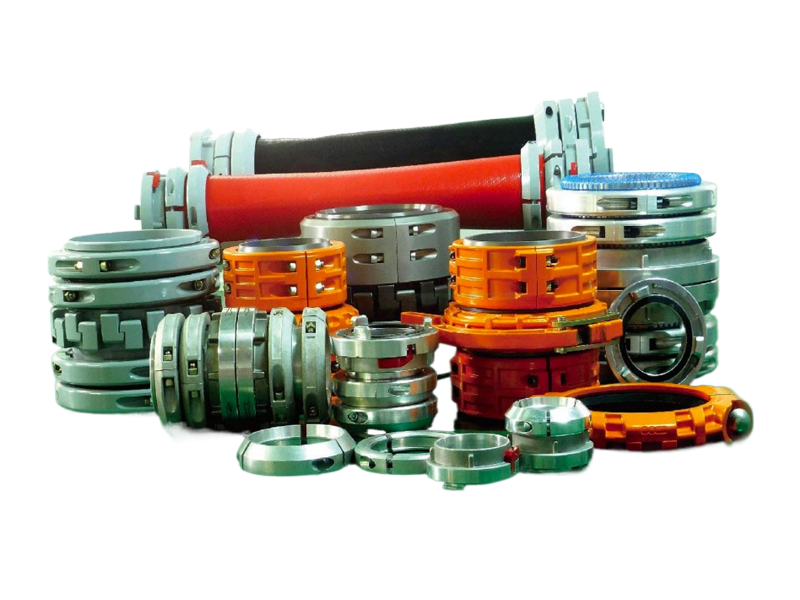
Several thread styles share similar appearance but behave differently in sealing and measurement, which can cause confusion. Recognizing their key features avoids misapplication.[6][1]
1- NPTF (National Pipe Taper Fuel):
- Uses a similar taper and geometry to NPT but is designed for a dry‑seal, with thread roots and crests engaging more fully.[8][6]
- Measurement of OD and TPI is similar to NPT, but sealing performance relies more heavily on precise root–crest contact.
2- NPSM (National Pipe Straight Mechanical):
- Uses straight threads with a mechanical seal formed at the seat, not in the threads themselves.[9][6]
- OD and TPI may resemble NPT, so confirming taper or straightness is essential when measuring.
Many imported components use BSP or metric threads that can visually resemble NPT but differ dimensionally and geometrically. Accurate measurement is the primary defense against mismatching.[3]
- BSP threads typically use a 55‑degree angle and may be straight (BSPP) or tapered (BSPT), requiring careful identification.[3]
- Diameter and pitch differences are often subtle, so relying only on nominal size is risky; measurement plus chart comparison is safer.[3]
Once the correct NPT size has been identified, following good installation practice protects threads and ensures sealing integrity. Thread quality and torque are just as important as accurate measurement.[8][1]
- Apply PTFE tape or a compatible thread sealant to male threads while avoiding the first thread or two to minimize contamination.[4][1]
- Start the connection by hand for several turns to avoid cross‑threading, then tighten with an appropriate wrench to the recommended torque range where provided.[8]
- Inspect and test for leakage after pressurizing, using appropriate leak‑detection methods for the fluid or gas in the system.[8][2]
Certain mistakes appear repeatedly in the field and can be mitigated with a few deliberate habits.[2][1]
- Assuming that the measured OD must equal the nominal size leads to repeated mis‑ordering of fittings.[5][4]
- Measuring at the thread tip rather than the second or third full thread increases error because of chamfers and thread truncation.[6][4]
- Ignoring pitch and only checking diameter opens the door to cross‑standard mismatches. Always verify TPI.[2]
For engineers and technicians who require reliable, repeatable NPT measurements in demanding fluid‑transfer systems—especially where flexible hose assemblies interact with rigid pipe—working with a specialized, engineering‑driven hose manufacturer delivers clear advantages. By sharing your measured NPT size, operating pressure, media, and installation conditions, you enable a tailored selection of hose, fittings, and adapters that maintain sealing integrity over the full service life of the system. Contact our technical team with your NPT measurements and application details to receive optimized TPU lay‑flat hose and fitting recommendations that reduce leakage risk, simplify installation, and improve long‑term reliability.
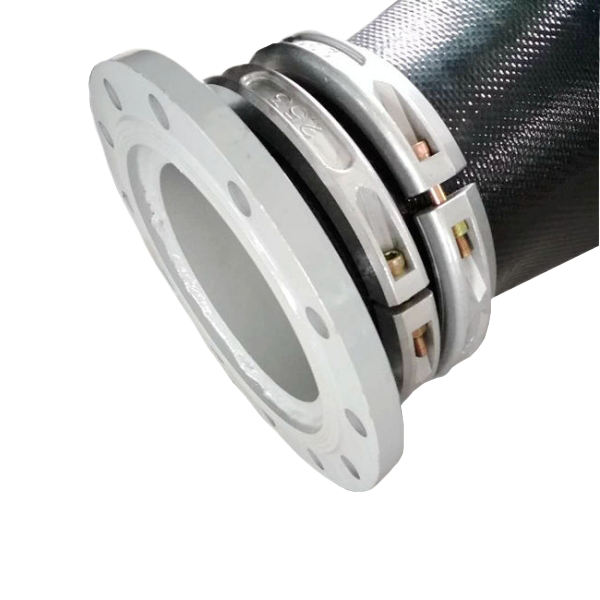
The measured outside diameter reflects the external thread crest, while NPT size is defined by the approximate internal diameter of the matching pipe. As a result, the OD is always larger than the nominal size and will vary slightly depending on measurement location along the taper.[5][4][1]
Even if NPT and BSP threads initially screw together, their differences in thread angle, pitch, and diameter prevent them from creating a reliable seal. Mixing these standards can lead to leaks and damage, so adapters specifically designed for cross‑standard connections should always be used.[3]
Conventional NPT connections almost always use PTFE tape or a compatible liquid sealant to fill micro‑gaps and support leak‑free sealing. Some specialized dry‑seal forms like NPTF are designed to seal without sealant, but lubricants are still commonly applied to simplify assembly and disassembly.[6][8][4][1]
Over‑tightening can crack ports, distort threads, and make disassembly difficult, while under‑tightening risks leakage. Following manufacturer torque guidelines where available and stopping once correct orientation and leak‑free performance are reached is the safest practice.[8][1]
A caliper for measuring outside or inside diameter, a thread pitch gauge for TPI, and an accurate NPT reference chart are the most useful tools in everyday work. Complete thread identification kits that include gauges for multiple standards add further protection against misidentifying non‑NPT threads.[3][4][2]
[1](https://www.strongflex.com/how-to-measure-npt-fittings/)
[2](https://sanitaryfittings.us/how-to-measure-npt-fittings)
[3](https://www.transtek.com.au/npt-vs-bsp-fittings-guide-2025)
[4](https://kingdaflex.com/how-to-measure-npt-pipe-fittings/)
[5](https://www.reddit.com/r/millwrights/comments/1ddhy96/npt_sizing_question/)
[6](https://www.strongflex.com/project/npt-fitting/)
[7](https://www.directmaterial.com/measure-npt-connection)
[8](https://www.industrialspec.com/about-us/blog/detail/npt-nptf-tapered-threads-and-leakproof-seals)
[9](https://www.strongflex.com/npsm-vs-npt-thread-difference/)
[10](https://www.strongflex.net/a-guide-to-identify-hydraulic-hose-fittings/)
[11](https://www.strongflex.com/how-to-measure-hydraulic-hose/)
[12](https://www.strongflex.com/jic-fittings-vs-npt-fittings/)
[13](https://www.youtube.com/watch?v=ifPkWJuBJoM)
[14](https://www.strongflex.net/how-to-choose-the-right-fitting-for-hydraulic-rubber-hose/)
[15](https://www.strongflex.net/hydraulic-fitting-and-machine/hydraulic-fittings/)


