

Views: 222 Author: Sunmoon Publish Time: 2026-05-04 Origin: Site


In modern center‑pivot and lateral‑move irrigation, water‑delivery flat hoses (often called "drag hoses" or "layflat hoses") are increasingly replacing rigid pipe and standard coiled hose as the backbone of high‑volume water transfer.
For large‑scale pivot systems, specifications matter more than ever: inner diameter, working pressure (W.P.), burst pressure, abrasion resistance, and flexibility all directly impact water‑use efficiency, field‑traffic control, and total system lifetime. At Sunmoon, our engineered TPU and NBR drag hoses are built specifically for high‑pressure, long‑distance water‑transfer in pivot‑based irrigation, manure‑drag‑line systems, and municipal dewatering, with diameters typically ranging from 2″ up to 16″ (50–400 mm) and working pressures up to 200–240 psi (13–16 bar) depending on construction. [sunmoonlayflathose]
This article explains how flat‑lay water‑delivery hoses can cut pressure losses, reduce kinking, and lower operating costs on large‑field pivot setups, while positioning Sunmoon as a factory‑direct source for custom‑sized, test‑certified, and export‑ready TPU layflat hose solutions. [sunmoonlayflathose]

Center‑pivot irrigation systems rely on a rotating water‑delivery line that can extend several hundred meters from the pivot point. Traditionally, rigid pipe or standard coiled hose link the main water source to the moving pivot; however, both options present handling, cost, and maintenance challenges. [nelsonirrigation]
Drag‑type flat hoses run along the ground and are simply rolled out or dragged behind the pivot, dramatically simplifying deployment and re‑alignment. [talk.newagtalk]
Key operational advantages of flat‑lay drag hoses include:
- Less kinking and tangling vs. round‑section hoses, which reduces flow interruptions and maintenance downtime. [anacondapipeandhose]
- Lower friction loss at high flow rates, especially when using large‑diameter TPU‑based layflat hose (e.g., 8″–16″), because of smooth internal bores and optimized wall thickness. [sunmoonhose]
- Easier field‑traffic management: a flat hose profile reduces wheel‑track damage and helps prevent runoff or soil crusting issues in tight‑field layouts. [talk.newagtalk]
From a hydraulic‑engineering standpoint, choosing a high‑pressure drag hose with a working pressure rating that matches your pump and elevation profile ensures the pivot can operate efficiently even at the farthest span without pressure "drop‑off" at the distal end. [sunmoonhose]
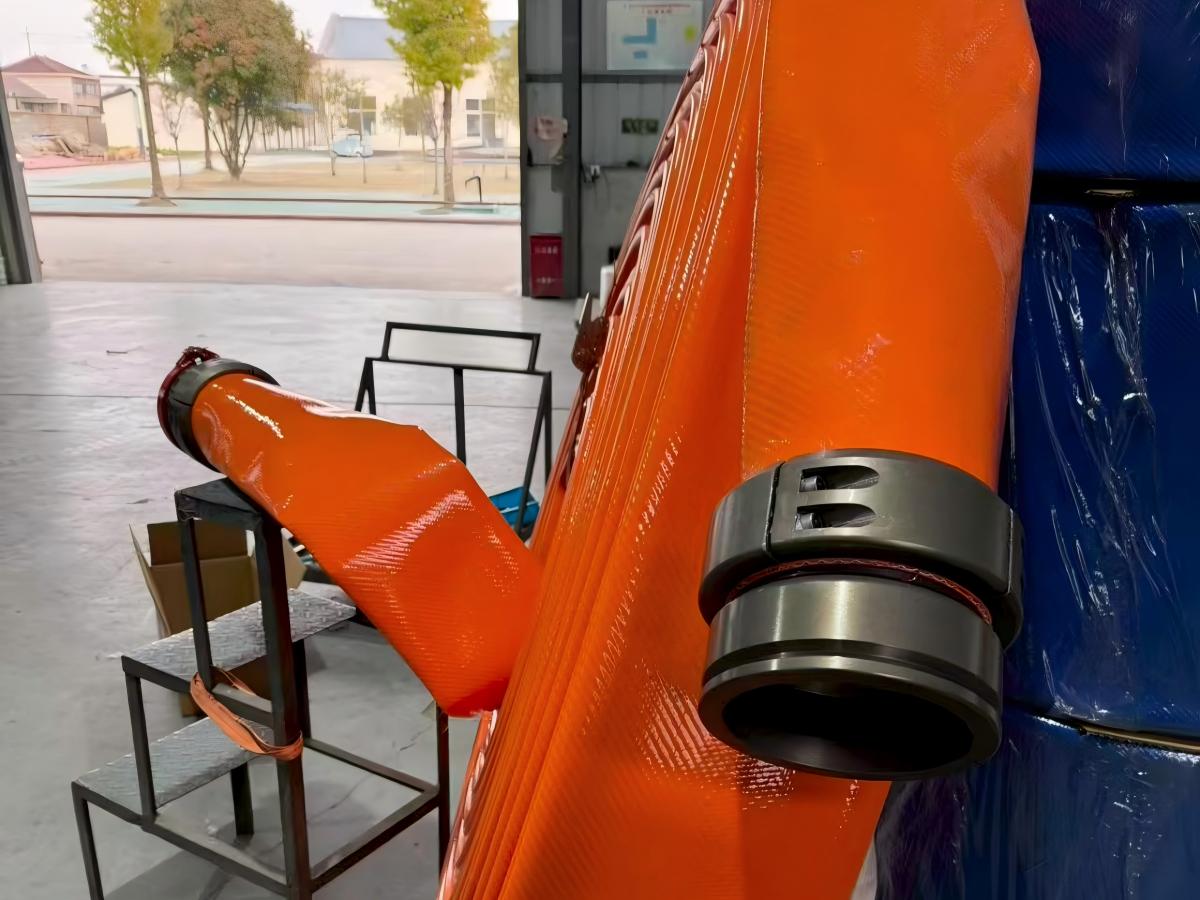
Sunmoon's TPU‑based drag‑type layflat hoses are engineered for high‑pressure, long‑distance water transfer in agriculture, municipal projects, and industrial dewatering. [sunmoonhose]
Typical technical references for Sunmoon's irrigation‑oriented TPU layflat hose include:
- Diameter range: 2″–16″ (50–400 mm), with custom inner‑diameter options on request. [sunmoonhose]
- Working pressure: up to 200–240 psi (13–16 bar) depending on fiber reinforcement and wall thickness. [sunmoonhose]
- Burst pressure: approximately 3× working pressure (e.g., 720 psi for 240 psi‑rated hose), with full‑length hydrostatic testing at 1.5× W.P. for 3 hours before shipment. [sunmoonpipe]
- Temperature range: often rated for ‑46 °C to 80 °C (‑51 °F to 180 °F), suitable for cold‑climate and high‑sun‑exposure fields. [sunmoonpipe]
These hoses are commonly used as:
- Main water‑supply lines from a canal or reservoir to the pivot sub‑main.
- Drag‑line manure or effluent hoses behind pivot‑based slurry‑injection systems. [sunmoonlayflathose]
- Temporary dewatering or transfer lines in construction‑adjacent irrigation projects.
By manufacturing in China but engineering to ISO 9001:2015, ISO 14001:2015, and ISO 45001:2018 standards, Sunmoon can offer factory‑direct pricing while maintaining quality comparable with established Western brands. [sunmoonhose]
Efficient center‑pivot irrigation depends on consistent end‑pressure and uniform flow distribution across the entire span. When pressure drops too far toward the outer spans, sprinklers under‑perform and water application becomes uneven.
Layflat drag hoses with high‑inner‑diameter and smooth inner liners help maintain pressure and flow over long distances in two ways:
1. Reduced friction loss
- Larger cross‑sectional area (e.g., 10″–16″ ID) lowers flow‑velocity per unit of discharge, which directly reduces friction loss per meter. [sunmoonhose]
- TPU‑based liners provide a smooth, low‑friction bore that minimizes scale buildup and internal roughness compared with some PVC‑based alternatives. [sunmoonhose]
2. More stable working‑pressure management
- Sunmoon's high‑pressure TPU layflat hoses can be sized so that the pump operates closer to its optimal efficiency point, rather than being oversized to compensate for high‑loss, small‑diameter supply lines. [sunmoonhose]
- This not only improves water‑use efficiency (WUE) but also reduces energy consumption and wear on pumps. [agriculture.hunterirrigation]
For pivot‑based growers, the practical outcome is more uniform crop coverage, reduced runoff, and fewer "dry bands" at the outer ends of the pivot—all of which translate into higher‑yield fields and lower water‑costs per ton of produce. [canr.msu]
Hydraulic design is where many pivot‑system operators either gain or lose efficiency. A Sunmoon engineer can run basic hydraulic calculations to help you select the right drag‑hose size, but the key variables to consider are: [sunmoonhose]
- Target flow rate (l/min or gpm) required by the pivot's sprinklers or nozzles.
- Total length of the hose run from pump to pivot.
- Static head (elevation difference) between pump and farthest pivot point.
- Friction loss across the chosen hose diameter and length.
- Available pump head and discharge curve.
Guiding principles for selecting drag‑hose diameter:
- Higher flow requirement → larger ID (e.g., 8″–16″ TPU layflat) to keep velocity moderate and friction loss low. [sunmoonhose]
- Longer runs → higher‑pressure rating (200–240 psi) to tolerate the cumulative head loss without requiring a much larger pump. [sunmoonhose]
- Rough terrain or frequent folding → thicker, abrasion‑resistant TPU cover with reinforced fabric or aramid‑fiber reinforcement to extend service life. [sunmoonhose]
At Sunmoon, technical teams can assist with hose sizing charts and pressure‑gradient simulations so that your chosen drag‑hose configuration operates within the pivot manufacturer's recommended pressure window. [sunmoonhose]
When choosing a water‑delivery flat hose for pivot irrigation, the material construction has a major impact on durability, flexibility, and cold‑temperature performance. [sunmoonlayflathose]
Below is a high‑level comparison of common materials used in Sunmoon‑style layflat hoses:
| Material | Typical Use | Key Advantages | Considerations |
|---|---|---|---|
| TPU (Thermoplastic Polyurethane) | Long‑distance water transfer, high‑pressure irrigation, manure‑drag lines. sunmoonhose | High abrasion resistance, excellent flexibility, good low‑temperature performance (‑46 °C), burst‑pressure up to 720 psi on 240 psi‑rated 16″ hose. sunmoonpipe | Higher upfront cost vs. PVC, but longer service life in abrasive or high‑pressure fields. |
| PVC | General irrigation layflat hose, hand‑line or wheel‑line systems. sunhose | Cost‑effective, widely available, easy to handle. sunhose | Less flexible at low temperatures, more prone to kinking and cracking over time in harsh fields. |
| NBR (Nitrile Rubber) | Manure, slurry, and effluent transfer drag hoses. sunmoonhose | Good resistance to oils and organic fluids, suitable for manure‑drag‑line systems behind pivots. sunmoonlayflathose | Heavier and more rigid than TPU; ideal when chemical resistance is more critical than ultra‑light weight. |
For high‑efficiency pivot irrigation, TPU‑based drag hoses are usually the preferred choice because they balance high pressure rating, flexibility, and abrasion resistance while remaining manageable for field crews. [sunmoonhose]
 |  |
Sunmoon's flat‑lay hoses are used in several pivot‑relevant scenarios that benefit from high‑volume, low‑friction water transfer. [sunmoonlayflathose]
1. Center‑pivot water‑supply lines
- A grower connects a high‑pressure TPU drag hose from a canal or reservoir to a center‑pivot sub‑main, enabling continuous, high‑flow irrigation over several thousand meters. [sunmoonhose]
- With a 16″ TPU layflat hose capable of 2,100 m per run, multi‑pivot farms can share a single main‑line instead of installing separate rigid‑pipe lines for each pivot. [sunmoonhose]
2. Manure‑drag‑line pivot systems
- Specialized NBR‑type drag hoses distribute liquid manure or slurry from a central tank to the pivot, injecting nutrients directly into the soil while minimizing runoff. [anacondapipeandhose]
- These hoses are designed with high tensile strength and interlayer adhesion to withstand the abrasive solids content of slurry. [sunmoonlayflathose]
3. Temporary dewatering during pivot installation
- During pivot construction or land‑leveling, large‑diameter TPU layflat hoses move water from low‑lying areas to discharge points, helping to prepare the field without disturbing the nascent pivot‑line. [sunmoonhose]
In each case, the flat profile of the hose reduces obstruction for field equipment while the high‑pressure rating ensures that pivot‑mounted sprinklers receive adequate head for uniform distribution. [nelsonirrigation]
Even the highest‑spec drag hose will under‑perform if deployment and handling are sub‑optimal. Below are five expert‑level best practices for using flat‑lay water‑delivery hoses on pivot systems:
1. Roll out slowly under low pressure
- Start the pump at low RPM and gradually increase speed while unrolling the hose to avoid kinks and pressure spikes. [sunmoonhose]
2. Minimize sharp bends and ground hazards
- Avoid routing the hose over sharp rocks, stumps, or sharp metal edges; these can cause localized abrasion and eventual leaks. [anacondapipeandhose]
3. Use protective sleeves or mats at road crossings
- Crossings with farm vehicles or temporary roads should feature protective mats or sleeves to prevent crushing and wear. [anacondapipeandhose]
4. Inspect for wear and damage after each season
- Check for cracks, bulges, or inner‑liner delamination, especially at coupling points where stress concentrates. [sunmoonhose]
5. Store flat and dry when not in use
- Coiling the hose tightly or leaving it kinked in standing water accelerates aging and liner degradation. [sunmoonpipe]
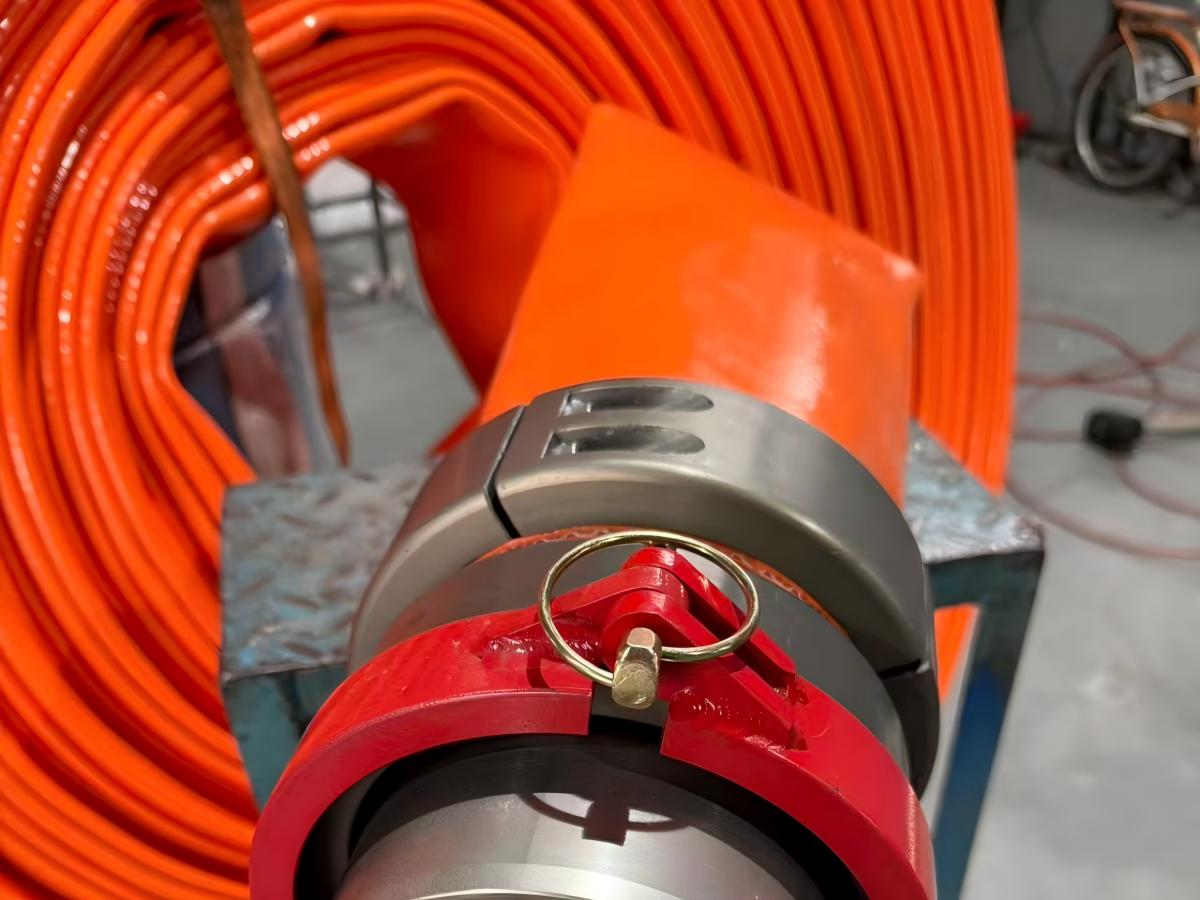
Sunmoon's technical documentation often includes recommended coupling‑type (e.g., cam‑lock or flange) and min‑bend‑radius guidance tailored to each hose model, helping operators maintain warranty conditions and maximize service life. [sunmoonlayflathose]
As a China‑based flat‑hose manufacturer, Sunmoon offers customization options that many global buyers find decisive:
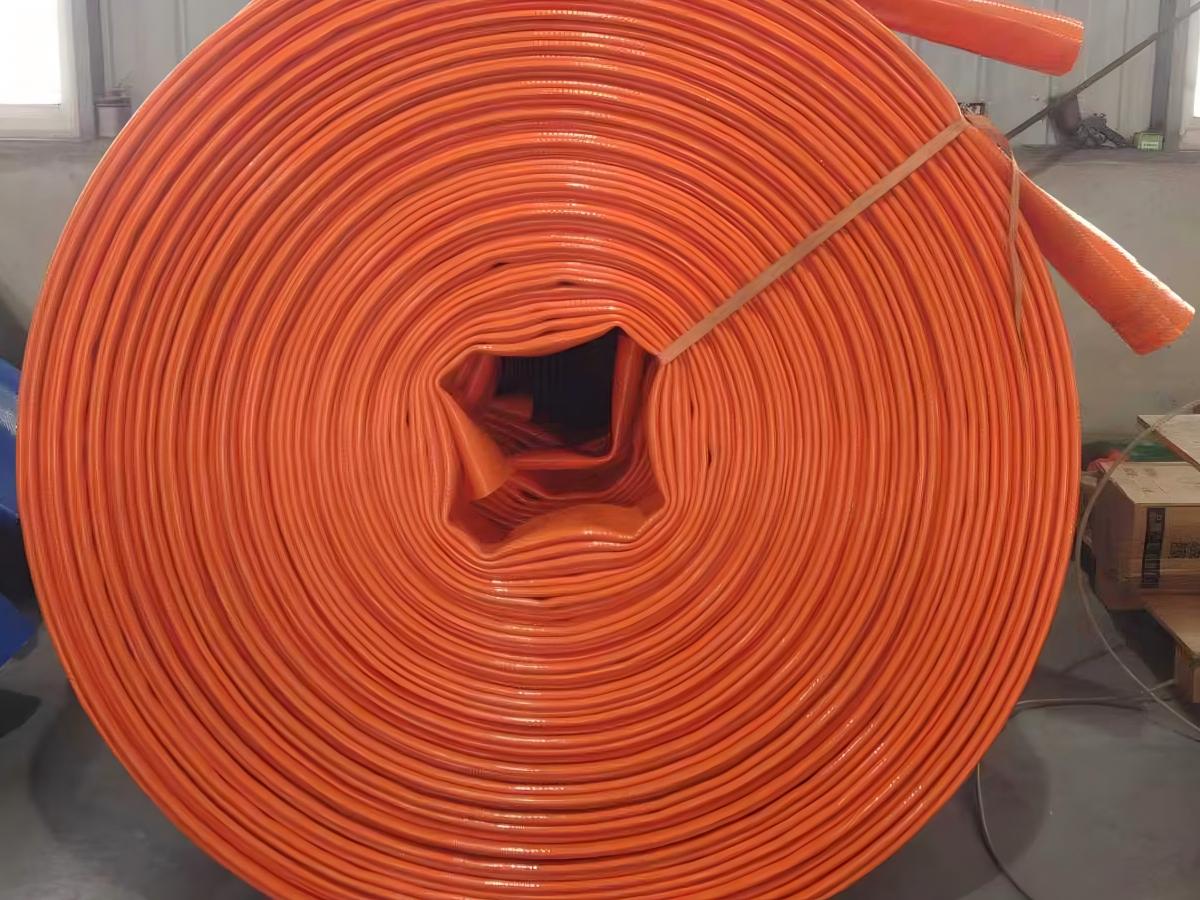
- Custom diameters and lengths: hoses from 2″ to 16″ ID, with standard lengths up to 200 m (660 ft) and project‑specific longer runs. [sunmoonhose]
- Custom colors and markings: color‑coded for irrigation, manure, or dewatering, plus printed length markers for easier field‑measurement. [sunmoonhose]
- Factory‑direct supply chain: elimination of multiple‑tier distributors can lower total cost per meter while maintaining ISO‑certified quality control. [sunmoonpipe]
For pivot‑system operators, this means you can specify exact working‑pressure and length requirements without being forced into stock‑only sizes, which in turn allows for tighter hydraulic matching and reduced energy losses. [sunmoonhose]
If you operate large‑scale pivot systems and want to reduce friction loss, lower pump energy costs, and extend hose life, choosing the right water‑delivery flat hose is a first‑level decision.
Sunmoon's TPU‑based drag hoses are engineered for:
- High‑pressure, long‑distance water transfer up to 240 psi and 16″ diameter. [sunmoonpipe]
- Abrasion‑resistant, flexible construction suitable for rough‑field conditions. [sunmoonhose]
- Factory‑direct, ISO‑certified manufacturing with custom sizing and export support. [sunmoonhose]
Contact a Sunmoon technical engineer with your pivot‑system's flow rate, distance, and elevation profile; they can propose a drag‑hose configuration, coupling‑type, and length recommendation tailored to your farm. [sunmoonhose]
FAQ 1: What is a drag hose in pivot irrigation?
A drag hose is a heavy‑duty layflat hose that supplies water from a pump or mainline to a moving pivot or linear system, designed to be pulled across the field without kinking or failing.
FAQ 2: Why choose TPU flat hoses over traditional rubber hoses?
TPU flat hoses offer higher abrasion resistance, lighter weight, better flexibility, and more stable pressure performance, which reduces friction losses and maintenance downtime in large‑scale irrigation.
FAQ 3: How do I size a flat hose for my pivot system?
You select diameter and pressure rating based on your design flow, required pressure at the pivot, allowable friction loss, and run length, then choose a hose that keeps water velocity moderate while exceeding your maximum working pressure.
FAQ 4: Can flat hoses be customized for specific projects?
Yes, many manufacturers offer customized diameters, lengths, pressure ratings, colors, and printed markings so integrators can match hoses to pivot spans, field layouts, and branding or safety requirements.
FAQ 5: How can I extend the service life of drag hoses?
Avoid dragging hoses over sharp objects, respect minimum bend radius, drain and store them properly off‑season, inspect for abrasion or cuts regularly, and use compatible fittings with protected couplings to prevent premature failures.
1. "Layflat Hose Manufacturer – Sunmoon." Sunmoon Layflat Hose, sunmoonlayflathose.com. [sunmoonlayflathose]
2. "Jiangsu Sunmoon Shale Gas High Pressure Hose Co., Ltd – Company Overview." Alibaba.com, alibaba.com. [sunmoonhose.en.alibaba]
3. "Sunmoon Hose Manufacturing – High‑Pressure TPU Layflat Hose." sunmoonhose.com. [sunmoonhose]
4. "How Sunmoon's High‑Pressure TPU Layflat Hose Transforms Shale Gas Water Supply." blog, sunmoonhose.com. [sunmoonhose]
5. "10 inch 200PSI Working Pressure TPU Lay Flat Hose." sunmoonhose.net. [sunmoonhose]
6. "Drag Hose – SUNMOON." sunmoonhose.com/products/drag-hose. [sunmoonlayflathose]
7. "Center Pivot Irrigation System Guide." Nelson Irrigation, nelsonirrigation.com. [nelsonirrigation]
8. "Efficient Irrigation Management with Center Pivot Systems." Michigan State University Extension, canr.msu.edu. [canr.msu]
9. "Agricultural Lay‑Flat Drag Hose – Sludge Injection & Slurry Transfer." Anaconda Pipe and Hose, anacondapipeandhose.com. [anacondapipeandhose]
10. "ISO 9001:2015, ISO 14001:2015, ISO 45001:2018." Certification details via Sunmoon product pages, sunmoonhose.com. [sunmoonpipe]


