

Views: 222 Author: Sunmoon Publish Time: 2026-05-03 Origin: Site


TPU layflat frac water hoses are rapidly replacing rigid pipe systems for produced water transfer in shale plays because they cut deployment time, lower lifecycle costs, and improve safety and ESG performance when correctly specified and installed. From my field experience working with shale operators and hose manufacturers like Sunmoon, the biggest gains come when you treat hoses not as cheap consumables but as critical infrastructure that must match your pressure, chemistry, and logistics profile. [sunmoonhose]

Produced water management has become one of the toughest operational and regulatory challenges in modern shale development. Today, operators are under pressure to move, reuse, and treat produced water more efficiently to cut freshwater use, reduce trucking, and minimize spill risk. [intelmarketresearch]
Instead of building permanent steel or HDPE networks for every pad, more field teams now rely on high‑pressure TPU layflat frac hoses to connect wells, pits, tanks, and treatment units over several kilometers. When designed correctly, these hose strings become the backbone of a flexible water midstream system that can be redeployed quickly as development shifts to new pads. [jafirehose]
From an operator and project engineer's viewpoint, the real comparison is not just "hose vs pipe" but a balance of deployment speed, hydraulic performance, risk profile, and total cost of ownership over multiple campaigns. [irrigationsupplyparts]
Below is a practical comparison of TPU frac water hoses and rigid steel/HDPE pipes for produced water transfer in shale plays. [sunmoonhose]
| Criterion | TPU Layflat Frac Hose | Rigid Steel / HDPE Pipe |
|---|---|---|
| Typical pressure rating | 300–600+ psi depending on size and construction sunmoonhose | 150–300+ psi for HDPE; higher for steel but with more weight and cost sunmoonhose |
| Deployment speed | Very fast; kilometers can be deployed and retrieved in hours using hose reels or spoolers sunmoonhose | Slow; requires trucked joints, alignment, welding or fusion, and heavy equipment sunmoonhose |
| Logistics & storage | Compact coils, more footage per truckload, easier storage between jobs sunmoonhose | Bulky sticks, higher transport cost and yard space sunmoonhose |
| Terrain adaptability | Excellent; conforms to undulating ground, road crossings, and temporary rights‑of‑way sunmoonhose | Limited; more civil work or above‑ground supports needed for uneven terrain irrigationsupplyparts |
| Integrity & leakage | Through‑the‑weave TPU designs virtually eliminate delamination and reduce leak points vs glued hoses; couplings remain critical sunmoonhose | Fewer joints for welded/fused lines; mechanical connections can leak; corrosion risk for steel sunmoonhose |
| Capex & lifecycle cost | Lower upfront for temporary or semi‑permanent lines; high‑grade TPU can be reused across many campaigns sunmoonhose | Higher upfront for steel/HDPE but can pay off for long‑term fixed trunk lines intelmarketresearch |
| ESG & safety | Fewer trucks vs hauling water, lower spill volume per failure, easier route optimization for environmental constraints intelmarketresearch | Robust, but failures can be harder to detect; more civil work and right‑of‑way disturbance shalemag |
In practice, many best‑in‑class shale operators run a hybrid strategy: permanent rigid trunk lines from central facilities to core corridors, and TPU layflat hose laterals to individual pads or temporary storage and treatment sites. [aogr]
Through‑the‑weave extruded TPU layflat hose has proven especially effective for shale water transfer because of its combination of tensile strength, abrasion resistance, and chemical compatibility. [jafirehose]
- High abrasion resistance: TPU can withstand up to roughly an order of magnitude more abrasion cycles than conventional PVC compounds, which directly extends hose life on rocky rights‑of‑way. [jafirehose]
- Zero‑delamination construction: Single‑process extrusion locks the TPU into the woven reinforcement so the liner cannot peel or blister under pulsating pump loads. [sunmoonhose]
- Chemical tolerance: Properly formulated TPU resists swelling and softening when exposed to chlorides, trace hydrocarbons, scale inhibitors, biocides, and typical frac chemistry found in produced water. [aogr]
From a user perspective, that means fewer unexpected line failures, fewer emergency repairs, and more predictable reuse across campaigns, even as water chemistry varies by basin. [aogr]
Field crews consistently highlight how TPU hoses change the rhythm of water‑transfer work. Compared with building out rigid lines for every new pad, a well‑designed TPU hose system can: [irrigationsupplyparts]
- Cut mobilization and demobilization time by up to a full shift per multi‑kilometer spread, especially when using powered hose reels or spooling trailers. [irrigationsupplyparts]
- Increase footage per truckload, since large‑diameter hoses (8–12 in) can be rolled into dense coils instead of hauling 40‑foot pipe joints. [sunmoonhose]
- Reduce site disturbance, because hoses can be snaked along existing lease roads and temporary tracks rather than trenching new pipe corridors. [irrigationsupplyparts]
For a water‑midstream manager, these gains translate into higher asset utilization and lower per‑barrel transfer cost over the season. [datainsightsmarket]
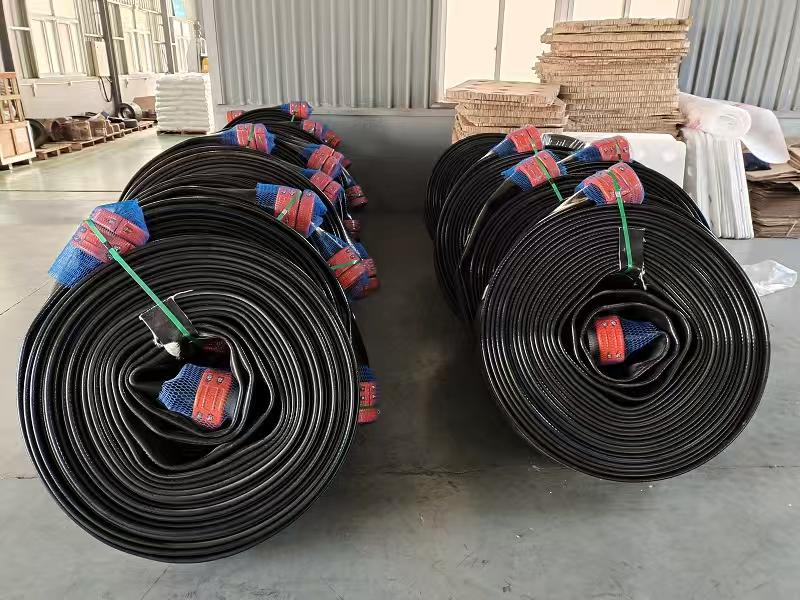
Across North American shale plays, produced water is shifting from being treated purely as waste to being recycled and reused in completions wherever feasible. Recycling reduces both wastewater volumes and freshwater withdrawals, and new treatment protocols can economically deliver water quality suitable for high‑intensity frac jobs. [engineering.tamu]
In basins such as the Permian, treating and reusing produced water is now often more economical than long‑distance trucking to saltwater disposal wells. That shift makes safe, reliable, high‑volume transfer lines—increasingly built around TPU layflat hoses—strategic infrastructure for ESG performance and regulatory compliance. [intelmarketresearch]
Produced water carries high salinity and trace chemicals, so even modest leaks can leave persistent environmental signatures. To manage this risk at scale, operators are integrating AI‑powered geospatial analytics with their water‑transfer networks. [shalemag]
By combining satellite imagery with advanced algorithms, these systems can detect anomalies associated with chloride plumes or standing water and alert field teams to potential hose or pipe failures far faster than traditional drive‑by inspections alone. For operators deploying long TPU hose runs, that means earlier intervention, smaller release volumes, and a stronger ESG story when reporting to stakeholders. [shalemag]
When specifying TPU produced‑water hoses for shale plays, engineering teams should move beyond just diameter and price and work through a structured checklist. [irrigationsupplyparts]
1. Define application and fluid
- Clarify whether the line is for produced water, blended frac water, or freshwater transfer, and gather expected TDS and chemical additives. [irrigationsupplyparts]
- Confirm continuous and surge temperature ranges at pump discharge. [irrigationsupplyparts]
2. Pressure and hydraulic profile
- Confirm maximum operating pressure plus a safety margin, including pump transients and elevation changes. [irrigationsupplyparts]
- Work with the manufacturer to model friction losses for hose ID and length, ensuring adequate flow at the frac location. [jafirehose]
3. Mechanical and environmental conditions
- Assess terrain (rocky, soft, road crossings), UV exposure, and risk of vehicle traffic over the line. [jafirehose]
- Select through‑the‑weave TPU construction and robust outer covers for abrasive or high‑traffic locations. [sunmoonhose]
4. Couplings and accessories
- Use high‑quality couplings sized and rated for the hose and fluid service; poor coupling choice is a leading cause of leaks. [irrigationsupplyparts]
- Plan for strain‑relief, anchor points, and bypass segments in critical areas. [youtube]
5. Total lifecycle cost
- Factor in expected reuse cycles, cleaning and storage requirements, and compatibility with your existing reels and handling equipment. [datainsightsmarket]
Proper routing and installation directly determine hose life and leak performance in shale environments. A practical field sequence looks like this: [youtube]
1. Pre‑job planning
- Survey the route for sharp rocks, traffic crossings, and elevation changes. [irrigationsupplyparts]
- Prepare a layout drawing indicating anchor points, valves, and connection to pumps and tanks. [youtube]
2. Deployment and routing
- Use reels or spoolers to unroll hose in a straight, untwisted line, avoiding torsion that can weaken the reinforcement. [youtube]
- Do not exceed the minimum bend radius, especially near couplings and manifold connections. [youtube]
3. Securing and protection
- Use clamps and stakes to keep the hose in place and limit movement during high‑flow operation. [youtube]
- Add ramps or protective crossings wherever vehicles may pass over the line. [irrigationsupplyparts]
4. Pressure testing and commissioning
- Conduct a controlled pressure test to the required level, maintaining pressure long enough to check all couplings and repair any minor weeps. [youtube]
- Document test results and mark the hose string as ready for operation.
5. Monitoring during operations
- Assign line‑walk responsibilities and integrate remote or AI‑based leak detection where available. [shalemag]
- Capture and trend incidents to refine routing and handling practices for the next deployment.
For water‑transfer supervisors, standardizing these steps in a SOP and quick‑reference field checklist is one of the fastest ways to extend hose life and reduce environmental events. [irrigationsupplyparts]
As a Chinese manufacturer focused on frac water transfer and produced‑water layflat hoses, Sunmoon works with service companies and operators across different basins, each with unique pressure, chemistry, and logistics requirements. [sunmoonhose]
Instead of a one‑size‑fits‑all product, we provide:
- Custom diameters and pressure ratings to match your pump fleet, target flow rates, and allowable friction loss per kilometer. [sunmoonhose]
- Tailored TPU formulations for specific produced‑water chemistries, UV exposure levels, and ambient temperature ranges. [aogr]
- Reel‑friendly hose designs that coil tightly and handle repeated deployment cycles without kinking or delamination. [jafirehose]
For multi‑region operators, that customization helps standardize connection hardware and deployment procedures while still accommodating local water chemistry and regulatory requirements. [intelmarketresearch]
In my experience, the most successful TPU hose programs start with a joint engineering review, not a price list. A typical engagement with Sunmoon can include: [irrigationsupplyparts]
- Reviewing your produced‑water quality data, including TDS and key treatment steps, and recommending suitable TPU grades. [engineering.tamu]
- Modeling pressure and flow for different hose diameters and layouts, with options for future scaling as pad sizes grow. [jafirehose]
- Helping your team develop standard operating procedures for deployment, retrieval, inspection, and storage. [sunmoonhose]
This approach turns your hose fleet into a strategic, reusable asset rather than a consumable line item that quietly erodes your water‑management budget. [datainsightsmarket]
If you are planning a new shale development or rethinking your water midstream strategy, here is a concise action plan you can follow:
1. Map your produced‑water flows
- Quantify expected volumes, distances, and head conditions across pads and central facilities over the next 3–5 years. [intelmarketresearch]
2. Define a hybrid infrastructure strategy
- Use rigid trunk lines where fixed, multi‑year routes make sense, and TPU layflat hoses for lateral connections and seasonal lines. [intelmarketresearch]
3. Engage a specialist TPU hose partner
- Share your design conditions and failure history; request a custom hose and coupling specification tailored to your basins. [irrigationsupplyparts]
4. Standardize installation and monitoring practices
- Implement clear SOPs based on best‑practice routing, pressure testing, and AI‑assisted leak detection. [shalemag]
5. Measure lifecycle cost and ESG impact
- Track deployment time, failure rates, water‑reuse volumes, and spill reductions to build a transparent value case for TPU hose investments. [datainsightsmarket]
If you want to reduce water‑transfer risk, increase reuse, and cut per‑barrel costs on your next shale project, reach out to Sunmoon's engineering team for a tailored TPU frac water hose proposal and technical review. [aogr]
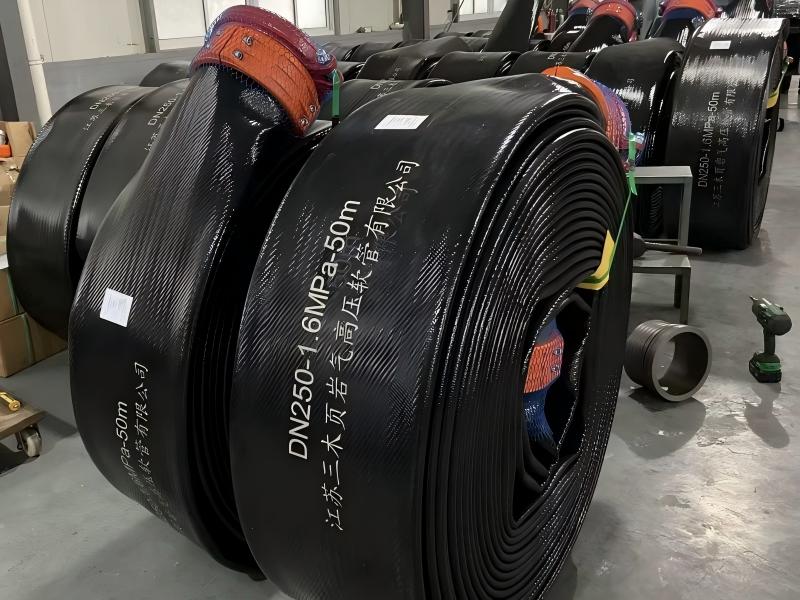
Q1: Are TPU frac water transfer hoses suitable for high‑salinity produced water?
Yes. High‑quality TPU formulations offer strong resistance to saline brines and common frac‑chemicals, and are widely used for produced water transfer and reuse in major shale basins. [aogr]
Q2: How many times can I typically reuse a TPU layflat hose string?
Actual reuse cycles depend on pressure, routing, handling, and terrain, but through‑the‑weave TPU hoses routinely deliver multiple campaigns when properly installed, protected, and stored. [jafirehose]
Q3: When should I choose rigid pipe instead of TPU hoses?
Rigid steel or HDPE lines remain a strong choice for permanent, high‑utilization trunk lines where routes are stable and long‑term, while TPU hoses are better for temporary laterals and flexible routing. [strategicmarketresearch]
Q4: What are the most common causes of TPU hose failures in the field?
Most incidents trace back to improper couplings, over‑bending, vehicle damage, or inadequate protection on rocky ground, rather than problems with the TPU material itself. [youtube]
Q5: Can TPU frac hoses help improve the ESG profile of my operations?
Yes. By enabling produced‑water reuse, reducing trucking, and integrating with advanced leak‑detection systems, TPU hose networks can significantly reduce spill risk and freshwater consumption. [engineering.tamu]
1. Sunmoon Hose. "How Sunmoon's High‑Pressure TPU Layflat Hose Transforms Shale Gas Water Supply Operations." [Link] [sunmoonhose]
2. JAFirehose. "TPU Lay Flat Hose for Shale Gas Fracturing Water Transfer." [Link] [jafirehose]
3. Intel Market Research. "Frac Water Management Treatment System Market Outlook 2026–2034." [Link] [intelmarketresearch]
4. American Oil & Gas Reporter. "Produced Water Innovations Can Become Scarcity Game‑Changers." [Link] [aogr]
5. Shale Magazine. "AI Geospatial Analytics: Tackling Produced Water Challenges." [Link] [shalemag]
6. Irrigation Supply Parts. "Guide to Fracking Hoses and Their Applications." [Link] [irrigationsupplyparts]
7. Irrigation Supply Parts. "Guide to Installing Water Transfer Hoses in Oilfields." [Link] [irrigationsupplyparts]
8. Parker Hannifin. "Proper Hose Installation & Routing Rules | ParkerStore." YouTube. [Link] [youtube]
9. Datainsights Market. "High Pressure Frac Hose Analysis 2026 and Forecasts 2034." [Link] [datainsightsmarket]
10. Strategic Market Research. "Oil and Gas Hose Assemblies Market 2026." [Link] [strategicmarketresearch]
11. Texas A&M Engineering. "A Synergistic Partnership for Beneficial Reuse of Produced Water." [Link] [engineering.tamu]


