

Views: 222 Author: Sunmoon Publish Time: 2026-04-19 Origin: Site


In shale gas and tight oil projects, frac water transfer hoses are the critical arteries that move huge volumes of water from ponds, rivers, or impoundments to the well pad for hydraulic fracturing. [irrigationsupplyparts]
Unlike rigid steel pipe or traditional poly pipe, TPU (thermoplastic polyurethane) layflat hoses can be quickly deployed, retrieved, and re-routed as the frac spread moves from pad to pad. They handle high working pressures, long transfer distances, and abrasive field conditions while minimizing leaks and unplanned downtime. [asoehose]
From my own experience in shale gas projects, choosing the right layflat frac hose—and pairing it with proper training—is often the difference between a smooth frac campaign and one plagued by leaks, pressure spikes, and costly non‑productive time (NPT).
As a China‑based manufacturer focused on high‑pressure TPU layflat hose for oil and gas, Sunmoon designs its Frac Water Transfer Hose specifically for shale gas water supply and long‑distance transfer projects. [sunmoonhose]
Key technical strengths reported from field use include:
- Higher burst pressure for demanding shale gas water transfer lines
- Outstanding abrasion resistance for rough terrain and repeated deployment
- Large‑diameter, long‑length reels that reduce coupling points and leak risks
- Custom engineering for different pressures, diameters, and environments [asoehose]
For more than 1.5 years, Sunmoon has supported shale gas water transfer projects with on‑site technical service and training, helping operators quickly adopt layflat systems and avoid early‑life hose failures.
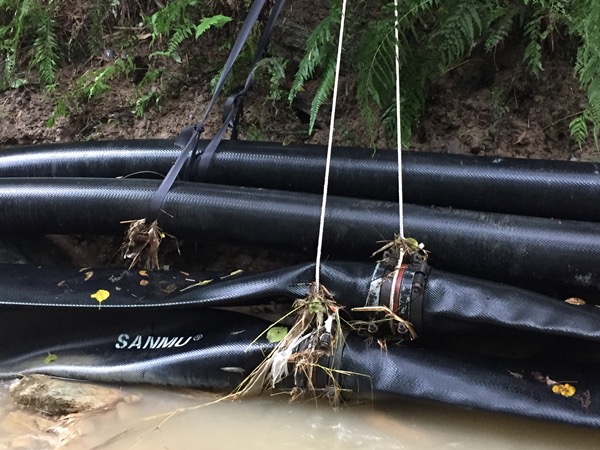
In China's shale gas fields, Sunmoon's high-pressure TPU layflat hoses have been deployed on long-distance water transfer lines that feed multi‑well pads.
In one typical project, the operator needed to move water from a low‑lying impoundment up to elevated pads with significant elevation changes. Sunmoon's engineering team:
- Designed a high‑pressure layflat hose configuration suited to the static head and pump curves
- Provided on‑site technical training at the frac location
- Helped optimize hose routing and slope transitions using sloped steel frames to reduce impact at hose–steel connections, extending hose life and reducing repair frequency
This combination of engineered hose + field service allowed local crews to quickly master deployment, operation, and maintenance, even if they had never worked with large‑diameter layflat hose before.

From both my field experience and industry data, modern TPU layflat frac hoses offer several advantages compared with rigid steel pipe or standard poly pipe in water transfer operations. [hondotx]
- Rapid deployment and retrieval
Crews can unspool and connect kilometers of hose far faster than assembling steel or poly lines, which reduces setup time between frac stages. [pureline]
- Flexibility and route adaptability
The hose easily follows terrain, roads, and temporary rights‑of‑way; rerouting for new pads or obstacles takes hours, not days. [hondotx]
- Reduced number of leak points
Longer continuous lengths mean fewer couplings, which are the most common failure points in water transfer lines. [pureline]
- Lower fuel and energy consumption
Properly sized layflat systems allow pumps to run at lower RPMs and lower differential pressure, reducing fuel use and emissions. [keystoneclear]
- Smaller storage and logistics footprint
Layflat hose coils compactly for storage and transport; a truck that once hauled a small length of rigid pipe can now carry kilometers of hose. [hondotx]
- Reduced spill risk
Fewer connections and high‑integrity TPU construction lower the chance of leaks and water spills, improving environmental performance. [selectwater]
From an engineering perspective, several design elements make Sunmoon's hoses suitable for demanding shale gas environments. [china-rubberhose]
Key technical characteristics:
- Material: High‑performance TPU cover and liner with a high‑tenacity woven reinforcement
- Working pressure: Configurable for high‑pressure water transfer lines used in shale gas and produced water systems
- Burst pressure: Designed with high safety margins for pressure spikes and elevation changes
- Abrasion resistance: Optimized for dragging across rough ground, gravel roads, and steel structures
- Temperature range: Suitable for a wide range of climate conditions in major shale plays
Based on current industry best practices, there are recurring patterns in successful frac water transfer operations using layflat hose. Sunmoon integrates these into its training programs and project support. [hondotx]
- Perform hydraulic calculations for flow rate, friction loss, and static head.
- Size hoses and pumps to maintain efficient operating pressures and avoid cavitation. [irrigationsupplyparts]
- Plan hose routes to minimize sharp bends, road crossings, and high‑risk areas. [hondotx]
- Unspool hoses straight and flat, avoiding twists that can stress the reinforcement. [irrigationsupplyparts]
- Use sloped steel frames or ramps at major elevation breaks to soften the transition, reduce water hammer, and protect hose–steel pipe connections from impact damage.
- Keep hoses clear of sharp edges, heavy vehicle traffic, and hot exhausts. [hondotx]
- Start pumps gradually to avoid pressure shocks and check for movement at couplings. [hondotx]
- Monitor line pressure and flow; significant changes often indicate partial blockage, pump issues, or leaks. [selectwater]
- Use pressure relief valves and check valves where appropriate. [asoehose]
- Conduct routine visual inspections for cuts, abrasions, blistering, and coupling wear. [irrigationsupplyparts]
- Clean and dry hoses before long‑term storage to prevent microbial growth and internal damage. [irrigationsupplyparts]
- Store in a cool, shaded area and avoid permanent kinks in the coils. [hondotx]
One of the most overlooked factors in frac water transfer success is crew training. Even the best hose can fail early if it is handled poorly or run outside design limits. [hondotx]
Sunmoon's technical team has built a structured training program for shale gas water transfer customers:
- Training plan and objectives
Define clear learning goals: safe deployment, proper connection techniques, pressure management, inspection routines, and troubleshooting.
- Classroom and on‑site sessions
Combine classroom safety and theory with on‑pad, hands‑on training, so operators learn with the actual hoses and pumps they will use.
- Guided first operations
During initial projects, Sunmoon's field engineers provide free on‑site support at the frac location, guiding customer operators step by step until they can operate independently.
- Ongoing support
For complex jobs—especially where elevation changes are large—Sunmoon engineers continue to advise on routing, slope transitions, and protection measures such as sloped steel ramps.
This approach helps new users move quickly from "never used layflat before" to "confident, independent operation," while reducing the risk of early damage and unplanned shutdowns.
The frac water transfer industry is not standing still. Several trends are shaping how operators choose and use layflat hoses today. [midwesthose]
Operators in major shale plays increasingly use large‑diameter layflat systems (e.g., 16‑inch hoses) to move more water with fewer pumps, lowering fuel costs and crew requirements. [keystoneclear]
An increasing share of frac water is now treated produced water, which can be more chemically aggressive. This drives demand for hoses with: [selectwater]
- Enhanced chemical resistance
- Better internal linings
- Strict quality control and traceability
Layflat hose technology originally optimized for oilfield is now benefiting agriculture, mining, municipal emergency response, construction, and even entertainment due to its flexibility and cost‑effectiveness. This broader adoption helps drive further material and design innovations that frac operators can leverage. [midwesthose]
From an engineering and operational perspective, each option has its place. However, for fast‑moving frac campaigns, TPU layflat hoses often provide the best balance of speed, safety, and cost. [pureline]
| Aspect | TPU Layflat Hose (asoehose) | Poly Pipe (hondotx) | Steel Line (irrigationsupplyparts) |
|---|---|---|---|
| Deployment speed | Very fast, roll‑out/roll‑up | Moderate | Slow |
| Flexibility (route) | High | Medium | Low |
| Leak points | Low (long lengths) | Medium | High (many joints) |
| Pressure capability | High | Medium | Very high |
| Abrasion resistance | High | Medium | High |
| Storage / transport space | Very low | Medium | High |
| Best use case | Dynamic frac water transfer | Semi‑permanent lines | Long‑term fixed lines |
In many shale plays, operators use a hybrid approach: layflat hoses for dynamic surface lines and steel or composite pipe for fixed sections near facilities. [asoehose]

Sunmoon positions itself not just as a hose supplier, but as a solution partner for frac water transfer. [facebook]
Key elements of the service model include:
- Engineering‑driven manufacturing
Founded in 2011, Sunmoon focuses on high‑performance TPU layflat hoses with rigorous material selection and process control. [sunmoonhose]
- Customization
Hoses can be customized in terms of diameter, pressure rating, length, and color to fit different regulatory, operational, and branding requirements across markets. [sunmoonhose]
- Direct factory supply
Shipping directly from the factory helps customers avoid hidden costs of warehouse storage while maintaining quality. [facebook]
- Field technical service
Dedicated technical staff support projects from design and planning through on‑site commissioning and training, particularly for shale gas and oilfield water transfer.
Based on on‑site experience, here are practical, expert‑level tips that significantly extend the life of frac water transfer hoses:
1. Respect elevation changes
Use gradual transitions and sloped steel frames where the height difference is large to reduce impact at hose–steel connections and lower surge pressures.
2. Avoid over‑bending and twisting
Keep bend radii within the manufacturer's limits and eliminate twists during deployment—these are common root causes of early failures. [asoehose]
3. Manage vehicle crossings
Use ramps or protective crossings where trucks pass over the line; never allow direct tire contact with unsupported hose sections. [irrigationsupplyparts]
4. Standardize inspection routines
Build pre‑shift and post‑shift inspection checklists into your operating procedures, and tag or remove any suspect hose segments promptly. [hondotx]
5. Capture lessons learned
After each project, log issues (leaks, coupling problems, terrain challenges) and feed them back to Sunmoon so the next layout and training program can be even better.
If you are planning a new frac water transfer project or want to upgrade from rigid pipe to modern layflat systems, consider involving Sunmoon early in your design phase.
- Share your planned flow rates, distances, elevation profile, and water quality.
- Request a custom hose specification and layout proposal tailored to your geology, climate, and regulatory environment.
- Schedule on‑site or remote training so your team can deploy and operate the system confidently from day one.
By combining engineered TPU layflat hose, project‑specific design, and hands‑on training, you can reduce risk, improve efficiency, and extend hose life across your entire frac program.
Select hose diameter and pressure rating based on your target flow rate, pump configuration, friction loss, and elevation profile. A Sunmoon engineer can run the hydraulic calculations for you and recommend the optimal hose size, working pressure, and pump spacing. [keystoneclear]
Modern TPU layflat hoses are designed for fresh water, brine, and many produced water applications, but the exact chemical compatibility depends on the fluid. Sunmoon can review your water analysis and confirm whether standard hose is suitable or if an alternative specification is needed. [china-rubberhose]
Service life depends heavily on operating pressure, handling practices, terrain, and inspection discipline. With proper design, deployment, and maintenance, many operators get multiple campaigns from each hose segment. Using sloped ramps at elevation changes and avoiding sharp edges significantly extends life. [pureline]
Key risks include over‑pressurization, improper couplings, vehicle damage, and uncontrolled hose movement during start‑up or shut‑down. Mitigate these by following manufacturer pressure limits, using qualified fittings, protecting road crossings, and adopting gradual pump ramp‑up procedures. [irrigationsupplyparts]
Sunmoon supports global customers through customized hose manufacturing, engineering design assistance, remote and on‑site training, and direct factory shipments that reduce cost and lead time. The company's focus on TPU layflat hose for oil and gas ensures that designs keep pace with evolving frac water transfer practices worldwide. [facebook]
1. Irrigation Supply Parts – "Guide to Fracking Hoses and Their Applications" – overview of fracking hose roles and performance requirements. <https://irrigationsupplyparts.com/guide-to-fracking-hoses-and-their-applications/> [irrigationsupplyparts]
2. Hondo Resources – "Top 11 Best Practices for Effective Frac Water Transfer" – best practices for designing and operating water transfer systems. <https://hondotx.com/blog/frac-water-transfer-best-practices/> [hondotx]
3. ASOE Hose Manufacturing – "Frac Water Transfer Solution" – technical background on layflat frac hose systems. <https://www.asoehose.com/oil-gas/frac-water-transfer-solution/> [asoehose]
4. Keystone Clear – "The Benefits of Using 16-inch Layflat Hose for Water Transfer in the Permian Basin" – data on large‑diameter layflat efficiency and pump energy savings. <https://keystoneclear.com/resources/blog/the-benefits-of-using-16-inch-layflat-hose-for-water-transfer-in-the-permian-basin/> [keystoneclear]
5. Hondo Resources – "Layflat Hose vs Poly Pipe: Which Is Best for You?" – comparative analysis of layflat hose and poly pipe in oilfield water transfer. <https://hondotx.com/blog/layflat-hose-vs-poly-pipe/> [hondotx]
6. Sunmoon – "Customized TPU Layflat Hose, Oil and Gas Hose, Dewatering Hose" – corporate and product information for Sunmoon's TPU layflat hose solutions. <https://www.sunmoonhose.com> [sunmoonhose]
7. Select Water Solutions – "Layflat Hose for Oilfield Water Transfer – Produced Water Applications" – industry trend toward produced water reuse and hose requirements. <https://www.selectwater.com/revolutionizing-layflat-hose-technology-for-produced-water-applications/> [selectwater]
8. PureLine – "3 Advantages in Using Lay-Flat Hose for Water Transfer" – advantages of layflat hose for scalable long‑distance water transfer. <https://www.pureline.com/3-advantages-in-using-lay-flat-hose-for-water-transfer/> [pureline]
9. China Rubber Hose – "Hoses for Shale Gas & Oil Fracturing" – description of hose requirements for shale gas applications. <https://www.china-rubberhose.com/hoses-for-shale-gas-oil-fracturing/> [china-rubberhose]
10. Midwest Hose – "Surprising Industries Benefiting from Layflat Hose Technology" – examples of cross‑industry adoption of layflat hose. <https://www.midwesthose.com/from-agriculture-to-aerospace-surprising-industries-benefiting-from-layflat-hose-technology/> [midwesthose]
11. Sunmoon social media – "If you're sourcing frac hose from a US warehouse…" – information about direct factory supply and cost structure. <https://www.facebook.com/61581858315592/videos/> [facebook]
12. Wikipedia – "Fracking hose" – general description of fracking hoses and their role in hydraulic fracturing. <https://en.wikipedia.org/wiki/Fracking_hose> [en.wikipedia]


