

Views: 222 Author: Loretta Publish Time: 2025-12-28 Origin: Site


Content Menu
● Understanding Hose Materials and Their Importance
● PVC vs Rubber vs TPU: Quick Comparison Table
>> Advantages
>> Limitations
>> Advantages
>> Limitations
● TPU Layflat Hose: The Next Generation Solution
● 10 Technical Differences Between PVC and Rubber Hose
● Practical Hose Selection Guide
● Partnering with an Engineering-Focused Hose Manufacturer
● Frequently Asked Questions (FAQ)
>> 1. Is PVC or rubber hose more suitable for everyday use?
>> 2. When should PVC hoses be avoided?
>> 3. Why are TPU hoses popular in industrial fields?
>> 4. Are rubber hoses always superior to PVC?
>> 5. How do TPU hoses compare with rubber in cost-performance?
Hoses play a vital role in fluid transfer across industries—from gardening and construction to mining and oil & gas. However, not all hoses are created equal. The material you choose directly impacts performance, safety, and long-term cost. While PVC and rubber hoses dominate the market, the modern TPU layflat hose is quickly becoming a superior alternative for heavy-duty, high-pressure, or long-distance applications.
This article compares PVC vs rubber hose in depth and introduces how TPU layflat hoses outperform both in demanding environments.

A hose may seem simple, but its composition determines flexibility, temperature range, chemical resistance, and lifespan. Selecting the wrong material can cause cracks, leaks, or complete system failure.
If your operations involve heat, pressure, or chemical exposure, material choice becomes mission-critical. PVC offers affordability and ease, rubber delivers flexibility and toughness, while TPU provides unmatched durability and performance consistency.
Feature | PVC Hose | Rubber Hose | TPU Layflat Hose |
Material | Polyvinyl chloride with plasticizers | Natural or synthetic elastomer (EPDM, nitrile) | Thermoplastic polyurethane reinforced with textile fiber |
Flexibility | Moderate; stiffens in cold | High flexibility, even in cold | Excellent flexibility across a wide temperature range |
Durability | Prone to UV and abrasion damage | Good mechanical resistance | Outstanding abrasion and tear resistance |
Temperature Range | –10°C to +60°C | –40°C to +90°C | –46°C to +125°C (depending on formula) |
Pressure Handling | 50–300 PSI | 300–6,000 PSI | High working pressure; minimal deformation at length |
Chemical Resistance | Weak to fuels and harsh solvents | Good to oils and fuels | Excellent to fuels, chemicals, and abrasion |
Weight | Very lightweight | Heavy, stable under pressure | Lightweight layflat design for easy deployment |
Environmental Impact | Non-biodegradable, limited recycling | Natural rubber is biodegradable | Long lifespan and recyclable |
Applications | Garden, irrigation, low-pressure tools | Hydraulic, fuel, and air systems | Mining, irrigation, oil & gas, firefighting |
Cost | Low initial cost, high replacement rate | Moderate cost, longer life | Higher upfront, lowest long-term cost |
PVC hoses are made from polyvinyl chloride, mixed with softening agents for flexibility. They are low-cost and widely available, making them popular for general use.
- Low purchase cost.
- Lightweight and easy to handle.
- Resistant to mild chemicals.
- Transparent variants available for fluid visibility.
- Lose elasticity and crack in cold conditions.
- Deform under sustained pressure or heat.
- Poor resistance to oils and fuels.
- Difficult to recycle; non-biodegradable.
PVC hoses are suitable for light-duty applications but should be avoided where performance and durability are critical.
Rubber hoses are composed of natural or synthetic rubber and reinforced with layers of fiber or metal for added strength. They are widely used in heavy-duty and high-pressure systems.
- Excellent elasticity and resilience.
- Handles extreme temperatures effectively.
- Resists impact, vibration, and abrasion.
- Performs well with fuels, oils, and hot water.
- Heavier and bulkier than PVC.
- Higher initial purchase cost.
- Potential ozone degradation without proper care.
Rubber hoses outlast PVC in high-stress environments but are less convenient to handle over long distances.
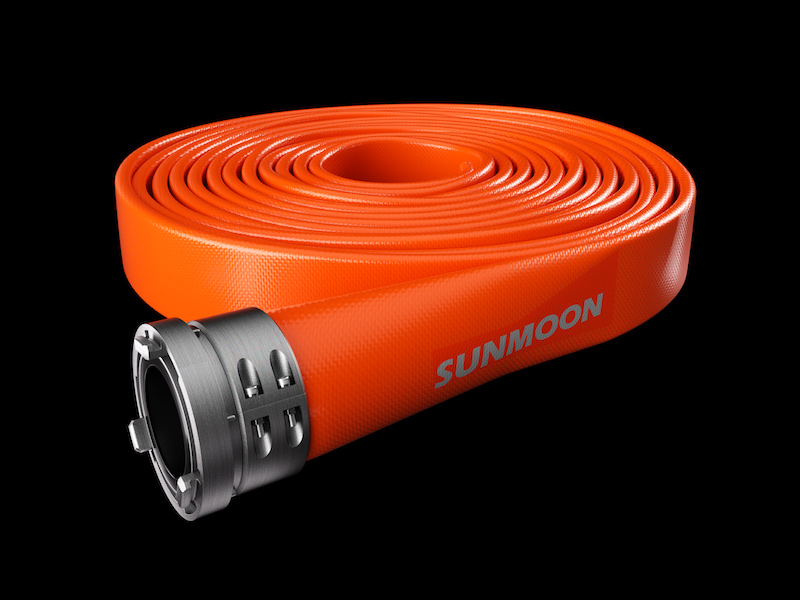
Thermoplastic polyurethane (TPU) layflat hoses combine flexibility with high tensile strength. They flatten for compact storage and inflate fully under pressure, maintaining roundness and flow stability.
- Exceptional abrasion and puncture resistance.
- Operates reliably from –46°C to +125°C.
- Carries high pressure without kinking or expansion.
- Resistant to fuels, chemicals, and UV exposure.
- Lightweight and easy to deploy over long distances.
- Agricultural irrigation and fertigation.
- Mine dewatering and slurry transport.
- Oilfield water logistics and wastewater handling.
- Disaster relief, firefighting, and flood control.
The combination of performance, longevity, and recyclability makes TPU layflat hoses a preferred choice for global engineering and industrial projects.
PVC is a thermoplastic; rubber is an elastomer. Rubber's crosslinked molecular structure allows superior elasticity and durability under repeated stress.
PVC stiffens at low temperatures, while rubber remains flexible even in freezing conditions—minimizing cracking and kinking.
Rubber hoses absorb impact better and resist wear, while PVC is vulnerable to abrasion and UV light over time.
PVC performs best under +60°C, whereas rubber maintains performance up to +90°C.
Rubber hoses have higher pressure tolerance due to reinforcement layers, making them ideal for hydraulic and pneumatic systems.
PVC weakens with fuels or solvents, while rubber—especially nitrile—handles hydrocarbons and oils effectively.
PVC's light weight aids maneuverability but increases kinking risk; rubber's density gives better stability but adds handling difficulty.
PVC is non-biodegradable; natural rubber decomposes naturally. TPU's long service life further minimizes environmental replacement waste.
PVC fits household and light industrial needs. Rubber excels in hydraulic, automotive, and high-temperature settings.
PVC offers the lowest purchase cost but highest replacement frequency. Rubber or TPU delivers better long-term investment returns.
1. Define your media:
- Water, mild chemicals → PVC.
- Fuel, oils, or solvents → Rubber or TPU.
2. Assess your pressure and temperature range:
- Low → PVC.
- High or variable → Rubber or TPU.
3. Consider handling frequency:
- Stationary systems → Rubber.
- Portable setups → TPU layflat hose.
4. Review lifecycle and sustainability goals:
- Short-term or low-budget → PVC.
- Long-term and eco-conscious → TPU.
The right selection balances upfront cost with performance and environmental responsibility.
Working with a specialized TPU hose manufacturer ensures you receive technical validation and product customization. Engineering-driven teams can:
- Tailor hoses for your application pressure, media, and terrain.
- Certify compliance with safety standards.
- Optimize coupling and reel systems for faster deployment.
- Offer traceability and material testing for critical industries.
This technical partnership ensures your hose systems perform efficiently, reliably, and sustainably.
Choose performance that lasts. If your industry demands extreme durability, high-pressure transfer, or environmental adaptability, consider upgrading to engineering-grade TPU layflat hose technology. Contact our specialist team today to evaluate your project needs and optimize your fluid-handling system for long-term efficiency and sustainability.
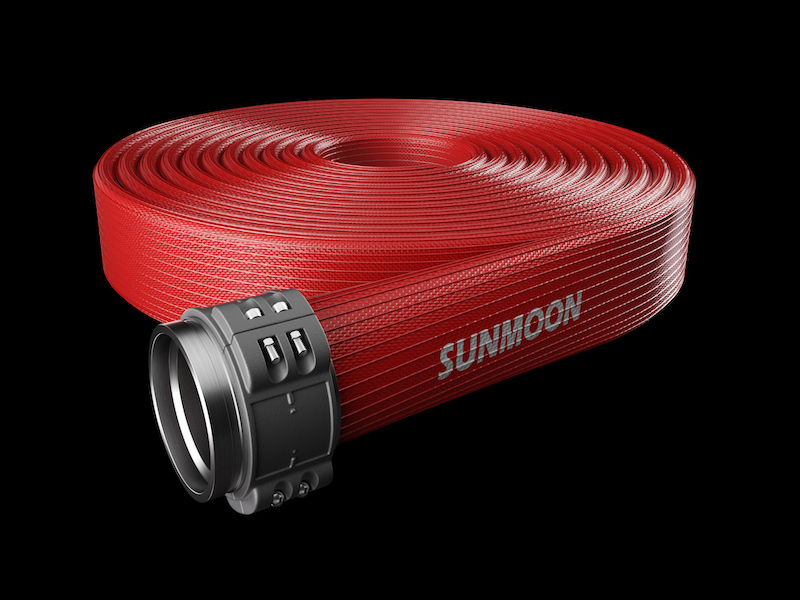
PVC is fine for standard garden or low-pressure work. Rubber hoses offer better flexibility and longer service, ideal for frequent or professional use.
Avoid PVC hoses for high-pressure systems, extreme cold, or exposure to oils and solvents. They can harden, crack, or leak.
TPU layflat hoses combine high strength, flexibility, and chemical resistance while being lightweight and easy to transport—essential for construction, mining, and agriculture.
Not necessarily. While rubber offers higher temperature and pressure resistance, PVC remains economical for short-term, low-duty applications.
Although TPU hoses cost more upfront, their extended lifetime and lower maintenance result in greater long-term savings, especially in large-scale operations.


