

Views: 292 Author: Sunmoon Publish Time: 2026-07-02 Origin: Site


Content Menu
● Understanding Kinking in Underground Tight-Space Pumping
● Dewatering Hose vs Drag Hose – Core Definitions
● Comparing Dewatering Hose and Drag Hose in Tight-Space Pumping
>> Functional Comparison Table
● Why Dewatering Hoses Kink in Underground Projects
>> Flexibility – A Double-Edged Sword
>> Installation and Fitting Mismatch
● Why Drag Hoses Kink – Even When Engineered for Tough Duty
● Expert Troubleshooting Framework for Kinking Issues
>> Step 1 – Diagnose the Kink Type and Location
>> Step 2 – Correct Routing and Bend Radius
>> Step 3 – Optimize Fittings and Couplings
● Case Insight – Underground Water Extraction with Confined Pump Rooms
● Latest Engineering Trends in Anti-Kinking Layflat Hoses
>> Multi-Pressure Options and Aramid-Reinforced Designs
>> Engineering-Grade Quality Control
● Practical Checklist – Preventing Kinks Before They Happen
● How Sunmoon Customization Helps Solve Kinking Problems
● Action-Oriented Recommendations for Project Owners
● Call to Action – Design Your Anti-Kinking Underground Hose System
● FAQ
Kinking is one of the most common failures in underground pumping systems using layflat hoses, especially when space is tight, routing is complex, and the hose is repeatedly dragged or repositioned. It can choke flow, damage the hose reinforcement, and cause unexpected downtime on dewatering, emergency rescue, and underground water extraction jobs. [sunmoonhose]
In this article, we will compare dewatering hose and drag hose, explain why kinking happens in each type, and provide a practical troubleshooting framework that combines field best practices with engineering‑grade hose customization options from Sunmoon. [sunmoonhose]
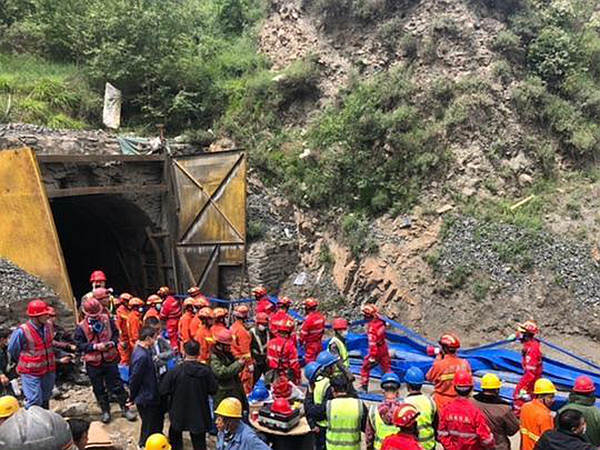
Kinking occurs when a hose bends beyond its minimum bend radius, causing a sharp fold that restricts or completely stops flow. In underground tight-space pumping, hoses must navigate narrow shafts, low ceilings, sharp corners and congested equipment areas, and this geometry amplifies the risk of kinking. [sunmoonhose]
Key kinking risk factors include:
- Very small bend radius near pump outlets or manifolds
- Poorly planned hose routing across corners or stairs
- Dragging hoses over abrasive surfaces or edges
- Mixed hose types with different flexibility and stiffness
- Inadequate support, clamping or reel management
When you see pressure spikes, sudden flow loss, or visible flat spots along the hose, you are likely facing a kinking issue that needs immediate troubleshooting.
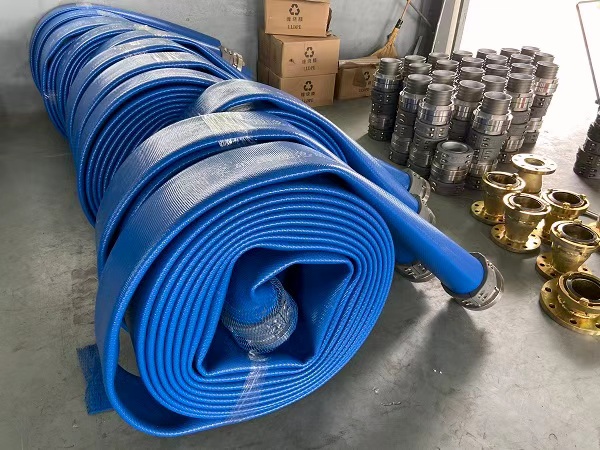
A dewatering hose is a layflat hose designed to transfer water and slurry away from construction sites, tunnels, mines, and flooded areas. Sunmoon's dewatering hoses are TPU layflat hoses engineered for durability, flexibility and long‑distance water transfer, with multiple pressure options per diameter. [sunmoonhose]
Typical features:
- High flexibility for quick deployment and retrieval
- Multiple working pressures at the same hose size
- Abrasion‑resistant outer cover for rough surfaces
- Compatibility with portable pumps and temporary setups
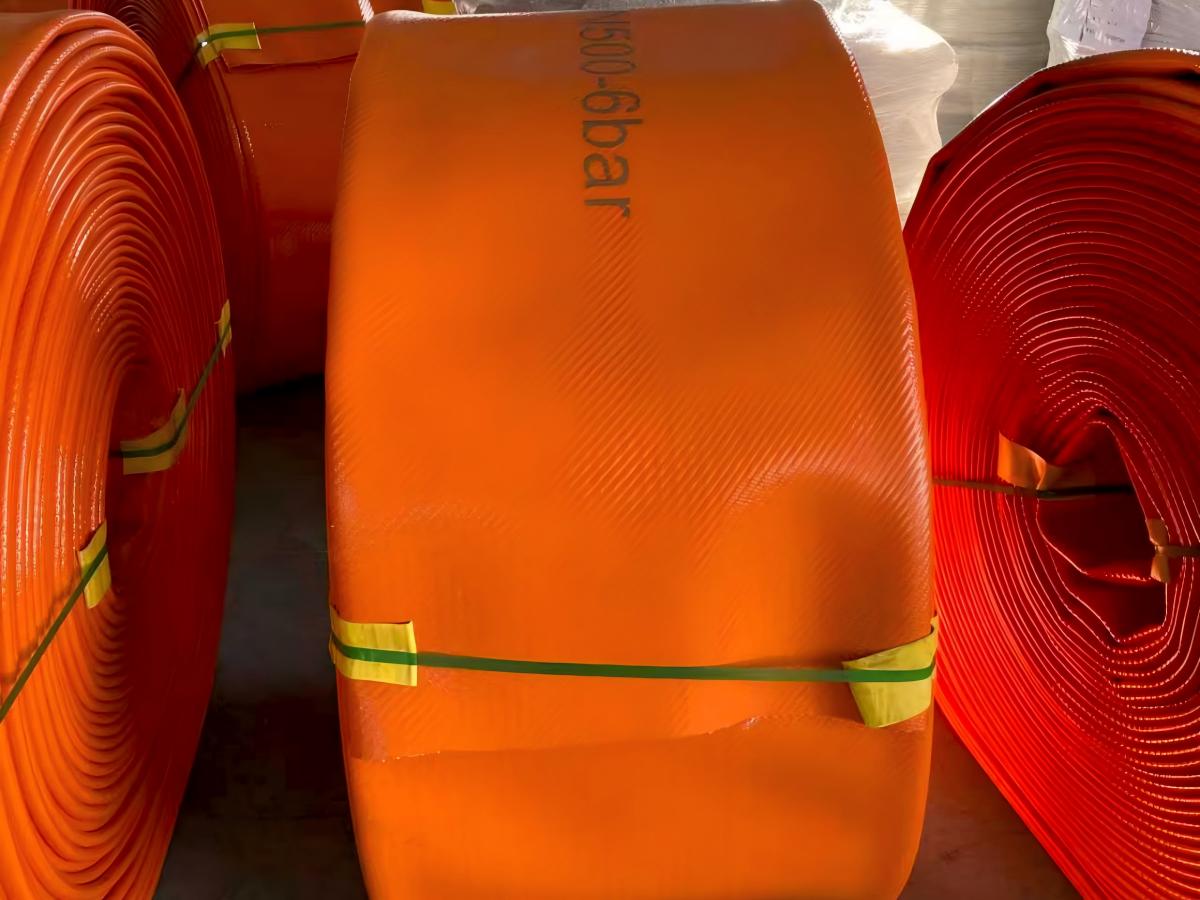
A drag hose is a layflat hose specifically optimized to be pulled or dragged over long distances, often in agriculture, sludge spreading and large‑scale dewatering projects. Sunmoon's drag hoses focus on enhanced abrasion resistance, long service life and stable performance under repeated dragging cycles. [sunmoonhose]
Key drag hose attributes:
- Reinforced construction for high tensile and drag loads
- Superior abrasion resistance for field operations
- Optimized balance of stiffness and flexibility
- Available in larger diameters for high flow rates
| Aspect | Dewatering Hose | Drag Hose |
|---|---|---|
| Primary use | Stationary or semi‑mobile water/slurry removal in construction, mining, tunnels. (sunmoonhose) | Continuous dragging in fields, long‑distance transfer, large dewatering networks. (sunmoonhose) |
| Flexibility | Generally more flexible, easier to coil around obstacles. (sunmoonhose) | Slightly stiffer, designed to resist deformation during dragging. (sunmoonhose) |
| Abrasion resistance | Good, suited for construction sites and underground surfaces. (sunmoonhose) | Enhanced abrasion resistance for heavy dragging and rugged terrain. (sunmoonhose) |
| Kinking tendency | Higher if bend radius is too small or hose is poorly supported. | Lower under drag tension, but can kink at tight bends near fittings or reels. |
| Best underground use case | Confined pumping where hose routing is complex and frequent repositioning is required. (sunmoonhose) | Main trunk lines in larger tunnels/shafts where hoses are pulled into place and kept under tension. (sunmoonhose) |
From a user perspective, both hoses can work in underground pumping, but the kinking behavior differs because of flexibility, construction and how they are operated.
Dewatering hoses are highly flexible, which makes deployment easy but also means they can bend sharply if routing is not carefully planned. In tight underground spaces, operators often force hoses around 90‑degree corners, low beams or ladder openings, accidentally pushing the bend radius below safe limits. [sunmoonhose]
Common dewatering hose kinking scenarios:
- Sharp bends right at pump outlets or elbows
- Hose compressed under equipment, steel plates or debris
- Coils stacked too tightly in storage areas, creating memory‑shaped kinks
- Sudden changes in elevation with no support points
Improper coupling or mismatching hose diameter with fittings can create stress concentration points that act as kinking origins. When fittings are too heavy or too rigid for the hose size, the hose can fold right behind the coupling under back pressure or gravity. [sunmoonhose]
Key risk patterns:
- Oversized metal fittings on light hoses
- Inadequate clamping, allowing micro‑movement at connection points
- Long unsupported horizontal runs with heavy fittings at the ends
Drag hoses are designed with enhanced abrasion resistance and stronger reinforcement, but they are not kinking‑proof. Their stiffness helps them hold shape under tension, yet in tight spaces where they are forced into sharp curves without proper guides, they can still develop folds. [sunmoonhose]
Typical drag hose kinking triggers:
- Tight curves near hose reels or manifold connections
- Sudden direction changes in confined shafts without roller guides
- Over‑tensioning the hose, causing local buckling when hitting obstacles
- Mixing soft hoses and drag hoses in one line, creating uneven bending behavior
Because drag hoses often operate in long continuous runs, a single kink can reduce effective capacity along the entire line, impacting productivity and pumping efficiency.
Before acting, you need to identify how the kink formed and where it sits relative to the pump, fittings and support points.
1. Inspect visible hose segments for flat spots, sharp bends or twisted sections.
2. Check pressure and flow readings upstream and downstream of suspected areas.
3. Map hose routing across corners, elevations and obstacles in the tight space.
4. Record whether the kink appears near couplings, anchor points or unsupported spans.
By classifying the kink as installation‑induced, routing‑induced, or load‑induced, you can choose targeted corrective actions instead of simply replacing the hose.
Once you locate the kink, adjust the hose path to respect realistic bend radius limits for the chosen dewatering or drag hose.
Practical corrections:
- Re‑position pumps or manifolds to avoid 90‑degree corners at outlets.
- Use smooth curves instead of sharp turns around pillars or ladders.
- Add intermediate support points (hooks, saddles, rollers) on long runs.
- Avoid stacking hoses under temporary platforms or heavy equipment.
For Sunmoon hoses, you can consult engineering guidance on the recommended bend radius and choose pressure classes and constructions that better tolerate tight‑space routing. [sunmoonhose]
Fittings and couplings play a critical role in kinking behavior at connection points.
Focus on:
- Matching diameter and pressure class of hose and couplings. [sunmoonhose]
- Using lighter or more compact fittings where space is constrained.
- Ensuring proper clamping so the hose transitions smoothly from the fitting.
- Adding short rigid spools or elbows to move sharp bends away from the hose body.
Engineering‑level customization of coupling systems is one of Sunmoon's strengths and allows you to align fittings with real‑world underground layouts. [sunmoonhose]
Sunmoon has supported multiple underground water extraction projects where tight pump rooms and narrow access tunnels created serious kinking risk for layflat hose systems. In these projects, the team combined on‑site layout audits with customized hose pressure classes and routing plans to stabilize performance. [sunmoonhose]
A typical improvement pattern:
- Replace generic hoses with TPU dewatering hoses tuned to operating pressure and length. [sunmoonhose]
- Use drag hoses as trunk lines in wider shafts where hoses can stay under tension and drag loads. [sunmoonhose]
- Redesign routing to avoid sharp bends directly at pump outlets.
- Introduce standardized support brackets at height changes and corners.
The result was reduced kinking incidents, more predictable flow rates and lower maintenance workload over long‑term operation.
One important trend is offering multiple working‑pressure options at the same diameter, so operators can choose the most cost‑effective hose without over‑designing and adding unnecessary stiffness. This supports better kinking performance by matching hose construction to real operating conditions instead of a one‑size‑fits‑all standard. [sunmoonhose]
Sunmoon has also introduced aramid‑reinforced layflat hoses to push pressure and strength boundaries for critical‑duty applications. These designs help maintain shape under high pressure and drag loads, reducing deformation that can evolve into kinks when routing is properly planned. [sunmoonhose]
Every Sunmoon hose is hydrostatically tested on a 260‑meter pressure‑test line, with only hoses that operate stably at their specified working pressure being approved for shipment. This engineering‑grade quality control ensures that when kinking occurs in the field, it is usually linked to routing, installation or load conditions rather than fundamental product defects. [sunmoonhose]
If you are planning underground tight‑space pumping with dewatering or drag hoses, use this pre‑deployment checklist:
1. Define operating pressure and flow requirements clearly.
2. Choose hose type: dewatering hose for flexible routing; drag hose for long trunk lines under tension. [sunmoonhose]
3. Verify minimum bend radius in critical corners and elevation changes.
4. Design hose routing that avoids sharp bends immediately at pump outlets.
5. Select fittings and couplings that match diameter and pressure class. [sunmoonhose]
6. Plan support points and anchoring to prevent sagging and local buckling.
7. Train operators on safe dragging, coiling and storage practices.
Following this checklist reduces kinking risk, extends hose life and improves overall system reliability.
Sunmoon provides engineering‑level customization across diameter, pressure class, materials, structure, length and coupling systems, allowing you to tailor hoses to specific underground layouts. For tight‑space pumping, this means you can choose combinations of dewatering hoses and drag hoses that balance flexibility, strength and anti‑kinking performance. [sunmoonhose]
Customization benefits:
- Right pressure, right value – avoid over‑rigid hoses by selecting pressure precisely for actual duty. [sunmoonhose]
- Integrated hose reel solutions that manage bend radius and dragging direction.
- Matching coupling systems that reduce stress concentration and kinking at connections. [sunmoonhose]
For global projects, Sunmoon positions itself as a best value choice, delivering engineering‑grade quality comparable to leading European brands with the efficiency advantages of advanced manufacturing in China. [sunmoonhose]
For project owners, engineers and site supervisors dealing with kinking issues in underground tight-space pumping, the most effective approach is to treat hoses as engineered components rather than generic consumables.
Recommended actions:
- Audit your current hose layouts and identify kinking hotspots.
- Distinguish where dewatering hoses or drag hoses are more appropriate in the system.
- Engage with an engineering‑driven manufacturer like Sunmoon to review pressure classes, diameters and reinforcement options. [sunmoonhose]
- Standardize installation practices and training around bend radius, routing and support.
By combining expert layout design, correct hose selection and controlled operation, you can significantly reduce kinking incidents and prolong hose lifecycle.
If you are planning or already operating an underground dewatering or tight‑space pumping project and facing kinking problems, the fastest way forward is to review your hose system with an engineering partner.
Sunmoon's team can support you with:
- Detailed application assessment (pressure, layout, environment).
- Selection between dewatering hose and drag hose for each segment.
- Custom pressure classes, diameters and reinforcement options to stabilize performance. [sunmoonhose]
- Integrated solutions including hose reels and coupling systems for better bend control. [sunmoonhose]
Reach out to Sunmoon to design a kink‑resistant layflat hose solution tailored to your underground tight‑space pumping challenges and long‑term operational goals. [sunmoonhose]
Q1: What is the main difference between dewatering hose and drag hose in underground applications?
Dewatering hoses prioritize flexibility for complex routing, while drag hoses emphasize abrasion resistance and stability under continuous dragging, making them better suited for trunk lines under tension. [sunmoonhose]
Q2: How can I quickly identify kinking issues in my pumping system?
Look for visible flat spots or sharp bends on hoses, monitor sudden drops in flow or pressure changes, and check areas near fittings, corners and elevation changes for local buckling.
Q3: Are higher-pressure hoses always better for reducing kinks?
Not necessarily. Over‑designed high‑pressure hoses can be too stiff for tight routing. Selecting the right pressure class for the actual duty usually offers better anti‑kinking performance. [sunmoonhose]
Q4: What role do couplings and fittings play in kinking?
Improper or oversized fittings create stress concentration points near connections, making hoses more likely to kink right behind the coupling under load or gravity. Matching fittings to hose diameter and pressure reduces this risk. [sunmoonhose]
Q5: Can customization really help solve persistent kinking problems?
Yes. By customizing hose diameter, pressure class, reinforcement and coupling systems to your specific underground layout, you can control bend behavior, improve routing and significantly cut kinking incidents over time. [sunmoonhose]
1. Sunmoon Hose – Who We Are? – TPU Layflat Hose Manufacturer. Available at: [https://www.sunmoonhose.com/aboutus.html] [sunmoonhose]
2. Sunmoon Hose – Customized TPU Layflat Hose, Oil and Gas Hose, Dewatering Hose. Available at: [https://www.sunmoonhose.com] [sunmoonhose]
3. Sunmoon Hose – Drag Hose Product Page. Available at: [https://sunmoonlayflathose.com/products/drag-hose] [sunmoonlayflathose]
4. Sunmoon Hose – Top Drag Hose Manufacturers and Suppliers in America. Available at: [https://www.sunmoonhose.com/top-drag-hose-manufacturers-and-suppliers-in-america.html] [sunmoonhose]
5. Sunmoon Hose – Sitemap & Contact Information. Available at: [https://www.sunmoonhose.com/sv/sitemap.html] [sunmoonhose]


