

Views: 222 Author: Loretta Publish Time: 2026-01-14 Origin: Site


Content Menu
● Understanding Drag Hose Systems
● Why Quality Matters in Drag Hoses
● Core Construction Features to Look For
● Performance Specifications That Matter
● Leading American Drag Hose Manufacturers and Suppliers
>> Puck Enterprises and BullDog Hose Company
>> Phil's Pumping & Fab and Regional Dealers
>> RJ Miller Hose Solutions and Other Local Specialists
● Global Brands Supporting the American Market
>> 5ELEM
● Sunmoon: Engineering‑Driven TPU Layflat Hose Specialist
>> Technical Characteristics of Sunmoon TPU Drag Hose
>> How Sunmoon Fits into the American Supply Landscape
● Selecting the Right Drag Hose Manufacturer or Supplier
● Operational Best Practices for Drag Hose Systems
● Frequently Asked Questions (FAQ)
>> 1. How does a drag hose system differ from traditional tanker spreading?
>> 2. What advantages does TPU drag hose offer over conventional rubber hoses?
>> 3. How can American buyers evaluate international Drag Hose Manufacturers and Suppliers?
>> 4. What factors most strongly affect drag hose service life?
Choosing the right drag hose manufacturers and suppliers in America is essential for efficient manure management, irrigation, mining, and industrial fluid transfer operations. Engineering‑driven TPU layflat hose specialists such as Sunmoon are increasingly part of the sourcing mix for American drag hose buyers who demand high pressure, long‑distance, and long‑life hose systems.[1][2]

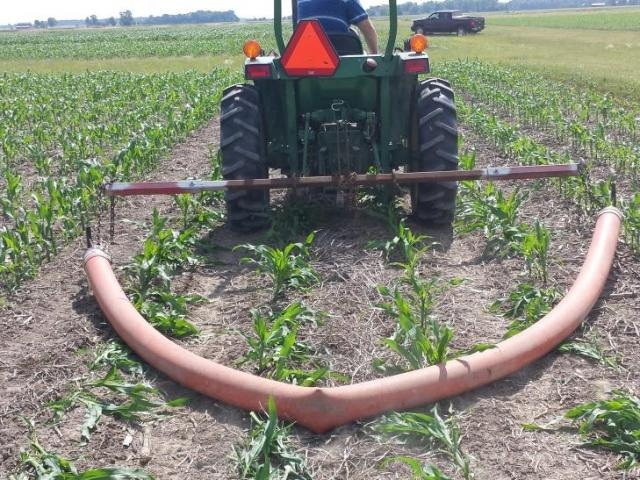
Drag hose systems rely on long, flexible layflat hoses that connect a pump at the storage site to applicators working across large fields or work zones. Instead of hauling multiple tank loads, the system continuously transfers liquid manure, slurry, or water through hoses that are pulled behind tractors or toolbars, dramatically improving operational efficiency.[3]
Key benefits of drag hose systems include reduced soil compaction, fewer trips with heavy tankers, and more consistent nutrient application across large acreages. In American agriculture, drag hoses have become a central technology for high‑capacity manure injection and surface application in corn, hay, and pasture systems.[4][3]
High‑quality drag hoses must survive repeated deployment, retrieval, and dragging over rough and sometimes abrasive terrain. Inferior hoses increase the risk of bursts, downtime, and costly field repairs, which can disrupt critical application windows. For this reason, advanced through‑the‑weave constructions, premium TPU or elastomer coverings, and precise quality control are key differentiators for leading Drag Hose Manufacturers and Suppliers.[2][5]
A well‑designed drag hose balances flexibility and toughness so operators can maneuver easily while still resisting cuts, kinks, and wear. Over the life of a hose system, better construction quality often lowers the total cost of ownership by extending service life and reducing emergency repairs.[2][3]
When evaluating Drag Hose Manufacturers and Suppliers, pay close attention to how the hose is built. Construction details often reveal how a product will perform in severe American field conditions.
Important construction characteristics include:
- Reinforcement layer: Most top‑tier drag hoses use circular‑woven high‑tenacity polyester or aramid fibers that provide high tensile strength and controlled elongation.[5]
- Through‑the‑weave extrusion: With this method, TPU or other elastomers are extruded through and around the jacket, forming a single composite wall that resists delamination under cyclic pressure and bending.[3][5]
- Cover and lining materials: TPU covers offer excellent abrasion, UV, and chemical resistance for slurry and manure; nitrile or EPDM blends may be used where oil or specific chemicals are present.[4][5]
- Dimensional stability: Quality hoses maintain their internal diameter under pressure and show low permanent elongation, ensuring stable flow rates and predictable pressure loss.[3]
These design choices directly influence pumping efficiency, maximum workable length, and compatibility with hose reels and couplings used in American dragline systems.[3]
Beyond construction, buyers should compare technical specifications across Drag Hose Manufacturers and Suppliers to match hoses with real‑world operating conditions.
Key performance parameters include:
- Working pressure and burst pressure ratings with appropriate safety factors for long‑distance pumping.[3]
- Recommended temperature ranges for slurry, water, or industrial fluids.
- Abrasion resistance for dragging across soil, crop residue, and gravel tracks.[5]
- UV and weather resistance for hoses stored or used outdoors season after season.[2]
- Chemical compatibility with manure, slurry additives, and other process fluids.[4]
Matching these specifications to pump output, hose length, and field topography helps American operators avoid failures and maintain consistent flow during long application days.[3]
The United States hosts several well‑known brands and integrators that specialize in dragline systems, along with regional suppliers focused on specific states and manure‑intensive regions.
Bazooka Farmstar is a prominent American equipment brand that supplies drag systems and acts as the exclusive North American source for certain European layflat hoses used in supply and drag applications. By integrating hoses, pumps, and injection equipment, Bazooka Farmstar provides complete systems tailored for American liquid manure management.[1]
Farm operations value the combination of field‑tested hose products with application toolbars, making it easier to implement large‑scale dragline projects and maintain a single point of contact for service and support. This integrated approach simplifies decisions for buyers comparing multiple Drag Hose Manufacturers and Suppliers.[1]
Puck Enterprises, together with BullDog Hose Company, has become a major name in American agricultural hose systems. BullDog designs large‑diameter layflat hoses, including Mainline and X24 drag hose products, specifically for manure injection and slurry transfer.[6][3]
BullDog's through‑the‑weave polyurethane constructions emphasize durability and reduced pumping costs by optimizing internal flow and minimizing frictional losses. American contractors appreciate the focus on heavy‑duty performance in demanding dragline applications, where hoses are repeatedly pulled behind toolbars over uneven fields.[3]
Snap‑tite Hose has more than half a century of experience manufacturing layflat hoses in the United States and serves municipal, industrial, and agricultural markets. The company played a key role in popularizing large‑diameter hoses in North America, and its product lines include hoses that can be configured for drag hose and supply hose tasks.[2]
With domestic manufacturing and a strong reputation for reliability, Snap‑tite Hose is often considered by buyers who prioritize American‑made products and long‑term availability of replacement hose lengths. This reputation supports its place among established Drag Hose Manufacturers and Suppliers active in American agriculture.[2]
Phil's Pumping & Fab, based in the Midwest, stocks irrigation and manure hoses and works as an authorized dealer for several global layflat brands, including Mandals, ZYfire, Asoe, and 5ELEM. For many American farmers and custom applicators, regional dealers like Phil's combine technical expertise with ready‑to‑ship inventory.[7]
These dealers not only supply hoses but also provide couplers, menders, ends, and clamps required to build complete dragline systems. The combination of equipment integration, onsite service, and flexible stocking programs makes them valuable links between global Drag Hose Manufacturers and Suppliers and end‑users in the field.[7]
Smaller regional suppliers, such as RJ Miller Hose Solutions, focus on dragline equipment packages that include pumps, hoses, and accessories tailored to local conditions. Contractors often rely on such specialists for quick troubleshooting, layout advice, and emergency replacements.[8]
These local experts help operators select appropriate hose diameters, wall thicknesses, and pressure ratings, while also advising on reel capacity and how to optimize hose routing across varied terrain. Their role complements the broader product portfolios of large Drag Hose Manufacturers and Suppliers by bringing hands‑on experience to day‑to‑day operations.[8]
In addition to domestic producers, several global companies supply layflat hoses for drag systems into the US market through distributors and OEM partners.
ZYfire manufactures agricultural, mining, and industrial hoses, including drag hoses and frac hoses, and maintains a notable presence in the US. Its Drag Hose Plus product line uses TPU covers and linings, high‑tenacity synthetic jackets, and multiple length options suitable for irrigation and manure pumping.[9][10]
By combining high‑volume production capacity with specialized agricultural hose designs, ZYfire can support large projects where consistent quality and short lead times are crucial. American dealers often integrate ZYfire hoses into complete systems alongside domestic equipment brands.[10][9]
5ELEM is an experienced layflat hose manufacturer that serves global agricultural markets, including the United States. Its hoses support water irrigation, manure pumping, and drag injection, with options in nitrile, TPU, and EPDM covering a wide range of fluids and temperatures.[4]
Warehouses in locations such as Houston and Midland, Texas, enable faster delivery to American customers, particularly in regions where oil and gas water transfer projects overlap with agricultural hose demand. This logistical presence strengthens its standing among internationally active Drag Hose Manufacturers and Suppliers.[4]
Sunmoon focuses on engineering and producing TPU layflat hoses for high‑pressure, long‑distance transfer in oil and gas, mining, municipal, and agricultural sectors. While based outside the US, Sunmoon increasingly supports global customers, including those in North America, that need advanced TPU drag hose solutions compatible with American systems.[11][5]
Sunmoon's TPU layflat hoses are tailored for long‑distance water, slurry, and mud transfer, blending heavy‑duty through‑the‑weave construction with high working pressures. The company's engineering‑driven approach allows customization in diameters, wall thicknesses, and pressure classes to align with the requirements of different pump fleets and field layouts.[12][13][5]
Typical Sunmoon TPU layflat hose designs use high‑tensile polyester or aramid jackets fully embedded within extruded TPU, creating a homogenous composite that resists separation under flex and pressure cycling. This construction provides excellent abrasion resistance when hoses are dragged across fields or construction sites.[5]
Products commonly operate at working pressures around 150–200 psi and beyond, enabling long‑distance pumping from centralized storage to remote fields or job sites. The TPU compound is formulated for UV and aging resistance, allowing repeated deployment in sunny, exposed environments without rapid degradation.[12][5]
For American operators, Sunmoon can complement domestic Drag Hose Manufacturers and Suppliers by offering specialized TPU hoses for tough environments and long‑distance projects. OEMs and integrators may incorporate Sunmoon hoses into turnkey dragline systems, especially where high pressure and extended hose runs are required.[11]
By combining Sunmoon hoses with local expertise in equipment, couplings, and service, buyers can design systems that meet American performance expectations while leveraging global engineering and manufacturing capacity. This hybrid sourcing approach is increasingly common in sectors like oil and gas water transfer and intensive livestock agriculture.[11]
Choosing among many Drag Hose Manufacturers and Suppliers in America and abroad requires a structured evaluation that goes beyond list price.
Practical selection steps include:
- Clarifying operating conditions such as fluid type, target flow rate, maximum pumping distance, and acceptable pressure loss.
- Comparing construction methods (for example, through‑the‑weave TPU versus rubber‑covered fabric hoses) and matching them to abrasion and chemical exposure risks.
- Reviewing technical data sheets for working and burst pressure, elongation, and abrasion test results.
- Checking distribution networks, local inventory, and the availability of technical support during application seasons.
Buyers may also test small batches from multiple Drag Hose Manufacturers and Suppliers under real field conditions before committing to large system purchases. Over time, these trials can reveal which hoses deliver the best balance of durability, handling, and lifecycle cost for specific regions and soil types.
Even the best hoses from leading Drag Hose Manufacturers and Suppliers require proper handling to achieve maximum life. Operational discipline greatly influences how many seasons a drag hose can survive.
Recommended practices include:
- Avoiding sharp turns or tight bend radii that can overstress the hose wall and reinforcement.
- Minimizing dragging over sharp rocks or metal edges; where unavoidable, using protective covers or controlled routes.
- Operating within the manufacturer's pressure and temperature ratings and using pressure relief devices where appropriate.
- Periodically inspecting couplings, clamps, and hose sections for early signs of wear or leaks before each application run.
Proper off‑season storage—cleaning, draining, and protecting hoses from prolonged direct sunlight—also helps maintain flexibility and reduce cracking or surface degradation over time.
Modern American agriculture, construction, and industrial sectors rely on a diverse ecosystem of Drag Hose Manufacturers and Suppliers to support critical fluid transfer operations. Domestic producers such as Bazooka Farmstar, Puck with BullDog Hose Company, Snap‑tite Hose, and regional dealers serve as the backbone of the US dragline market, while global brands like ZYfire, 5ELEM, and TPU specialists like Sunmoon expand the range of technical options available to buyers.
By understanding hose construction, key performance specifications, and the strengths of both local and international suppliers, buyers can assemble drag hose systems that improve efficiency, reduce soil compaction, and deliver consistent performance across challenging operating conditions. Careful selection, paired with disciplined operation and maintenance, ensures that investments in high‑quality drag hoses provide long, reliable service life in American fields and job sites.
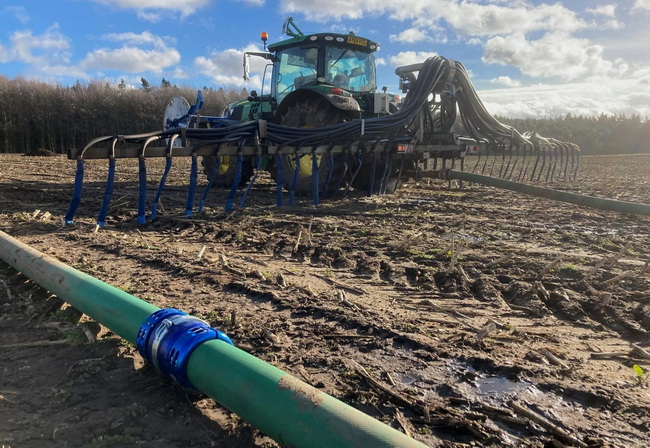
In a drag hose system, a pump sends slurry or manure through flexible layflat hoses directly to an injector or toolbar in the field, allowing continuous application without hauling large tanks back and forth. This reduces fuel use, road traffic, and soil compaction compared with traditional tanker spreading, where heavy vehicles repeatedly cross fields to deliver each load.
TPU drag hoses typically offer higher abrasion resistance, better chemical compatibility with slurry and manure, and lower weight than many rubber‑covered hoses, making them easier to handle over long distances. Their through‑the‑weave construction resists delamination under repeated pressure cycles and dragging, which can extend service life when properly maintained.
Buyers should request detailed technical data, test reports, and references from existing customers in similar applications, along with sample sections for field trials. It is also important to confirm that international suppliers maintain reliable logistics and, ideally, work with local dealers or service partners to provide support and spare hose lengths.
Service life is heavily influenced by field conditions, operating pressure, handling practices, and storage methods. Dragging hoses over sharp or highly abrasive surfaces, operating above rated pressures, or storing hoses dirty and exposed to harsh sunlight can significantly shorten their usable life, even if they come from top‑tier manufacturers.
The choice depends on project scale, technical requirements, budget, and expectations for service support. Domestic suppliers may offer faster delivery and closer on‑site assistance, while international TPU specialists can provide custom designs and competitive pricing for high‑pressure, long‑distance projects; many operations ultimately use a mix of both to optimize performance and cost.
[1](https://www.bazookafarmstar.com/equipment/supply-and-drag-hoses/)
[2](https://www.snaptitehose.com/about-us)
[3](https://puck.com/agricultural-hose/)
[4](http://www.5elemhose.com/agriculture-hose)
[5](https://www.sunmoonpipe.com/tpu-layflat-hose/high-pressure-150psi-16inch-528ft-tpu-frac-layflat-long-distance-supply-water-hose.html)
[6](https://puck.com/bulldog-hose-company/)
[7](https://philspumpingandfab.com/products/irrigation-hose/)
[8](https://www.rjmillerhosesolutionsllc.com/drag-line-equipment/)
[9](https://www.zyfire.com/product/drag-hose-plus)
[10](https://www.zyfire.com)
[11](https://www.sunmoonhose.com)
[12](https://sunmoonhose.en.alibaba.com/productgrouplist-803209907/TPU_lay_flat_hose.html?spm=a2700.icbuShop.88.11.239fb30tH64Kq)
[13](https://www.alibaba.com/product-detail/SUNMOON-Hot-Sale-High-Quality-Agriculture_60713926781.html)


