

Views: 222 Author: Loretta Publish Time: 2026-01-01 Origin: Site


Content Menu
● What Is A Hose And Why Selection Matters
● Main Types Of Hoses And Typical Applications
>> Steam Hoses
>> Fire Hoses
>> Marine Hoses
>> Slurry Hoses
● Hose Types Compared At A Glance
● TPU Layflat Hose As A Modern High-Flow Solution
● Key Factors To Consider When Choosing A Hose
>> Medium (Fluid) Compatibility
>> Application And Environment
>> Ends, Couplings, And Assembly
● Practical Steps To Select The Right Hose
● Talk To An Engineering-Driven TPU Layflat Hose Expert
● FAQs About Types Of Hoses And TPU Layflat Hose
>> 1. What is the difference between industrial hose and hydraulic hose?
>> 2. When should TPU layflat hose be used instead of rigid pipe?
>> 3. Can one hose handle both chemicals and fuels?
>> 4. What standards apply to food-grade and potable water hoses?
>> 5. How often should industrial hoses be inspected or replaced?
Hoses are more than simple tubes; they are critical fluid transfer components that keep homes, factories, farms, mines, and energy projects running safely and efficiently. From low-pressure garden watering to high-pressure hydraulic circuits and chemical loading arms, choosing the right hose type directly affects safety, uptime, and total operating cost.[1][2][3]

A hose is a flexible conduit designed to convey liquids, gases, or mixed media between two points while withstanding pressure, temperature, and environmental stresses. Different hose types use specific tube materials, reinforcements, and covers so they can safely handle water, air, oils, fuels, slurries, steam, and even aggressive chemicals.[2][4][1]
For engineers and buyers, hose selection must consider medium, working pressure, temperature, required flexibility, regulatory requirements, and expected service life. Modern materials like TPU layflat hose have expanded options for long-distance, high-flow transfer in industries such as agriculture, mining, construction, and shale gas water transfer.[3][4][5]
Below is an overview of the most common hose types used in industrial and commercial environments.[1][2]
Industrial hoses are general-purpose heavy-duty hoses designed to handle a wide range of fluids and operating conditions in factories, construction sites, refineries, and mines. They are typically built with synthetic rubber or PVC tubes, textile or wire reinforcement, and robust outer covers to resist abrasion and weather.[2][1]
Typical uses include:
- Water and coolant transfer
- Air and multipurpose service
- Low-pressure oil, fuel, and light chemicals
- Material handling of powders and granules
TPU layflat industrial hose is increasingly used for high-volume water and slurry transfer because it is lightweight, flexible, and highly resistant to abrasion and many chemicals.[4][5]
Hydraulic hoses are engineered to carry high-pressure hydraulic fluids that transmit power in mobile and stationary machinery. They usually feature oil-resistant synthetic rubber or thermoplastic tubes, multiple layers of braided or spiral steel wire reinforcement, and covers built to withstand harsh outdoor environments.[6][7][2]
Key characteristics:
- Very high working pressure ratings, often several thousand psi[7]
- Strict compliance with standards and derating rules for temperature and pressure[6][7]
- Use in excavators, loaders, presses, injection machines, and industrial power units
Because hydraulic failures can be catastrophic, proper pressure rating, impulse resistance, and routing are essential.[7]
Pneumatic hoses carry compressed air or other non-corrosive gases to power tools, cylinders, valves, and control systems. Common materials include PVC, polyurethane, and synthetic rubber chosen for low weight, flexibility, and kink resistance.[8][2]
They are widely used for:
- Air tools such as drills, impact wrenches, sanders, and nailers
- Paint spraying and finishing operations
- Automation and machine controls
Polyurethane pneumatic hose combines lightweight construction with high abrasion resistance, making it suitable for demanding workshop and field environments.[8]
Chemical hoses are designed to transfer aggressive chemicals such as acids, alkalis, solvents, and aromatic hydrocarbons without degrading. They may use specialized rubber compounds, polyethylene, or PTFE tubes with textile or wire reinforcement and chemically resistant covers.[9]
Key points:
- High resistance to chemical attack and permeation
- Smooth inner bores to reduce buildup and facilitate cleaning
- Use in chemical plants, tank truck loading, marine terminals, and pharmaceuticals
For many chemical transfer applications, TPU layflat hose formulations can be selected that offer excellent chemical and abrasion resistance, especially for produced water and certain fuels.[10][4]
Composite hoses are multi-layer hoses built from concentric layers of plastic films and fabrics, held together by inner and outer wire helices. This construction makes them flexible, kink-resistant, and suitable for loading and unloading chemicals, oils, and fuels in terminals and tank farms.[11][9]
They are commonly used when:
- A wide range of fluids must be handled with one hose
- Lightweight and high flexibility are required
- Traditional rubber or metal hoses are too heavy or too stiff
Because composite hoses can be tailored by changing layer materials, they are often customized for specific chemical or fuel service.[9]
Food-grade hoses are specifically designed to convey food and beverages without contaminating the product with taste, odor, or harmful substances. They often use food-approved PVC, silicone, or special rubber compounds and comply with regulations such as FDA or EU food contact standards.[1]
Typical uses:
- Dairy processing and milk collection
- Breweries, wineries, and soft-drink plants
- Edible oil, syrup, and sugar solution transfer
TPU potable-water and food-grade hoses are increasingly used where high cleanliness, flexibility, and long-distance transfer are required, such as temporary beverage lines at events or emergency water systems.[4]
Steam hoses carry high-temperature steam under pressure for cleaning, sterilization, and process heating. They are made with heat-resistant rubber compounds and reinforced with steel wire or strong fabric to manage both pressure and thermal expansion.[2]
Applications include:
- Food and beverage plant sanitation
- Chemical and pharmaceutical cleaning
- Laundries, textile mills, and industrial sterilization
Correct temperature rating, pressure derating, and periodic inspection are critical to prevent dangerous failures.[12]
Fire hoses deliver large volumes of water or fire-fighting foam at high pressure to extinguish fires. They usually feature woven reinforcement (often polyester) and an internal waterproof liner, and they must resist abrasion, kinking, and exposure to heat and rough surfaces.[1]
Use cases:
- Municipal fire departments
- Industrial fire-protection systems
- Marine and offshore fire lines
Modern TPU layflat fire hoses provide high pressure capability with very low weight, improving deployment speed and handling.[4]
Marine hoses are designed for demanding offshore and shipboard environments, where saltwater, UV, movement, and variable loading are constant challenges. Typical duties include fuel transfer, cargo loading, seawater cooling, and bilge or ballast systems.[1]
Characteristics:
- Excellent resistance to seawater, weathering, and fuels
- Robust construction to handle wave motion and ship movements
- Use in ship-to-ship and ship-to-shore transfer systems
In offshore energy and terminal applications, large-diameter composite and rubber hoses are common, and TPU layflat hose is used for temporary water and fluid transfer lines.[5][4]
Slurry hoses handle abrasive mixtures of solids and liquids, such as sand-water, mineral slurries, or cement mixtures. They feature thick, highly abrasion-resistant inner linings and strong outer reinforcements that withstand high pressure and external impacts.[1]
They are heavily used in:
- Dredging and sand reclamation
- Mining tailings and concentrate transfer
- Construction dewatering and bentonite circulation
TPU layflat slurry hoses provide high abrasion resistance and can be deployed quickly over long distances, reducing installation time in dredging and mining projects.[5][4]
The table below summarizes the core differences between the main hose types and highlights where TPU layflat hose can be an advantageous alternative in long-distance projects.[2][4][1]
Hose type | Typical media | Key strengths | Common applications |
Industrial hose | Water, air, light chemicals, oils | Versatile, durable, many sizes | Plants, construction, general utility |
Hydraulic hose | Hydraulic oil | Very high pressure, power transmission | Mobile equipment, presses, machinery |
Pneumatic hose | Compressed air, inert gases | Lightweight, flexible, kink resistance | Air tools, automation, painting |
Chemical hose | Acids, alkalis, solvents | Chemical resistance, safety | Chemical plants, tank trucks, terminals |
Composite hose | Chemicals, fuels, oils | Multi layer, flexible, customizable | Loading arms, marine transfer |
Food grade hose | Food, beverages, potable water | Hygienic, certified materials | Dairy, breweries, potable water systems |
Steam hose | Saturated steam | Heat resistance, pressure capability | Cleaning, sterilization, process heating |
Fire hose | Water, fire fighting foam | High flow, abrasion resistance | Fire services, fixed protection |
Marine hose | Fuel, seawater, chemicals | Seawater and weather resistance | Shipboard, offshore, terminals |
Slurry hose | Abrasive slurries | Thick liner, abrasion resistance | Mining, dredging, tunnelling |
TPU layflat hose | Water, fuel, some chemicals, slurries | Lightweight, high pressure, long distances | Agriculture, mining, frac water transfer |
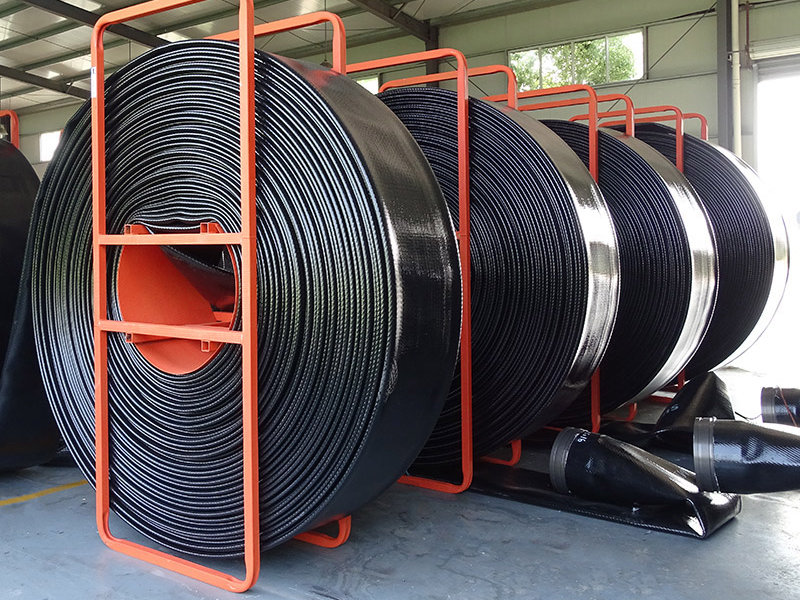
Thermoplastic polyurethane (TPU) layflat hose has become a strategic hose category, especially for high-volume water, fuel, and slurry transfer. It is extruded as a single, flat-lay tube with circular woven polyester or similar reinforcement and a TPU cover that provides excellent wear and chemical resistance.[5][4]
Key advantages of TPU layflat hose include:
- High working and burst pressures for long-distance pumping with fewer booster stations[13][4]
- Outstanding abrasion and puncture resistance for rough ground and mobile deployment in mines and construction sites[4]
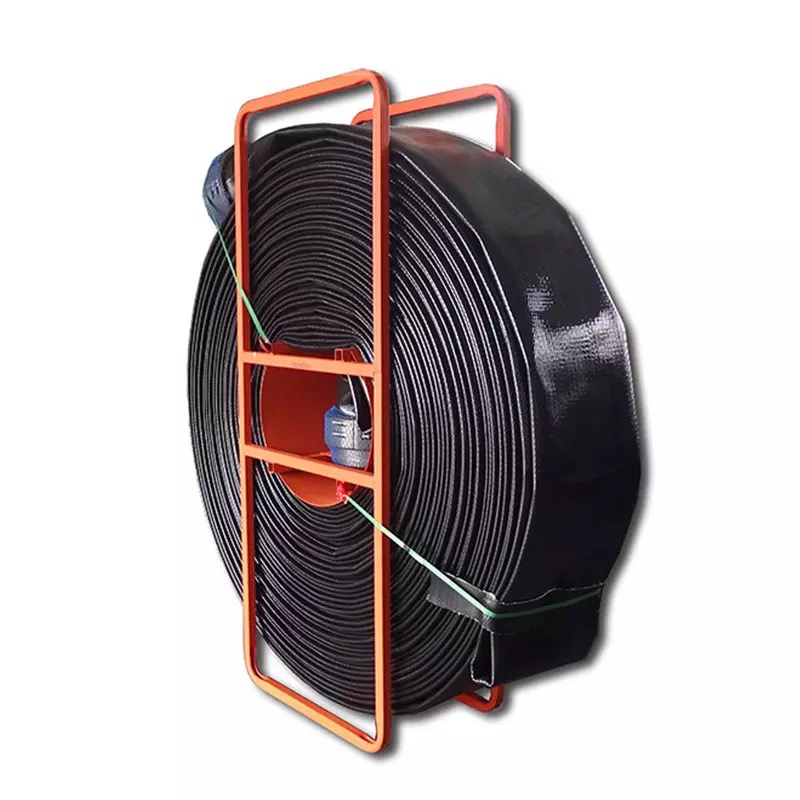
- Compact storage and quick deployment because the hose lies flat on the reel and inflates only during operation[5][4]
These properties make TPU layflat hose an attractive option for engineering-driven manufacturers serving global projects that require lightweight yet durable hose systems for water transfer, oilfield water and fuel logistics, emergency supply, and temporary pipe replacement.[4][5]
Specialists often use the STAMPED concept—Size, Temperature, Application, Medium, Pressure, Ends, Delivery—to specify the right hose. Focusing on these factors reduces failures and unplanned downtime.[3]
Hose size (inside diameter and length) directly determines flow rate, pressure loss, and handling. Larger IDs carry more flow but may be heavier, while smaller IDs give higher velocity and more friction loss.[3]
For long-distance lines, high-flow TPU layflat hoses with carefully selected diameters can reduce the number of parallel lines and connection points.[4]
Every hose has a maximum working pressure and burst pressure that must match the system's normal and peak loads. Working pressure must be above the system's maximum operating pressure with a suitable safety factor.[7]
High-pressure TPU layflat discharge hoses are often individually hydraulic-tested at the factory in many premium product lines.[13][4]
Fluid and ambient temperature greatly influence hose life and performance. Many rubber and thermoplastic hoses have maximum temperatures between roughly 80 °C and 150 °C depending on material.[6][7]
TPU layflat hoses typically operate reliably across a wide temperature range suitable for most outdoor water transfer use cases.[4]
Not every hose compound is compatible with every fluid. Oils, fuels, and aromatic solvents can attack certain rubber and plastic materials, while strong acids and alkalis require specialized chemical hoses.[14][9]
Chemical compatibility must always be verified using manufacturer data before specifying a hose.[14]
The physical environment around the hose can be as important as the medium inside it. Outdoor UV exposure, abrasion from ground contact, and vehicle crossings all affect cover selection and reinforcement.[3][1][4]
For mobile, temporary pipe routes in mining, agriculture irrigation, or shale gas water transfer, TPU layflat hose is widely used because it combines flexibility, ruggedness, and quick deployment.[5][4]
The best hose can still fail if fittings and assembly are not properly specified. Couplings must match hose diameter, reinforcement type, and working pressure, and assembly methods must follow manufacturer recommendations.[15][3]
In high-pressure TPU layflat systems, integrated couplings and tested assemblies help reduce leak risk and simplify field deployment.[13][4]
A simple, repeatable process helps engineers and buyers specify hoses more confidently.
1. Define the medium clearly.
- Identify whether the fluid is water, slurry, oil, fuel, compressed air, or chemicals, and note viscosity and solids content.[9][1]
2. Specify pressure and temperature.
- Document normal and peak pressures, plus minimum and maximum fluid and ambient temperatures.[6][7]
3. Determine routing and distance.
- Measure length, elevation changes, and available routing space, and decide between fixed piping and flexible TPU layflat lines.[5][4]
4. Assess environmental conditions.
- Identify exposure to sunlight, chemicals, abrasion, and vehicle traffic, then match covers and reinforcements accordingly.[3]
5. Select hose family and size.
- Choose between industrial, chemical, food-grade, steam, hydraulic, fire, marine, slurry, or TPU layflat hose based on the above.[2][4]
6. Confirm standards and certifications.
- Check for relevant ISO, EN, API, NSF, or food contact standards, especially for potable water and food applications.[9][1]
7. Work with an engineering-focused supplier.
- Provide medium, flow, pressure, and environmental data so the supplier can recommend constructions and coil lengths optimized for service life.[5][4]
If your project involves high-flow water, fuel, or slurry transfer over significant distances, the next step is to review your data with an engineering-driven TPU layflat hose specialist. Share details such as fluid type, flow rate, working pressure, total distance, elevation profile, and connection requirements so that a tailored hose configuration can be proposed with the right diameter, pressure rating, reinforcement, and coupling system.[3][5][4]
By engaging early with a technical team focused on TPU layflat technology, you can reduce total system weight, simplify deployment, and extend hose service life while maintaining rigorous safety and compliance standards across global sites.[5][4]
Industrial hose is designed for general service with moderate pressures and a wide range of media such as water, air, and light chemicals. Hydraulic hose is built specifically for high-pressure hydraulic oil circuits and uses multiple layers of wire reinforcement and strict standards to handle much higher pressures safely.[7][2][1]
TPU layflat hose is suitable when long-distance lines must be installed, moved, or recovered quickly, such as in irrigation, mining, dewatering, and shale-gas water transfer. It offers high pressure capability in a lightweight, compact package, reducing transport and installation costs compared with rigid pipe.[4][5]
Some composite and chemically resistant hoses can be rated for both certain chemicals and fuels, but compatibility always depends on the specific fluid and hose material. Chemical compatibility charts and manufacturer guidance must be checked before using a single hose for multiple products.[11][14][9]
Food-grade and potable-water hoses commonly refer to certifications such as FDA or EU food contact rules and standards like NSF/ANSI 61 for drinking water contact. These standards help ensure hose materials do not leach harmful substances or affect taste and odor.[1]
Inspection intervals depend on the application, but many industrial users visually inspect hoses before each use and perform scheduled detailed checks. Hoses that show cracks, bulges, leaks, soft spots, or damage near couplings should be removed from service and replaced in line with manufacturer recommendations.[3]
[1](https://www.ushose.info/a-guide-to-the-various-types-of-industrial-hoses/)
[2](https://tchindustries.com/tch-resources/insights/types-of-industrial-hoses/)
[3](https://eriks.com/en/know-how-hub/blogs/7-key-factors-to-select-the-right-industrial-hose/)
[4](https://www.sunhose.com/tpu-layflat-hose/)
[5](https://layflat.midwesthose.com/index.php/tpu-layflat/)
[6](https://marshall-equipement.com/blog/7-key-hydraulic-hose-selection-factors/)
[7](https://4starhose.com/essential-guide-to-hydraulic-hose-selection-pressure-size-and-application)
[8](https://blog.flexaust.com/blog/types-of-hoses)
[9](https://shipyardsupplyinc.com/the-ultimate-guide-to-chemical-resistant-hoses-how-to-choose-the-right-hose-for-your-industrial-needs)
[10](https://www.hosecraftusa.com/model/UD2_Chemical_Oil_Layflat_Discharge_Hos)
[11](https://www.ievilenergy.com/blogs/news/complete-guide-to-hoses-and-fittings-types)
[12](https://www.hosemaster.com/news/metal-hose-derating-factors-understanding-the-temperature-pressure-relationship-43403)
[13](https://products.kuriyama.com/item/polyurethane-discharge-hoses/high-flow-extruded-tpu-layflat-discharge-hose/oftrh-1600)
[14](https://jasonindustrial.com/wp-content/uploads/Selecting-Proper-Hose-for-Application.pdf)
[15](https://jasonhosesolutions.com/how-to-know-what-hose-is-right-for-you/)


