

Views: 222 Author: Loretta Publish Time: 2025-12-31 Origin: Site


Content Menu
● Key Air Hose Specifications and Sizes
>> Working Pressure and Bursting Pressure
>> Hose Length and Pressure Loss
● Types of Air Hoses by Material
>> PVC Air Hose
>> Hybrid and Composite Air Hoses
>> TPU Air Hose and Layflat Hose
● PVC vs Rubber vs PU vs TPU Air Hoses
● How to Choose the Right Air Hose in 6 Practical Steps
>> 1. Define Application and Environment
>> 2. Determine Required Hose Diameter
>> 3. Match Hose Length to the Workspace
>> 4. Check Working Pressure and Safety Margin
>> 5. Select the Best Material for Durability and Cost
>> 6. Consider Total Cost of Ownership
● Why High-Performance Hoses Are Gaining Popularity
● Expert Tips to Improve Safety, Efficiency, and Service Life
● When to Consult a Specialist Hose Manufacturer
● Take the Next Step to Optimize Your Air Hose Setup
● FAQs About Air Hoses and High-Performance Hose Solutions
>> (1) What is the best air hose size for general workshop use?
>> (2) How often should air hoses be replaced?
>> (3) Are high-performance hoses worth the higher cost?
>> (4) Can one type of air hose work in all environments?
>> (5) Why consult a specialized hose manufacturer for complex projects?
Air hoses are critical components in compressed air systems, and the right air compressor hose can directly improve safety, tool performance, and operating costs. This air hose buying guide explains hose types, materials, sizes, pressure ratings, and practical selection steps so buyers can make confident, technically sound decisions.[2][4][1]

An air hose (also known as an air compressor hose) is a flexible pipe that transfers compressed air from a compressor to tools, equipment, or distribution manifolds. It is widely used in industry, construction, automotive repair, agriculture, mining, and home workshops where pneumatic tools or air-driven systems are installed.[4][5][1]
A high-quality air hose must safely withstand working pressure, maintain adequate airflow, and stay flexible enough for operators to handle tools efficiently. Poor selection can lead to pressure loss, premature wear, or even dangerous bursts in high-pressure environments.[6][2][4]
When comparing air hoses, several core parameters determine performance and suitability: inside diameter, length, working pressure, bursting pressure, and weight. Understanding these specifications helps avoid oversizing, undersizing, or misapplying a hose.[1][2]
The inside diameter (ID) of the hose directly affects how much air reaches the tool. Larger IDs increase airflow and reduce pressure drop, which is crucial for high-demand tools, but they also make the hose heavier and less flexible.[3][4][1]
Common air hose sizes include 1/4", 3/8", 1/2", 3/4", and 1" for standard pneumatic applications, with larger diameters used for higher flow or industrial systems. For many workshop tools, 1/4" and 3/8" hoses are common, while 1/2" and above are preferred for heavy-duty or long-distance lines.[5][2][1]
Typical Air Hose Size Reference
Inside Diameter | Outside Diameter | Working Pressure | Bursting Pressure | Typical Length |
1/4" (6.4 mm) | 13.0 mm | 20 bar / 300 psi | 60 bar / 900 psi | 100 m |
3/8" (9.5 mm) | 17.0 mm | 20 bar / 300 psi | 60 bar / 900 psi | 100 m |
1/2" (12.7 mm) | 23.0 mm | 20 bar / 300 psi | 60 bar / 900 psi | 100 m |
3/4" (19.1 mm) | 30.0 mm | 20 bar / 300 psi | 60 bar / 900 psi | 100 m |
1" (25.4 mm) | 37.0 mm | 20 bar / 300 psi | 60 bar / 900 psi | 100 m |
For engineering-grade sizing, the hose ID should match the tool's air consumption and line length to keep pressure drop within acceptable limits.[3][4]
Working pressure is the maximum continuous operating pressure the hose is designed to handle safely. Bursting pressure is typically around three times the working pressure and indicates the point at which the hose will fail under an extreme pressure spike.[2][6]
In industrial environments, hoses should be selected so that working pressure clearly exceeds the system's maximum operating pressure, including possible transient peaks. For high-pressure applications such as mining, oil and gas, or long-distance water transfer, specialized layflat hoses with higher pressure capabilities are often used.[7][8][4][6]
Longer hoses provide greater reach but increase friction losses and pressure drop. To maintain performance, operators should choose the shortest length that still allows safe and flexible operation and use reels or fixed manifolds to bring air closer to the work area.[4][3]
In large workshops, combining a short flexible hose with a fixed overhead distribution line helps minimize pressure loss while preserving maneuverability.[3][4]
Air hoses are available in several materials, each with distinct performance characteristics, cost levels, and best-fit applications. Choosing the right material is often more important than aiming for the lowest price.[6][1]
PVC air hoses are lightweight and cost-effective, which makes them popular in general industrial and household use. They provide reasonable abrasion and chemical resistance but can become stiff in cold environments, reducing flexibility and increasing the risk of kinking.[9][1]
PVC hoses are suitable for occasional use, light-duty pneumatic tools, and environments where budget is a primary concern and ambient temperatures are moderate.[9]
Rubber air hoses offer excellent flexibility and durability, especially in low temperatures, and maintain stable performance in harsh outdoor conditions. They resist abrasion and impact, making them a strong choice for construction sites, automotive workshops, and heavy industrial equipment where hoses are dragged across rough surfaces.[6][9]
These hoses are generally heavier and can be more expensive than PVC, which may reduce operator comfort in some scenarios.[9][6]
Polyurethane hoses provide very high flexibility, low weight, and excellent abrasion resistance, particularly when compared with standard PVC. They remain flexible at low temperatures and suit retractable coil hoses or spring tubes around workbenches and assembly lines.[10][11][1]
Because PU hoses resist kinking and have smooth inner surfaces, they are often chosen for precision pneumatic tools and automated systems where consistent airflow is critical.[11][10]
Hybrid hoses combine PVC, rubber, TPU, or polyurethane to deliver balanced performance characteristics. They are designed for good flexibility, reduced weight, and strong durability across a wide temperature range, while keeping costs under control.[1][6]
Hybrid hoses are recommended where a single general-purpose solution is required for multiple environments, reducing the need for frequent hose changes.[1]
TPU (Thermoplastic Polyurethane) hoses are a premium solution for demanding applications that require high pressure, long life, and resistance to harsh conditions. Compared with traditional materials, TPU provides outstanding abrasion resistance, chemical resistance, and weather stability, while remaining flexible and relatively lightweight.[12][13][10]
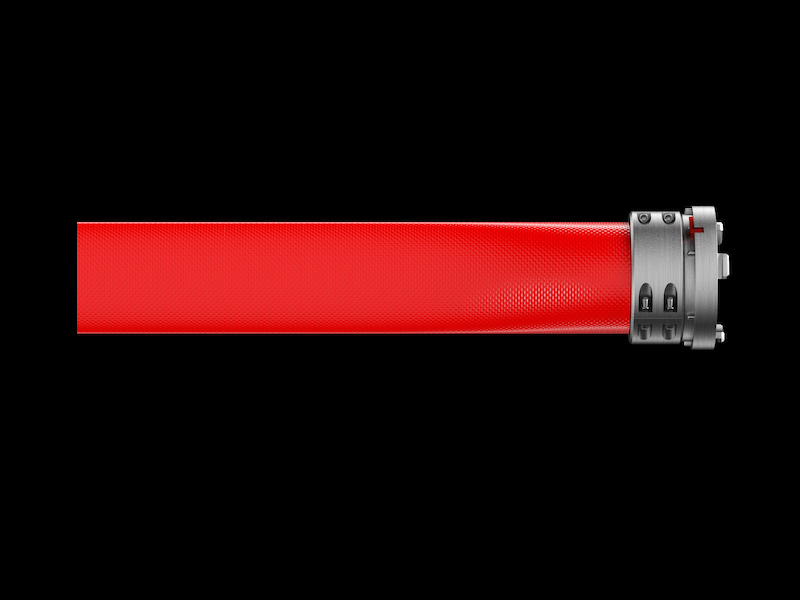
TPU layflat hoses are widely used for long-distance transfer of water, slurry, and oil in mining, shale gas, firefighting, and municipal drainage, where working pressures can range from 150 psi to 450 psi or higher. Through-the-weave construction and advanced cover technology support long service life and reduced downtime in demanding field operations.[8][14]
The table below summarizes key differences between common air hose materials to simplify selection decisions.[10][6][9][1]
Air Hose Material Comparison
Feature / Material | PVC Air Hose | Rubber Air Hose | PU Air Hose | TPU Air Hose / Layflat |
Flexibility | Medium, stiff in cold | Excellent, even in cold | Very high flexibility | High flexibility, good elasticity |
Weight | Light | Heavier | Very light | Light to medium |
Abrasion resistance | Medium | High | High | Very high |
Temperature range | Limited in extreme cold | Wide range | Good low-temperature performance | Excellent hot/cold and UV resistance |
Chemical resistance | Good vs many chemicals | Moderate | Good oil and chemical resistance | Excellent resistance to oils, fuels, solvents |
Typical use cases | DIY, light industry | Construction, auto shop | Assembly lines, tools, coils | Mining, shale gas, municipal, long-distance transfer |
For high-pressure, long-distance, or mission-critical operations, TPU-based hoses provide a robust combination of safety, durability, and lifecycle economy.[14][8][10]
A structured selection method helps avoid common mistakes such as using undersized hoses, mismatching materials, or ignoring environmental factors. The six steps below align with widely accepted industrial practices.[5][4][1]
Clarify what the air hose will support, for example powering pneumatic tools, feeding spray guns, supplying air to machines and valves, or handling temporary drainage and transfer operations. Then evaluate whether the installation is indoor or outdoor, the expected temperature range, exposure to chemicals, rough surfaces, UV, or oils.[7][8][10][6][9][1]
These factors directly influence material selection, reinforcement level, and expected service life.[10][6]
Use tool air consumption and required pressure at the tool to determine the inside diameter. High-flow tools or long lines usually require larger diameters such as 3/8" or 1/2", while low-flow hand tools may operate reliably with 1/4" hoses.[4][5][3][1]
Oversizing increases weight and reduces flexibility, so diameter should balance airflow needs with handling comfort.[3][4]
Measure the distance between the compressor or main manifold and the most remote working point. To optimize performance: use the shortest hose that safely reaches all areas, consider hose reels for storage and deployment, and rely on fixed lines with short hose drops in large facilities.[4][3]
This approach maintains pressure, reduces clutter, and minimizes trip hazards.[3][4]
Compare the system's maximum pressure with the hose's rated working pressure. Good practice is to ensure that working pressure clearly exceeds system maximum and that bursting pressure is several times higher than working pressure, especially in high-pressure lines.[14][6][4]
Reinforced hoses with higher pressure ratings are recommended in sectors such as mining, oil and gas, and emergency drainage.[8][7]
Select the material that aligns with the operating environment and duty cycle. PVC suits budget-oriented, light-duty use; rubber works well in cold and rough conditions; PU is appropriate for lightweight, flexible, high-movement situations; TPU and layflat designs are appropriate for heavy-duty, high-pressure, and long-distance operations.[8][14][6][9][10][1]
A well-matched material reduces failures, improves safety, and often lowers maintenance costs over time.[6][10]
Low initial price can be misleading if the hose needs frequent replacement or causes downtime. More durable options, including TPU-based products in demanding conditions, usually offer lower total cost of ownership by extending hose life and minimizing unplanned outages.[13][8][10][6]
Across multiple industries, users are giving more attention to lifecycle performance, reliability, and safety than to upfront cost alone. This shift drives growing demand for high-performance materials with better abrasion resistance, chemical resistance, and weather stability.[10][6]
Such hoses support safer operations, reduced maintenance, and stable performance in harsh or variable environments. They are particularly valuable in long-distance transfer and high-pressure applications where failures are expensive and dangerous.[13][7][8][10]
Small improvements in hose selection, handling, and maintenance can significantly increase uptime and safety. The tips below are widely adopted in professional facilities.[5][1][6]
- Inspect hoses regularly for cuts, blisters, kinks, and deformation, especially near fittings, and replace damaged sections immediately.
- Use fittings and adapters with pressure ratings that match or exceed system pressure.
- Avoid sharp bends and excessive twisting, which accelerate fatigue and failure.
- Store hoses on reels or racks to prevent crushing, excessive UV exposure, and contamination by incompatible chemicals.
- Train operators to depressurize lines before disconnecting and to avoid pulling equipment by the hose.
For demanding use cases such as shale gas extraction, mining drainage, municipal emergency flooding, or large-scale agricultural irrigation, standard hoses are often not sufficient. These projects involve higher pressures, longer distances, and more severe environments, which require specialist engineering support.[7][14][8]
Working with a technical, engineering-driven manufacturer allows customization of structure, diameter, pressure ratings, and accessory combinations, along with access to test data and application guidance. This support helps ensure safe, reliable operation over the entire project lifecycle.[15][14][8]
The choice of air hose or high-performance hose solution has a direct impact on safety, efficiency, and long-term operating costs across your facility. If your current hoses show signs of wear, cause pressure loss, or do not fit new application requirements, this is the ideal time to review your configuration and upgrade to properly sized, application-matched products.[6][10]
For support in evaluating your existing setup, selecting appropriate hose diameters and materials, and planning a reliable, long-term compressed air or transfer solution, contact a professional engineering-oriented hose supplier and request a tailored proposal based on your actual working conditions and performance targets.[15][14]

For typical workshop tools such as nail guns and small impact wrenches, 1/4" or 3/8" air hoses are commonly used, with 3/8" preferred for higher-demand tools or longer runs. The final choice depends on tool air consumption, line length, and acceptable pressure drop.[2][5][1][3][4]
Replacement intervals vary with material, environment, and usage intensity, so there is no single schedule for every installation. However, hoses should be replaced immediately if cracks, bulges, cuts, or persistent kinks appear, especially near the ends and fittings.[5][6]
In demanding environments with high pressure, heavy abrasion, or strong chemical and weather exposure, high-performance hoses usually offer longer life and fewer failures. This combination often leads to lower total cost of ownership when downtime and replacement labor are considered.[13][8][10]
No single hose material is optimal for every situation because temperature, mechanical load, chemical exposure, and budget differ from site to site. Matching hose material and construction to the specific environment is essential for safe and economical operation.[9][1][10][6]
Specialized manufacturers can provide broader size and pressure ranges, customized designs, and technical support that general-purpose products cannot offer. This expertise is valuable in complex projects such as mining, shale gas, and emergency drainage, where failures carry high risk and cost.[14][15][7][8]
[1](https://www.rolair.com/blog/air-hose-buyers-guide)
[2](https://www.strongflex.com/air-hose-buying-guide/)
[3](https://greatcircleus.com/blogs/blog/selecting-the-best-air-hose-reel-for-your-needs-guide)
[4](https://info.topring.com/en/blog/how-choose-compressed-air-hose-4-steps)
[5](https://thebluehose.com/blogs/news/10-tips-to-choose-the-right-air-hose)
[6](https://www.pdrtoolz.com/blog/2025-top-air-rubber-hose-features-benefits-buying-guide/)
[7](https://www.sunmoonhose.com)
[8](https://www.sunmoonpipe.com/tpu-layflat-hose/)
[9](https://yardbutler.com/blogs/news/pvc-air-hose-vs-rubber)
[10](https://www.sunghose.com/blog/what-are-the-advantages-of-a-tpu-hose-compared-to-other-hoses-1365653.html)
[11](https://www.strongflex.com/project/polyurethane-hose/)
[12](https://www.zyfireuae.com/What-Is-TPU-Hose-id49746296.html)
[13](https://kingdaflex.com/what-is-tpu-hose/)
[14](https://china-layflat-hose.com/about/)
[15](https://sunmoonhose.goldsupplier.com)


