

Views: 222 Author: Sunmoon Publish Time: 2026-06-10 Origin: Site


Content Menu
● TPU Layflat Hose vs PVC Hose – Core Material Differences
>> How these properties impact repairability
● Real-World Use Cases – When a TPU Flat Hose Is Worth Repairing
>> Typical TPU layflat hose applications
● Repairing a TPU Layflat Hose – Field-Proven Process
>> Typical repair workflow for TPU layflat hoses
● Repairing vs Replacing a PVC Layflat Hose
>> Typical PVC hose repair steps
>> Why many users simply replace PVC hoses
● Comparative Table – TPU Flat Hose Repair vs PVC Hose Replacement
● Lifecycle Economics – TCO View from the Plant Floor
>> Cost drivers where TPU has an advantage
● Expert Insight – When to Repair TPU and When to Upgrade from PVC
>> Practical decision rules you can apply
● Sunmoon's Role – Customizable TPU Layflat Hoses Designed to Be Repairable
>> Why customization supports better repairability
● Practical Checklist – Choosing Between Repairing TPU and Replacing PVC
● Call to Action – Plan Your Next TPU Layflat Hose Project with Sunmoon
● FAQs
Repairing a TPU layflat hose is often more economical and reliable over its service life than repeatedly replacing a PVC flat hose, especially in demanding industrial applications. For a manufacturer like Sunmoon, this difference in repairability and lifecycle cost is exactly where TPU layflat hoses deliver strategic value for global buyers. [sunhose]
From my experience working with industrial clients, maintenance managers today do not just ask "How cheap is the hose?" – they ask "How fast can we repair it, and how long will it last after repair?". In that real-world decision context, TPU layflat hoses and PVC layflat hoses behave very differently in terms of damage tolerance, repair procedures, and total cost of ownership. [jafirehose]
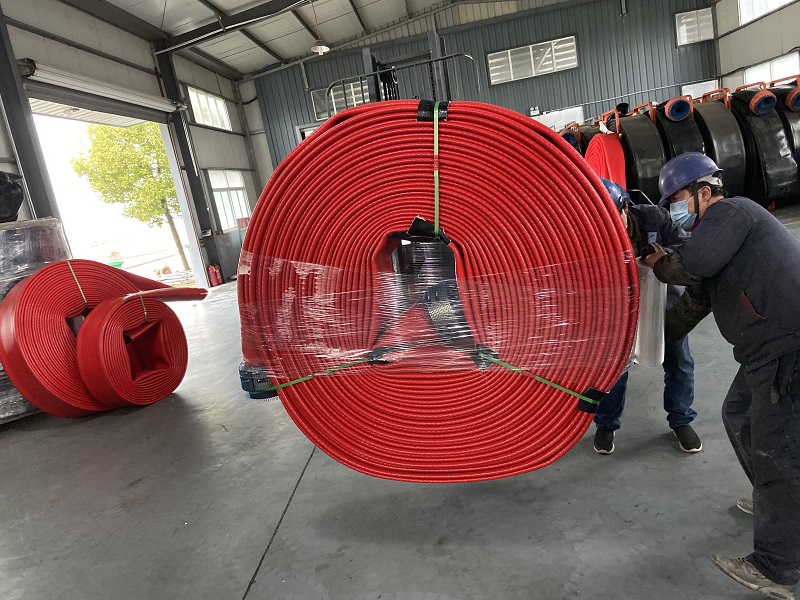
TPU (thermoplastic polyurethane) combines high abrasion resistance, excellent tensile properties, and flexibility at low temperatures, making it suitable for harsh, high-movement environments. PVC (polyvinyl chloride) is more cost-effective and easy to process, so PVC layflat hoses are common in price-sensitive sectors such as agriculture and light construction. [teknorapex]
- TPU maintains mechanical strength after localized damage and properly executed repairs, so the hose can continue operating under relatively high pressure. [echemi]
- PVC is more prone to crack propagation, UV embrittlement, and delamination around the damaged zone, which often makes repairs temporary at best. [sunhose]
- In heavy-duty applications (oil transfer, mining water discharge, shale gas, slurry), TPU layflat hoses are designed as long-life assets that justify professional repair instead of frequent replacement. [made-in-china]
Sunmoon focuses on high-pressure TPU layflat hoses for applications such as shale gas, oil transfer, and high-volume water delivery, where downtime is extremely expensive. In these scenarios, a damaged hose is not just a product issue; it is a system risk with real production and safety costs. [sunmoonhose.en.alibaba]
- Oil and fuel transfer lines in remote fields. [gii]
- High-pressure water supply for mining, tunnelling, and dewatering. [eastophose]
- Long-distance agricultural irrigation where pressure and abrasion are high. [jafirehose]
In these use cases, technicians often carry repair kits and expect hoses to be repairable on-site rather than replaced immediately, especially when hose runs are hundreds of meters long and customized in diameter, wall thickness, and pressure rating. [made-in-china]
In practice, fixing a TPU layflat hose is closer to repairing a technical asset than "patching a cheap hose". Because TPU bonds well with compatible repair materials and retains its mechanical properties, a properly repaired section can reliably handle demanding duty. [teknorapex]
1. Damage assessment – Technicians locate the leak, cut out severely damaged sections if needed, and measure the remaining hose to verify pressure rating compatibility. [gii]
2. Surface preparation – The outer TPU surface around the damage is cleaned and lightly abraded so the repair patch or coupling can bond properly. [teknorapex]
3. Patch or coupling installation – TPU-compatible patches or mechanical couplings are applied with controlled pressure and, where applicable, heat/adhesive curing. [eureka.patsnap]
4. Pressure testing – The repaired hose is pressurized to a safe test level to confirm no leakage and check for deformation around the repair. [eureka.patsnap]
Because TPU layflat hoses are engineered for high performance, this workflow makes sense economically when the hose length is long or customized, and when supply lead times are critical. [sunhose]
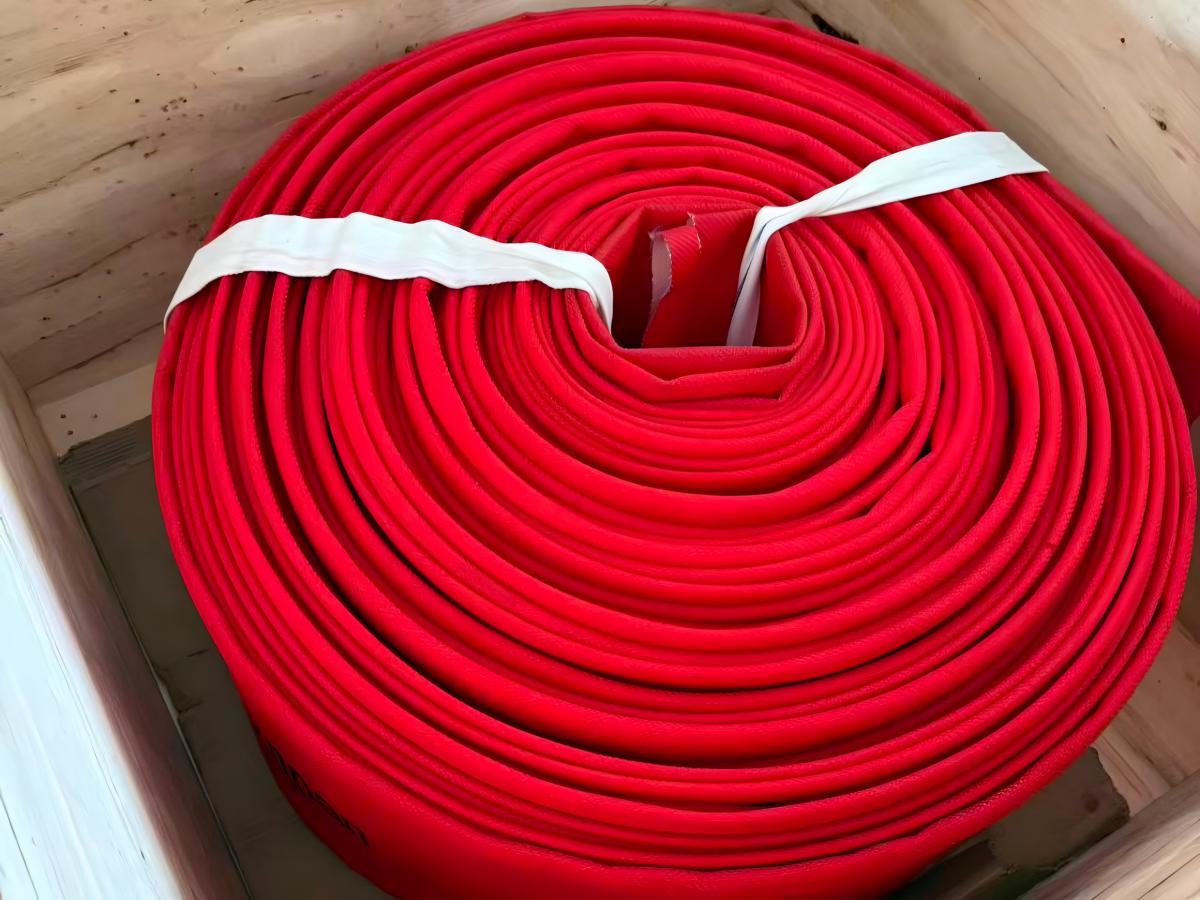
At the lower end of the market, a PVC layflat hose is often treated as a disposable or semi-disposable component, especially in agriculture or light-duty construction. While PVC hoses can be patched using simple repair kits, these repairs usually serve as temporary solutions rather than long-term fixes under pressure. [echemi]
A standard PVC layflat hose repair often involves: cleaning the area, lightly sanding it, applying a patch or tape, and allowing curing time for adhesive. This is adequate for small leaks in low-pressure, non-critical applications, but the surrounding material can continue to degrade due to UV exposure, kinking, or chemical attack. [jafirehose]
- Low purchase price makes replacement attractive compared to labor-intensive repairs. [echemi]
- PVC hoses can lose flexibility and crack over time, so a new hose is often safer than relying on multiple old patches. [sunhose]
- For distributors and rental fleets, standard PVC layflat sizes are easy to stock, making replacement logistically simple. [jafirehose]
This is why a maintenance strategy of "repair TPU, replace PVC" is common in industrial field operations. [eastophose]
| Aspect | TPU layflat hose repair | PVC layflat hose replacement |
| --- | --- | --- |
| Typical applications | High-pressure oil, mining water, demanding irrigation [sunhose] | Light irrigation, temporary construction dewatering [sunhose] |
| Initial hose cost | Higher, engineered for long service life [sunhose] | Lower, optimized for affordability [sunhose] |
| Repair feasibility | High, with appropriate TPU-compatible kits and couplings [teknorapex] | Limited, repairs often temporary and pressure-restricted [jafirehose] |
| Post-repair performance | Can approach original pressure rating if done correctly [teknorapex] | Often de-rated or used for lighter-duty tasks only [sunhose] |
| Downtime impact | Lower when on-site repair capability exists [sunhose] | Depends on spare availability and logistics [sunhose] |
| Lifecycle cost | Optimized for long runs and repeated repairs over years [sunhose] | Optimized for short to medium term, with periodic replacement [sunhose] |
From an operations or project manager's viewpoint, total cost of ownership (TCO) matters more than the invoice price of a single hose. TPU layflat hoses usually deliver higher ROI when you factor in service life, repairability, downtime reduction, and the cost of emergency replacements. [made-in-china]
- Lower failure frequency in harsh environments, due to better abrasion, chemical, and low-temperature resistance. [eastophose]
- More predictable failure modes and pressure thresholds, which make inspection and maintenance easier to plan. [eureka.patsnap]
- Ability to justify on-site repairs for long, customized hose systems instead of full system replacement. [sunmoonhose.en.alibaba]
PVC still has a role where budgets are limited, pressures are modest, and hose runs are short, but its economics depend on accepting more frequent replacement and more leak risk over time. [echemi]
In discussions with engineering and procurement teams, I see a recurring pattern: once operations move from small farms or simple construction jobs into continuous or high-value processes, PVC layflat hoses quickly become a bottleneck. At that point, teams either switch critical lines to TPU or maintain a mixed portfolio: TPU for main trunks and PVC for short, low-risk branches. [gii]
- If downtime cost per hour exceeds the cost of a hose section, prioritize TPU with repair capability for that line. [made-in-china]
- If your hoses are frequently dragged over rough ground, exposed to oils, or used in freezing or very hot climates, TPU will likely pay for itself. [teknorapex]
- If your current PVC hoses show repeated pinhole leaks, kinking, or UV cracking within one season, it is time to model an upgrade path to TPU for the most critical segments. [sunhose]
Sunmoon, based in Jiangsu, China, is specialized in high-pressure TPU layflat hoses and related flat hose products, integrating R&D, manufacturing, and global sales. The company offers customized diameters, pressure ratings, materials (including different TPU chemistries), and reinforcement structures to match specific oil, gas, water, and slurry applications. [sunmoonhose.en.alibaba]
- Precise material specification (polyether vs polyester TPU, wall construction, reinforcement) ensures predictable performance after repair. [gii]
- Consistent quality across long lengths makes it easier for technicians to trust repaired sections in critical systems. [sunmoonhose.en.alibaba]
- Sunmoon's focus on shale gas and other high-pressure markets means its hoses are engineered from the outset to support field repairs instead of frequent complete replacement. [made-in-china]
For distributors and project owners, partnering with a manufacturer that designs hoses for both performance and repairability reduces risk across the entire lifecycle of a pipeline or hose network. [sunmoonhose.en.alibaba]
Use the simple checklist below when planning your hose maintenance and procurement strategy. [eastophose]
- Operating pressure and temperature
- Fluid type (water, slurry, oil, chemicals)
- Hose run length and accessibility
- Downtime cost per hour
- Environmental exposure (UV, abrasion, temperature extremes)
- Availability of repair kits and trained technicians
If most of the above are high or critical, repairing a TPU layflat hose is usually the more strategic choice; if they are low and non-critical, replacing an inexpensive PVC hose can still be acceptable. [jafirehose]
If you are currently struggling with frequent PVC hose failures or uncertain repair outcomes, it may be time to redesign your hose system around repairable TPU layflat hoses. Sunmoon can work with you to define diameters, pressure classes, reinforcement levels, and connection systems that fit your environment and support reliable on-site repairs over the hose's lifetime. [gii]
You can start by mapping one critical line – for example, your main water or oil transfer trunk – and evaluating how a customized TPU layflat hose from Sunmoon would reduce leaks, downtime, and unscheduled replacements in the next 12–24 months. [eastophose]
Q1: Can a TPU layflat hose be repaired multiple times?
A properly manufactured TPU layflat hose can typically withstand multiple localized repairs, as long as each repair is done with compatible materials and the hose is pressure-tested afterwards. [eureka.patsnap]
Q2: Is there a maximum damage size for TPU hose repair?
Large tears, severe punctures, or structural damage near couplings may justify cutting out a section and installing a new coupling rather than applying a surface patch, especially in high-pressure systems. [eureka.patsnap]
Q3: Why do PVC hoses fail more quickly outdoors?
PVC is more susceptible to UV-induced embrittlement and can lose flexibility in extreme temperatures, which accelerates cracking and pinhole leaks. [echemi]
Q4: Are TPU hoses always more cost-effective than PVC hoses?
Not in every case; for short-term, low-pressure, and non-critical applications, low-cost PVC hoses may still make sense, especially where replacement is easy and downtime is cheap. [sunhose]
Q5: How can Sunmoon support my transition from PVC to TPU?
Sunmoon offers customized TPU layflat hose designs, technical recommendations on material and pressure selection, and support for building maintenance strategies around repairable hose systems. [made-in-china]
1. Sunhose – "Layflat Hoses Decoded: Why PVC, Rubber, and TPU Cater to Different Needs" – differences in application, durability, and cost between PVC and TPU layflat hoses. [Link] [sunhose]
2. Teknor Apex – "Tough New PVC / TPU Jacketing Compounds for Industrial Data and Control Cable" – TPU mechanical and abrasion resistance properties in industrial environments. [Link] [teknorapex]
3. Jiangsu Sunmoon Shale Gas High Pressure Hose Co., Ltd – company profile and product focus on TPU and PE high-pressure hoses. [Link] [made-in-china]
4. JA Fire Hose – "PVC Layflat Hose: Comprehensive Guide on Uses, Comparisons, and Maintenance" – PVC hose repair steps and maintenance tips. [Link] [jafirehose]
5. Echemi – "TPU vs PVC: An In-Depth Material Comparison" – comparison of flexibility, durability, environmental impact, and performance. [Link] [echemi]
6. Alibaba – "TPU Lay-flat hose – Jiangsu Sunmoon Shale Gas High Pressure Hose Co., Ltd" – product listings and customization options for TPU layflat hoses. [Link] [sunmoonhose.en.alibaba]
7. GII – "TPU Layflat Hose (Oil Transfer) Market" – material selection for TPU layflat hoses in oil transfer and high-pressure applications. [Link] [gii]
8. Eastop – "TPU Layflat Hose" – overview of TPU layflat hose flexibility and durability in harsh environments. [Link] [eastophose]
9. Patsnap – "Thermoplastic Polyurethane Hose: Advanced Material Engineering and Applications" – details on TPU hose performance and failure modes under overpressure. [Link] [eureka.patsnap]


