

Views: 222 Author: Sunmoon Publish Time: 2026-06-12 Origin: Site


Content Menu
● What "Corrosion Resistance" Really Means in Wells
● How TPU Layflat Well Riser Hose Resists Corrosion
● Stainless Steel Pipes and Corrosion Resistance
● Direct Corrosion Comparison: TPU Hose vs. Stainless Steel Pipes
>> Key Corrosion‑Related Differences
● Installation, Design and Hidden Corrosion Risks
>> Joints, Couplings and Fittings
>> Flexibility and Stress Cracking
● Environmental and Regulatory Perspective
● Real‑World Use Cases: When TPU Wins Over Steel
● How a TPU‑Focused Manufacturer Adds Corrosion Value
● Practical Selection Framework for Corrosion‑Critical Wells
● Summary: Corrosion Resistance in the Real World
● Call to Action: Evaluate TPU for Your Next Corrosion‑Critical Project
● FAQs on TPU Well Riser Hose vs. Stainless Steel Pipes
TPU well riser hose offers excellent corrosion resistance in harsh, chemically aggressive groundwater environments, and in many modern water well and dewatering projects it is increasingly replacing stainless steel pipes as a lighter, more flexible and cost‑efficient option. Stainless steel pipes still have a place in ultra‑high‑temperature and highly oxidizing environments, but for most water, mining and oilfield well riser applications, TPU layflat hose delivers comparable or superior corrosion performance with significantly lower lifecycle cost. [coating.com]
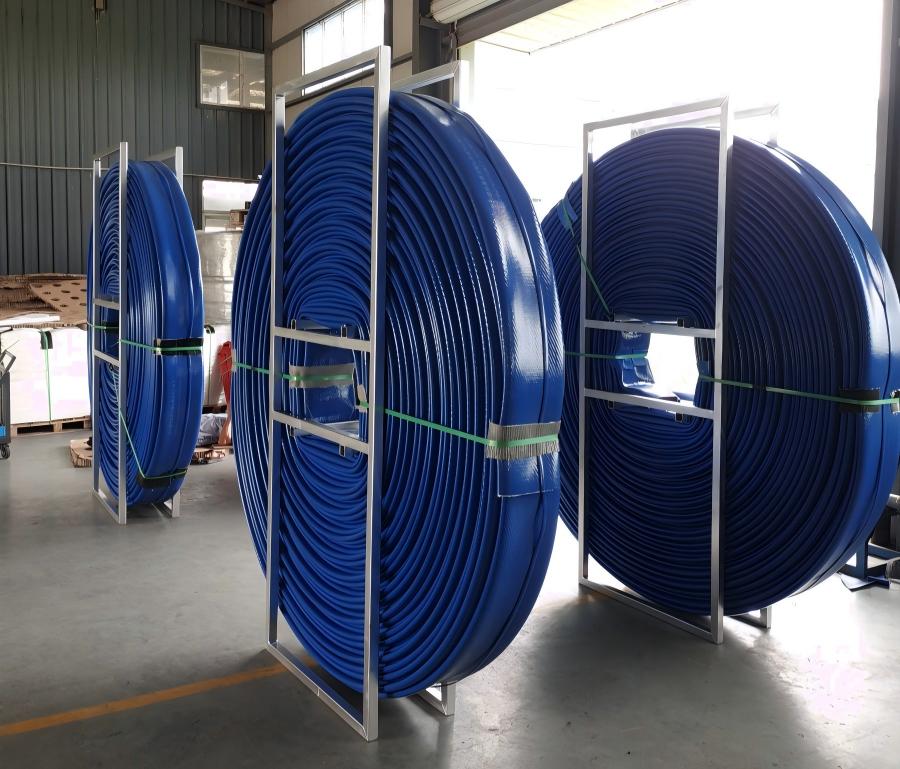
From my experience working with global well drilling and dewatering contractors, the corrosion story is no longer as simple as "metal is stronger, plastic is weaker." Thermoplastic polyurethane (TPU) well riser hose has evolved to combine high mechanical strength with strong resistance to water, many chemicals and micro‑biological attack, making it a serious alternative to stainless steel riser strings in most real‑world projects. When you add Sunmoon‑style custom engineering for pressure rating, liner thickness and reinforcement design, TPU layflat hose can be tuned to the exact fluid chemistry and operating profile of each well, something that is harder and more expensive to do with conventional steel pipe systems. [tpulayflatpipe]
In the context of well risers, corrosion resistance is not just about rust; it is about how materials behave when exposed to water, dissolved gases and chemicals over years of operation. Engineers usually consider: [188hose]
- Electrochemical corrosion from dissolved oxygen and salts
- Chemical attack from acids, alkalis, hydrocarbons or H₂S
- Microbiologically induced corrosion (MIC) from bacteria
- Erosion–corrosion from sand and suspended solids
- Stress cracking from cyclic pressure and temperature
TPU and stainless steel respond to these mechanisms in fundamentally different ways, which is why it is important to match the material to the well chemistry instead of defaulting to a "one‑material‑for‑everything" mindset. [blog.csdn]
Modern TPU is a segmented block copolymer that combines hard and soft segments, giving it a unique mix of elasticity and mechanical strength. For hoses and pipes, this structure offers several corrosion‑related benefits: [coating.com]
- Excellent hydrolysis resistance for water and moisture exposure when ether‑based TPU grades are used, making them stable in long‑term water service. [coating.com]
- Resistance to many oils, fuels and hydraulic fluids, which is why TPU layflat hose is widely used for water and oil transfer in energy and mining. [gii]
- No electrochemical corrosion, because TPU is non‑metallic and does not participate in galvanic reactions or rust. [188hose]
- Smooth internal bore that reduces scale build‑up and bacterial deposits compared with some rougher metal surfaces. [2.china-rubberhose]
Industry reports note that TPU hose has become a preferred "green" alternative to traditional PVC and some metal pipe in water, oil and gas transfer because it is recyclable and compliant with tightening environmental standards, which also supports long‑term asset reliability. In a Sunmoon‑type layflat riser design, these advantages are enhanced by controlled wall thickness and textile reinforcement, which helps the hose maintain dimensional stability and resist pinhole formation even under high pressure. [tpulayflatpipe]
Stainless steel is widely used in well casings and risers because of its protective chromium oxide film, which gives it a reputation for being "corrosion‑proof." In reality, its performance depends heavily on grade selection and water chemistry: [188hose]
- Austenitic grades like 304 and 316 resist general corrosion and many mild chemicals but can pit in chloride‑rich brines. [188hose]
- In the presence of chlorides, CO₂ or H₂S, localized pitting and crevice corrosion can occur, especially at welds, threads and couplings. [188hose]
- Under cyclic stress, stainless steel is vulnerable to stress corrosion cracking, particularly in higher‑temperature environments. [188hose]
From a field engineer's perspective, stainless steel performs well when carefully specified and perfectly installed, but real‑world systems with threaded joints, weld beads and mixed metals are full of stress raisers and crevices where corrosion starts. This means that the "corrosion resistance" of a stainless riser string is often limited by its weakest joint, not by the pipe wall itself. [188hose]
| Factor | TPU well riser hose | Stainless steel pipes |
|---|---|---|
| Electrochemical corrosion | Non‑metallic, no rust or galvanic attack in water service coating.com | Susceptible to pitting, crevice and galvanic corrosion in chlorides and mixed metals 188hose |
| Chemical exposure | Strong resistance to water, many oils and fuels; grade‑dependent for strong acids/solvents coating.com | Good in many neutral/oxidizing environments; vulnerable to chlorides, certain acids and H₂S 188hose |
| Microbiologically induced corrosion | No metal surface for MIC; biofilm can still form but does not "eat" the polymer coating.com | MIC can attack welds and low‑flow zones, accelerating localized damage 188hose |
| Erosion–corrosion | Flexible hose absorbs impact; smooth bore lowers turbulence and wear 2.china-rubberhose | Hard surface resists abrasion but can suffer groove erosion at elbows and joints 188hose |
| Localized weak points | Continuous hose minimizes fittings and leak paths 2.china-rubberhose | Numerous joints, couplings and welds can become corrosion hot‑spots 188hose |
In wells with moderate temperature, high chloride content and variable flow, TPU layflat hose often delivers more predictable long‑term performance simply because it removes the most vulnerable failure points: metal joints and interfaces exposed to aggressive water. Stainless steel remains advantageous where temperatures are very high or where the fluid includes oxidizers or chemicals not compatible with TPU, but those are more specialized cases. [2.china-rubberhose]
Corrosion in stainless steel systems rarely starts in the middle of a straight pipe; it tends to initiate at:
- Threaded or flanged joints
- Welds and heat‑affected zones
- Dissimilar metal couplings or clamps
Each of these locations is a crevice where stagnant fluid can sit, concentrating chlorides and other corrosive species. TPU layflat well riser hose, by contrast, is typically deployed as long continuous lengths with minimal couplings, so there are far fewer locations where corrosive attack can begin and propagate. [2.china-rubberhose]
Because TPU is flexible and slightly elastic, it accommodates small ground movements, pump vibration and thermal expansion without introducing significant stress into the material. Rigid stainless pipe systems can translate these same loads directly into cyclic stress at joints and welds, which is a precursor to stress corrosion cracking in susceptible environments. [2.china-rubberhose]
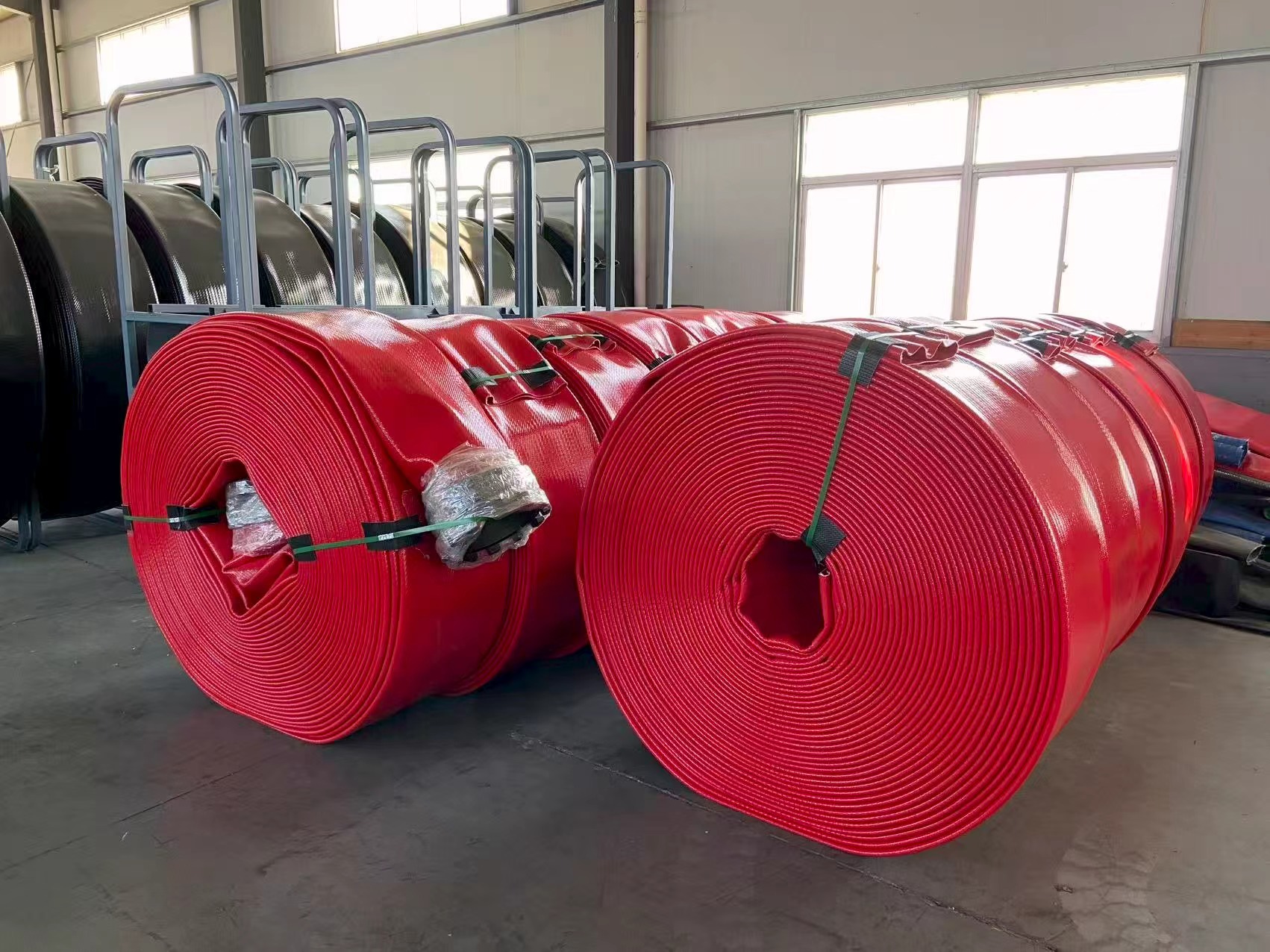
Regulators and large industrial buyers are increasingly evaluating not just technical performance, but also environmental impact and recyclability of well infrastructure. TPU has a strong position here: [blog.csdn]
- It is widely recognized as a recyclable polymer and a more environmentally friendly alternative to PVC in hose and pipe applications. [coating.com]
- It supports lighter systems that reduce transport and installation emissions. [2.china-rubberhose]
Market analysis suggests that the global TPU hose and pipe segment is growing steadily, with a projected market size reaching hundreds of millions of dollars by 2030 at a CAGR of around 4–5%, driven partly by this sustainability shift. Stainless steel is also recyclable, but its higher weight and the energy‑intensive nature of steelmaking make it harder to position as a low‑impact solution in flexible, temporary or mobile water management projects. [blog.csdn]
Industry and market reports show TPU layflat hose gaining share in several segments that used to be almost exclusively metallic:
- Oil and gas water transfer: TPU layflat hose is widely used for high‑pressure water transfer and temporary pipelines in oil and shale gas fields because of its corrosion resistance, flexibility and rapid deployment. [gii]
- Municipal and emergency dewatering: Lightweight TPU hose is adopted for temporary bypass lines and emergency pumping, where corrosion‑prone steel can be overkill and slow to install. [2.china-rubberhose]
- Agriculture and irrigation: TPU is increasingly selected over metal and PVC because of its durability, UV resistance and resistance to environmental stress cracking. [coating.com]
From an engineer's point of view, these are harsh, real‑world environments where corrosive water, variable chemistry and frequent handling quickly expose weaknesses in materials. The fact that TPU has taken meaningful share here is a strong practical signal that, in many corrosion‑driven decisions, it is outperforming steel on a total‑cost‑of‑ownership basis. [gii]
For a dedicated TPU layflat hose manufacturer such as Sunmoon, the value proposition around corrosion resistance goes beyond simply selling "a hose instead of a pipe." Specialist manufacturers typically provide: [tpulayflatpipe]
- Material selection by water chemistry: Ether‑based TPU grades for superior hydrolysis resistance, with customized formulations for specific chemicals. [coating.com]
- Reinforcement tailoring: Adjusted textile or aramid reinforcement density to match pressure, depth and safety factors, avoiding overstress that could accelerate aging. [2.china-rubberhose]
- Custom diameters and wall thickness: Optimized for flow rate, friction losses and mechanical stability under the actual pump curve. [tpulayflatpipe]
Because the same team designs, extrudes and tests the layflat hose, they can treat corrosion resistance as a system property, balancing material, structure and operating window instead of relying only on nominal material grades as with standard stainless pipes. This systems approach is particularly valuable for global customers with unique well conditions, where an off‑the‑shelf metal pipe may be over‑ or under‑specified. [gii]
From a corrosion‑focused project perspective, a simple decision framework looks like this:
1. Characterize your fluid:
- Chloride content, hardness, dissolved gases (CO₂, O₂, H₂S) and presence of hydrocarbons. [188hose]
2. Define temperature and pressure envelope:
- Maximum operating temperature and transient pressure spikes. [188hose]
3. Assess lifecycle and handling:
- Frequency of deployment, retrieval and relocation, which can influence mechanical wear and overall corrosion risk. [2.china-rubberhose]
4. Match materials to conditions:
- For moderate temperatures, high chlorides and frequent handling, TPU layflat well riser hose is often the more resilient, corrosion‑safe option. [coating.com]
- For exceptional temperatures or very aggressive chemicals outside TPU compatibility charts, specified stainless grades may still be required. [188hose]
In practice, many drilling and dewatering projects fall into the first category, which explains the rapid adoption of TPU layflat risers in oil transfer, shale gas support and high‑volume water management. [blog.csdn]
When you look beyond brochure claims and examine failure modes, TPU well riser hose delivers several decisive corrosion‑related advantages over stainless steel pipes in typical water and oilfield environments:
- No electrochemical corrosion or rust in water service
- Fewer joints and couplings, which sharply reduces localized corrosion risks
- Greater flexibility, which limits stress concentration and cracking at interfaces
- Strong hydrolysis and chemical resistance for the right TPU grade
Stainless steel retains an important niche for very high‑temperature wells and some aggressive chemical services, but for most modern dewatering, mining and energy water transfer projects, TPU layflat hose offers a more robust, corrosion‑tolerant and economical solution when properly engineered. [gii]
If your current or upcoming wells suffer from pitting, leaks at joints or premature failure of metal riser strings, it is time to benchmark TPU well riser hose against stainless steel in a structured way. By collaborating with a specialist TPU layflat manufacturer such as Sunmoon that can analyze your water chemistry, pumping conditions and deployment model, you can design a custom hose system that maximizes corrosion resistance, reduces downtime and lowers total installation cost. [coating.com]
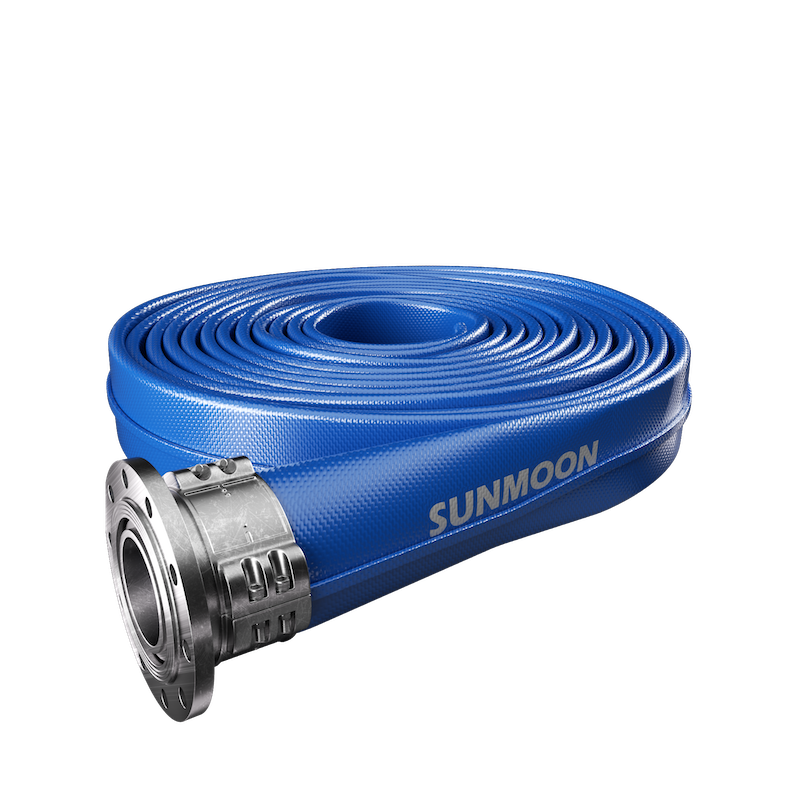
Q1: Is TPU layflat well riser hose suitable for deep wells with high pressure?
Yes, modern TPU layflat hoses are engineered with textile or aramid reinforcement and can be rated for high working pressures, including deep wells, when correctly specified by the manufacturer. [gii]
Q2: Can TPU hoses handle water with high chloride content better than stainless pipes?
In many moderate‑temperature, high‑chloride environments, TPU hoses avoid the pitting and crevice corrosion that can affect stainless steel, because TPU does not undergo electrochemical corrosion. [coating.com]
Q3: How does UV exposure affect TPU vs. stainless steel?
TPU formulations for hose applications include UV stabilizers and show good weathering performance, while stainless steel is inherently UV‑stable but may heat up and influence temperature‑sensitive media. [ssrg66]
Q4: Are TPU hoses compatible with hydrocarbons and oils?
Many TPU grades are designed for resistance to oils, fuels and hydraulic fluids, which is why they are widely used in oil and gas water and fluid transfer systems. [gii]
Q5: Is TPU more sustainable than stainless steel for riser applications?
TPU is recognized as a recyclable, environmentally friendly alternative to PVC in hose and pipe applications, and its lower weight reduces transport and handling emissions, which supports sustainability goals. [coating.com]
1. Top Polymer Enterprise – "管材用料新选择,TPU材料如何取代传统塑料管材 (How TPU material replaces traditional plastic pipe)" – discusses TPU recyclability, corrosion and hydrolysis resistance, and hose applications. [Link] [coating.com]
2. Top Polymer Enterprise – "管材用料新選擇,TPU材料如何取代傳統塑膠管材" – traditional Chinese version reinforcing TPU's environmental and performance benefits. [Link] [coating.com]
3. Global Information Inc. – "TPU扁平軟管市場(石油運輸用)" – market outlook and application trends for TPU layflat hoses in oil transfer. [Link] [gii]
4. CSDN Industry Blog – "环保需求驱动 TPU 软管管材创新,应用拓展迎新机" – analysis of TPU hose and pipe market growth and key players. [Link] [blog.csdn]
5. Coating / Industry News – "How TPU flat hoses are used in various fields" – overview of TPU layflat hose deployment scenarios and benefits. [Link] [2.china-rubberhose]
6. Industrial Hose Knowledge Base – "什么是TPU软管" – explanation of TPU hose properties and corrosion‑related performance compared with other materials. [Link] [188hose]
7. Jiangsu Sunmoon Shale Gas High Pressure Hose – News and product information for customized TPU layflat hose systems. [Link] [tpulayflatpipe]
8. TPU hose product and application notes – discussions of TPU flexibility, UV resistance and chemical compatibility in hose applications. [Link] [ssrg66]


