

Views: 222 Author: Sunmoon Publish Time: 2026-06-11 Origin: Site


Content Menu
● Understanding the Two Systems
● Storage Efficiency at a Glance
● Expert Perspective: Why Storage Efficiency Matters
>> Compact Coiling and Flat Packing
>> Lightweight for Vertical Storage
● How Rigid HDPE Piping Stores
>> Constraints of Fixed Lengths
● Side‑by‑Side: Storage Efficiency Comparison
● Real‑World Use Cases: Storage in Practice
>> Oil & Gas and Shale Operations
● Total Lifecycle View: Beyond Storage Volume
● Technical Considerations for Storage Planning
>> 1. Environmental Conditions
>> 2. Inventory Rotation (FIFO)
● Step‑by‑Step: Evaluating Storage Efficiency for Your Project
● Why TPU Layflat Excels in Export Scenarios
● Sunmoon's Approach to Storage‑Friendly Customization
● When Rigid HDPE Still Makes Sense
● Practical Checklist for Buyers
● Call to Action: Design a Storage‑Efficient Hose Package with Sunmoon
● Frequently Asked Questions (FAQ)
TPU layflat hose delivers significantly higher storage efficiency than rigid HDPE piping in most mobile and temporary fluid transfer projects, especially when space, logistics costs, and rapid deployment matter. For global buyers working with Chinese manufacturers like Sunmoon, understanding these differences helps you optimize both warehouse space and total lifecycle cost. [sunmoonlayflathose]
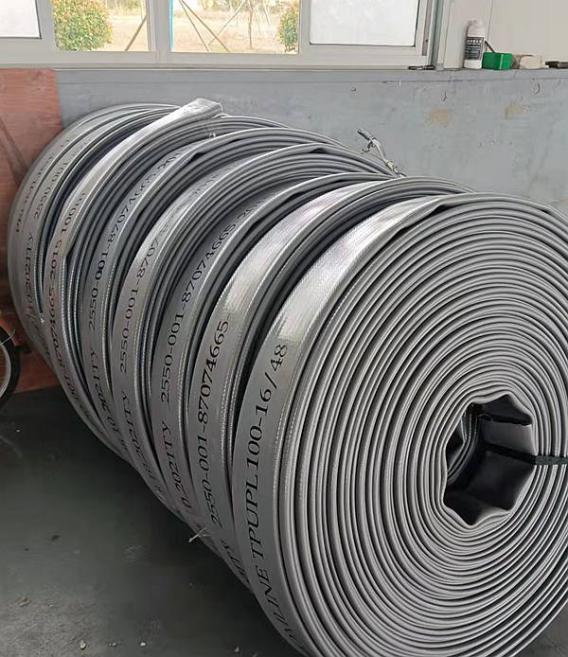
TPU layflat hose is a flexible hose made from thermoplastic polyurethane with a textile reinforcement, designed to be rolled and unrolled repeatedly for fluid transfer in demanding environments. It combines lightweight construction with high tensile strength, chemical resistance, and abrasion resistance, making it suitable for oil & gas, agriculture, mining, and municipal projects. [eastophose]
Rigid HDPE piping is a system of hard, cylindrical plastic pipes made from high‑density polyethylene, typically joined by butt fusion or mechanical fittings for long‑term buried or above‑ground networks. HDPE is known for its strength, corrosion resistance, and very long service life in permanent water, gas, and industrial pipelines. [wlplastics]
From a storage perspective, the key functional difference is flexibility vs. rigidity.
- TPU layflat hose can be flattened and rolled on reels, reducing its storage volume dramatically when not in use. [china-layflat-hose]
- Rigid HDPE piping keeps its full circular cross‑section at all times, so every meter of pipe occupies its full external diameter in warehouse space. [staline]
As a result, a single pallet can typically hold hundreds of meters of TPU layflat hose, while the same pallet footprint might carry only a small bundle of HDPE pipes of equivalent nominal diameter. [eastophose]
Speaking as a content strategist working with B2B industrial buyers, I see storage efficiency becoming a board‑level issue for many fluid transfer projects.
- Global operators are under pressure to cut warehouse costs and increase project mobility, especially in oil & gas, mining, and emergency response.
- Every cubic meter of storage capacity has a cost, and every extra container shipped cross‑border adds to your landed cost per meter of pipe or hose.
For a Chinese manufacturer like Sunmoon, being able to ship long continuous lengths of TPU layflat hose on compact reels is a practical way to support export customers who operate in remote regions with limited storage infrastructure. [china-layflat-hose]
A TPU layflat hose is designed to collapse flat when it is not pressurized. This collapsed profile can be: [china-layflat-hose]
- Rolled on steel or plastic reels for long lengths
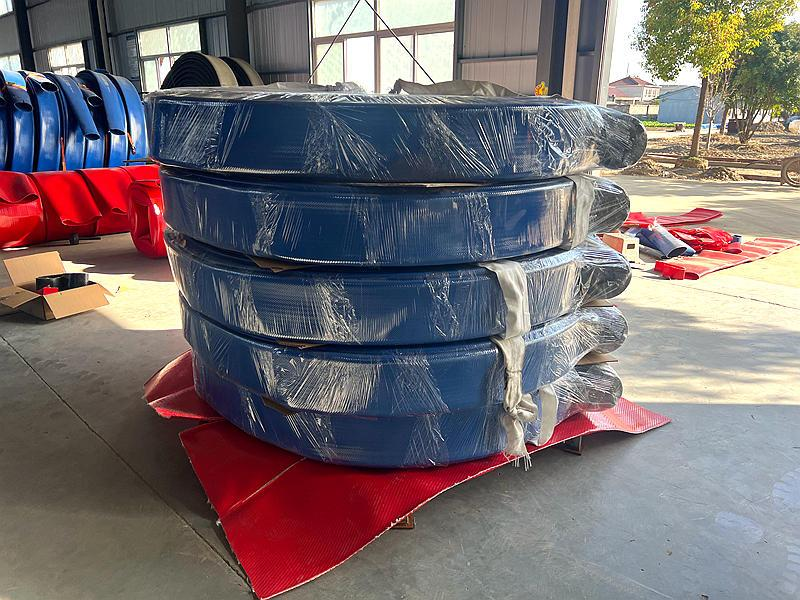
- Folded into compact coils and strapped on pallets
- Stacked in layers without significant deformation
Because the hose wall is relatively thin and flexible, dozens or hundreds of meters can be stored in a single compact reel, often within the volume of a single pallet. [eastophose]
TPU layflat hoses are typically lighter per meter than rigid pipe systems of comparable flow capacity. This allows: [sunhose]
- Vertical stacking of reels or coils
- Use of racking systems without overloading the structure
- Easier manual handling in depots and on-site containers
For distributors, this means less structural stress on racking and more efficient use of vertical warehouse space. [china-layflat-hose]
Rigid HDPE pipes retain their circular shape, so they are normally:
- Stored in long bundles, often 6–12 m per piece
- Stacked horizontally on pipe racks or wooden supports
- Secured with straps to prevent rolling and damage
Even though HDPE has some flexibility, the pipe body does not collapse, so the storage volume is essentially the sum of the cylinders you stock. [wlplastics]
Rigid pipes are usually supplied in fixed lengths (for example, 6 m or 12 m), which imposes several constraints:
- Warehouses must have enough length to accommodate bundles
- Containers and trucks may carry less total length due to wasted gaps and limited stacking height
- Offcuts and leftover pieces take up disproportionate space, as they cannot be flattened
This is acceptable for permanent infrastructure projects but less efficient for temporary or frequently relocated systems. [staline]
Storage and Logistics Factors: TPU Layflat vs Rigid HDPE
| Factor | TPU Layflat Hose | Rigid HDPE Piping |
|---|---|---|
| Storage volume per 100 m | Very low due to flat, coiled storage; one pallet often holds hundreds of meters. (eastophose) | High, as pipes remain cylindrical and require long racks or large yards. (wlplastics) |
| Handling on site | Lightweight coils; easy manual movement and compact storage near work fronts. (eastophose) | Requires forklifts or cranes; more complex to move and store. (wlplastics) |
| Container loading | Optimized palletization; more total length per container. (eastophose) | Limited by pipe diameter and length; more empty air shipped. (wlplastics) |
| Storage infrastructure | Works well with standard pallet racks and small warehouses. (eastophose) | Often needs outdoor yards or dedicated pipe racks. (wlplastics) |
| Adaptability for relocation | Highly suited to mobile and seasonal projects. (eastophose) | Better for fixed, long‑term installations. (wlplastics) |
Sunmoon's high‑pressure TPU layflat hoses are used in shale gas and oilfield applications, where long distances and frequent relocations are common. In these fields: [sunmoonlayflathose]
- Equipment is often stored in remote yards with limited space
- Crews must mobilize quickly between well pads
- Transport fleets need to carry maximum flow capacity per truck
Using TPU layflat reels allows operators to store entire temporary pipeline systems on relatively few pallets, which can be loaded and unloaded rapidly between operations. [china-layflat-hose]
In agricultural irrigation, seasonal usage is the norm. TPU layflat hoses can be rolled up at the end of the watering season and stored in compact coils in a small farm storeroom or shed. In contrast, rigid HDPE pipes might require: [eastophose]
- Permanent storage racks near fields
- Larger sheds or open yards
- More labor for retrieval and redeployment
For growers working with limited farm infrastructure, this storage flexibility becomes a strong argument for layflat solutions. [china-layflat-hose]
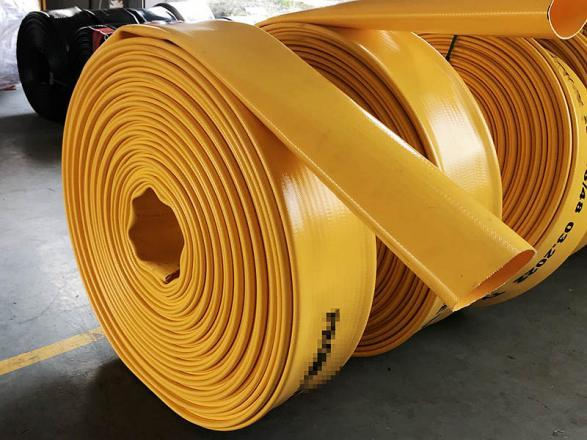
Storage efficiency is not only about how much space the product occupies; it also influences total lifecycle cost and risk.
- Inventory flexibility: You can stock more lengths, diameters, or configurations of TPU layflat hose within the same warehouse footprint, giving distributors and EPC contractors more flexibility in project planning. [eastophose]
- Damage reduction: Coiled and palletized hoses are less exposed to impact and UV damage during storage compared to large pipe stacks stored in open yards. [china-layflat-hose]
- Faster deployment: Systems that store compactly are often quicker to deploy and repack, reducing labor costs and project setup time. [sunmoonlayflathose]
Rigid HDPE, however, compensates with long lifespan and excellent performance in permanently installed pipelines, which may offset storage inefficiency in long‑term projects. [wlplastics]
Both TPU layflat hoses and HDPE pipes should be stored in ways that control:
- UV exposure: Extended sunlight can degrade polymers over time; covering or indoor storage helps extend service life. [staline]
- Temperature extremes: Avoiding extreme heat reduces stress on hose and pipe materials. [sinohose]
Because TPU layflat hoses are easier to store indoors or under shelter due to their compactness, it is often more practical to implement environmentally controlled storage for them. [eastophose]
For global buyers, inventory rotation helps avoid aging stock:
- Layflat reels can be labeled with production dates and stacked in FIFO order on racks.
- HDPE bundles often require more physical movement to access older stock, increasing handling time.
This makes lean inventory practices easier with layflat hose systems, especially in multi‑SKU environments. [china-layflat-hose]
If you are comparing TPU layflat hose and rigid HDPE piping for a new fluid transfer project, use this simple framework:
1. Define your storage constraints
- Available indoor and outdoor space
- Height limits in racks or containers
- Maximum allowable weight per pallet or shelf
2. Estimate required length and diameter
- Total route length and number of branches
- Future expansions or seasonal variations
3. Calculate storage volume per option
- For HDPE: approximate volume by multiplying pipe cross‑sectional area by length and stacking factors. [wlplastics]
- For TPU layflat: consult reel dimensions and packing density from your manufacturer to estimate pallets per system. [eastophose]
4. Factor in logistics and handling
- Number of container loads required
- Loading and unloading times
- Equipment needed (forklifts, cranes vs. manual)
5. Align with project type
- Temporary, mobile, seasonal: TPU layflat is usually the more storage‑efficient and operationally flexible choice. [china-layflat-hose]
- Permanent, long‑term pipeline: HDPE may remain preferable for its long service life and structural robustness. [staline]
For international buyers sourcing from China, storage efficiency has a direct impact on freight cost per meter and warehouse ROI.
- High packing density: More hose per container means lower average shipping cost per meter of pipeline capacity. [eastophose]
- Simplified warehousing: Standard palletized reels fit easily into global 3PL storage systems, avoiding the need for specialized pipe yards. [china-layflat-hose]
- Modular deployment: Coils can be allocated across multiple sites or projects rapidly, supporting dynamic project schedules. [china-layflat-hose]
Manufacturers like Sunmoon leverage this by offering custom lengths, pressure ratings, and hose constructions that fit both the operational and storage needs of overseas clients. [sunmoonlayflathose]
Sunmoon specializes in high‑pressure TPU layflat hoses and related flat hose products, with a focus on export markets. From a storage and logistics perspective, we can support buyers through: [china-layflat-hose]
- Custom hose lengths per reel, so you can match each pallet to a specific project segment.
- Optimized hose wall thickness and reinforcement, balancing compact storage with required working pressures. [asoepiperelining]
- Project‑based packaging design, helping you plan reel sizes, pallet layouts, and container loading patterns for maximum storage efficiency. [sunmoonlayflathose]
By aligning hose design with your warehouse layout and transportation routes, you can unlock significant savings beyond the material cost of the hose itself. [china-layflat-hose]
Despite its storage drawbacks, rigid HDPE piping is still an excellent choice when:
- The pipeline is permanent or long‑term, and the cost of storage is minor compared to decades of service. [wlplastics]
- You need a buried main line that will remain in place with minimal movement.
- The project has large open storage yards, making the volumetric inefficiency less significant.
In these cases, many operators adopt a hybrid strategy: HDPE for main trunks and TPU layflat hoses for temporary branches, bypasses, or seasonal connections. [staline]
Use this checklist when deciding between TPU layflat hose and rigid HDPE piping with a focus on storage efficiency:
- Do we need to move this pipeline multiple times during its life?
- Is indoor storage space limited or expensive at our site?
- Are our logistics routes (ports, rail, trucks) cost‑sensitive to volume?
- Can our team handle large pipe bundles safely, or would lighter coils be safer?
- Do we want to standardize packaging across multiple international locations?
If you answer "yes" to most of these questions, TPU layflat hose is likely to offer a compelling storage advantage. If you answer "no" and your infrastructure is stable, rigid HDPE still deserves serious consideration. [wlplastics]
If you are planning a new fluid transfer project or upgrading an existing system, we recommend a storage‑first design review of your pipeline solution.
- Share your route length, pressure requirements, and storage constraints with Sunmoon's engineering team.
- We can recommend a custom TPU layflat configuration, reel length, and pallet plan tailored to your warehouse, container, and deployment needs. [sunmoonlayflathose]
- For hybrid systems, we can help you integrate TPU layflat hoses with existing rigid HDPE networks to maximize both performance and storage efficiency.
Contact Sunmoon today to explore a storage‑optimized TPU layflat solution for your next project. [china-layflat-hose]
1. Is TPU layflat hose as durable as rigid HDPE in long‑term use?
TPU layflat hose is highly durable under demanding conditions, especially for mobile and temporary applications, but rigid HDPE generally offers the longest service life in permanent buried pipelines. Choosing between them depends on whether your primary priority is long‑term permanence or deployment flexibility. [wlplastics]
2. Can TPU layflat hoses be used with existing HDPE systems?
Yes, TPU layflat hoses can be connected to rigid HDPE pipelines using appropriate couplings and manifolds, allowing a hybrid approach where layflat handles temporary or mobile segments. This combines HDPE's structural strength with TPU's storage and deployment efficiency. [wlplastics]
3. How much storage space can TPU layflat hoses save compared to rigid HDPE?
While exact savings depend on diameter and length, coiled layflat hoses can reduce storage volume by several times compared with rigid pipe bundles of equivalent flow capacity, especially for larger diameters. Many operators report that entire temporary networks can be stored on just a few pallets. [eastophose]
4. Are there temperature limits for storing TPU layflat hoses?
TPU layflat hoses are designed to handle a broad temperature range during operation, but for storage, it is best to avoid extreme heat and prolonged direct sunlight to maximize service life. Covered or indoor storage is recommended whenever possible. [sinohose]
5. What industries benefit most from the storage efficiency of TPU layflat hoses?
Industries with frequent mobilization and limited storage space benefit most, including oil & gas, mining, agriculture, firefighting, and emergency water supply. For these sectors, compact storage directly translates into faster deployment and lower logistics costs. [sunmoonlayflathose]
1. Sunmoon Layflat Hose Manufacturer – Company Overview. Jiangsu Sunmoon Shale Gas High Pressure Hose Co., Ltd. Available at:
https://china-layflat-hose.com/about/ [china-layflat-hose]
2. Sunmoon Layflat Hose – Product and Applications. Sunmoon TPU Layflat Hose. Available at:
https://sunmoonlayflathose.com [sunmoonlayflathose]
3. TPU Layflat Hose: Structure and Applications. China TPU Layflat Hose Supplier. Available at:
https://china-layflat-hose.com/products/tpu-layflat-hose.html [china-layflat-hose]
4. TPU Layflat Hose Overview. Eastop Hose. Available at:
https://www.eastophose.com/news_detail/18.html [eastophose]
5. HDPE vs. PVC Pipes: Key Differences & Benefits. WL Plastics. Available at:
https://www.wlplastics.com/news/hdpe-vs-pvc-pipes [wlplastics]
6. PVC vs HDPE: Complete Comparison Guide for Pipe Selection. Staline. Available at:
https://staline.com/post/pvc-vs-hdpe-complete-comparison-guide-for-pipe-selection [staline]
7. Key Features of TPU Layflat Hose. Sinohose. Available at:
https://www.sinohose.com/key-features-of-tpu-layflat-hose.html [sinohose]
8. PVC vs. Rubber vs. TPU Layflat Hoses – Key Differences. Sunhose. Available at:
https://www.sunhose.com/blog/layflat-hoses-decoded-why-pvc-rubber-and-tpu-cater-to-different-needs/ [sunhose]
9. ManureFlow Supply TPU Lay Flat Hose. Asoepipe Relining. Available at:
https://www.asoepiperelining.com/manureflow-supply-tpu-lay-flat-hose/ [asoepiperelining]


