

Views: 222 Author: Loretta Publish Time: 2026-01-07 Origin: Site


Content Menu
● Key Components of a Fire Hose
● How Fire Hoses Work (Step-by-Step)
● Advantages and Limitations of Fire Hoses
>> Attack Hose
>> Suction (Hard Suction) Hose
>> Booster Hose
● Key Uses: Suction and Delivery
● TPU Layflat Fire Hoses: Modern Performance Upgrade
● TPU vs Traditional Fire Hose Materials
● How to Select the Right Fire Hose (Including TPU Options)
>> 1. Match Hose Type to Fire Risk
>> 2. Define Performance Requirements
>> 3. Consider Handling, Storage, and Deployment
● Practical Maintenance and Inspection Checklist
● Expert Tips for Maximizing TPU Layflat Hose Value
● When to Upgrade to High-Performance TPU Layflat Hoses
● Optimize Your Fire Hose System
● Frequently Asked Questions (FAQ)
>> Q1. How much pressure can a typical fire hose handle?
>> Q2. What is the main advantage of TPU layflat hoses over rubber hoses?
>> Q3. Are TPU layflat hoses suitable for structural firefighting?
>> Q4. How often should fire hoses be tested?
>> Q5. What factors are most important when selecting a fire hose for an industrial facility?
Fire hoses are the front-line tool that connects water supply to the fire, and modern TPU layflat hoses are redefining how efficiently that job can be done. This enhanced guide explains what fire hoses are, how they work, the main hose types, real-world applications, and how to select and maintain high-performance TPU layflat hoses for demanding environments.[1][2][3]

A fire hose is a specialized flexible hose used to deliver water or foam from a pressurized source to a fire, either inside buildings or in outdoor environments. It is a critical part of every fire protection system, from municipal fire departments to industrial and commercial facilities.[2][4][1]
Typical modern fire hoses are constructed as multi-layer assemblies designed to balance strength, flexibility, and durability under high pressure and exposure to heat and abrasion. These hoses are built and tested to meet standards such as NFPA 1961, which defines design and construction requirements for new fire hose.[5][6][1][2]
A standard firefighting hose usually consists of five main components that work together to move water safely and efficiently. Understanding each part helps evaluate hose quality and performance.[1][2]
- Hose jacket – The outer jacket protects the hose from abrasion, cuts, and environmental exposure and is often woven from polyester, nylon, or other synthetic fibers. Quality jackets also contribute to kink resistance and flexibility during deployment.[2][1]
- Reinforcement layer – This is the structural backbone that allows the hose to withstand high internal pressure without failing, commonly made of high-tenacity synthetic fibers. The design of the reinforcement determines working pressure, burst pressure, and weight.[1][2]
- Inner tube (liner) – The inner tube carries water or foam and is typically made from rubber, TPU, or thermoplastic materials that resist heat, chemicals, and microbial growth. Material selection here has a major impact on friction loss and compatibility with different firefighting agents.[3][2][1]
- Couplings – Metal fittings, often aluminum or brass, connect hoses to hydrants, pumps, and nozzles and must meet dimensional and strength standards such as NFPA 1963. Precision-machined couplings help prevent leaks and speed up hose deployment in emergencies.[7][1]
- Nozzles – The nozzle at the hose end controls flow and stream pattern, from a tight jet for reach and penetration to a fog or spray for area coverage and protection. Adjustable nozzles allow firefighters to adapt instantly to changing fire conditions.[8][1]
Fire hoses function as a high-pressure transport and control system for water or foam. Performance depends on both the hose construction and the pump or hydrant characteristics.[2][1]
1. Connection to water source
- Couplings are attached to hydrants, pumps, or standpipe outlets using standardized threads or quick-connect systems.[7][1]
- Multiple hose lengths may be connected in series with couplings to reach upper floors or distant fire grounds.[9][1]
2. Pressurization and flow
- A fire pump or municipal pressure pushes water into the hose, generating working pressures typically between about 8 and 20 bar (approximately 116–290 psi), depending on hose type and application.[1][2]
- Most firefighting operations keep pressures within a range that balances reach, flow rate, and operator safety.[10][9]
3. Water delivery and stream control
- The inner tube carries water with minimum friction loss toward the nozzle, while the reinforcement prevents expansion or rupture.[2][1]
- At the nozzle, firefighters adjust pattern and flow rate to either knock down the seat of the fire or protect exposures and escape routes.[8][1]
Fire hoses offer rapid, high-volume water delivery but also pose handling and maintenance challenges. Understanding both aspects helps users plan systems and training.[11][1]
Key advantages
- High flow and pressure capability – Fire hoses can deliver significant flow at high pressure, with many designs tested to several hundred psi to meet relevant standards.[1][2]
- Long-distance reach – By connecting multiple lengths, crews can push water from remote hydrants or pumps to upper stories, basements, or remote outdoor fires.[9][1]
- Flexibility and versatility – Hoses can operate in urban, industrial, wildland, and marine environments and support both water and compatible foam agents.[11][1]
Typical limitations
- Weight and handling effort – Charged hoses are heavy and require trained personnel and proper techniques for safe maneuvering.[11][1]
- Limited maneuverability in tight spaces – In confined or cluttered areas, the diameter and stiffness of a charged line make repositioning more difficult.[1]
- Need for professional training and maintenance – Incorrect use, storage, or testing can shorten hose life or cause dangerous failures during incidents.[4][1]
Different hose types are optimized for specific roles in firefighting operations. Selecting the right type ensures adequate flow, reach, and durability for each scenario.[8][1]
Attack hoses are the primary high-pressure lines used to directly apply water or foam to the fire. They typically range from about 1 to 3 inches in diameter and must remain flexible while pressurized in dynamic interior operations.[6][8][1]
Modern attack hoses are often double-jacket construction with synthetic fibers and advanced liners such as TPU to balance durability and weight. Many are tested at pressures up to several hundred psi and operated within controlled working pressure limits specified by manufacturers.[12][3][2]
Supply and relay hoses are large-diameter hoses used to move water from a distant hydrant or static source to a pumper or fire engine. Diameters usually range from about 3 to 5 inches to maximize flow at moderate pressure.[6][9][1]
These hoses are commonly rubber or thermoplastic-lined and prioritize low friction loss over extreme maneuverability. They are particularly important in commercial, industrial, and rural settings where hydrant spacing or water sources require long lays.[13][6][1]
Suction hoses are rigid or semi-rigid hoses that allow pumps to draft water from static sources such as tanks, ponds, or rivers. They use rubber or plastic coverings with metal or plastic helix reinforcement to prevent collapse under vacuum.[2][1]
Common diameters range from about 2.5 to 6 inches, with standard lengths around 10 feet to keep suction lifts manageable and minimize friction losses.[9][1]
Forestry hoses are lightweight, small-diameter lines designed for wildland and rural firefighting where portability is critical. Typical diameters range from about 1 to 1.5 inches, allowing long hose lays over difficult terrain with hand crews.[8][9][1]
These hoses often use single-jacket synthetic construction and may feature percolating jackets that allow a fine water film for added protection in vegetation fires.[2][1]
Booster hoses are small-diameter, rubber-covered hoses often mounted on reels for quick initial attack or mop-up operations. Diameters usually run from about 0.75 to 1 inch and are designed for durability and ease of use rather than very high flow.[9][8][1]
They are suitable for vehicle fires, rubbish fires, and overhaul tasks where moderate flow at high pressure is sufficient.[8][1]
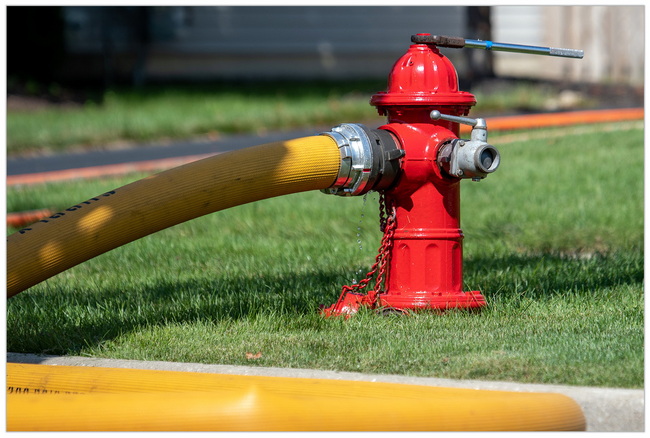
Fire hose deployments fall into two main functional categories: suction and delivery. Each category has distinct hose designs and handling considerations.[1][2]
Suction operations involve drawing water from a source into the fire engine's pump using hard suction hoses. Water may be sourced from hydrants, open tanks, lakes, or reservoirs depending on site conditions.[9][2][1]
- Partially embedded suction hoses – Used in shallow water where the hose is partially buried or stabilized to avoid movement and loss of prime, typically with a helix-reinforced structure to resist collapse.[1]
- Fully embedded suction hoses – Used in deeper or more turbulent water, fully buried or secured to maintain position and provide reliable flow under harsher conditions.[1]
Delivery operations transfer water from the pump to the nozzles using attack, forestry, or booster hoses. Hose selection depends on target reach, required flow, and environment.[8][1]
- Percolating delivery hose – Features small pores in the jacket that allow controlled seepage, creating a cooling water film ideal for forest and grass fires.[2][1]
- Non-percolating delivery hose – Designed with impermeable liners to maintain a strong, focused water jet for interior attacks and structural fires where maximum reach is needed.[2][1]
Thermoplastic polyurethane (TPU) layflat hoses are an advanced class of fire hose that provide significant benefits over traditional rubber-lined or PVC hoses. They are used where long service life, reduced downtime, and high performance under harsh conditions are required.[14][3]
Key performance characteristics of TPU layflat hoses include:
- Lighter weight – TPU liners can reduce total hose weight to about two-thirds or less of comparable rubber hoses, improving deployment speed and reducing fatigue.[15][14]
- Higher pressure capability – TPU fire hoses can reach burst pressures around 5.7 MPa, significantly higher than many rubber equivalents that burst around 3.9 MPa.[14][15]
- Outstanding weather resistance – TPU can work continuously around 80–90°C without distortion and remains flexible at low temperatures, outperforming PVC and many rubber compounds.[15][14]
- Excellent abrasion and oil resistance – TPU resists wear from rough surfaces and is minimally affected by non-mineral oil and many fuels, making it suitable for harsh industrial environments.[16][14]
The table below summarizes how TPU layflat hoses compare with more traditional hose materials for firefighting and industrial use.[3][14][1]
Feature | TPU Layflat Hose | Rubber-Lined Hose | PVC/PVC-Nitrile Hose |
Weight | Very light; often about one-half to two-thirds of rubber alternatives. | Heavier; increases handling effort. | Moderate; heavier than TPU in cold conditions. |
Burst pressure | Up to around 5.7 MPa in many designs. | Around 3.9 MPa typical for many models. | Lower than high-end TPU attack hoses. |
Temperature range | Approx. −40°C to +90°C usable range. | Good heat resistance; more mass to heat. | Limited low-temperature flexibility. |
Abrasion resistance | Exceptional; designed for rough surfaces. | Good but can wear faster in mining or rocky areas. | Moderate; jacket can wear quickly outdoors. |
Chemical or oil resistance | Excellent against oils and many fuels. | Variable; depends on compound. | Good versus some chemicals; weaker in heavy oil environments. |
Typical applications | High-end attack hose, long-distance supply, heavy industry. | Traditional municipal attack and supply lines. | Agricultural and light industrial layflat duty. |
Choosing the right hose is not only a safety decision but also a cost-of-ownership decision for departments and facilities. The following framework helps structure that choice.[6][1]
Selection begins with the likely fire scenarios and occupancy type.[17][13]
- Structural and commercial fires – Prioritize high-pressure attack hoses with durable jackets and compliant couplings; TPU attack hoses can reduce fatigue and enhance maneuverability.[3][1]
- Industrial and petrochemical sites – Emphasize chemical and oil resistance, higher burst pressures, and robust abrasion resistance; TPU layflat hoses are strong candidates.[16][14]
- Wildland and rural operations – Consider lightweight forestry lines and percolating hoses; TPU liners can extend life on rocky and abrasive ground.[3][1]
Technical specifications should align with standards and local conditions.[17][6]
- Working and test pressures in line with NFPA 1961 and NFPA 1962 recommendations.[5][6]
- Hose diameters that deliver the required flow for the occupancy type, referencing NFPA 14 and NFPA 1710 guidance where applicable.[18][13]
- Temperature, UV, and chemical exposure conditions typical for the location and industry.[4][11]
User experience in real deployments directly affects safety and outcomes.[11][1]
- Lighter, low-kink hoses are helpful for high-frequency deployments or for smaller crews; TPU layflat products perform well in these scenarios.[14][3]
- Hoses should lay truly flat for compact storage and quick loading or unloading from racks or hose beds.[16][11]
- Compatibility with existing couplings, appliances, and nozzles avoids costly retrofits and operational delays.[7][17]
Regular maintenance is essential to keep hoses safe, compliant, and ready for use. NFPA 1962 provides detailed guidance on inspection and testing frequencies for hose, couplings, and nozzles.[4][6][1]
After each use
1. Visually inspect for cuts, burns, abrasions, bulges, and kinks along the entire length.[4][1]
2. Clean hose with clear water and avoid harsh chemicals that may compromise liners or jackets.[4][2]
3. Dry completely before storage to help prevent mold, jacket degradation, and coupling corrosion.[2][1]
Periodic inspection and testing
- Conduct scheduled pressure tests at values consistent with manufacturer data and NFPA 1962; many double-jacket attack hoses are tested at high pressure during acceptance and at lower test pressures during service.[4][2]
- Record inspection and test results in a log, including any repairs, replacements, or out-of-service decisions.[4]
Storage best practices
- Store hoses in cool, dry, and shaded areas away from direct UV exposure or chemicals.[11][2]
- Use racks, reels, or cabinets that prevent sharp bends and minimize mechanical stress on couplings and jackets.[4][1]
Suggested visual:
Insert a simple table-style graphic or infographic summarizing the maintenance checklist for quick reference in fire stations or plants.
Users can gain more value by treating TPU layflat hoses as long-term assets rather than short-life consumables. A structured approach improves reliability and lifecycle cost.[14][3]
- Standardize on TPU for high-wear lines – Deploy TPU hoses on the most abrasive routes, such as mining, construction, and long industrial runs, where extended life offsets higher initial cost.[16][14]
- Use data-driven replacement cycles – Track service hours, deployment type, and test results to move from fixed calendar replacement to condition-based maintenance.[4]
- Align hoses with pump curves – Select hose diameters and lengths that match pump performance to avoid excessive friction loss and unnecessary over-pressurization.[13][9]
Recurring issues in hose fleets often indicate the need for higher-performance materials and construction. TPU layflat hoses can address multiple pain points simultaneously.[3][14]
- Frequent jacket wear, cuts, or abrasion failures on rough ground or concrete.[14]
- Crew fatigue and slow deployment due to the weight of traditional rubber-lined hoses.[3]
- Repeated leaks or burst events at pressures below operational targets, especially in industrial or high-rise environments.[10][2]
When such issues appear regularly, partnering with an engineering-focused TPU layflat hose supplier enables customized hose designs that match specific pressure, length, and environmental requirements.[16][3]
Well-chosen and well-maintained fire hoses directly influence safety, response speed, and long-term operating cost, especially where high-performance TPU layflat technology is available. Now is the right time to review existing hose inventories, compare them against current risk profiles and standards, and work with a specialized TPU layflat hose engineering team to define hose diameters, pressure ratings, and configurations that match specific global deployment needs.[3][1]
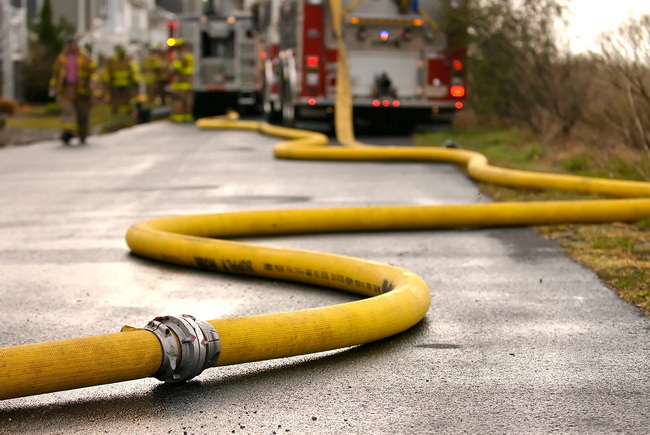
Most modern fire hoses are designed for working pressures in a range of roughly 8–20 bar (about 116–290 psi), with burst pressures significantly higher to meet relevant standards and manufacturer specifications.[10][2]
TPU layflat hoses are significantly lighter, offer higher burst pressure, and provide better abrasion and oil resistance, which extends service life in demanding environments and reduces handling fatigue.[15][14][3]
Many TPU layflat hoses are designed as high-end attack hoses and are suitable for structural firefighting when they are specified and certified for that purpose, combining high working pressure, low weight, and good flexibility.[15][3]
Relevant standards such as NFPA 1962 recommend regular inspection and periodic service testing of fire hoses, nozzles, and appliances, and many organizations perform at least annual pressure tests in addition to after-use inspections.[6][4]
Key factors include fire type, required flow and pressure, chemical and temperature exposure, hose handling requirements, and compatibility with existing fittings, pumps, and protection systems.[6][11][1]
[1](https://rentonehose.com/blog/all-about-fire-hoses-everything-you-should-know)
[2](https://en.wikipedia.org/wiki/Fire_hose)
[3](https://www.jafirehose.com/news/industry-news/the-ultimate-guide-to-tpu-lay-flat-hoses-benefits-uses-and-selection-tips.html)
[4](https://tasfire.com/understanding-nfpa-standards-a-guide-to-compliant-fire-hose-inspections/)
[5](https://www.nfpa.org/codes-and-standards/nfpa-1961-standard-development/1961)
[6](https://www.firefighternation.com/lifestyle/a-guide-to-hose-selection/)
[7](https://firehosedirect.com/blogs/expert-help/introduction-to-fire-hoses)
[8](https://foutsfire.com/blog/types-of-fire-hoses-and-nozzles/)
[9](https://www.supplycache.com/blogs/news/what-is-the-typical-range-of-a-fire-hose)
[10](https://www.forede.com/info/how-strong-are-fire-hoses-86272769.html)
[11](https://www.sinohose.com/why-choose-layflat-fire-hoses-for-your-emergency-needs.html)
[12](https://rubberhoseindia.com/fire-hose-pipe/)
[13](https://nfsa.org/2020/01/31/fire-service-hose-lines-and-nfpa-14-requirements/)
[14](https://www.orient-hose.com/tpu-layflat-hose-has-huge-advantages/)
[15](https://www.orientflexhose.com/project/tpu-layflat-hose/)
[16](https://www.austinhose.com/itemdetail/AH-16-TPU-660FT-M-A)
[17](https://www.snaptitehose.com/about-us/news-and-innovation/the-quickest-and-easiest-way-to-choose-the-right-fire-hose-for-you)
[18](https://www.nfpa.org/codes-and-standards/nfpa-14-standard-development/14)


