

Views: 202 Author: Sunmoon Hose Manufacturing Publish Time: 2026-07-18 Origin: Site


Content Menu
● What Is an Anti-Static Layflat Hose?
● Technical Differences That Matter
● When Each Hose Should Be Used
● Procurement Insight From the Factory Side
● Why Engineers Prefer Anti-Static Hose
● How Sunmoon Supports Custom Projects
● Buying Guidance for Global Buyers
● FAQ
>> 1. Is a standard hose ever acceptable in an explosive zone?
>> 2. What makes a hose anti-static?
>> 3. Do fittings matter as much as the hose itself?
>> 4. Can anti-static hose be used in non-hazardous applications?
>> 5. What should I ask a supplier before buying?
>> 6. Why is TPU often chosen for layflat hose projects?
Explosive zones require more than a strong hose. They require a transfer solution that helps reduce ignition risk, supports safe operation, and fits the actual site conditions.
In flammable or dust-hazard environments, the wrong hose choice can create serious risk. That is why anti-static layflat hose and standard hose must be evaluated very differently.
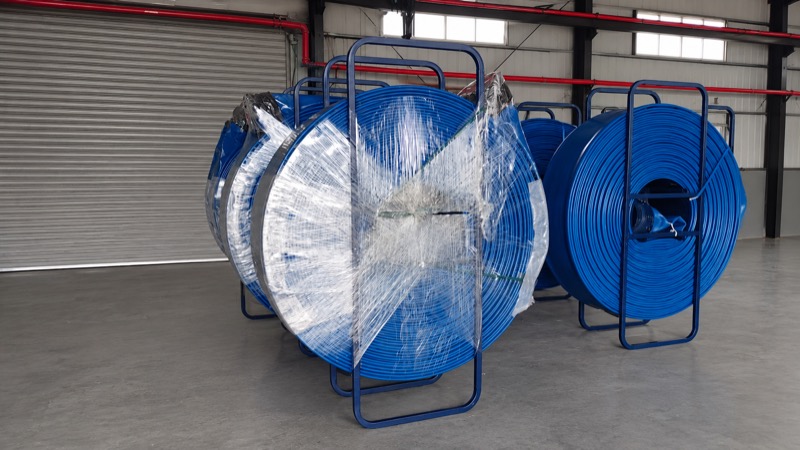
In hazardous areas, static electricity is not a minor issue. It can become an ignition source if it builds up on the hose surface or in the transfer system.
A hose may look durable and still be unsuitable for explosive zones. The real question is not only whether it can move fluid, but whether it can do so safely when flammable vapor, gas, or dust may be present.
An anti-static layflat hose is designed to reduce or dissipate electrostatic charge during fluid transfer. It usually includes conductive elements, special layers, or a construction method that helps control static buildup.
This type of hose is used when the transfer process involves flammable liquids, solvent handling, or other hazardous applications. The hose becomes part of the safety system, not just a fluid carrier.
A standard hose is designed for normal fluid transfer tasks such as irrigation, dewatering, construction water movement, or general industrial use. It may offer good pressure resistance and flexibility, but it is not automatically designed for electrostatic control.
That means a standard hose can work well in ordinary conditions while still being unsafe in explosive zones. For that reason, "industrial-grade" does not always mean "hazard-zone suitable."
| Factor | Anti-Static Layflat Hose | Standard Hose |
|---|---|---|
| Static control | Designed to reduce or dissipate charge | Usually not designed for electrostatic dissipation |
| Best use | Explosive zones, flammable liquid transfer, hazard-controlled sites | General water transfer, irrigation, dewatering |
| Safety focus | Lower ignition risk from static discharge | Basic fluid transfer performance |
| Compliance focus | Grounding, conductivity, zone suitability | Pressure, flexibility, abrasion resistance |
| Risk level in explosive zones | Lower when correctly specified and installed | Higher and usually unsuitable |
| Buying priority | Conductive design, fittings, grounding method, test data | Cost, size, pressure rating, durability |
The difference is clear. In explosive zones, safety is the deciding factor, not just strength or price.
The biggest difference is the ability to manage electrostatic charge. Anti-static hoses are built to reduce the chance of dangerous discharge.
Standard hoses generally do not provide the same protection. That is why they should not be assumed safe for flammable environments.
In hazardous areas, the hose often needs to work together with grounding and bonding practices. The hose alone is not enough if the fittings or assembly interrupt the discharge path.
This is why the full hose assembly matters, not only the hose tube itself.
Anti-static hoses may use conductive materials or engineered layers to support static control. Standard hoses usually focus on mechanical performance such as pressure, flexibility, and wear resistance.
Both are important, but in explosive zones static behavior comes first.
Hoses used in hazardous areas need strict inspection. Damage, worn fittings, or poor assembly can affect safety.
A hose may still look acceptable from the outside while no longer being suitable for critical service.
Use an anti-static layflat hose when the site, medium, or process creates an ignition risk from static electricity. Typical examples include flammable liquid transfer, solvent handling, and controlled industrial zones with explosive atmospheres.
Use a standard hose when the application is outside hazardous classifications and the priority is ordinary fluid transfer. Common examples include irrigation, drainage, construction water transfer, and general dewatering.
If the zone classification is unclear, treat it as a safety issue first. Do not select the hose only by size or price.
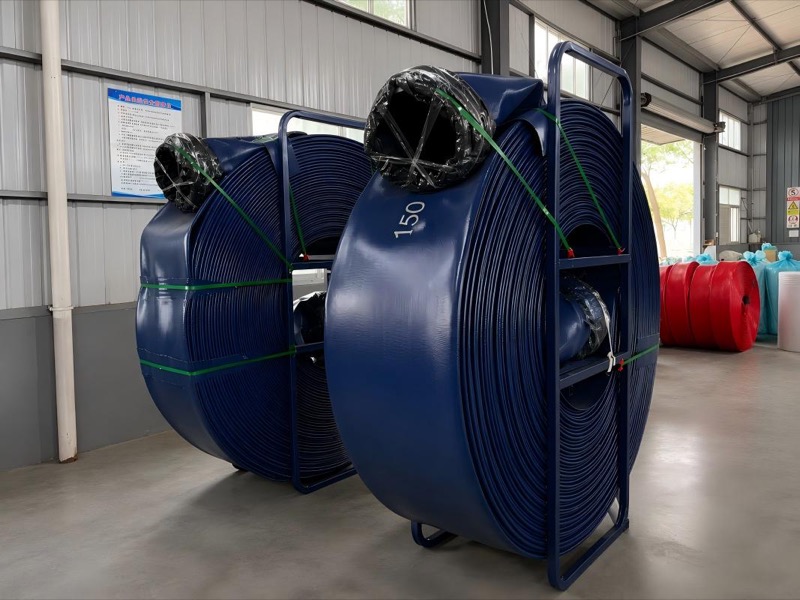
Before choosing a hose for an explosive zone, review these points:
1. Confirm the zone classification and hazard type.
2. Identify the transferred medium and its ignition risk.
3. Check whether electrostatic dissipation is required.
4. Verify hose conductivity, grounding, and bonding method.
5. Confirm fitting compatibility and assembly continuity.
6. Ask for test data, material details, and service limits.
7. Train operators on inspection and replacement rules.
This checklist helps prevent a common mistake: selecting a hose only by diameter and pressure rating.
From an engineering and manufacturing point of view, the best hose selection process starts with the application, not the catalog. The hose must match the medium, pressure, distance, fittings, reel use, and site environment.
For explosive zones, the supplier should understand the full assembly design, not just the hose body. That includes conductivity, grounding, couplings, and installation method.
A supplier who can explain those details is much more useful than one who only lists dimensions.
Engineers choose anti-static layflat hose because it reduces uncertainty in safety-critical environments. The hose is not just a conduit; it becomes part of the hazard-control strategy.
A properly specified hose system can also reduce downtime caused by failed checks, rejected deliveries, or emergency replacement of unsuitable lines. In high-risk industries, that matters as much as purchase cost.
Sunmoon Hose Manufacturing operates with a 35,000 m² production base, eight standardized automated production lines, and an 80-person technical team. The company focuses on TPU layflat hose and related industrial solutions for oil and gas, agriculture, construction, municipal, mining, and water transfer applications.
For international buyers, that means more than supplying a hose roll. It means building a complete transfer solution around the site conditions, including hose body, couplings, fittings, and optional reel integration.
This is especially valuable when a project must work across different climates, operating practices, and regulatory expectations.
If you are sourcing hoses for explosive zones, prioritize these points:
- Clear explanation of anti-static construction.
- Evidence of grounding and bonding compatibility.
- Application-based recommendations.
- Durable fittings and assembly support.
- Technical documentation and inspection guidance.
- OEM or custom marking for traceability.
For non-hazardous projects, a standard hose may be the more economical choice. For explosive zones, however, the lowest-cost hose can become the highest-risk decision.
The choice between an anti-static layflat hose and a standard hose is really a choice between engineered safety and general-purpose utility. In explosive zones, the anti-static option is the responsible starting point because it helps control static electricity and reduce ignition risk when correctly specified and installed.
For non-hazardous transfer work, a standard hose remains practical and cost-effective. But when flammable media or explosive atmospheres are involved, the hose should be selected as part of the safety plan, not as a commodity item.
No. A standard hose is generally not suitable because it may not provide the electrostatic safety needed in hazardous areas.
An anti-static hose is designed to reduce or dissipate electrostatic charge through conductive materials, bonding features, or special construction.
Yes. The full assembly must maintain the intended discharge path, so fittings and grounding both matter.
Yes. It can be used, but it may be more expensive than necessary if the site has no electrostatic ignition risk.
Ask about conductivity, grounding method, zone suitability, fitting compatibility, test data, and application limits.
TPU is widely used in engineering-grade layflat hoses because it supports demanding applications where flexibility, durability, and transport efficiency matter.
1. IEC TS 60079-32-1:2013, Explosive atmospheres - Part 32-1: Electrostatic hazards, guidance — [https://webstore.iec.ch/en/publication/651]
2. Elaflex, Use of Composite Hoses for Flammable Liquids in Ex-Zones — [https://elaflex.de/dokumente/download/ElaflexInformation/ELAFLEX_Information_3.14E.pdf]
3. Masterflex, Electroconductive and permanently antistatic hoses — [https://www.masterflex.de/en/hoses/antistatic-hoses-and-electroconductive-hoses/]
4. Hansa-Flex, Criteria for selecting a hose — [https://www.hansa-flex.de/fileadmin/hansaflex/Technical_Information/English/Quick_Reference_Folder_EN.pdf]
5. Sunmoon Hose Manufacturing, Customized TPU Layflat Hose, Oil and Gas Hose, Dewatering... — [https://www.sunmoonhose.com/]
6. Sunmoon Hose Manufacturing, About Us — [https://www.sunmoonhose.com/aboutus.html]
7. Sunmoon Hose Manufacturing, Layflat hose manufacturing profile — [https://sunmoonlayflathose.com/]
8. NEN, EN 13765 thermoplastic multi-layer hoses and hose assemblies — [https://www.nen.nl/en/nen-en-13765-2018-en-248121]


