

Views: 222 Author: Loretta Publish Time: 2025-12-28 Origin: Site


Content Menu
● Why Standard Silicone Hoses Are Not Fuel-Resistant
● The Science Behind Silicone's Weakness
● Applications Where Silicone Hoses Excel
● Alternative Materials for Fuel Hoses
>> Comparison of Common Fuel Hose Materials
● Understanding Fuel Hose Standards: SAE J30 Explained
● How to Choose the Right Fuel Hose
● Modern TPU Layflat Hoses for Fuel Applications
● Common Mistakes to Avoid in Fuel Hose Selection
● Enhance System Safety with Expert Guidance
>> 1. Are silicone hoses fuel resistant?
>> 2. Is fluorosilicone safe for fuel applications?
>> 3. What is the best hose for ethanol-blended fuels?
>> 4. How can I tell if my hose is fuel-rated?
>> 5. Can TPU layflat hoses be used for fuel?
Silicone hoses are widely known for their flexibility, durability, and heat resistance, making them a popular choice in automotive and industrial applications. However, when it comes to fuel transfer, many engineers and enthusiasts wonder: Are silicone hoses fuel resistant?
This guide explains the science behind silicone's limitations with fuels, explores better alternatives like PTFE, NBR, nylon, and stainless steel braided hoses, and offers a structured path to selecting the right hose for your project.
A standard silicone hose is highly heat resistant and flexible, yet not compatible with petroleum-based fuels. Despite its robust appearance, silicone is porous to hydrocarbons like gasoline and diesel.
When used in a fuel environment:
- Fuel molecules penetrate the silicone wall, causing swelling and softening.
- Over time, the internal layer loses elasticity and begins to crack, even if the surface looks intact.
- Continuous exposure leads to hose failure, leaks, or serious system breakdowns.
Silicone performs best with air, coolant, and water applications, but fails in direct fuel service.
From a molecular perspective, silicone's base structure consists of siloxane bonds (silicon-oxygen chains). These provide flexibility and temperature resilience but have limited hydrocarbon resistance.
Fuel molecules can penetrate and degrade these bonds, disrupting molecular cohesion. As deterioration progresses, silicone absorbs fuel, becomes pliable, and loses mechanical integrity. Ultimately, the hose expands, weakens, and forms cracks, making it unsuitable for constant contact with fuel mixtures.
Although silicone hoses are not designed for fuel, they excel in several other demanding applications:
- Radiator and coolant systems operating at high temperatures.
- Turbocharger connections requiring flexibility under vibration.
- Air and vacuum lines in engines and HVAC systems.
In short, silicone is ideal for heat and pressure, but not for chemical exposure to fuel.
Selecting the right hose material ensures fuel compatibility, operational safety, and long service life. Below is a detailed comparison of common fuel hose materials.
Material | Fuel Compatibility | Key Advantages | Limitations |
NBR (Nitrile Rubber) | Excellent resistance to fuels and oils | Flexible, economical, fuel-safe | Limited high-temperature resistance (up to 120°C) |
PTFE (Teflon) | Exceptional chemical and fuel resistance | Handles high pressure and heat, non-permeable | Costly and less flexible |
Fluorosilicone (FVMQ) | Improved fuel resistance compared to silicone | Withstands oils and vapors | Limited use for continuous fuel flow; unsuitable for all additives |
Nylon Tube | Moderate fuel resistance | Lightweight, abrasion resistant | Not ideal for high temperatures |
Stainless Steel Braided Hose | Excellent for high pressure and abrasion | Strong and long lasting | Expensive and difficult to install |
Standard Silicone | Poor fuel compatibility | Excellent for air/water systems | Absorbs fuel, swells, and cracks |
Fuel hose qualification depends on internationally recognized standards like SAE J30, which defines key parameters:
- Fuel and oil resistance tests for different hose grades (R6 to R12).
- Temperature and pressure thresholds for safe operation.
- Permeation, flexibility, and burst strength evaluations.
- R6: Low pressure, carburetor feed lines.
- R7: For low emission and moderate heat.
- R9: High-pressure, modern EFI systems.
- R10/R11: In-tank and low-permeation hoses.
Always choose hoses certified under SAE J30 for proven fuel compatibility and durability.

Follow these five steps to select a safe, effective, and long-lasting fuel line:
1. Identify your fuel type – Gasoline, diesel, biodiesel, or ethanol blends (E10, E85).
2. Define operational conditions – Temperature, pressure, and exposure environment.
3. Select an appropriate material – PTFE for high temperatures, NBR for standard applications, nylon for lightweight systems.
4. Verify certification – Look for SAE J30 or equivalent approval on the hose marking.
5. Install correctly – Ensure proper diameter, bend radius, and clamp placement for safe routing.
Thermoplastic polyurethane (TPU) layflat hoses have become a cutting-edge option for specialized industrial and oil-transfer applications.
When engineered correctly, TPU hoses provide:
- High abrasion and oil resistance.
- Strong mechanical durability for outdoor or heavy-duty setups.
- Customizable thickness and reinforcement for specific chemical compatibility.
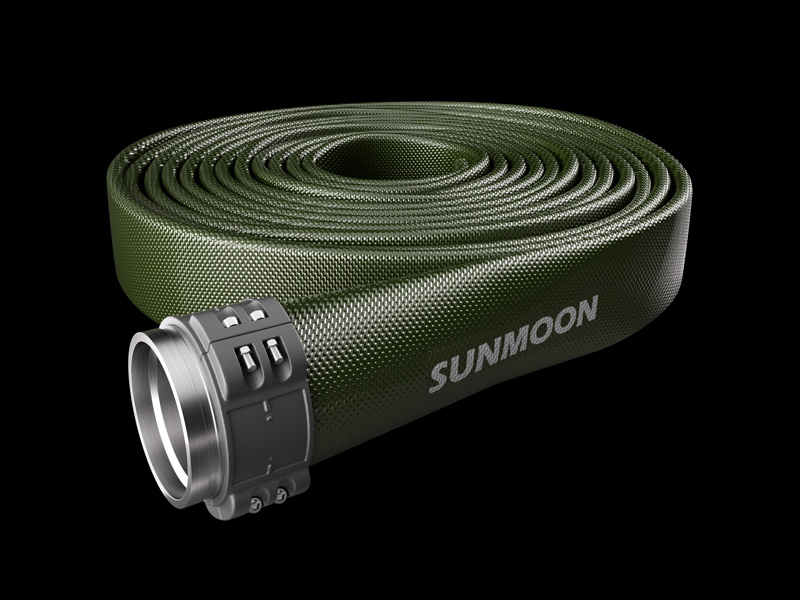
However, not every TPU hose is fuel-rated. Always review the chemical resistance chart, working pressure, and temperature before implementation. Manufacturers like Sunmoon offer engineered TPU solutions designed for fuel, oil, and hydraulic transfer in demanding conditions.
- Assuming all hoses can handle fuel: Exteriors can be deceiving; internal composition determines fuel safety.
- Using coolant-grade silicone: Leads to swelling and breakdown over time.
- Ignoring fuel additives: Alcohol and biodiesel blends can rapidly degrade incompatible materials.
- Overlooking permeation: Non-rated hoses may allow fuel vapors to escape, causing odor or safety issues.
- Installing low-grade hose near heat sources: Shortens hose life and increases failure risk.
Avoiding these mistakes prevents leaks, fuel loss, and mechanical damage.
Choosing a fuel hose is not just a parts decision—it's an engineering choice that affects performance, cost, and safety. For tailored advice, consulting an expert manufacturer ensures that every specification—fuel type, pressure rating, and operating temperature—is met.
Engineering-driven manufacturers like Sunmoon provide customized TPU layflat hose solutions that optimize chemical compatibility, flexibility, and safety for global fuel and oil transfer needs.
Contact Sunmoon today to discuss a TPU-based fuel hose solution engineered for your exact application and performance standards.

No. Standard silicone hoses are not fuel resistant because they are porous and degrade when exposed to gasoline or oil, leading to eventual cracking and leaks.
Fluorosilicone resists hydrocarbons better than silicone, but it isn't recommended for continuous fuel transfer. It performs best against fuel vapors or light oil contact.
PTFE-lined hoses are ideal for ethanol or biodiesel fuels due to their non-reactive and non-permeable properties.
Check for official SAE markings like “SAE J30 R9” on the hose body or packaging, and confirm compatibility using the manufacturer's specifications.
Yes, if they are chemically rated for hydrocarbons. Always confirm compatibility, working pressure, and temperature range before use.


