

Views: 222 Author: Loretta Publish Time: 2026-01-07 Origin: Site


Content Menu
● What Are Automotive Rubber Hoses
● Main Types Of Automotive Rubber Hoses
>> Vacuum Hoses
>> Fuel Hoses
>> Brake Hoses
>> Air Intake And Charge‑Air Hoses
>> Custom Automotive Hoses And Assemblies
● Materials Used In Automotive Hoses
>> Common Elastomers And Thermoplastics
>> TPU As A High‑Performance Hose Material
● Reinforcement Structures And Manufacturing
>> Key Manufacturing Processes
● Factors Affecting Hose Lifespan
>> Environmental And Operating Conditions
>> UV, Ozone, And Contaminants
● Inspection And Maintenance Checklist
>> Physical And Functional Checks
● Automotive Rubber Vs Silicone Vs TPU Hoses
● Where TPU Layflat Hoses Support Automotive And Off‑Highway Systems
● Selection Tips For Automotive And Support Hoses
>> Key Engineering Considerations
● FAQs About Automotive Rubber Hoses And TPU Hoses
>> FAQ 1: How often should automotive rubber hoses be inspected and replaced?
>> FAQ 2: What are the most common signs of hose problems?
>> FAQ 3: Are silicone hoses always better than rubber hoses?
>> FAQ 4: Where do TPU layflat hoses add the most value around vehicles and equipment?
>> FAQ 5: How can engineers choose a reliable hose supplier?
Automotive rubber hoses are critical safety components that carry fluids and gases for cooling, fueling, braking, power steering, and air management in every modern vehicle. When these hoses fail, the result can be engine overheating, fuel leaks, brake loss, or steering problems that directly threaten driver and passenger safety.[1][2]
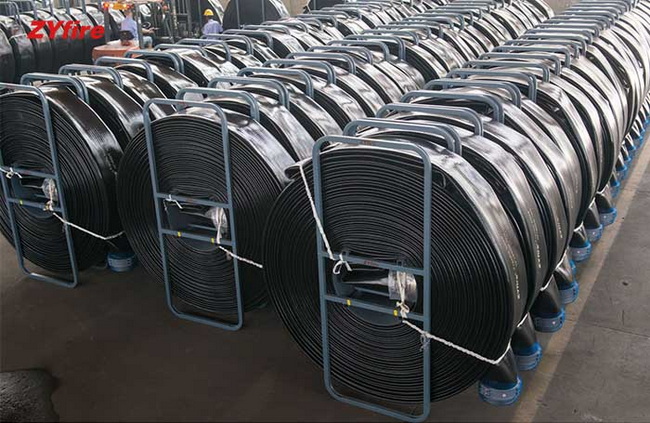
Automotive rubber hoses are flexible tubes that connect different vehicle components to transport coolant, fuel, oil, air, vacuum, and hydraulic fluid under defined pressure and temperature conditions. They are designed to absorb vibration, compensate for engine movement, and seal against leaks while resisting heat, chemicals, ozone, and road contaminants during the vehicle's service life.[2][3]
Vacuum hoses transmit vacuum signals from the intake manifold or vacuum pump to components such as brake boosters, emission control valves, turbo wastegates, and HVAC controls. Incorrect routing, aging, or cracks can cause rough idle, poor fuel economy, and warning lights.[4][1]
Fuel hoses connect the fuel tank, fuel lines, fuel rail, and injectors while containing gasoline, diesel, or ethanol blends at moderate pressure. Multi‑layer constructions with inner barrier layers help limit fuel permeation and maintain long‑term flexibility.[5][6]
Radiator and heater hoses move coolant through the engine, radiator, heater core, and auxiliary cooling circuits. EPDM rubber is widely used because it offers strong resistance to heat, coolant additives, and ozone.[7][2]
Brake hoses carry hydraulic fluid from the master cylinder to calipers or wheel cylinders under high pressure. They typically use synthetic rubber with textile or steel braid reinforcement to maintain stable pedal feel and safe braking distance.[6][2]
Power steering hoses transport hydraulic fluid between the pump, steering gear, and reservoir in hydraulic steering systems. High‑pressure sections use reinforced structures to carry elevated pressure, while return hoses work at lower pressure but still need oil and heat resistance.[2][6]
Air intake hoses route filtered air to the throttle body or turbocharger, while charge‑air hoses connect turbochargers, intercoolers, and intake manifolds. Turbocharged engines often use reinforced rubber or silicone hoses to handle higher temperature and boost pressure.[8][9]
Custom hoses combine specific lengths, bends, and fittings to suit OEM layouts and service requirements. In hybrid and electric vehicles, customized assemblies support battery, motor, and power electronics thermal management circuits.[10][7]
- EPDM rubber provides excellent heat, water, and ozone resistance and is widely used for coolant and heater hoses.[7]
- NBR and NBR‑blend rubber deliver good resistance to fuels and oils, making them suitable for many fuel and oil hoses.[5]
- Silicone offers a wide temperature range and high flexibility for performance cooling and charge‑air applications.[9]
- Thermoplastic elastomers and co‑extruded constructions can reduce permeation in emission and fuel systems.[6]
Thermoplastic polyurethane (TPU) combines rubber‑like elasticity with thermoplastic processing and very high abrasion and cut resistance. TPU hoses and TPU layflat hoses show strong resistance to fuels, oils, many chemicals, and weathering, which is valuable in severe environments and long‑distance transfer systems.[11][12]
- Textile braids or spirals provide flexibility and moderate pressure capability.[6]
- Steel wire braids are used in high‑pressure brake and power steering hoses.[6]
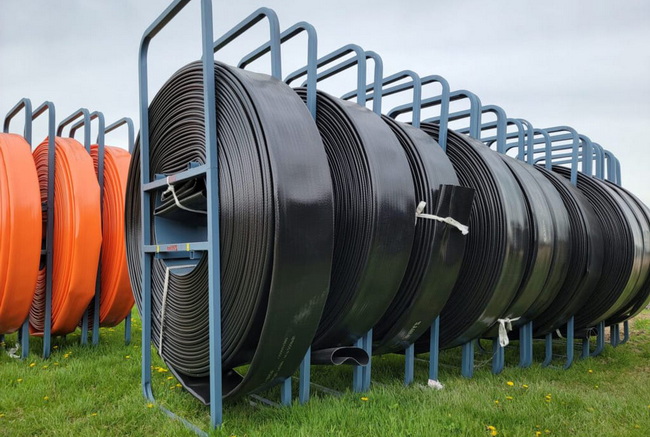
- Through‑the‑weave constructions embed high‑tenacity yarns into the hose wall for strong, flexible TPU layflat hoses.[13]
Extrusion is used to form inner tubes and outer covers from rubber or thermoplastic compounds. Rubber hoses are subsequently cured or vulcanized, while TPU layflat hoses are produced by embedding woven reinforcement into TPU during extrusion to create a seamless structure.[13][7]
- High temperature accelerates rubber hardening and cracking, while low temperature promotes brittleness.[9]
- Incompatible fuels, oils, additives, and cleaning chemicals can cause swelling or surface degradation.[5]
- Mechanical stress, vibration, and tight bends promote kinking, rubbing, or early fatigue.[2]
Ozone and sunlight can cause surface cracking in sensitive materials, especially when hoses are routed near heat sources and not shielded. Road salt, dirt, and moisture contribute to external degradation and metal fitting corrosion.[9][2]
- Look for cracks, bulges, wet or oily spots, and swelling near clamps and fittings.[2]
- Check for chafing or flattening where hoses contact brackets or other components.[2]
- Gently squeeze coolant and heater hoses to detect excessively soft or very hard sections.[2]
- Monitor coolant temperature, fuel odors, brake pedal feel, and steering noise for signs of hose‑related issues.[4]
Feature / Property | Rubber Hose (EPDM / NBR) | Silicone Hose | TPU Hose / TPU Layflat Hose |
Temperature resistance | Good for typical automotive ranges. | Very wide, suited to high temperatures. | Wide range suitable for hot and cold environments. |
Abrasion and cut resistance | Moderate. | Moderate. | Very high, suited to harsh surfaces. |
Chemical / fuel / oil resistance | EPDM poor to fuel; NBR good to fuel and oil. | Often needs linings for certain fluids. | Strong resistance to fuels, oils, many chemicals. |
Flexibility and kink resistance | Good. | Very good. | Excellent, especially in layflat form. |
Typical use | Coolant, fuel, oil, vacuum hoses. | Performance cooling, charge-air hoses. | Long-distance transfer for water and some fuels. |
TPU layflat hoses are widely used in industrial fluid transfer systems that support heavy vehicles, off‑highway machinery, and emergency response operations. They provide high pressure capability, long continuous lengths, abrasion resistance, and fast deployment and recovery compared with many conventional hose types.[14][13]
- Define fluid type, minimum and maximum temperature, and expected service environment.[7]
- Determine working pressure, transient peaks, and required safety factor according to applicable standards.[6]
- Evaluate routing space, bend radius, vibration, and potential external abrasion.[2]
Supplier evaluation should consider design support, application experience, test data, and the ability to offer customized hose solutions. For TPU layflat hoses, cooperation with an engineering‑driven manufacturer helps ensure proper matching of hose grade, pressure rating, and operating environment.[13][6]
Engineers, fleet managers, and project buyers who need higher reliability and longer service life from cooling, fuel, brake, and support hose systems can benefit from combining proven automotive rubber hoses with high‑performance TPU layflat hoses in surrounding infrastructure. For upcoming projects or upgrades that involve high‑pressure, long‑distance water or fluid transfer for vehicle fleets or heavy equipment, contact Sunmoon's technical team to discuss operating pressure, distance, and environmental conditions so that a tailored TPU layflat hose solution can be specified to improve safety, deployment efficiency, and total life‑cycle cost.[13]
(1) Critical hoses such as coolant, heater, and vacuum hoses should be inspected at every major service and replaced based on time, mileage, and operating conditions rather than waiting for visible failure. (2) Brake hoses should follow manufacturer recommendations and be renewed when signs of cracking, bulging, or stiffness changes appear.[2]
(1) Common signs include visible cracks, wet or oily spots, swelling near clamps, soft or very hard hose sections, and unusual coolant temperature or fuel odor. (2) Changes in brake pedal feel or steering noise can also indicate hose‑related issues that require prompt inspection.[4][2]
(1) Silicone hoses provide outstanding temperature resistance and flexibility, which benefits performance cooling and charge‑air systems. (2) Rubber hoses remain more cost‑effective and appropriate for many standard coolant, fuel, and oil circuits when correctly specified.[7][9]
(1) TPU layflat hoses add strong value in support systems such as high‑pressure water transfer, emergency dewatering, firefighting water supply, and long‑distance fluid transfer for vehicle fleets and heavy machinery. (2) Their abrasion resistance and long lengths reduce coupling points and setup time on demanding sites.[14][13]
(1) Engineers should look for documented compliance with relevant standards, clear material and reinforcement descriptions, and robust quality control. (2) For TPU layflat hoses, experience in high‑pressure, large‑caliber products and willingness to support detailed application engineering are important indicators of reliability.[6][13]
[1](https://www.allhose.com.au/different-types-of-automotive-hoses/)
[2](https://knowhow.napaonline.com/all-about-automotive-hoses-and-where-to-use-them/)
[3](https://www.fupower.com/a-automobile-rubber-hoses-everything-you-ll-ever-need-to-know.html)
[4](https://www.acg.aaa.com/connect/blogs/5c/auto/a-guide-to-automotive-belts-and-hoses)
[5](https://fuelcurve.com/guide-to-fluid-lines-connections-and-fittings/)
[6](https://www.omniservices.com/omni-services-guide-to-sae-standards-and-picking-the-right-hose-for-you/)
[7](https://www.somaxflex.com/automotive-hose-types-sizes-materials-applications/)
[8](http://www.kangamotorsports.com/blog/2018/an-hoses-fittings-guide)
[9](https://morelandhose.com/choosing-between-silicone-and-rubber-hoses-a-comprehensive-guide-for-long-island-buyers/)
[10](https://www.atpchem.com/application-advantages-of-tpu-in-new-energy-vehicle-components.html)
[11](https://kingdaflex.com/what-is-tpu-hose/)
[12](https://www.zyfireuae.com/What-Is-TPU-Hose-id49746296.html)
[13](https://www.sunmoonpipe.com/tpu-layflat-hose/tpu-lay-flat-hose.html)
[14](https://www.austinhose.com/itemdetail/AH-16-TPU-660FT-M-A)


