

Views: 222 Author: Sunmoon Publish Time: 2026-04-18 Origin: Site


When winter hits and temperatures plunge well below freezing, industrial hose failure becomes much more likely, especially in oilfield, mining, and municipal water transfer projects. Many engineers and purchasing managers ask the same question every year:
> "Can my high pressure polyurethane frac water hose really handle long‑term operation in low temperatures without becoming brittle, cracking, or bursting?"
Based on my experience working with flat PU hoses for large water transfer and frac projects, and combining real customer feedback, the answer is: yes, if the hose is engineered for low temperature and used correctly, it can safely work through harsh winters.
Sunmoon's high pressure polyurethane hose is designed with an operating temperature range of approximately –46 °C to +76 °C, which covers most onshore frac, mining, and agricultural water transfer environments around the world. [pneumatic-supply]
In conventional rigid pipes and low‑grade hoses, winter damage usually follows the same pattern:
- Residual water in the line freezes overnight.
- The ice expands in a confined, rigid pipe wall.
- Local micro‑cracks become macro‑cracks.
- At the next startup, the line bursts or leaks under pressure.
Industry studies show that extreme cold significantly alters hose material properties, causing reduced flexibility, increased stiffness, and a sharp rise in cracking and failure risk. At the same time, frozen water blocks flow, creates pressure spikes, and can damage pumps, seals, and valves. [hosemanufacture]
From an operator's perspective, this means:
- More unplanned downtime.
- Higher replacement and maintenance cost.
- Real safety hazards on site when a high‑pressure line fails unexpectedly. [hotsyab]

Compared with rigid pipe, flat lay hoses behave very differently in winter:
- A flat hose only becomes fully pressurized and "round" when it is in use.
- When not in use, it collapses and does not stay in a geometric "extreme stress" condition.
- If some water remains and freezes, the wall can deform slightly instead of being forced to crack instantly.
Research and field practice show that failure risk in cold climates is much higher in rigid systems than in properly selected flexible hoses, because rigidity magnifies the stress from ice expansion. [sunhose]
However, this does not mean you can ignore cold‑resistance in soft hoses. Even flexible hoses will fail early if the hose material itself is not designed for low temperatures.
Most low‑cost "engineering hoses" on the market use basic PVC or low‑end rubber compounds. At just a few degrees below 0 °C, these materials:
- Rapidly harden and lose flexibility.
- Develop micro‑cracks on the surface that are invisible to the naked eye.
- Show a significant drop in tensile strength and burst resistance. [flextechhose.co]
Under high pressure, these microscopic cracks grow quickly, leading to:
- Local weeping and leaks.
- Layer separation.
- Sudden, catastrophic burst during operation.
This is precisely why many winter operations experience hose failures even when the nominal working pressure is within the "rating" of ordinary hoses: the real working environment (low temperature) is outside the material's comfort zone. [pirtekusa]
High‑quality polyurethane (PU) hoses are widely recognized for their broad operating temperature window and stable performance. General industrial PU hoses typically operate from about –40 °C to +65–93 °C, while some advanced formulations can go even higher on the hot side. [norres]
Sunmoon's high pressure polyurethane frac water hose is engineered with an approximate working temperature range of –46 °C to +76 °C, meaning:
- At –46 °C, the hose still maintains usable flexibility and impact resistance.
- Within this range, physical properties (strength, flexibility, elongation) change only slightly, so the hose can carry high pressure without brittle failure. [pneumatic-supply]
For most frac water transfer and industrial applications in North America, Europe, Central Asia, and Northern China, winter ambient temperatures fall well within this range, giving buyers a comfortable safety margin.
Compared to conventional PVC or low‑grade rubber hoses, PU hoses generally offer: [flextechhose.co]
- Better low‑temperature flexibility.
- Higher abrasion resistance for dragging across rough ground.
- Improved pressure resistance and dimensional stability.
- Longer service life under cyclic pressurization and bending.
In real field projects, this translates into fewer replacements, less downtime, and lower life‑cycle cost, even if the initial purchase price of PU hose is higher.
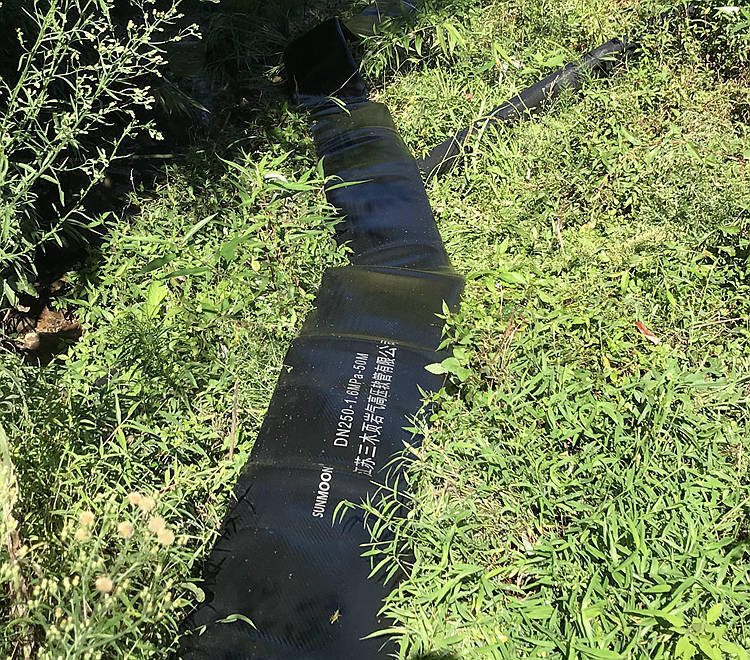
From a practical, "on‑site engineer" point of view, the typical questions we hear about Sunmoon high pressure PU frac water hose in winter include:
- "Will the hose get so stiff that we can't deploy or retrieve it in the morning?"
- "If we can't fully drain the line overnight, will ice destroy the hose?"
- "What happens if we keep running at high pressure for long periods in sub‑zero temperatures?"
Based on repeated winter deployments in high‑latitude regions, we see several recurring patterns:
- Within the –46 °C to +76 °C operating window, the hose keeps stable flexibility, so handling, coiling, and redeployment are still manageable.
- Occasional residual water and partial ice do not normally cause hose bursting, thanks to the flat structure and PU's cold‑resistant properties.
- Most hose damage in winter arises from using products that are not truly rated for low temperature, improper storage, or ignoring preventive maintenance, rather than from the PU material itself. [hosemanufacture]
From an industry practitioner's view, the key takeaway is: select the correct low‑temperature hose spec first, then invest in simple winterization practices to get reliable performance.
Do not rely only on sales brochures. As a technical buyer or engineer, you should:
- Ask for the certified operating temperature range (for example, –46 °C to +76 °C).
- Verify whether this range is based on actual material testing or just generic polymer data.
- Check that the low‑temperature rating covers your worst‑case ambient plus any additional cooling from wind chill or altitude. [ryco-hydraulics]
Hose performance is not defined by pressure alone. In cold environments:
- Stiffness increases and bend radius becomes larger.
- Repeated bending near fittings under high pressure can become a failure hotspot. [ryco-hydraulics]
You should therefore:
- Match working pressure and safety factor (commonly 3:1 or 4:1) at the lowest operating temperature.
- Avoid tight bends, sharp edges, or point loads—especially near couplings and manifolds.
For frac water transfer and other demanding uses, a winter‑ready hose should feature:
- High‑quality PU cover and lining designed for low temperature.
- Strong reinforcement (woven or circular) for high pressure.
- Flat‑lay design for easier draining and storage.
- Reliable couplings compatible with your existing systems. [kytider]
Sunmoon designs its flat PU frac water hoses with these factors in mind to balance low‑temperature flexibility, pressure capacity, and long service life.
To get the most from a high pressure polyurethane frac hose in freezing conditions, follow these practical steps used by experienced field crews:
1. Gradual pressurization
- When starting up in very low temperatures, increase pressure gradually to allow the hose body to relax and adapt.
2. Avoid sudden bending when stiff
- If the hose is very cold and stiff, avoid forced tight bends; let some fluid flow and warm it slightly before repositioning. [sunhose]
3. Partial draining after shutdown
- Fully draining is ideal, but even partial draining reduces ice blockage and pressure spikes at next startup. [hotsyab]
- Store hose on racks or reels in a sheltered area where possible.
- Avoid dragging a fully frozen hose over sharp rocks, metal edges, or icy surfaces.
- After extended winter use, inspect for surface micro‑cracking, cuts, or localized bulging before the next season. [pirtekusa]
Sunmoon's high pressure polyurethane flat hoses are suitable for a wide range of cold‑climate applications, including:
- Frac water transfer lines in shale gas and tight oil fields.
- Temporary surface water pipelines for mining and construction.
- Agricultural irrigation and municipal emergency water supply.
- Industrial dewatering, bypass pumping, and pipeline maintenance.
The –46 °C to +76 °C temperature range and high pressure capability make them a strong fit for most cold‑region operations where both flexibility and durability are mission‑critical. [kytider]
| Parameter | Typical Value / Description |
|---|---|
| Hose type | High pressure flat‑lay polyurethane water hose |
| Core material | Cold‑resistant polyurethane (PU) |
| Operating temperature range | Approx. –46 °C to +76 °C |
| Typical application | Frac water transfer, mining, industrial water lines |
| Key advantage in winter | Maintains flexibility and strength in sub‑zero temps |
| Failure risk vs rigid pipe | Lower, thanks to flat structure and PU formulation |
(Actual parameters may vary by size and custom specification; always confirm with Sunmoon's sales and technical team before ordering.)
From an industry expert perspective, a reliable hose supplier must do more than just ship product. Sunmoon adds value in several ways:
- Specialization in flat, high pressure PU hoses for global industrial and frac markets.
- Custom services for length, diameter, working pressure, color, and coupling systems to match your field equipment.
- Technical guidance on low‑temperature hose selection, layout, and winter operation best practices.
- Focus on long‑term partnerships with overseas distributors, contractors, and end users rather than one‑time sales.
For buyers responsible for project safety and uptime, this combination of product performance + engineering support is often more important than unit price alone.
If you are planning or upgrading winter frac water transfer, mining dewatering, or cold‑region industrial water lines, and need hoses that can reliably operate from about –46 °C to +76 °C, we recommend:
- Contacting Sunmoon's technical team with your project temperature range, working pressure, hose length, and connection requirements.
- Requesting a tailored hose configuration and quotation optimized for your specific environment.
- Starting with a pilot deployment on one or two lines, then rolling out across the full project after confirming on‑site performance.
You can learn more about Sunmoon's high pressure polyurethane hoses and customization options on the official website: https://www.sunmoonhose.com/
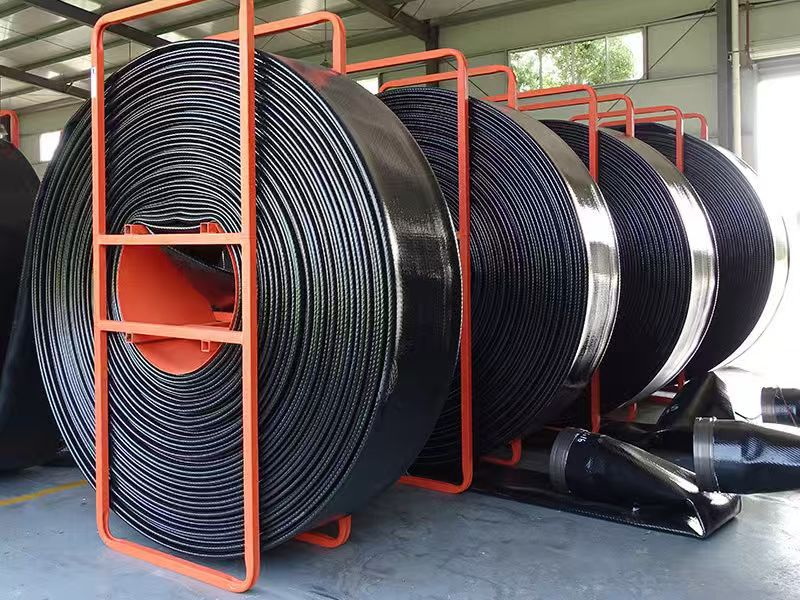
Yes, as long as the ambient and fluid temperatures stay within the hose's rated operating window (for Sunmoon, around –46 °C to +76 °C), continuous operation in sub‑zero environments is feasible. PU maintains flexibility and strength much better than many general‑purpose hose materials in cold conditions. [pneumatic-supply]
Flat PU hoses are more tolerant of internal ice than rigid pipes, because their walls can deform instead of taking all the stress at once. However, if temperatures drop far below the rating or if the hose is severely over‑pressurized with ice blockages present, any hose can fail. Partial draining and gradual pressurization are strongly recommended. [hosemanufacture]
PVC hoses typically become stiff and brittle at modest sub‑zero temperatures, creating micro‑cracks and early failure under pressure. High‑quality PU hoses retain flexibility much deeper into negative temperatures and offer better abrasion and pressure resistance, making them more suitable for demanding winter applications. [norres]
Key tasks include regular visual inspection for cuts and surface cracking, verifying couplings and clamps, draining hoses as much as practical after use, and avoiding tight kinks or sharp bends when the hose is very cold. Scheduled inspections after major temperature swings help catch problems early. [sunhose]
Yes. Sunmoon offers customization services, including diameter, working pressure, color, branding, and compatible coupling systems. By sharing your project data (pump type, pressure, temperature, fluid medium), the technical team can recommend the right hose structure and configuration for your local conditions.
1. Hosemanufacture – "Can industrial hoses be used in extreme cold conditions?"
https://www.hosemanufacture.com/blog/can-industrial-hoses-be-used-in-extreme-cold-conditions-1303671.html [hosemanufacture]
2. Pneumatic‑Supply – "What is the temperature resistance of PU air hoses?"
https://www.pneumatic-supply.com/news/what-is-the-temperature-resistance-of-pu-air-hoses.html [pneumatic-supply]
3. Flextech Hose – "How Does Temperature Affect Hose Performance?"
https://www.flextechhose.co.uk/blog/how-does-temperature-affect-hose-performance [flextechhose.co]
4. Sunhose – "Challenges and Solutions for Industrial Hoses in Extreme Environments"
https://www.sunhose.com/industrial-hose-challenges-in-extreme-environments/ [sunhose]
5. Hotsy Water Blast – "How Cold Weather Affects Your Pressure Washer Hose and How to Protect It"
https://www.hotsyab.com/blog/how-cold-weather-affects-your-pressure-washer-hose-and-how-to-protect-it/ [hotsyab]
6. PIRTEK USA – "The Impact of Environmental Factors on Hydraulic Hose Performance"
https://www.pirtekusa.com/the-impact-of-environmental-factors-on-hydraulic-hose-performance/ [pirtekusa]
7. Norres – "Polyurethane hoses"
https://www.norres.com/us/products/product-categories/polyurethane-hoses/ [norres]
8. Kytider – "Frac Fluid Hose"
https://www.kytider.com/frac-fluid-hose/ [kytider]
9. Ryco Hydraulics – "Hydraulic Hose Selection for Extreme Temperatures"
https://www.ryco-hydraulics.com/hydraulic-hose-selection-for-extreme-temperatures/ [ryco-hydraulics]
10. Sunmoon – High pressure polyurethane hose (product information and operating range).


