

Views: 222 Author: Loretta Publish Time: 2026-01-02 Origin: Site


Content Menu
● What Is a Multipurpose Hose?
● Can Multipurpose Hose Be Used as Oil Hose?
● Risks of Using a Non-Rated Multipurpose Hose for Oil
● Material Compatibility: The Core of Oil Hose Selection
● Temperature and Pressure Limits for Oil Hose
● Why TPU Layflat Hose Excels as Oil Hose
● Key Advantages of TPU Oil Hose Over Generic Multipurpose Hose
● Application Scenarios Where Dedicated Oil Hose Is Essential
● How Sunmoon Serves Global Oil Hose Users
● Engineering Guide: Choosing Between Multipurpose Hose and Oil Hose
● Role of Inspection and Maintenance in Oil Hose Safety
● FAQ
>> 1. What is the main difference between multipurpose hose and oil hose?
>> 2. Can I use multipurpose hose for diesel or hydraulic oil?
>> 3. Why is TPU layflat hose suitable as an oil hose?
>> 4. What happens if I use a non-oil-resistant hose for oil?
>> 5. How should I choose the right oil hose for my project?
Using a multipurpose hose for oil is only safe when the hose is specifically engineered and rated for oil service by the manufacturer, including clear limits for temperature and pressure. For critical, high-duty transfer tasks, a dedicated oil hose or a TPU layflat hose designed for oil and fuel media usually delivers much better safety, reliability, and lifecycle cost performance.[1][2][3][4][5]
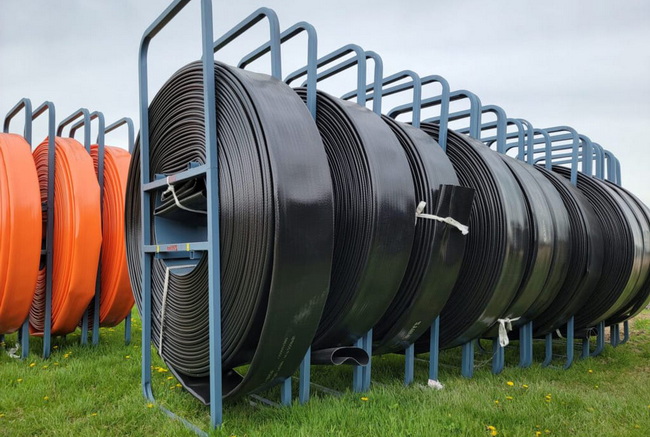
Multipurpose hose is a general-service hose designed to handle more than one medium, typically combinations of air, water, and light oils in industrial environments. Its construction balances flexibility, abrasion resistance, and moderate chemical resistance so that a single hose type can support many routine tasks in workshops, factories, and construction sites.[2][6][1]
- Typical multipurpose hose constructions use blends of rubber (such as EPDM or NBR), PVC, or thermoplastic materials with textile reinforcement to meet moderate pressure demands.[7][1]
- These hoses are convenient for operators who want to reduce the number of different hose types in inventory while maintaining basic functionality for general industrial media.[6][1]
An oil hose is specifically designed and certified to handle petroleum-based products such as diesel, gasoline, hydraulic oil, lubricants, fuel oil, and some crude-related fluids. Its tube and cover use oil-resistant polymers and reinforcements selected to withstand swelling, softening, cracking, and permeation during long-term exposure to hydrocarbons.[8][9][7]
- Nitrile rubber (NBR) is a classic material for oil hose tubes because of its excellent resistance to many oils, fuels, and fats.[7][8]
- Thermoplastic polyurethane (TPU) used in layflat oil hose can be formulated for high resistance to fuels and oils while also providing outstanding abrasion, cut, and weather resistance in field operations.[3][4][10]
Whether a multipurpose hose can serve as an oil hose depends entirely on its material compatibility and rating.[1][7]
- If the product data sheet clearly states that the hose is oil-resistant and suitable for the specific type of oil at the required temperature and pressure, then it may be used as an oil hose within those limits.[2][1]
- If the hose is not explicitly rated for oil, using it in oil service is unsafe, as the tube and cover may degrade, leading to leakage, bursting, and potential contamination.[9][2]
Using a general multipurpose hose that is not properly rated as an oil hose introduces multiple risks in industrial systems.[11][2]
- Oil can cause non-compatible hose compounds to swell, harden, or soften, which reduces flexibility and mechanical strength and can ultimately cause cracks, blistering, or delamination.[9][2]
- Failures during oil transfer can lead to spills, fire hazards, environmental contamination, downtime, and costly clean-up or repairs, especially in crowded industrial sites or sensitive areas.[11][2]
The fundamental factor behind safe oil hose selection is chemical compatibility between hose materials and the oil being transferred.[12][7]
- Chemical resistance charts and hose manufacturer data help engineers match oil types (such as mineral oils, hydraulic oils, fuels, or blended lubricants) with compatible elastomers and thermoplastics.[13][12][7]
- Even when a material shows “good” compatibility, operating temperature, pressure, and exposure time can significantly change its long-term performance, so design margins and safety factors are essential.[10][9][11]
Both multipurpose hose and dedicated oil hose have defined temperature and pressure ratings that must never be exceeded in operation.[1][11]
- Oil at elevated temperature accelerates chemical degradation of hose materials, so hot oil service requires hoses specifically rated for continuous operation at those temperatures.[8][10][9]
- The system working pressure, including spikes and surges, must stay below the hose's rated working pressure with a safety factor; high-pressure oil transfer lines often demand reinforced oil hose or high-pressure TPU layflat oil hose.[4][11][1]
TPU layflat hose has emerged as a robust oil hose solution for demanding fields such as oil and gas, mining, emergency bypass, and large-scale fluid transfer.[5][3][4]
- Through-the-weave extrusion bonds TPU directly to a circular-woven polyester reinforcement, creating a durable, kink-resistant structure that withstands repeated deployment, retrieval, and dragging on rough terrain.[14][3][4]
- TPU layflat oil hose can be produced in long continuous lengths, allowing rapid deployment of flexible pipelines that replace or supplement rigid pipe networks for temporary or semi-permanent oil transfer lines.[15][3][4]
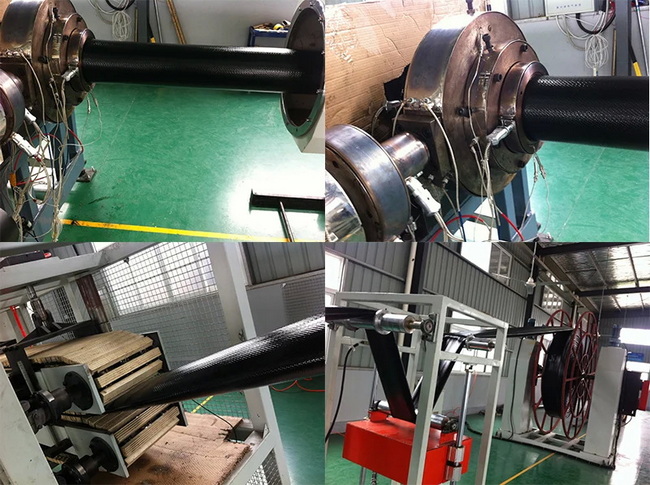
Compared with generic multipurpose hose, an engineered TPU oil hose offers several practical advantages for industrial users.[3][4][14]
- Improved resistance to fuels, oils, abrasion, UV, and weathering, which significantly extends service life in outdoor or harsh environments.[4][14][3]
- Lower weight per meter and compact coil storage make TPU oil hose easier to transport, deploy, and recover than many heavy rubber hose designs, boosting overall project efficiency.[16][15][4]
In some scenarios, using a dedicated oil hose rather than a general multipurpose hose is not just recommended but essential for safety and reliability.[5][3][11]
- High-pressure or long-distance transfer of fuels and oils in oilfields, depots, or refineries, where failure could cause large spills and significant financial losses.[3][4][5]
- Critical systems such as hydraulic power packs, marine bunkering, and emergency bypass lines for pipelines, which require high integrity and consistent performance from the oil hose.[15][5][11]
Sunmoon is an engineering-driven manufacturer that specializes in the research, development, production, and sales of TPU flat-lay hoses for global customers, including demanding oil hose applications.
- By combining material engineering, production control, and field feedback, Sunmoon can develop TPU oil hose structures that meet specific project standards and local regulations for different countries and industries.[4][3]
- Customized solutions may include adjusted wall thicknesses, working pressures, diameters, and coil lengths, as well as integrated couplings, enabling users to build mobile oil transfer systems tailored to their sites.[4][15][3]
When deciding whether to use a multipurpose hose or a dedicated oil hose, an engineering-based selection process helps avoid costly mistakes.[2][11][1]
- Clearly define the medium (oil type, additives, possible contamination), maximum and minimum temperatures, working pressure, surge pressure, and installation configuration (fixed, moving, reeled, buried, or exposed).[7][11][1]
- Evaluate manufacturer recommendations, chemical compatibility charts, and service history; when oil transfer is frequent, long-distance, or high-pressure, a specialized oil hose such as TPU layflat oil hose is usually the safer and more economical choice.[5][3][4]
Even when the correct oil hose is selected, inspection and maintenance are vital to maintain safety and performance.[11]
- Regular checks for cuts, abrasion, blisters, bulges, kinks, and soft spots help detect early signs of degradation before leakage or bursting occurs.[11]
- Scheduled pressure testing, flushing, and documentation of hose usage cycles extend oil hose life and provide traceability for critical installations.[11]
A multipurpose hose can only function safely as an oil hose when it is explicitly rated for oil service, with confirmed compatibility for the specific oil, temperature, and pressure in your system. For frequent, long-distance, or high-pressure oil transfer, a purpose-engineered oil hose—especially TPU layflat oil hose—provides superior durability, safety, and economic value compared with generic multipurpose hose options.[1][2][3][4][5] Contact us to get more information!
The main difference is that a true oil hose is designed with oil-resistant materials and reinforcement specifically for continuous contact with petroleum-based products, while many multipurpose hoses only offer limited oil resistance. Oil hose ratings and test standards also focus on the higher risks and stricter safety requirements of oil transfer applications.[10][8][4][5][7][1]
Some multipurpose hoses are formulated and rated to handle light oils like diesel or hydraulic oil, but this must be clearly indicated in the technical documentation. For regular or high-pressure diesel and hydraulic oil transfer, a dedicated oil hose or TPU layflat oil hose is strongly recommended to avoid premature hose failure and unplanned downtime.[17][2][3][4][1]
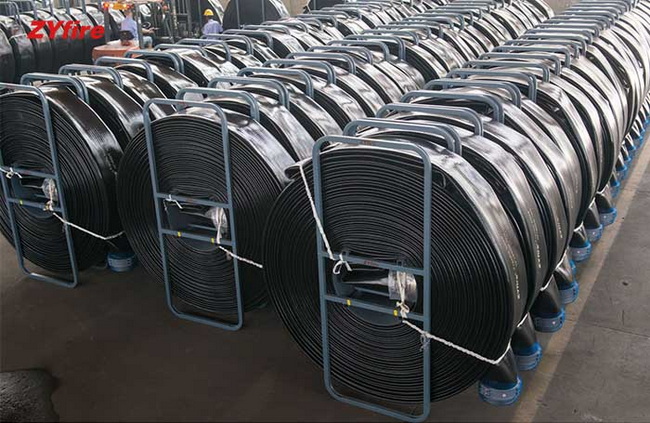
TPU layflat hose combines oil-resistant thermoplastic polyurethane with a high-tenacity textile reinforcement, delivering excellent resistance to fuels, oils, abrasion, and weathering. Its through-the-weave construction and long continuous lengths make it ideal for mobile, long-distance oil transfer systems where rapid deployment and reliable performance are essential.[14][15][3][4]
Using a non-oil-resistant hose for oil can lead to swelling, softening, cracking, or delamination of the hose wall, eventually causing leaks or bursts. Such failures can result in spills, fire hazards, contamination, and costly operational interruptions, particularly in critical industrial facilities.[9][2][11]
To choose the right oil hose, define your medium, temperature, pressure, and installation conditions, then match them with hose materials and ratings using manufacturer data and compatibility charts. For complex or large-scale oil transfer projects, working with an engineering-driven TPU flat-lay hose supplier like Sunmoon helps ensure the selected oil hose meets performance, safety, and regulatory requirements across the entire system.[12][3][4][7][1]
[1](https://www.strongflex.com/project/multi-purpose-hose/)
[2](https://ibtinc.com/the-many-uses-of-multipurpose-industrial-hose/)
[3](https://www.somaxflex.com/product/tpu-layflat-hose-for-oil-transfer/)
[4](https://www.sunhose.com/tpu-layflat-hose/)
[5](https://www.asoehose.com/oilvey-tpu-high-pressure-oil-gas-hose/)
[6](https://shipyardsupplyinc.com/5-ways-red-multipurpose-hose-can-improve-your-industrial-operations-a-comprehensive-guide)
[7](https://www.tubes-international.com/technical-information/table-of-hose-material-chemical-resistance/)
[8](http://www.hoseinc.com/nitrile-rubber-hose-nbr.html)
[9](https://www.calpaclab.com/nitrile-buna-rubber-chemical-compatibility-charts/)
[10](https://www.midwesthose.com/wp-content/uploads/2020/07/TPU-Layflat-Hose-QA-v3.pdf)
[11](https://rexarc.com/blog/guide-to-proper-hose-use-care-and-maintenance/)
[12](https://rubber-group.com/wp-content/uploads/2018/01/Chemical-Compatibility.pdf)
[13](https://www.hydra-flex.com/v/vspfiles/assets/catalogs/manuli-tech/hose-fluid-comp.pdf)
[14](https://www.zyfire.com/product/mining-dewatering-tpu-layflat-hose)
[15](https://www.austinhose.com/itemdetail/AH-16-TPU-660FT-M-A)
[16](https://hjhose.en.made-in-china.com/product-group/ZeNTWMvwQuUo/TPU-Lay-Flat-Hose-1.html)
[17](https://nelsonjameson.com/multi-purpose-hose-2192-50200-151304.html)


