

Views: 222 Author: Loretta Publish Time: 2026-01-02 Origin: Site


Content Menu
● Fuel hose vs. oil hose basics
● Can fuel hose safely carry oil?
● Why oil systems need dedicated oil hose
● When can a fuel hose be used with oil?
● Why TPU layflat hose is different
● Using TPU layflat hose as an oil hose in the field
● Key selection tips for any oil hose
● Practical examples of correct oil hose use
● FAQ about fuel hose and oil hose
>> 1. Can I temporarily use a fuel hose as an oil hose?
>> 2. What happens if I run hot engine oil through a standard fuel hose?
>> 3. How do I know if a hose is suitable as an oil hose?
>> 4. Is TPU layflat hose a good choice as an oil hose?
>> 5. What should I check before replacing my current oil hose?
Using a standard fuel hose as an oil hose is usually not recommended because the rubber compound, pressure rating, and temperature resistance are optimized for fuel, not hot lubricating oil. In many cases, the wrong choice of hose can lead to premature softening, swelling, leaks, or even hose failure, especially in pressurized engine oil systems, so a dedicated oil hose or specialized TPU layflat oil hose is the safer solution.[1][2]
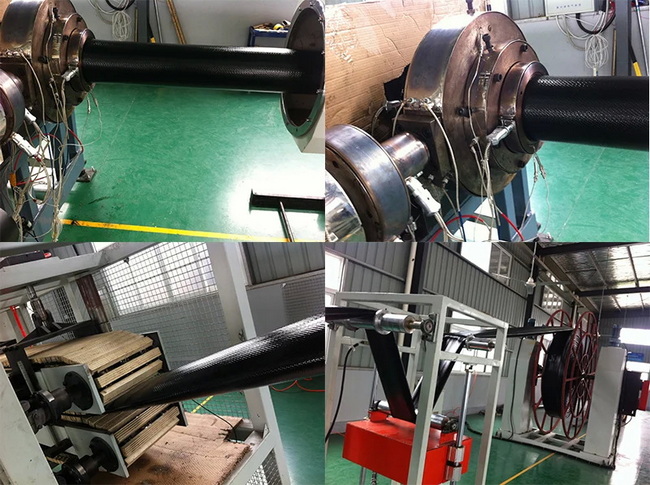
Fuel hose is formulated to handle gasoline, diesel, and often ethanol blends, with moderate temperatures and relatively low pressures in most return and feed applications. A dedicated oil hose is engineered to resist continuous contact with hot petroleum-based lubricants, higher operating pressures, and long-term exposure to contaminants without softening or cracking.[3][4]
- Fuel hose typically uses a petroleum-resistant inner tube and an outer cover that resists weather, ozone, and moderate heat, and many types are clearly marked for fuel service only.[3]
- Oil hose is designed with compounds and reinforcement that tolerate hot engine oil, hydraulic oil, or gear oil at elevated pressures and temperatures for long service life as an oil hose.[5]
- Specialized TPU layflat hose products add high abrasion, chemical, and oil/fuel resistance for long-distance transfer in industrial applications such as petroleum, mining, and chemical plants, where a flexible oil hose is preferred over rigid pipe.[6]
A helpful visual in this section could be an annotated cross-section of a braided fuel hose next to a reinforced oil hose, with labels for tube, reinforcement, and cover layers to highlight design differences. A short explainer video can also compare swelling and hardness changes between fuel hose and oil hose samples after soaking in hot oil.
In some low-pressure, low-temperature situations, a high-quality fuel line may survive with oil, but it is rarely the optimal or safest choice as an oil hose. Many mechanics and hose specialists warn that typical fuel hose is “not oil resistant” and will soften over time when exposed to hot oil, which can cause leaks and possible damage.[7][1]
- Automotive technical guidance notes that standard neoprene fuel line is not designed for coolant or oil systems and should not be used where oil pressure or temperature exceeds typical fuel conditions.[3]
- Industry articles on oil hose selection emphasize that fuel hose and oil hose use different rubber compounds and that substituting fuel hose in an oil circuit can lead to early failure or catastrophic leaks.[2]
- Discussions about using fuel hose for oil gauges or engine lines show that while some installations work short term, they are often replaced later with proper oil-rated hose for long-term reliability and safety.[8]
A useful video demonstration could show a test rig where hot oil is circulated through sections of fuel hose and oil hose for many hours, with periodic measurements of wall thickness, hardness, and leakage to visualize the risks of using fuel hose as an oil hose.
Oil systems work under higher pressures and temperatures than most fuel return lines, so the hose must withstand demanding conditions for long periods without degradation. Hot engine oil, hydraulic oil, or synthetic lubricants can quickly attack a hose compound that was never designed for that chemical environment, causing swelling, blistering, or internal delamination of a mis-used fuel hose.[5][3]
- Oil hose is typically rated for higher continuous temperatures than standard fuel line, which is critical near engines, turbochargers, or hydraulic power packs where fluid can get very hot.[3]
- Many oil hoses have stronger reinforcement and higher burst pressures to safely handle pressurized feed lines, coolers, and hydraulic actuators without stretching or bursting.[5]
- The right oil hose also resists oxidation and micro-cracking from constant thermal cycling, which reduces maintenance, leakage, and unplanned downtime in industrial and mobile equipment.[5]
An educational schematic can show a complete engine lubrication circuit, highlighting all points where a properly rated oil hose or rigid pipe is critical. A 3D animation could also illustrate how internal pressure pulses and temperature cycles stress the hose wall over time, reinforcing why an oil hose must be specified correctly.
There are narrow cases where a robust fuel hose can be acceptable for oil, but only under controlled conditions and with the correct specification. Some multi-fluid performance hoses are explicitly rated by the manufacturer for fuel, oil, coolant, and air, and these products can be used as an oil hose if installed within their temperature and pressure limits.[9][3]
- Performance automotive hose manufacturers specify certain braided hoses as suitable for methanol, fuel, oil, and coolants, but only when temperature limits are respected and proper fittings and clamps are used.[9]
- Low-pressure return or breather applications sometimes allow the use of a fuel-rated hose, but the product must clearly list oil compatibility and be installed with a healthy safety margin.[10]
- Aviation and industrial standards often provide dedicated specifications for hoses that are simultaneously approved for both fuel and oil, and only those dual-rated products should be used if cross-service is required.[11]
Here, a screenshot-style diagram of a performance hose catalog page could highlight which part numbers carry dual ratings for fuel and oil. A concise how-to video could guide users through reading hose markings and technical data sheets to confirm when a given hose can serve as an oil hose.
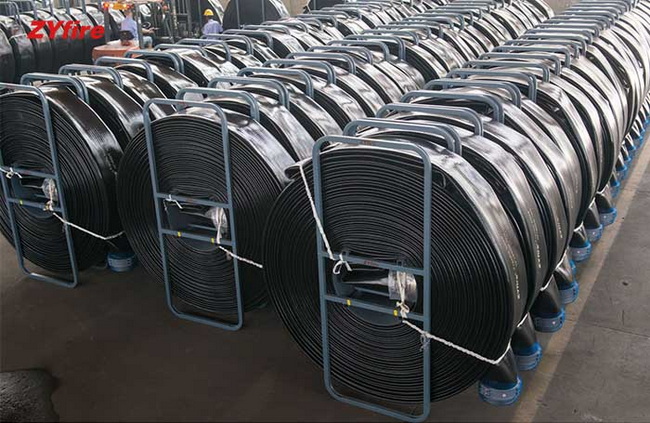
Thermoplastic polyurethane (TPU) layflat hose has become a preferred solution for long-distance transfer of oil, fuel, water, and aggressive chemicals in demanding industrial environments. For engineering-driven manufacturers such as Sunmoon, TPU layflat oil hose combines high abrasion resistance, excellent mechanical strength, and chemical compatibility with many petroleum products, making it reliable for oil transfer projects worldwide.[6]
- TPU layflat hose is extruded as a seamless structure with a woven reinforcement, delivering high working and burst pressures while remaining lightweight and easy to deploy over long distances as a flexible oil hose.[6]
- The TPU tube and cover provide excellent resistance to abrasion, punctures, UV exposure, and many oils and fuels, so the same hose can often be used as an oil hose, fuel transfer hose, or multi-purpose transfer line within the specified compatibility window.[6]
- Typical TPU layflat hose designed for petroleum applications can operate from low sub-zero temperatures up to around 80 °C, covering a wide range of climates and operating conditions for fire-fighting, mining, and oilfield water or oil transfer.[6]
To support technical buyers, a clear infographic can show the layered construction of TPU layflat oil hose, its pressure ratings, and typical applications such as oilfield, mining dewatering, and industrial transfer. A field-operations video can present how engineering teams deploy large-diameter TPU layflat oil hose reels to replace rigid pipe in remote projects.
In many projects, TPU layflat hose is used as a flexible, high-performance oil hose for temporary or semi-permanent transfer lines. Its ability to be reeled, transported, and quickly deployed makes TPU layflat oil hose a cost-effective alternative to steel or rigid plastic pipe for mobilized operations such as fracturing water and fuel transfer, refinery bypass lines, or chemical transfer on large construction sites.[12][6]
- Oil hose applications for TPU layflat products include transfer of crude oil, refined fuel, produced water, and oil-based drilling or fracturing fluids, as long as the specific fluid is compatible with the selected TPU compound.[6]
- Engineering-driven manufacturers like Sunmoon can customize TPU layflat oil hose with specific diameters, pressure ratings, and lengths up to hundreds of meters per reel, simplifying deployment in long cross-country lines and large industrial plants.[6]
- Compared to conventional rubber oil hose, TPU layflat oil hose offers much lower weight per meter, reduced storage volume, and faster field handling, while maintaining high mechanical strength and chemical resistance.[6]
A practical visual would be a site layout diagram where TPU layflat oil hose is routed from a storage tank to a processing unit, showing hose runs, coupling points, and reel positions. A drone-style video story could illustrate how crews unreel and connect TPU layflat oil hose in minutes, compared with hours needed to assemble rigid pipe.
Whether choosing a rubber oil hose, a braided performance hose, or a TPU layflat oil hose, careful specification is essential to safety and reliability. The wrong oil hose selection can negate the intended cost savings of using a fuel hose or generic hose and instead increase the risk of leaks, downtime, and environmental incidents.[4][2]
- Confirm chemical compatibility between the oil or fuel and the hose's tube material using manufacturer data sheets, particularly for synthetic oils, high-aromatic fuels, or aggressive additives.[4]
- Check working pressure, burst pressure, and safety factor against the system's maximum operating pressure and surge conditions to avoid over-stressing the oil hose.[6]
- Verify temperature range, including cold-start low temperature and hot-running maximum temperature, especially when routing an oil hose close to engines, exhausts, or hot process equipment.[3]
- Choose suitable couplings, clamps, and fittings designed for the specific oil hose, and respect bending radius recommendations to prevent kinking or internal damage.[6]
An engineering checklist graphic can summarize these steps to help maintenance teams standardize oil hose selection. A short training video can walk through a real project where engineers move from an unsuitable fuel hose to a correctly specified TPU layflat oil hose, highlighting each decision.
Real-world scenarios show how correct oil hose selection protects equipment and reduces operating costs. By contrast, misusing fuel hose can generate maintenance problems and safety risks that far outweigh the small initial savings.[2][5]
- In a hydraulic power unit retrofit, upgrading from generic rubber hose to a properly rated high-temperature oil hose reduced hose changes and leakage events, improving uptime and reducing oil consumption.[5]
- In a remote mining operation, replacing rigid steel lines with reinforced TPU layflat oil hose allowed quick reconfiguration of transfer routes and simplified transport, while maintaining pressure and abrasion performance.[6]
- For mobile generators and pumps, standardizing on a dual-rated fuel and oil hose where necessary simplified spares management, but only after verifying that the hose was formally approved as an oil hose under the relevant conditions.[9]
Illustrative before-and-after photos could emphasize the difference between an old, cracked hose installation and a clean layout using a modern TPU layflat oil hose. A customer-story video can further explain how equipment owners reduced lifecycle costs by upgrading their oil hose specification.
Fuel hose and oil hose are not automatically interchangeable, and using fuel hose as an oil hose without checking compatibility and ratings can cause swelling, leaks, or dangerous failures. For most engine, hydraulic, and industrial oil systems, a properly rated oil hose—or a specialized TPU layflat oil hose engineered for oil and fuel transfer—is the smart choice to secure safety, uptime, and long-term durability.[2][6]
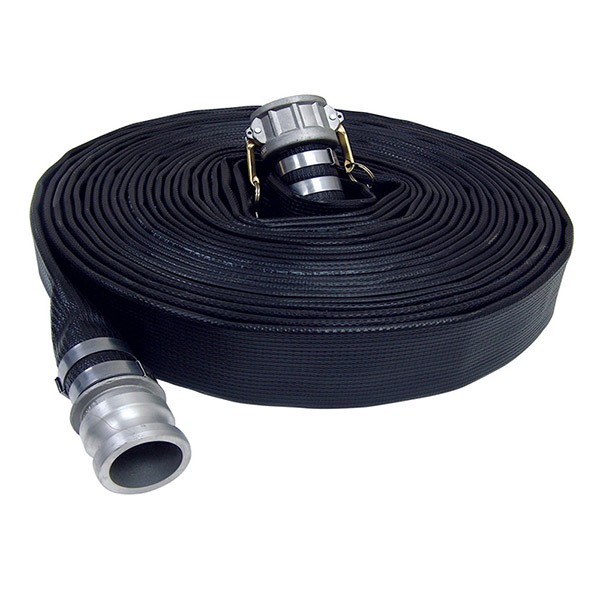
In low-pressure, low-temperature situations, a robust fuel hose may work temporarily with oil, but it is still a compromise and should not be treated as a long-term oil hose solution. If the hose manufacturer does not explicitly list oil compatibility, the safer approach is to replace the temporary fuel hose with a dedicated oil hose or oil-rated TPU layflat hose as soon as possible.[7][4]
Standard fuel hose compounds are optimized for fuel rather than hot oil, so continuous exposure to hot engine oil can cause softening, swelling, or internal degradation. Over time, this can lead to seepage, sudden leaks, or even hose rupture, particularly in pressurized oil circuits or near hot engine components.[1][3]
The data sheet or markings on the hose should clearly list the fluids for which the hose is approved, such as engine oil, hydraulic oil, or multi-fluid service including fuel and oil. If the documentation only mentions fuel, coolant, or air and does not reference oil, it should not be assumed safe as an oil hose, especially in high-pressure or high-temperature applications.[4][3]
TPU layflat hose designed for petroleum service is an excellent oil hose option for long-distance transfer of oil, fuel, and chemical fluids in industrial and oilfield environments. It combines high abrasion resistance, strong reinforcement, and broad oil and fuel compatibility with low weight and fast deployment on reels, making it ideal for projects where flexible oil hose is preferred over rigid pipe.[6]
Before replacing an existing oil hose, review the system pressure, operating temperature, oil type, and routing constraints, then select a hose that meets or exceeds those requirements with a suitable safety factor. For demanding applications, consider upgrading to a reinforced rubber oil hose or TPU layflat oil hose with documented compatibility for the specific oils and fuels used on site.[4][6]
[1](http://www.stangfix.com/threads/fuel-vs-oil-rubber-hose.13057/)
[2](https://hosemarket.com/comparing-oil-and-fuel-hoses-what-you-need-to-know/)
[3](https://www.hemmings.com/stories/which-fuel-line-to-use/)
[4](https://aochenggroup.com/news/o-ring-kit-how-to-select/)
[5](https://www.nexaparts.com/hoses/oil-and-petrol-hoses/)
[6](https://www.sunhose.com/tpu-layflat-hose/)
[7](https://bobistheoilguy.com/forums/threads/fuel-hose-vs-oil-hose.42136/)
[8](https://www.accessnorton.com/NortonCommando/fuel-line-as-oil-line.36364/)
[9](https://roadrunnerperformance.com/car-performance-101-fuel-line-hose-what-you-should-use/)
[10](https://www.reddit.com/r/AskMechanics/comments/kfwcjq/can_these_hoses_be_used_for_oilfuel/)
[11](https://www.supercub.org/forum/threads/fuel-and-oil-hose.36967/)
[12](https://www.hosecraftusa.com/model/UD2_Chemical_Oil_Layflat_Discharge_Hos)


