

Views: 222 Author: Sunmoon Publish Time: 2026-04-30 Origin: Site


When you push a layflat hose into extreme cold such as -40°C, material choice stops being a theoretical question and becomes a matter of system uptime, safety, and lifetime cost. As a Chinese manufacturer of TPU layflat hoses and PVC layflat hoses serving global projects, Sunmoon has seen how hoses really behave on winter jobsites, in oilfields, and on remote agricultural lines. [sunhose]
In this in‑depth guide, we will compare TPU vs. PVC layflat hoses at -40°C, focusing on flexibility, durability, pressure performance, and real‑world risk in cold climates. [jafirehose]
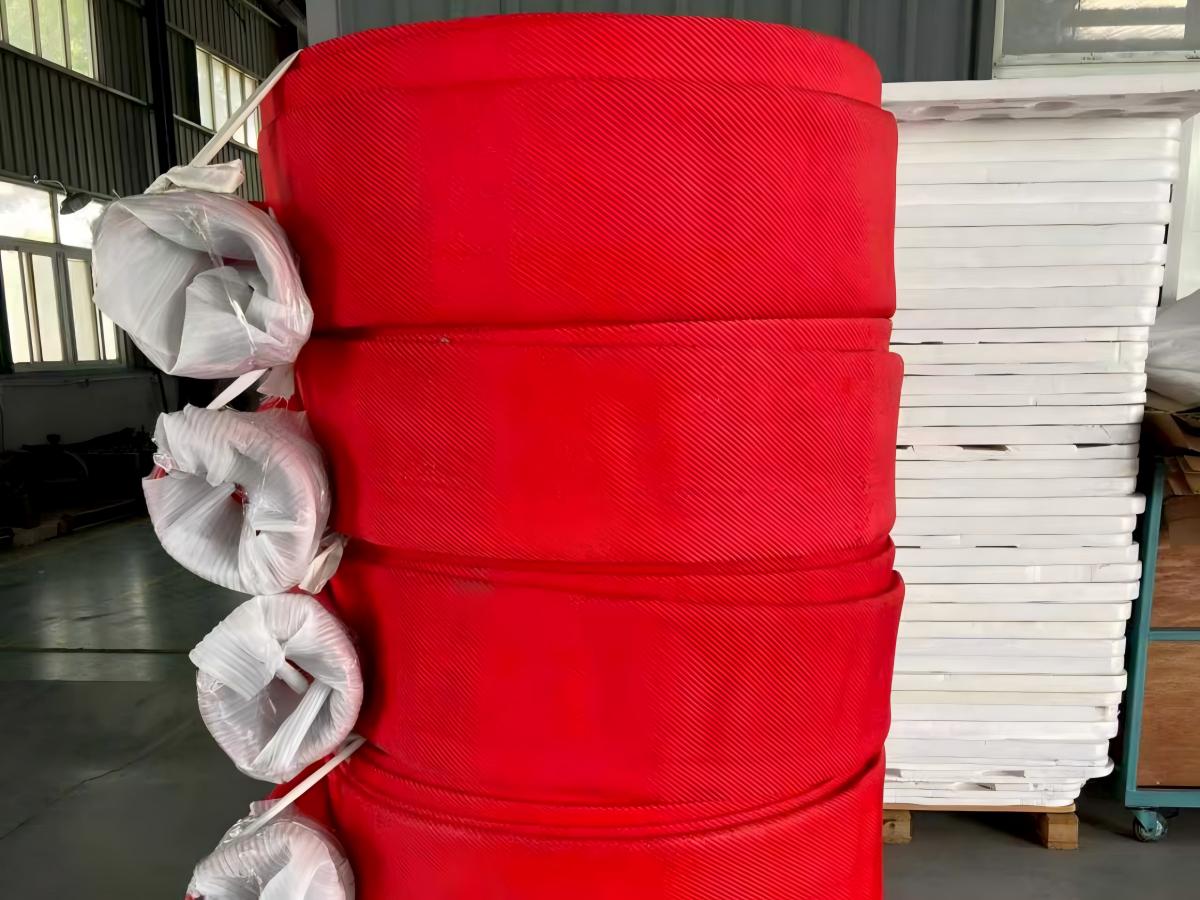
At -40°C, most common plastics are close to or beyond their brittle transition temperature, where they lose flexibility and crack under impact or bending. In this zone: [sunhose]
- PVC layflat hoses typically fall outside their recommended temperature range. [orientflexhose]
- TPU layflat hoses are still within or close to their designed operating window. [zyfireuae]
Industry data shows typical continuous temperature ranges as: [papagenogroup]
| Hose material | Typical temperature range | Behavior around -40°C |
|---|---|---|
| PVC layflat hose | About -5°C to +60°C (sunhose) | Below freezing it stiffens; close to -40°C, it is brittle and crack‑prone. (sunhose) |
| TPU layflat hose | About -40°C to -50°C up to +90°C or more (depending on design) (jafirehose) | Remains flexible and usable at -40°C; plasticity and impact resistance are largely retained. (jafirehose) |
For operations in Canada, Scandinavia, Russia, high‑altitude plateaus, or northern China, this difference is not a small technical detail—it determines whether a hose can be safely deployed outdoors in mid‑winter. [jafirehose]
From a field technician's perspective, flexibility at low temperatures is the first thing you notice. At -40°C, you do not have time to slowly warm a hose with heaters just to deploy it.
Independent and manufacturer data indicate that TPU hoses remain flexible down to roughly -40°C to -50°C, depending on formulation. In practice, this means: [jafirehose]
- Easy uncoiling and recoiling from reels or pallets in sub‑zero conditions. [jafirehose]
- Low risk of kinking damage when you drag hoses around corners or over uneven ground at -40°C. [jafirehose]
- Faster deployment and retrieval, which matters for temporary lines in mining, oil & gas, and emergency water transfer. [help.dripdepot]
For example, a TPU layflat hose used for shale gas water transfer stayed flexible at temperatures down to about -50°C, where PVC hoses became too rigid and crack‑prone to safely operate. [jafirehose]
Standard PVC layflat hoses typically work down to about -5°C before they stiffen significantly. Below this point: [orientflexhose]
- The hose hardens, making it difficult to bend or roll. [sunhose]
- Forced bending can cause micro‑cracks that later turn into leaks or bursts. [papagenogroup]
- In extreme cold like -40°C, PVC is generally outside of its recommended operating range and cannot be relied on for dynamic handling. [orientflexhose]
As one cold‑weather hose comparison notes, PVC hoses tend to turn rigid in the cold, and bending them in this state easily leads to cracking. TPU avoids this problem because its molecular structure remains elastomeric at low temperature. [zyfireuae]
Cold temperature is not only about flexibility—it also changes pressure behavior and safety margins.
Because TPU maintains elasticity, it can distribute internal stress better under pressure at low temperature. Industry comparisons show: [zyfireuae]
- TPU layflat hoses often support higher working pressures than PVC hoses of similar size. [papagenogroup]
- Abrasion and impact resistance of TPU can be 5–50 times higher than PVC in some industrial tests, extending hose life and reducing sudden failures. [jafirehose]
- At -40°C, TPU hoses are far less likely to experience brittle fracture when water hammer or pressure spikes occur. [zyfireuae]
This matters for high‑flow layflat systems in irrigation, dewatering, and fracturing operations, where flow rates can be thousands of liters per minute. [help.dripdepot]
PVC's internal structure embrittles as temperature drops. When pressurized at -40°C: [sunhose]
- Impact from vehicles or tools can easily initiate cracks. [orientflexhose]
- Pressure spikes or frozen spots can trigger burst failures rather than controlled leakage. [papagenogroup]
- Manufacturers generally do not rate standard PVC layflat hoses for -40°C operations, so any use at this temperature is outside typical warranty and design assumptions. [sunhose]
From a safety standpoint, this is a strong argument to avoid PVC layflat hoses in exposed outdoor systems that may see -40°C ambient or lower. [orientflexhose]
Extreme cold is rarely the only challenge. Hoses also face abrasive ground, UV exposure, and chemicals.
In industry tests and field use:
- Abrasion resistance of TPU layflat hoses can be 5–10 times higher than that of standard PVC hoses, and some reports cite up to 50 times in particular configurations. [jafirehose]
- TPU offers excellent resistance to oils, fuels, and many chemicals, which is essential in oil & gas, mining, and industrial water transfer. [jafirehose]
- TPU has good UV stability, improving lifetime for hoses left outdoors year‑round. [zyfireuae]
Because these properties hold over a wide temperature range (often -40°C to +90°C or more), TPU hoses provide predictable behavior across seasons instead of performing well only in mild weather. [sunhose]
PVC is cost‑effective and sufficiently durable for many mild‑climate, low‑pressure applications. However, under severe conditions: [papagenogroup]
- PVC suffers more abrasion damage when dragged across stone or frozen ground. [jafirehose]
- It is more sensitive to oils and hydrocarbons, which can accelerate degradation. [papagenogroup]
- UV exposure can cause hardening, discoloration, and embrittlement, effects that combine with cold to shorten service life. [sunhose]
For truly harsh winter environments, these factors further shift the total cost of ownership in favor of TPU, even if PVC looks cheaper on the initial invoice. [jafirehose]
From an environmental and regulatory angle, TPU also has advantages over PVC.
- TPU hoses can often be recycled and are typically formulated with fewer problematic additives. [dawnbags]
- Some TPU systems align better with tightening eco‑regulations in Europe and other regions, especially where PVC additives and incineration residues are under scrutiny. [dawnbags]
- For customers needing sustainable, long‑life winter infrastructure, TPU supports both performance and compliance goals. [dawnbags]
PVC remains widely used due to low cost and simple processing, but long‑term environmental policies are gradually driving more medium‑ to high‑end applications toward TPU and similar materials. [dawnbags]
Drawing on Sunmoon's manufacturing experience and published industry data, the real‑world implications can be summarized with three typical scenarios. [help.dripdepot]
Application: Temporary lines for mine dewatering or construction water supply at -30°C to -40°C. [help.dripdepot]
- TPU layflat hose:
- Remains flexible for deployment and retrieval. [jafirehose]
- Handles high flow with manageable friction losses. [help.dripdepot]
- Provides long service life under abrasion and UV. [jafirehose]
- PVC layflat hose:
- Too rigid to deploy safely at -40°C. [orientflexhose]
- High risk of cracking during handling or under pressure. [orientflexhose]
Result: At -40°C, TPU is the only practical choice for dynamic long‑distance water transfer. [help.dripdepot]
Application: Layflat main lines used during growing season; stored outdoors through winter. [help.dripdepot]
- TPU:
- Tolerates late‑season cold snaps and early‑spring frost. [zyfireuae]
- Less damage from accidental winter use or partial freezing. [zyfireuae]
- PVC:
- May be acceptable if hoses are stored above freezing and never used below 0°C. [papagenogroup]
- Improper storage or use during cold spells will accelerate cracking and aging. [sunhose]
Result: TPU provides more safety margin for farmers or contractors who cannot control weather windows perfectly. [jafirehose]
Application: Fire and emergency water lines in sub‑zero urban or industrial environments. [zyfireuae]
- TPU layflat hoses are widely used for fire hoses and emergency lines because they maintain flexibility and integrity in freezing conditions. [jafirehose]
- PVC is rarely recommended for such critical services at low temperature because failure consequences are severe. [papagenogroup]
Result: For mission‑critical systems, TPU is the industry‑preferred material in cold climates. [zyfireuae]
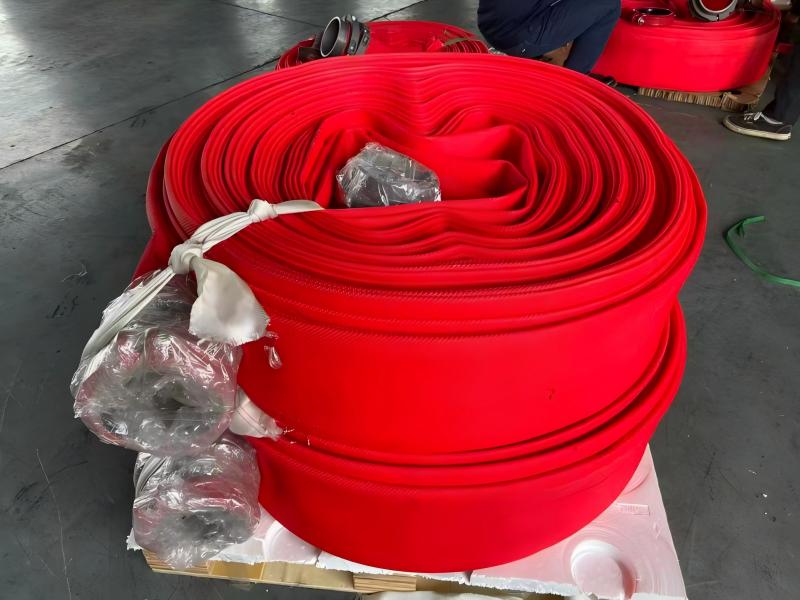
From an engineer's or buyer's viewpoint, choosing between TPU and PVC for -40°C environments can be guided by these steps.
- If your hoses may see -20°C to -40°C, even occasionally, treat this as a TPU‑only zone for dynamic outdoor use. [jafirehose]
- If hoses are always used and stored above 0°C, PVC might still be a cost‑effective option. [sunhose]
- High‑flow or high‑pressure lines benefit from TPU's higher pressure capability and stronger reinforcement. [help.dripdepot]
- Low‑pressure, short‑distance transfer in mild climates can justify PVC from a budget perspective. [papagenogroup]
- TPU offers much longer service life under abrasion and harsh conditions. [jafirehose]
- Fewer failures mean lower replacement, labor, and downtime costs. [jafirehose]
- In -40°C applications, the cost of a single PVC failure (water loss, contamination, safety risk) often exceeds the initial savings. [sunhose]
- Where eco‑constraints on PVC additives and disposal are tightening, TPU gives better long‑term compliance. [dawnbags]
As a dedicated manufacturer of TPU layflat hoses and PVC layflat hoses, Sunmoon can engineer hoses specifically for your cold‑climate scenario.
For TPU layflat hoses designed for -40°C environments, customization can include: [jafirehose]
- Special low‑temperature TPU compounds that stay flexible below -40°C. [zyfireuae]
- Optimized reinforcement layers to balance high pressure and easy handling in cold weather. [papagenogroup]
- Abrasion‑resistant covers for dragging across ice, snow, and rocky ground. [jafirehose]
- Tailored sizes and couplings that match your pumps, manifolds, and reel systems. [help.dripdepot]
For PVC layflat hoses, Sunmoon can still provide optimized solutions for moderate climates, focusing on: [sunhose]
- Competitive cost for projects operating in non‑freezing conditions. [papagenogroup]
- Adequate mechanical properties for short‑term or seasonal use. [sunhose]
Use a table like this in your page body to help users quickly understand the trade‑offs:
| Factor at -40°C | TPU layflat hose | PVC layflat hose |
|---|---|---|
| Flexibility | Remains flexible and easy to handle. (jafirehose) | Very stiff; practically rigid, hard to coil. (sunhose) |
| Operating range | Typically down to about -40°C to -50°C. (jafirehose) | Commonly only to about -5°C. (sunhose) |
| Burst / crack risk | Low; material is elastic even when cold. (jafirehose) | High; embrittlement makes cracking likely. (sunhose) |
| Abrasion resistance | 5–10× or more higher than PVC. (jafirehose) | Lower; faster wear on rough or icy ground. (jafirehose) |
| Chemical / oil resistance | Excellent for fuels, oils, and many chemicals. (jafirehose) | Limited; more sensitive to oils and solvents. (sunhose) |
| UV / weathering | Good long‑term outdoor stability. (jafirehose) | Susceptible to hardening and aging. (sunhose) |
| Typical applications in cold climates | Mining, oil & gas water transfer, firefighting, long‑distance dewatering. (jafirehose) | Only indoor or mild‑climate applications. (sunhose) |
Despite the performance gap at -40°C, there are still situations where PVC layflat hose makes sense:
- Your project operates strictly in above‑freezing environments. [papagenogroup]
- You need a short‑term, low‑pressure hose with minimal handling after installation. [sunhose]
- Budget is extremely constrained, and the risk of cold exposure is negligible. [papagenogroup]
In such cases, PVC remains a cost‑optimized choice, and Sunmoon can help you specify a PVC layflat hose construction tailored to your actual temperature and pressure window. [sunhose]
From both an engineering and lifecycle cost perspective, the conclusion is straightforward:
- At or near -40°C, TPU layflat hose is the recommended solution for almost all outdoor and high‑reliability applications. [jafirehose]
- PVC layflat hose should be limited to warmer conditions and non‑critical uses, ideally above freezing. [orientflexhose]
If your operation faces winter conditions, Arctic environments, or high‑altitude cold, upgrading to TPU is not an upgrade in luxury—it is a risk‑control and productivity decision. [zyfireuae]
If your current PVC layflat hoses are stiff, leaking, or cracking in winter, now is the right time to re‑engineer your system around TPU.
Sunmoon can support you with:
- Application‑specific TPU layflat hose design for -40°C performance. [jafirehose]
- Custom diameters, pressure ratings, and lengths matched to your pumps and terrain. [help.dripdepot]
- Technical consultation based on real project experience in cold‑climate agriculture, mining, construction, oil & gas, and emergency services. [jafirehose]
Contact Sunmoon today to discuss your project's minimum temperature, flow rate, and pressure needs, and we will help you build a reliable TPU layflat hose solution for -40°C and beyond.
1. Can standard PVC layflat hoses be used safely at -40°C?
In most cases, no. Standard PVC layflat hoses are typically rated only down to around -5°C and become brittle when used at much lower temperatures such as -40°C. [orientflexhose]
2. What is the typical working temperature range for TPU layflat hoses?
Many TPU layflat hose designs can operate continuously from about -40°C up to +90°C or higher, and some formulations remain flexible even down to around -50°C. [zyfireuae]
3. Are TPU layflat hoses more expensive than PVC, and is the extra cost worth it?
TPU generally has a higher initial cost, but its superior abrasion resistance, low‑temperature flexibility, and longer service life usually reduce total cost of ownership, especially in harsh or cold environments. [jafirehose]
4. Can TPU layflat hoses handle oils and chemicals in cold conditions?
Yes. TPU offers excellent resistance to oils, fuels, and many chemicals, and this resistance is maintained across its full temperature range, including sub‑zero operation. [jafirehose]
5. How do I know if my application really needs TPU instead of PVC?
If your hoses are used outdoors, face temperatures near or below freezing, operate at high pressure or flow, or are mission‑critical (such as dewatering, oil & gas water transfer, or firefighting), you should strongly consider TPU. [help.dripdepot]
1. JAFirehose – "TPU Lay Flat Hose for Shale Gas Fracturing Water Transfer" (cold flexibility and abrasion data) – <https://www.jafirehose.com/news/industry-news/tpu-lay-flat-hose-shale-gas-fracturing-water-transfer.html> [jafirehose]
2. Sunhose – "Layflat Hoses Decoded: Why PVC, Rubber, and TPU Cater to Different Needs" (temperature ranges and performance comparison) – <https://www.sunhose.com/layflat-hoses-decoded-why-pvc-rubber-and-tpu-cater-to-different-needs/> [sunhose]
3. ZYfire – "What is a TPU lining?" (TPU temperature range and flexibility) – <https://www.zyfireuae.com/What-is-a-TPU-lining-id44150436.html> [zyfireuae]
4. Papageno Group – "Differences between PVC Layflat Hose and TPU Layflat Hose" (material and pressure comparison) – <https://www.papagenogroup.com/news/Differences-between-PVC-Layflat-Hose-and-TPU-Layflat-Hose-173.html> [papagenogroup]
5. JAFirehose – "The Ultimate Guide to TPU Lay Flat Hoses: Benefits, Uses, and Selection Tips" (advantages of TPU material) – <https://www.jafirehose.com/news/industry-news/the-ultimate-guide-to-tpu-lay-flat-hoses-benefits-uses-and-selection-tips.html> [jafirehose]
6. Drip Depot – "Layflat Buying Guide" (layflat flow and sizing) – <https://help.dripdepot.com/support/solutions/articles/11000079252-layflat-buying-guide> [help.dripdepot]
7. Orientflex – "Which is better rubber hose or PVC hose" (PVC cold rigidity and cracking tendency) – <https://www.orientflexhose.com/which-is-better-rubber-hose-or-pvc-hose/> [orientflexhose]
8. Dawn Bags – "PVC vs. TPU transparent plastic material analysis" (environmental and material trends) – <https://www.dawnbags.com/> [dawnbags]


