

Views: 222 Author: Sunmoon Publish Time: 2026-04-14 Origin: Site


As someone who has spent years around concrete pump operators, site engineers, and hose manufacturers, I have seen first-hand how hose choice can make or break a pour. In high-volume, abrasive concrete pumping, TPU (thermoplastic polyurethane) boom end hoses consistently deliver longer service life, better safety margins, and lower total cost than traditional rubber hoses when they are correctly specified and maintained. [capitalrubberco]
TPU is a thermoplastic elastomer engineered to combine high abrasion resistance, flexibility, and cut/tear strength in a single material. Unlike vulcanized rubber, TPU can be precisely formulated and extruded to deliver consistent wall thickness, tightly controlled hardness, and excellent bonding with synthetic fiber reinforcements. [sunghose]
From a materials perspective, TPU offers:
- High abrasion resistance for longer life when handling sand, gravel, and cement. [solutions.covestro]
- Excellent resistance to oils, greases, and many chemicals found on construction sites. [sunhose]
- Stable flexibility over a wide temperature range, reducing kinking and handling fatigue. [sunmoonlayflathose]
- Good UV and weathering resistance, which is critical for outdoor concrete pumping operations. [sunhose]
For a concrete boom end hose, this combination means less outer cover wear when dragging across formwork and rebar, slower inner tube erosion from abrasive concrete, and fewer temperature-related cracks than conventional rubber options in many use cases. [sunhose]
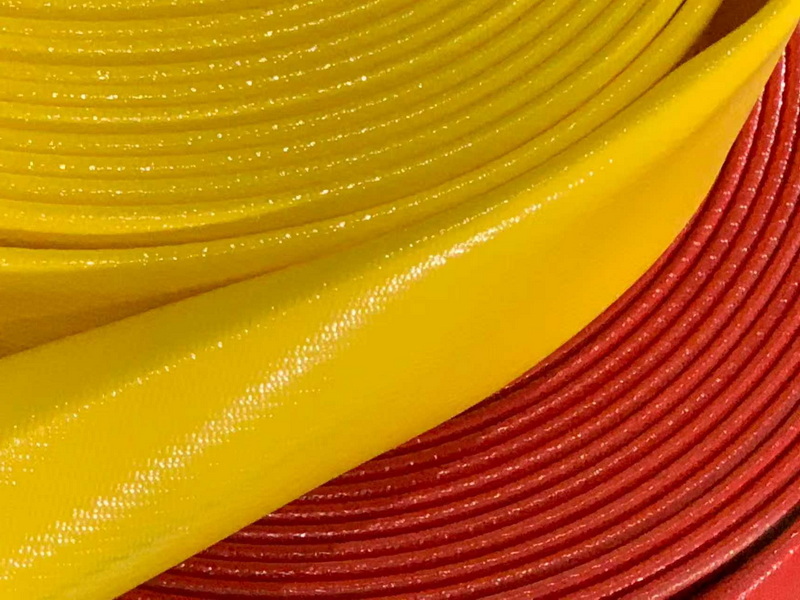
From an industry buyer's point of view, the key question is not the initial price per meter, but the cost per cubic meter of concrete pumped safely. Multiple hose manufacturers and resin suppliers report that premium TPU compounds can deliver several times the abrasion resistance of conventional rubber compounds in layflat and slurry hose applications. [conforms]
- Abrasion resistance: TPU layflat hoses often show significantly lower wear rates in standardized abrasion tests than nitrile or general-purpose rubber, directly extending hose life under abrasive flow. [sinohose]
- Tear and cut resistance: The segmented hard/soft structure of TPU provides high tear strength; when a hose is dragged over rough concrete, steel, or rebar, TPU covers tend to resist gouging better than many rubber covers. [sunghose]
- Chemical and oil resistance: TPU resists many oils, greases, and hydrocarbons better than standard rubber blends, which helps on greasy job sites and in pump cleaning environments. [solutions.covestro]
A typical scenario reported by contractors using TPU layflat and slurry hoses is service life improvements in the range of 2–4 times versus comparable rubber hoses in harsh conditions, especially where hoses are frequently dragged, coiled, and redeployed. While exact factors for concrete pump boom end hoses vary by mix design, operating pressure, and jobsite practice, the same durability mechanisms apply. [capitalrubberco]
Rubber boom end hoses often fail by:
- Progressive inner tube wear leading to soft spots or rupture. [conforms]
- Outer cover cracking from weather and UV. [sinopulse]
- Local tears or cuts caused by abrasion on sharp edges. [capitalrubberco]
Every unplanned hose failure means pump downtime, cleanup, and sometimes damaged formwork or finished surfaces. By extending hose life and reducing unscheduled failures, TPU hoses often reduce total cost of ownership even when their upfront price is higher than standard rubber. [worksafebc]
| Factor | TPU concrete pump hose | Traditional rubber hose |
|---|---|---|
| Abrasion resistance | Very high, often 2–4× rubber in layflat/slurry service (sinohose) | Good, but typically lower abrasion life under severe slurry (capitalrubberco) |
| Weight | Lighter construction reduces handling fatigue (sunhose) | Heavier, more operator fatigue (sinopulse) |
| Flexibility vs temperature | Remains flexible in low temperatures, resists kinks (sunhose) | May stiffen in cold or age-harden over time (sunhose) |
| Chemical/oil resistance | Excellent versus oils, greases, many chemicals (sunhose) | Depends on rubber blend; some are less resistant (sunhose) |
| UV/weathering | Good UV and outdoor durability (sunhose) | Can crack and age with prolonged exposure (sinopulse) |
| Service life potential | Longer life under abrasive, mobile use when properly specified (sunhose) | Shorter life in high abrasion or rough handling scenarios (capitalrubberco) |

From a safety engineer's standpoint, hose integrity is not just a maintenance issue; it is a critical control against hose whip and accidental discharge. Investigations into hose whip incidents in concrete delivery lines highlight blockages, trapped air pockets, poor restraint, and hose condition as key contributing factors. [worksafe.qld.gov]
Regulators and industry bodies emphasize:
- Using hoses designed specifically for concrete pumping and compliant with recognized safety standards (such as ASME B30.27 and related national codes). [cpmacert]
- Thorough inspection of the entire delivery line before each pour, especially the boom end hose. [worksafebc]
- Proper restraint and positioning of flexible hoses to minimize unrestrained length that could whip if pressure is released suddenly. [worksafe.qld.gov]
Higher durability in the hose cover and tube, as found in quality TPU hoses, helps maintain structural integrity under repeated pressure cycles and rough handling. While material choice alone cannot prevent hose whip, a robust TPU hose is less likely to fail due to unnoticed cracks or severe abrasion damage, which supports the broader safety strategy. [sunmoonlayflathose]
In discussions with concrete contractors and pump operators, several themes consistently come up when they switch from standard rubber boom end hoses to TPU-based designs. [sunhose]
Typical feedback includes:
- Noticeably easier handling due to lighter hose weight, especially when maneuvering the boom tip for overhead or long-reach pours. [sunhose]
- Less visible wear on the outer cover after weeks of jobs where hoses are dragged over rough concrete, rebar, and scaffolding. [sunghose]
- Fewer kinks and flat spots, particularly in cold weather or when hoses are repeatedly coiled and uncoiled. [sunmoonlayflathose]
- Longer intervals between hose replacements, reducing both purchasing frequency and the need to re-certify new hoses in safety systems. [sunhose]
When these qualitative observations are combined with internal maintenance data—such as tracking hose replacement dates and cumulative cubic meters pumped—many fleet managers see a clear trend: TPU hoses help stabilize maintenance schedules and reduce emergency hose swaps. [conforms]
Sunmoon is a Chinese manufacturer specializing in concrete boom end hoses and other layflat hose solutions, with a focus on TPU technology for demanding pumping and fluid transfer. Drawing on experience across construction, mining, and energy projects, the company designs hoses to balance abrasion resistance, flexibility, and pressure capability while offering extensive customization options for global customers. [sunmoonhose]
Key design principles that Sunmoon applies to TPU concrete pump hoses include:
- High-tenacity reinforcement: Polyester or aramid fiber reinforcement optimized for pressure, burst safety factor, and kink resistance. [sunmoonhose]
- Co-extruded tube and cover: Inner and outer TPU layers extruded together over the reinforcement to maximize adhesion and reduce delamination risk. [sunmoonhose]
- Application-specific TPU grades: Tailored hardness and abrasion formulations for concrete slurries and aggregate, targeting maximum wear life in boom end service. [sunghose]
- Wide size and pressure range: Large-caliber TPU hoses up to at least 16 inches, with development toward even larger diameters for high-volume projects. [sunmoonhose]
For international concrete pumping contractors, this means they can specify hose dimensions, working pressure, and reinforcement options that fit local pump fleets and jobsite standards while leveraging the durability benefits of TPU. [sunmoonlayflathose]
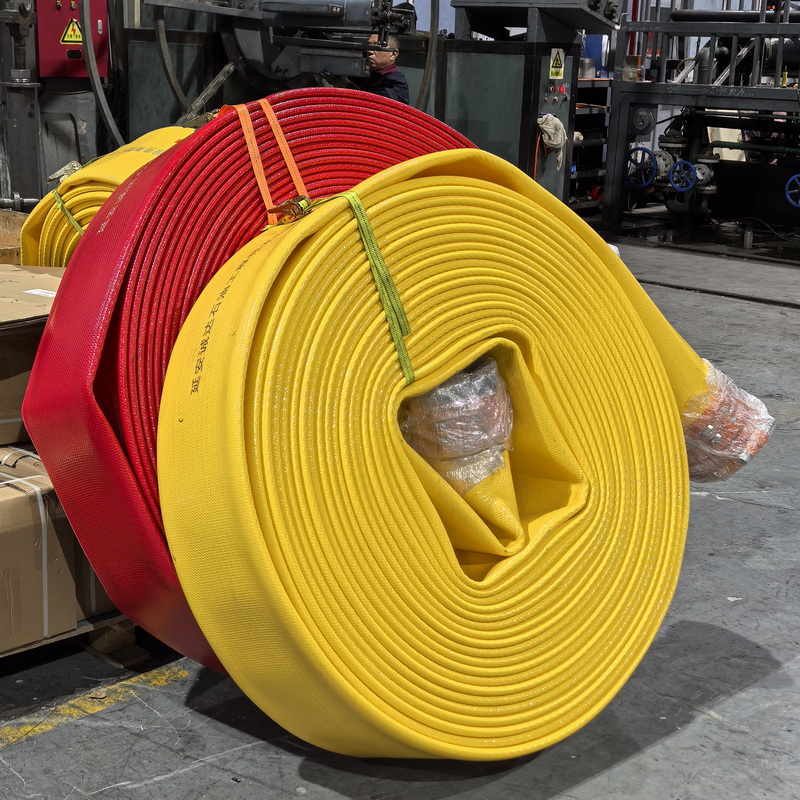
From an industry expert perspective, switching to TPU hoses is most successful when combined with rigorous selection and maintenance practices. [cpmacert]
- Confirm that the hose is specifically rated for concrete pumping and compatible with your system pressure (check working pressure and safety factor). [capitalrubberco]
- Match hose diameter and length to pump output and boom configuration to avoid excessive line pressure or unstable flow. [sinopulse]
- Verify compliance with relevant national or industry standards such as ASME B30.27 or equivalent local regulations. [cpmacert]
- Inspect the full length of the boom end hose before each pour for cuts, soft spots, bulges, exposed reinforcement, and coupling damage. [worksafebc]
- Include TPU hoses in a documented periodic inspection schedule, even though they wear more slowly than many rubber hoses. [sinohose]
- Remove any hose from service if you see significant abrasion, deformation, or coupling issues; do not attempt temporary repairs on pressure-bearing sections. [conforms]
- Avoid dragging hoses across sharp edges where possible; use rollers or protective sleeves in critical areas. [capitalrubberco]
- Store hoses in shaded, dry areas and avoid prolonged contact with aggressive chemicals or solvents, even though TPU is chemically resistant. [solutions.covestro]
- Coil hoses with generous radii and avoid tight kinks that can create permanent flat spots or stress points. [sunhose]
When these best practices are applied, TPU boom end hoses typically deliver superior life and more predictable performance compared with traditional rubber options, especially on high-utilization pump fleets. [sunhose]
Although TPU hoses outperform rubber in many concrete pumping scenarios, there are specific conditions where high-grade rubber compounds can still be preferable. [sinopulse]
Situations where rubber may be considered include:
- Extremely high continuous temperatures beyond the recommended range for the specific TPU grade. [solutions.covestro]
- Applications where the fleet is standardized on a particular rubber hose that already meets performance and safety requirements and TPU is not yet available in matching specifications. [sinopulse]
- Projects with very short duration and limited abrasive exposure, where initial cost is the overriding factor and lifecycle advantages are less visible. [sunhose]
An experienced supplier will help compare TPU and rubber based on actual mix design, ambient conditions, pump duty cycle, and lifecycle cost, rather than promoting a single material for every scenario. [conforms]
For global customers, Sunmoon offers customized TPU concrete pump hose solutions designed around specific project and fleet requirements. When specifying a custom hose, you should be prepared to share: [sunmoonhose]
1. Pump model and maximum working pressure. [capitalrubberco]
2. Boom configuration and typical boom end hose length. [sinopulse]
3. Concrete mix characteristics (maximum aggregate size, slump range, special admixtures). [conforms]
4. Climate conditions (temperature range, UV exposure, seasonal extremes). [sunhose]
5. Expected utilization (hours per week, project duration, mobility between sites). [capitalrubberco]
With this information, Sunmoon engineers can recommend optimized TPU compounds, reinforcement structures, and hose constructions that balance wear life, flexibility, weight, and safety margin for your specific operations. [sunmoonlayflathose]
Recommended visual: place a simple flowchart or process graphic here showing the steps from inquiry, technical consultation, design confirmation, production, to global shipment.
If your fleet is still relying on traditional rubber boom end hoses and experiencing frequent wear issues, kinks, or safety concerns, now is the ideal time to evaluate TPU-based alternatives. By partnering with a specialized manufacturer like Sunmoon, you can specify custom TPU concrete pump hoses that extend service life, improve handling, and support stronger safety performance on every pour. [sunmoonhose]
To move forward:
- Audit your current hose failure and replacement history for the last 6–12 months.
- Identify the most problematic hose diameters and lengths in your boom fleet.
- Contact Sunmoon with your technical requirements to discuss a tailored TPU boom end hose solution for your next project. [sunmoonlayflathose]
1. Are TPU concrete pump hoses compatible with standard pump couplings and clamps?
In most cases, yes: quality TPU hoses are designed with the same end fittings and outside diameters as conventional concrete pump hoses, but you should always verify coupling compatibility and pressure ratings with the manufacturer before use. [sinopulse]
2. How much longer do TPU hoses typically last than rubber hoses in concrete pumping?
Service life depends on mix design, handling, and inspection practices, but TPU layflat and slurry hoses often deliver several times the abrasion life of comparable rubber hoses in harsh environments, and similar gains can be observed for TPU concrete pump hoses under severe wear. [sinohose]
3. Can TPU hoses handle cold climates and freeze–thaw cycles?
Yes, one of the strengths of TPU is its ability to stay flexible at low temperatures, which helps reduce kinking and cracking in cold climates, provided the hose is drained and stored according to the manufacturer's recommendations. [sunhose]
4. Do TPU hoses require special cleaning procedures compared to rubber hoses?
No special cleaning chemistry is required, but as with rubber hoses, you must follow best practices to avoid trapped air, blockages, or unsafe use of compressed air, which can lead to hose whip regardless of the hose material. [worksafe.qld.gov]
5. Are TPU concrete pump hoses suitable for all types of concrete mixes?
TPU hoses can handle a wide range of standard and high-performance concrete mixes, but for highly specialized or extreme-temperature mixes, your hose supplier should review the mix design and operating conditions to confirm suitability or recommend a specific hose construction. [solutions.covestro]
1. Covestro – Thermoplastic Polyurethane overview and performance characteristics. <https://solutions.covestro.com/th/materials/thermoplastic-polyurethane> [solutions.covestro]
2. Sunhose – PVC vs Rubber vs TPU layflat hose performance and adoption trends. <https://www.sunhose.com/layflat-hoses-decoded-why-pvc-rubber-and-tpu-cater-to-different-needs/> [sunhose]
3. Sunmoon – TPU layflat hose product description and technical features. <https://www.sunmoonhose.net/tpu-layflat-hose/> [sunmoonhose]
4. Sunhose – TPU hose flexibility, chemical resistance, and durability. <https://www.sunhose.com/tpu-hose/> [sunhose]
5. Industry blog – Abrasion resistance of TPU layflat hose vs rubber. <https://www.sunghose.com/blog/what-is-the-abrasion-resistance-of-tpu-lay-flat-hose-472402.html> [sunghose]
6. Industry article – TPU vs Nitrile rubber abrasion resistance in firefighting applications. <https://www.sinohose.com/tpu-vs-nitrile-rubber-which-material-offers-better-abrasion-resistance-for-firefighting.html> [sinohose]
7. Capital Rubber – Concrete pumping hose selection and benefits. <https://capitalrubberco.com/concrete-pumping-hose-choosing-the-right-hose-for-high-pressure-construction-applications> [capitalrubberco]
8. Conforms – Concrete hose selection, inspection, and safe installation. <https://conforms.com/concrete-hose-selection-inspection-and-safe-installation/> [conforms]
9. Sinopulse – Types of concrete pump hoses and basic characteristics. <https://www.sinopulse.cn/what-are-the-different-types-of-concrete-pump-hoses/> [sinopulse]
10. WorkSafe Queensland – Piling rig concrete pumping hose whip safety alert. <https://www.worksafe.qld.gov.au/news-and-events/alerts/workplace-health-and-safety-alerts/2025/piling-rig-concrete-pumping-hose-whip-fatality> [worksafe.qld.gov]
11. WorkSafeBC – Blockage in concrete delivery system and hose whip incident investigation. <https://www.worksafebc.com/resources/health-safety/incident-investigation-report-summaries/blockage-in-concrete-delivery-system-caused-hose-to-whip-and-strike-worker> [worksafebc]
12. CPMA – Concrete pump safety standards and ASME B30.27 background. <https://cpmacert.com> [cpmacert]
13. Sunmoon-related TPU vs NBR vs PVC article – abrasion life and flexibility data. <https://sunmoonlayflathose.com/blogs/news/tpu-vs-nbr-vs-pvc-how-to-choose-the-right-layflat-hose-for-your-project> [sunmoonlayflathose]


