

Views: 222 Author: Loretta Publish Time: 2026-01-06 Origin: Site


Content Menu
>> Tube
>> Pipe
>> Hose
● How Tube, Pipe and Hose Are Sized
● Materials and Typical Applications
● Standards and Regulatory Frameworks
● Key Technical Differences at a Glance
● How to Choose Between Tube, Pipe and Hose
>> Step 1: Define Function and Installation
>> Step 2: Check Pressure, Temperature and Media
>> Step 3: Consider Lifecycle Cost and Maintenance
● Where TPU Layflat Hose Fits In
>> TPU Layflat Hose Characteristics
>> Typical TPU Layflat Hose Applications
● Practical Selection Examples
● Get Expert Help Selecting the Right Hose
● FAQs
>> 1. What is the main difference between tube, pipe and hose?
>> 2. Why is tube measured by outside diameter while pipe uses nominal size?
>> 3. When should hose be selected instead of pipe or tube?
>> 4. What are the advantages of TPU layflat hose?
>> 5. Can TPU layflat hose replace steel pipe in every application?
Tubes, pipes and hoses all move fluids, gases or even solids, but they are engineered for different functions, standards and installation conditions. Understanding these differences helps engineers, buyers and maintenance teams choose safer, longer‑lasting and more economical flow solutions.[1][2][3][4]

Tubes, pipes and hoses are all hollow components that form part of a fluid or gas transfer system. Their geometry, rigidity and typical applications, however, are significantly different.[2][3][4][1]
Tube is a hollow product with a smooth surface, precise dimensions and tighter tolerances than pipe, and it can be round, square or rectangular. Tubes are generally rigid or semi‑rigid and often used where accurate dimensions, structural performance or appearance are critical.[5][6][7][1]
Pipe is a cylindrical conduit with a circular cross‑section that is primarily used to transport fluids and gases in process and infrastructure systems. Pipe is usually rigid and defined by standardized nominal sizes and wall thickness schedules.[4][7][8][1]
Hose is a flexible conduit, usually round, designed to convey liquids, gases or solids where movement, vibration or frequent connection and disconnection must be accommodated. Hoses are commonly made from rubber, plastics or TPU and are often reinforced to meet specific pressure and durability requirements.[3][9][10][1]
Correct sizing is a key difference between tube, pipe and hose because it affects flow rate, pressure drop and connection compatibility. Each product uses a different sizing basis, which can cause confusion if not clearly understood.[7][8][4][5]
Tubes are defined by actual outside diameter (OD) and wall thickness, with tight dimensional tolerances. This precision makes tube sizing straightforward for engineering calculations and CAD modeling.[8][11][5]
- Tube sizes are typically expressed as OD × wall thickness (or gauge), for example 25.4 mm × 2.0 mm.[5][8]
- The nominal OD of a tube closely matches the measured OD, which simplifies fit‑up with clamps, fittings and structural components.[8][5]
Because of these characteristics, tubes are widely used in instrumentation, heat exchangers, medical devices and structural assemblies where tolerances must be tightly controlled.[6][4]
Pipes are specified by nominal pipe size (NPS) or DN (metric) and a schedule number that defines wall thickness. Nominal size is a standardized designation and is not equal to the pipe's actual OD.[4][7][8]
- For example, a 1¼″ nominal pipe has an OD of about 1.66″, not 1.25″.[4][8]
- The schedule (such as Sch 40 or Sch 80) determines wall thickness, pressure rating and weight per unit length.[7][4]
Pipe dimensions and pressure capabilities are governed by organizations such as ASTM, ASME, ANSI and API, which ensures interoperability across fittings, valves and flanges.[6][4]
Hoses are most often specified by inside diameter (ID) because the ID directly influences flow capacity and velocity. Wall thickness depends on the tube material and reinforcement design, which together determine working pressure and flexibility.[9][12][1][3]
- Typical hose specifications include ID, working pressure, burst pressure and temperature range.[3][9]
- For TPU layflat hose, ID, working pressure, weight per metre and recommended maximum working length are critical parameters for project design.[13][9]
Material choice determines mechanical performance, chemical resistance, temperature range and cost. Tubes, pipes and hoses each have common material families that align with specific industries and operating environments.[2][6][4]
Tubes are commonly produced in stainless steel, copper alloys, carbon steel, aluminum and engineering plastics. These materials support both pressure service and structural applications.[6][4]
- Heat exchangers and condensers use metallic tubes to combine high thermal conductivity with mechanical strength.[4][6]
- Medical and instrumentation systems rely on precision stainless or copper tubes for clean internal surfaces and leak‑tight connections.[8][6]
- Structural tubing provides predictable mechanical properties for frames, railings and architectural elements.[5][7]
Pipes are typically manufactured from carbon steel, stainless steel, ductile iron, PVC, CPVC, HDPE or concrete. Material choice is driven by the medium, pressure, temperature and installation environment.[8][4]
- Carbon steel and stainless steel pipes dominate in oil and gas, petrochemical, power and industrial process systems.[6][4]
- PVC, CPVC and HDPE are widely used in water, wastewater and chemical service at moderate conditions.[7][4]
- Concrete and large‑diameter steel pipes carry municipal water and other bulk fluids over long distances.[4][8]
Hoses use combinations of inner tube, reinforcement and cover materials to achieve specific performance targets. This layered construction enables high flexibility with controlled pressure capability.[1][3]
- Inner tubes may be rubber, PVC, polyurethane (PU/TPU), PTFE or thermoplastic blends, selected for fluid compatibility and temperature.[12][9]
- Reinforcement layers can include textile yarns, steel wire braid, spiral wire or aramid fibres for pressure resistance and kink control.[9][13]
- Outer covers are formulated for abrasion, weather, UV or chemical resistance, depending on application.[10][9]
TPU layflat hose in particular is valued for lightweight, abrasion‑resistant and flexible long‑distance transfer in water, mining, construction and emergency systems.[10][9]
Standards ensure that tubes, pipes and hoses meet minimum safety and performance criteria and remain compatible across global supply chains. Different product types fall under different sets of technical rules.[5][7][6][4]
Tube standards focus on dimensional accuracy, mechanical properties and surface finish.[5][6]
- Key specifications include various ASTM standards for seamless and welded tubing, such as ASTM A213, A269 and A511.[6][4]
- In pressure equipment and heat transfer components, ISO and EN standards supplement ASTM requirements.[7][4]
Pipe design is controlled by standards that specify dimensions, pressure ratings and manufacturing quality.[7][4]
- ASME B36.10M and B36.19M define dimensions for carbon and stainless steel pipes.[4][6]
- Codes such as ASME B31.3 and various API documents cover design, fabrication and inspection in process and energy sectors.[7][4]
Hose standards combine fluid power performance criteria with application‑specific safety rules.[2][3]
- International standards from SAE, ISO and EN define requirements for hydraulic and industrial hoses.[3][2]
- Additional regulations apply to special applications, including DOT for vehicle brake hoses and FDA criteria for food‑grade hoses.[10][3]
The following table brings the main technical differences together for fast comparison.[1][2]
Aspect | Tube | Pipe | Hose |
Geometry | Round, square or rectangular; precise OD and wall. | Round only; defined by nominal size and schedule. | Round; multilayer construction with tube, reinforcement and cover. |
Rigidity | Generally rigid or semi-rigid. | Rigid. | Flexible or semi-flexible. |
Sizing basis | Actual OD and wall thickness. | Nominal size (NPS/DN) plus schedule. | ID, pressure rating and construction. |
Typical materials | Stainless, copper, carbon steel, plastics. | Carbon steel, stainless, plastic, concrete. | Rubber, PVC, TPU, PTFE, thermoplastic. |
Typical uses | Heat exchangers, instrumentation, structures. | Process piping, gas lines, water mains. | Hydraulics, water transfer, chemicals, cleaning, firefighting. |
Standards | ASTM, ISO, EN for tubing. | ASTM, ASME, ANSI, API. | SAE, ISO, EN, DOT, FDA as applicable. |
Selection involves balancing mechanical, hydraulic and operational requirements rather than focusing on a single parameter. A structured approach helps engineers and buyers match product type to real‑world conditions.[2][3][4]
- When the line is fixed, rigid and part of a permanent process, tube or pipe is usually suitable.[2][4]
- When the line must flex, move or route through confined spaces, hose is often the better choice.[2][3]
- Very high pressure or very high temperature conditions may require heavy‑wall pipe or tube in specific materials.[2][6]
- Systems with pressure pulsation, vibration or frequent movement benefit from correctly rated hydraulic or industrial hose.[3][2]
- Aggressive chemicals or extreme temperatures may call for stainless tube, PTFE hose or lined pipe.[12][6]
- Rigid piping can deliver long service life but may be expensive and time‑consuming to modify when processes change.[7][4]
- Hoses provide fast installation and replacement, which is especially valuable in mobile machinery, temporary systems and remote projects.[9][2]
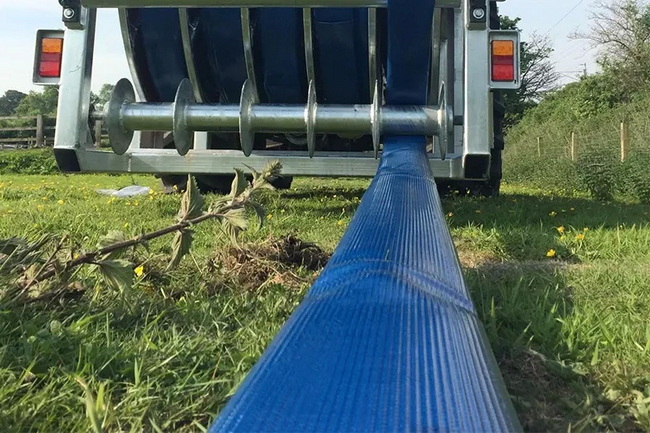
Thermoplastic polyurethane (TPU) layflat hose offers a modern alternative to conventional rigid lines and traditional hoses in long‑distance transfer systems. Its construction delivers a combination of strength, flexibility and low weight.[13][12][9]
TPU layflat hose is typically manufactured from extruded TPU with circular woven polyester reinforcement. This design gives high abrasion resistance, tensile strength and flexibility across a wide temperature range.[12][9]
- The hose lies flat when depressurised for compact storage, handling and transport.[13][9]
- Under pressure, it forms a round flow path and maintains stable internal diameter within its working range.[13][9]
TPU layflat hose is widely used where light weight, rapid deployment and long working lengths are critical.[14][9]
- Agriculture and irrigation, for long‑distance water supply over abrasive or uneven terrain.[10][9]
- Mining and construction, for dewatering, dust suppression and temporary water supply.[14][9]
- Oil and gas support, emergency water networks and firefighting systems, where fast deployment is key.[14][9]
Use cases help clarify the practical boundaries between tube, pipe and hose. In many systems, a combination of all three is used for optimum performance.[3][2][4]
- Hydraulic power units often use rigid tube or pipe for main fixed runs, combined with flexible hydraulic hoses at moving joints.[2][3]
- Temporary or seasonal municipal water transfer can be implemented using TPU layflat hose rather than constructing permanent pipelines.[14][9]
- Compact OEM equipment may combine precision bent tubes between fixed components with short flexible hoses for service access and movement.[2][6]
Selecting between tube, pipe and hose is the foundation of a reliable fluid transfer system, but translating project data into a final specification requires engineering support. Partnering with an experienced TPU layflat hose manufacturer allows project teams to align medium, pressure, temperature, length and connection details with a robust product recommendation.[14][9][2][4]
Engineering‑driven TPU layflat hose specialists can review drawings and operating conditions, suggest appropriate hose sizes and pressure classes, and propose coupling and manifold solutions that match regional standards. Send your project requirements, including fluid type, pressure, temperature range, required lengths and installation environment, to a dedicated TPU layflat hose team to receive a fast, targeted quotation and technical proposal for your next project.[10][14][9]
The main difference is that tube and pipe are generally rigid products with standardized dimensions, while hose is flexible and designed to accommodate movement or vibration. Tube focuses on precise OD and wall thickness, pipe uses nominal sizes and schedules, and hose is usually specified by ID and pressure rating.[1][8][3][4]
Tube is used where accurate fit and strength calculations are critical, so its OD is tightly controlled and given as the actual value. Pipe dimensions evolved from historical internal bore sizing, and today nominal size plus schedule numbers maintain compatibility with existing piping systems and components.[5][8][4]
Hose is usually selected when the line must flex, move or route through complex spaces, or when vibration needs to be isolated. It is also suitable for temporary and rapidly deployed systems, such as construction sites, mining operations and emergency water transfer.[14][3][9][2]
TPU layflat hose offers high tensile strength, abrasion resistance, chemical resistance and flexibility with low weight. It lies flat for storage and transport, then becomes round under pressure, making it effective for long‑distance water transfer, dewatering, irrigation and firefighting lines.[12][10][9]
TPU layflat hose can replace steel pipe in many temporary or semi‑permanent transfer systems where high flow, fast deployment and flexibility are critical, but it is not suitable for every high‑temperature or ultra‑high‑pressure service. Final selection should consider medium, pressure, temperature, mechanical protection and regulatory requirements, and should be confirmed with the hose manufacturer's engineering team.[12][14][9]
[1](https://www.sunhose.com/difference-between-tube-pipe-and-hose/)
[2](https://www.stauffusa.com/en/blog/knowledge/tube-and-pipe-vs-hose)
[3](https://www.carolinahoseandhydraulics.com/2-key-differences-between-hoses-and-tubes)
[4](https://www.engineeringtoolbox.com/pipes-tubes-d_347.html)
[5](https://www.valmonttubing.com/products-and-solutions/welded-steel-tubing/tubing-solutions/od-vs-nominal-pipe-size)
[6](https://www.hosemaster.com/news/fitting-knowledge-how-pipe-differs-from-tube-42662)
[7](https://wagnercompanies.com/resources/blog/company/differences-between-pipe-tube)
[8](https://www.industrialmetalsupply.com/pipevstube)
[9](https://www.sunhose.com/tpu-layflat-hose/)
[10](https://www.eastophose.com/news_detail/18.html)
[11](https://www.jtcmetals.com/blog/tube-vs-pipe-the-differences-explained-in-plain-english/)
[12](https://products.kuriyama.com/item/polyurethane-discharge-hoses/high-flow-extruded-tpu-layflat-discharge-hose/oftrh-1600)
[13](https://www.hosecraftusa.com/model/UD5_TPU_TRANSFER_LAYFLAT_HOSE)
[14](https://www.austinhose.com/itemdetail/AH-16-TPU-660FT-M-A)


