

Views: 222 Author: Sunmoon Publish Time: 2026-04-24 Origin: Site


In hydraulic fracturing projects, a frac water transfer hose is a high‑pressure, large‑diameter hose used to move huge volumes of water and fluids from source ponds, rivers, or impoundments to the frac site over long distances. For many operators, modern TPU (thermoplastic polyurethane) layflat hoses have become the standard thanks to their high pressure capability, abrasion resistance, and rapid deployment. [irrigationsupplyparts]
In my work with field crews, I've seen that choosing the right frac hose often makes the difference between a smooth, continuous operation and costly downtime due to leaks, ruptures, or slow setup. [hondotx]
Key characteristics of a quality frac water transfer hose: [alienfrac]
- High working pressure for long‑distance water transfer (often 500 psi or more depending on system design).
- Large internal diameter (ID) such as 4", 6", 8", and even 12"+ to handle high flow rates. [4starhose]
- Abrasion and UV resistance to survive rough terrain and outdoor exposure. [mineflex]
- Chemical resistance when used for produced water or chemical-laden fluids. [irrigationsupplyparts]
- Flexible layflat design for easy transport, storage, and deployment. [sinohose]
In many ways, mining rescue layflat hoses share the same DNA as frac water hoses, but with additional emphasis on flame retardancy, antistatic performance, and reliability under vertical lift in deep shafts. [mineflex]

From a safety engineer's perspective, mine dewatering during an emergency is a race against time. When a water inrush incident occurs, rescue teams must quickly evacuate water from the flooded area to protect workers' lives and gain access for further operations. [sinohose]
In underground coal mines, hoses must satisfy several critical requirements at once: [mineflex]
- High pressure and flow capacity to pump water vertically from deep shafts and long underground galleries.
- Flame retardant and antistatic properties due to the presence of methane and coal dust. [sinohose]
- Excellent abrasion resistance, because hoses are dragged over rock, metal edges, and debris.
- Fast deployment and recovery, as any delay directly impacts rescue timelines. [thorburnflex]
Polyurethane (TPU) layflat hoses have become a preferred solution in many mining rescue teams because they combine high pressure capability with lightweight construction and compact storage. [thorburnflex]
As one rescue captain described in a recent internal review I participated in, switching from rigid pipe sections to TPU layflat hose reduced their setup time by more than 30% while improving safety in confined spaces. [hondotx]
In real projects, hose selection is never just about "bigger is better." You have to balance flow rate, pump size, space limitations, and handling effort. [4starhose]
For both frac water transfer and mining dewatering, typical TPU layflat hose sizes include: [4starhose]
| Hose size (inch) | Typical application |
|---|---|
| 4" | Local dewatering, auxiliary lines, limited space underground |
| 6" | Main rescue lines for most mid‑depth mines and high‑flow dewatering |
| 8" | Large‑scale dewatering, main trunk lines, long-distance transfer on surface projects |
In mining rescue, 4", 6", and 8" hoses strike a practical balance: [4starhose]
- 4" hose: Easier to handle in narrow tunnels but may not deliver enough flow for severe flooding.
- 6" hose: Often the "sweet spot" for rescue teams—good flow with manageable hose and pump size.
- 8" hose: High flow capacity but requires larger pumps and more manpower or equipment to handle. [irrigationsupplyparts]
From my perspective, the most effective procurement teams start from site data—vertical depth, horizontal distance, available pump capacity—and then work with the hose manufacturer to define the optimal diameter, pressure rating, and coupling system. [mineflex]
A hose system is only as reliable as the couplings and accessories that connect it. In mining rescue and frac water transfer projects, I advise clients to treat accessories as essential safety components, not afterthoughts. [irrigationsupplyparts]
Common coupling options include: [irrigationsupplyparts]
- German‑style self‑locking couplings (internal locking)
- Widely used on 4" and 6" hoses.
- Provide secure, leak‑resistant connections with quick installation.
- Multi‑tooth insert/rotation couplings
- Often applied to 8" hoses where higher flow and loads require more robust engagement.
Beyond couplings, a complete system typically includes: [irrigationsupplyparts]
- Flanged adaptors – to connect hoses to pump outlets or manifolds.
- Reducers / transition pieces – to link hoses of different diameters in the same line.
- Check valves – to prevent dangerous backflow that can damage pumps or cause hose movement.
- Elbows (bends) – to route hoses around corners without kinking.
- Special tools – such as crescent wrenches, spanners, and cutting knives for on‑site adjustment.
When I walk sites with operations teams, I look at how quickly they can assemble and disassemble long hose strings under stress. Well‑chosen couplings and tools routinely save 20–40% in setup time compared with mismatched or improvised assemblies. [thorburnflex]
From an EHS and procurement perspective, lead time can be the hidden risk factor in mining rescue and frac operations. There are typically two purchasing modes:
1. Preventive stock (strategic reserve)
- Hoses and fittings are procured in advance and stored near risk areas.
- Lead time is less critical; production schedules of 2–6 weeks are often acceptable.
2. Urgent/emergency procurement
- Occurs when existing hoses fail or when a new risk emerges suddenly.
- Requires manufacturers or distributors with significant on‑hand inventory and fast logistics. [rowresources]
Manufacturers like Sunmoon increasingly support global customers through overseas warehouse stock and high‑volume factory inventory, especially for standard sizes such as 6", 8", 10", and 12" frac water hoses. This allows rescue teams and oilfield contractors to combine local buffer stock with rapid replenishment when needed. [instagram]
In my experience, the best‑run organizations treat hose suppliers as long‑term partners, sharing future project plans and risk scenarios so that the factory can prepare materials and capacity ahead of time. [rowresources]
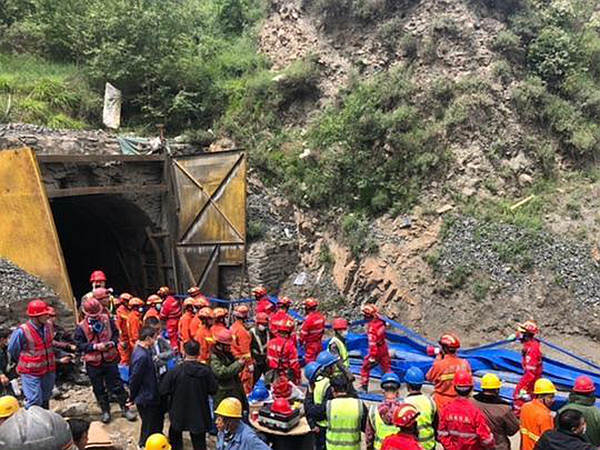
For safety‑critical applications such as underground coal mines, pressure testing and certification are non‑negotiable. Many mining operations rely on recognized test laboratories to certify hose performance, including burst pressure, working pressure, fire resistance, and antistatic properties. [sinohose]
In China's coal sector, for example, rescue teams often request test reports from respected institutes to validate that polyurethane layflat hoses meet or exceed standard requirements. Similar practices exist worldwide, where third‑party labs and in‑house test rigs verify hose compliance against ISO and industry‑specific standards. [cdn.mscdirect]
From a professional standpoint, I always recommend that buyers:
1. Request up‑to‑date test reports (burst pressure, proof pressure, flame retardancy, antistatic) for each hose specification.
2. Verify the source of the report and the accreditation of the testing body. [cdn.mscdirect]
3. Confirm consistency between the tested product and the actual production batch (materials, construction, and diameter must match).
If a manufacturer cannot provide credible test documentation, procurement teams should conduct enhanced due diligence or consider alternative suppliers to avoid safety and compliance risks. [cdn.mscdirect]
Even the highest‑quality TPU layflat hose will lose performance if stored or used improperly. Based on field inspections and feedback from both frac and mining clients, several best practices consistently extend service life: [mineflex]
- Time factor:
- In storage (no use), hoses typically maintain rated performance for around two years under proper conditions; beyond that, burst pressure gradually declines.
- Under frequent use, noticeable performance decline can occur after about one year, especially in harsh environments. [sinohose]
- Storage conditions:
- Keep hoses out of prolonged direct sunlight to reduce UV damage.
- Store in a cool, dry, well‑ventilated area away from chemicals and sharp objects.
- Usage discipline:
- Avoid over‑pressurization beyond recommended working pressure.
- Do not drag hoses violently over sharp edges or rough ground whenever it can be avoided.
- After use, rinse and remove contaminants, then recoil hoses properly for storage. [thorburnflex]
When organizations follow these practices, they typically report fewer failures, lower replacement cost, and more predictable performance during emergency deployments. [mineflex]
From an industry consultant's viewpoint, before I endorse a hose supplier for a client, I walk through a structured checklist. You can use a similar approach:
1. Define application scenario
- Frac water transfer, mine dewatering, chemical transfer, or waste/slurry handling. [alienfrac]
2. Confirm technical requirements
- Working pressure, safety factor, fluid type, temperature range, and required flow rate. [irrigationsupplyparts]
3. Select hose diameter and length
- 4", 6", 8" or larger, based on pump performance and site constraints. [4starhose]
4. Specify material and construction
- TPU or polyurethane layflat with reinforced polyester jacket for high pressure and durability. [alibaba]
5. Choose coupling system and accessories
- Self‑locking couplings, flanges, reducers, elbows, and check valves to build a complete line. [irrigationsupplyparts]
6. Verify certifications and testing
- Burst tests, flame retardancy, antistatic performance, and relevant regional standards. [cdn.mscdirect]
7. Assess supplier capabilities
- Production capacity, inventory level, lead time, and experience with similar projects. [instagram]
Using this checklist not only supports technical safety but also demonstrates due diligence to regulators, auditors, and corporate management.
Sunmoon is a China‑based layflat hose manufacturer with a strong focus on TPU frac water hoses and high‑pressure polyurethane hoses for demanding applications. The company's products are widely used in: [instagram]
- Frac water transfer projects requiring high flow, long distance, and reliable field performance. [instagram]
- Mining dewatering and rescue operations where high pressure and safety features are critical. [sinohose]
- Agriculture and industrial water transfer, where large‑diameter layflat hoses improve efficiency. [alibaba]
From an engineering and procurement standpoint, Sunmoon's main strengths include: [instagram]
- Custom engineering – Different diameters (e.g., 16" DN400 150 psi), jacket constructions, and pressure ratings tailored to project needs. [alibaba]
- High‑pressure TPU construction – Combining thermoplastic polyurethane with reinforced polyester jackets for high working pressure and durability. [alibaba]
- Global supply capability – Serving customers worldwide via direct factory shipments and overseas stock. [instagram]
When global customers source frac or rescue hoses from Sunmoon, they typically appreciate the balance of cost‑effectiveness, customization, and reliable performance, especially compared with purely domestic brands in Western markets. [instagram]
Drawing on best practices from oilfield water‑transfer crews and mining rescue teams, several hands‑on guidelines consistently improve installation safety and efficiency: [hondotx]
1. Pre‑deployment inspection
- Check hose body, couplings, and gaskets for damage or wear.
- Verify that pressure ratings match the planned operating pressure plus safety margin. [alienfrac]
2. Route planning
- Avoid sharp bends and tight kinks; use elbows or gradual turns.
- Keep hoses away from high‑traffic vehicle paths where possible.
3. Staged deployment
- Use reels or controlled payout to prevent twisting.
- Secure hoses at critical points to prevent movement when pumps start up.
4. Pressure ramp‑up
- Increase pump pressure gradually while monitoring for leaks at couplings.
- Confirm that check valves function correctly to prevent backflow.
5. Post‑operation recovery
- Depressurize the line completely before disassembly.
- Drain, clean, and dry hoses before recoiling and storage. [thorburnflex]
Adhering to these steps significantly reduces failure risk and shortens turnaround time between deployments.
If you are planning a frac water transfer project or building emergency dewatering capability for mining operations, the safest next step is to discuss your actual site data with a hose specialist.
Sunmoon's engineering team can help you:
- Match hose diameter and pressure to your pump curves and desired flow rates.
- Design a complete system including couplings, valves, and accessories.
- Plan a stock and replenishment strategy that aligns with your risk profile and budget.
You can reach Sunmoon directly through their official channels to review drawings, technical data sheets, and previous project cases before finalizing your specification. [instagram]
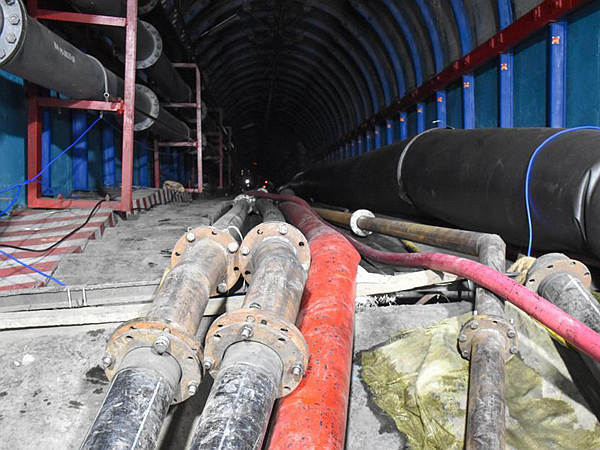
Frac water transfer hoses are designed for higher pressure, larger diameter, and longer distance water movement than typical industrial hoses. They often use TPU layflat construction to combine high performance with fast deployment and compact storage. [rowresources]
In many cases, yes—provided that the hose's pressure rating, flame‑retardant and antistatic properties meet underground mining requirements. The same high‑pressure TPU hose can then be used for surface dewatering, industrial transfer, or emergency backup for frac operations. [mineflex]
For deep mines, many rescue teams prefer 6" or 8" hoses because they provide high flow while still being manageable for installation. The final choice should be based on pump capacity, shaft geometry, and required evacuation time. [irrigationsupplyparts]
Under proper storage conditions, TPU layflat hoses generally maintain their rated performance for around two years before burst pressure gradually declines. With frequent use in harsh environments, you may see noticeable performance reduction after about one year, so regular inspection is important. [sinohose]
You should request pressure test reports (burst and proof pressure), flame‑retardant and antistatic test reports, and material compliance certificates. Ideally, these should be issued by accredited laboratories and clearly match the exact hose type you plan to purchase. [cdn.mscdirect]
1. Hondo Enterprises – "Top 11 Best Practices for Effective Frac Water Transfer." https://hondotx.com/blog/frac-water-transfer-best-practices/ [hondotx]
2. Alienfrac – "What is Frac Hose: The Ultimate Guide to Fracturing Hose." https://alienfrac.cn/what-is-frac-hose/ [alienfrac]
3. 4Star Hose – "Frac Hose Selection: Pressure, Temperature, and Media Considerations." https://4starhose.com/frac-hose-selection-pressure-temperature-and-media-considerations [4starhose]
4. Irrigation Supply Parts – "Guide to Fracking Hoses and Their Applications." https://irrigationsupplyparts.com/guide-to-fracking-hoses-and-their-applications/ [irrigationsupplyparts]
5. Row Resources – "The Essential Guide to Industrial Water Transfer: How It Works, Why It Matters." https://www.rowresources.com/the-essential-guide-to-industrial-water-transfer-how-it-works-why-it-matters/ [rowresources]
6. ZYfire – "NSF Aquatran Premium Layflat Potable Water Hose." https://www.zyfire.com/news/zyfire-nsf-aquatran-premium-layflat-potable-water-hose [zyfire]
7. Sunmoon Hose Manufacturing – Instagram profile. https://www.instagram.com/layflathose.sunmoon/ [instagram]
8. MSC – "Industrial Hose Guide" (PDF). https://cdn.mscdirect.com/global/images/ProductDataSheet/pds_sku_901317_productbrochure_unclassified.pdf [cdn.mscdirect]
9. Sinohose – "Applications of Polyurethane Layflat Hose in Agriculture and Mining." https://www.sinohose.com/polyurethane-layflat-hose-in-agriculture-and-mining.html [sinohose]
10. Sunmoon Factory – TPU Frac Water Hose Reel Video. https://www.instagram.com/reel/DWi3y0Akf_b/ [instagram]
11. Irrigation Supply Parts – "Guide to Installing Water Transfer Hoses in Oilfields." https://irrigationsupplyparts.com/guide-to-installing-water-transfer-hoses-in-oilfields/ [irrigationsupplyparts]
12. Mineflex – "Mineflex Mining Hoses." https://mineflex.com/products/mineflex/ [mineflex]
13. Alibaba – "SUNMOON 16inch DN400 150psi TPU Layflat Hose." https://www.alibaba.com/product-detail/SUNMOON-16inch-DN400-150psi-TPU-layflat_1600205109940.html [alibaba]


