

Views: 222 Author: Loretta Publish Time: 2026-01-07 Origin: Site


Content Menu
● Why Non–Food Grade Hoses Are Risky
● Core Benefits of Food Grade Hose
● Common Food Grade Hose Materials
>> Metal and Reinforcement Components
● Key Performance Properties of Food Grade Hose
● Typical Applications of Food Grade Hose
● Food Grade Standards and Regulations
● Food Grade Suction vs Discharge Hose
● TPU Layflat Hose in Food Grade and Potable Water Applications
● Practical Checklist: How To Choose the Right Food Grade Hose
● Materials vs Typical Food Grade Uses
● Optimize Your Food Grade and TPU Layflat Hose System
>> FAQ 1: How do I know if a hose is truly food grade?
>> FAQ 2: Can I use a garden hose for drinking water or food transfer?
>> FAQ 3: How often should food grade hoses be replaced?
>> FAQ 4: Is TPU layflat hose suitable for hot cleaning and disinfection?
>> FAQ 5: What documents should I request from a food grade hose supplier?
Food and beverage producers, dairy plants, breweries, and pharmaceutical manufacturers rely on food grade hose to protect product safety and brand reputation from raw material intake to final packaging. Food quality hose prevents contamination, preserves taste and aroma, and supports compliance with major food safety frameworks across different regions.
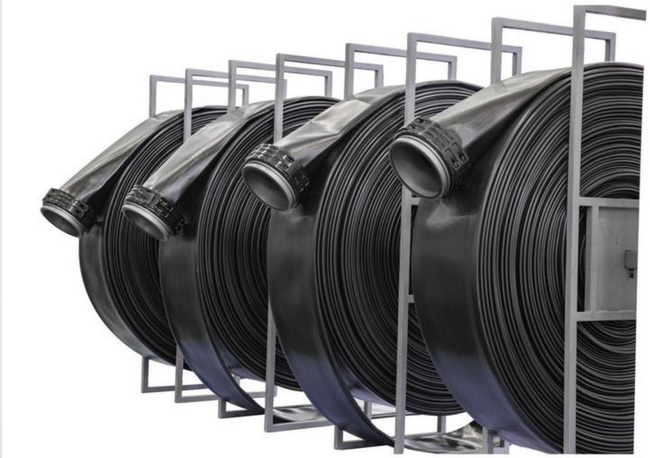
A food grade hose is a flexible conduit designed for the transfer of food, beverages, and pharmaceutical media without adding harmful substances, off‑odors, or unwanted flavors. These hoses are engineered so that contact layers, reinforcement, and covers work together to provide hygienic, traceable, and repeatable performance over long operating cycles.
Key characteristics of food grade hose include:
- Use of approved polymers and additives suitable for direct or indirect food contact.
- Smooth, easy‑to‑clean inner bores that minimize residue and biofilm build‑up.
- Documented compliance with recognized food contact and potable water standards.
Non‑food hoses often contain plasticizers, pigments, and fillers that have never been evaluated for repeated food contact and can leach into the product, especially under heat, fat, or acidic conditions. This leaching can cause off‑tastes, discoloration, or long‑term exposure to substances that may be unacceptable for food or drinking water.
Additional risks include:
- Bacterial growth caused by rough inner surfaces, micro‑cracks, or poor cleanability along the hose path.
- Particle shedding from degraded rubber or PVC into high‑shear or abrasive flows over time.
- Non‑compliance during audits, potential product recalls, and reputational damage to food and beverage brands.
Purpose‑built food grade hoses are designed to achieve hygiene, operational efficiency, and regulatory compliance at the same time. Choosing the right construction can reduce cleaning time, waste volumes, and unplanned downtime in sanitation‑intensive plants.
Key benefits:
- Hygiene and cleanability: Smooth, non‑porous inner bores make clean‑in‑place and sanitation cycles faster and more consistent.
- Odor and taste neutrality: Inert compounds protect flavor profiles in beer, wine, dairy, juices, and other sensitive products.
- Temperature and chemical resistance: Well‑chosen materials tolerate both hot cleaning solutions and cold or frozen media within specified limits.
- Mechanical durability: Abrasion‑resistant covers and robust reinforcement layers withstand repeated handling and contact with rough surfaces.
Food grade hoses are made from several polymer families, each offering a specific balance of flexibility, temperature capability, and chemical resistance. The final choice depends on the product, the cleaning regime, and the mechanical demands in the production line.
Thermoplastics are widely used for food grade hoses because of their processability, surface finish, and, in some cases, transparency. Many constructions combine thermoplastic tubes with reinforcement wires or fibers for pressure capability.
Main thermoplastic options:
- Polyurethane (TPU): High abrasion resistance, excellent flexibility, good low‑temperature performance, and formulations that can be designed for food and potable water contact.
- PVC in food grade quality: Cost‑effective and fairly flexible, suitable for light‑duty water and beverage transfer when the formulation is specifically developed for food contact.
- PTFE: Exceptional chemical and temperature resistance, ideal for aggressive cleaning agents, high‑temperature oils, and critical pharmaceutical media.
Rubber and silicone hoses remain common where elasticity, temperature resistance, or kink resistance are crucial in daily operation. These hoses are often found in dairy, brewery, and washdown duties.
Typical choices:
- EPDM and NBR food‑grade rubber: Robust, flexible, and suitable for many aqueous and certain oily media when the compound is designed for repeated food contact.
- Silicone: Excellent high‑temperature stability, pliability, and inertness, often used in applications that demand very low extractables and frequent thermal cycling.
Metal is generally not used as the wetted inner surface in hygienic food hoses but plays a key role in reinforcement and connections. Stainless steel wire helices and couplings give strength, vacuum resistance, and reliable mechanical anchoring while resisting corrosion and maintaining cleanability.
Several performance properties determine whether a hose will operate reliably and safely in a specific food or beverage process. Matching these parameters to the real operating environment helps avoid premature failures.
Important properties include:
- Non‑toxicity: Materials must not release harmful substances into the product within defined limits, even after repeated use and cleaning.
- Flexibility and kink resistance: Adequate bend radius and resilience reduce operator fatigue and the risk of mechanical damage or flow restriction.
- Abrasion resistance: Durable inner and outer layers protect against wear from powders, grains, sugar crystals, or rough handling environments.
- Temperature range: Food grade hoses are specified for particular continuous and peak temperatures during production, cleaning, and storage.
- Odor resistance: Low permeability and inert surfaces help maintain the original aroma and taste of sensitive products.
Food grade hoses are used in many industries, from bulk food ingredient handling to high‑value nutraceutical and biotech processes. Correct application‑specific selection ensures product integrity and process reliability.
Common application areas:
- Food and beverage processing: Transfer of water, syrups, oils, sauces, sugar solutions, and powder ingredients between tanks, blenders, and fillers.
- Dairy: Milk collection, cream, yogurt, and cheese production, where bacterial control and gentle product handling are critical.
- Brewing and wineries: Wort transfer, beer and wine racking, filtration, and kegging, where carbonation and delicate flavor must be preserved.
- Potable water and plant utilities: Certified potable water hose for ingredient water, bottling operations, and temporary water supplies in processing plants.
- Pharmaceutical and biotech: Sterile transfer of active ingredients, buffers, and cleaning solutions with strict traceability and validation requirements.
Compliance with recognized standards is essential evidence that a hose is suitable for food or potable water contact. Many audit schemes and brand owners require documented conformity and traceability from hose suppliers.
Several frameworks define requirements for materials and finished hose assemblies:
- FDA 21 CFR 177.2600: U.S. regulation describing permitted elastomeric compounds and extractable limits for repeated‑use rubber articles in food processing.
- EC 1935/2004 and related EU measures: European rules for materials intended to come into contact with food, covering plastics, printing inks, and coatings.
- NSF/ANSI 51 and 61: Standards used for food equipment materials and drinking water system components, frequently applied to potable water hose.
- ISO 22000: Food safety management framework that integrates equipment choices, including hoses, into documented hazard and control plans.
Using certified hoses simplifies compliance with internal HACCP systems and external audit schemes. Certification also indicates that the manufacturer has tested and documented material performance, supporting due diligence for both equipment suppliers and brand owners.
Food grade hoses are often specialized for suction or discharge duties to handle different pressure conditions. Selecting the wrong construction can result in collapse or blistering under actual operating loads.
Key distinctions:
- Food suction hose: Typically reinforced with steel helices or strong textile layers to resist collapse when drawing product from tanks, tankers, or totes under vacuum.
- Food discharge hose: Designed to handle positive pressure from pumps to fillers, storage tanks, or loading manifolds and is often lighter and more flexible when vacuum resistance is not required.
For high‑volume and long‑distance discharge lines, tailored layflat constructions can reduce weight, simplify cleaning, and limit the number of intermediate joints.
Thermoplastic polyurethane layflat hose combines TPU's material advantages with a flat‑when‑empty geometry that minimizes storage space and eases handling. In food and potable water applications, it is used where high flow, long runs, and frequent deployment are required.
Key advantages of TPU layflat food grade hose:
- Lightweight yet robust: High tensile strength with excellent abrasion and tear resistance compared to many conventional hose types.
- Long continuous lengths: Reels of hundreds of meters reduce joints, minimize leak points, and simplify cleaning regimes in transfer systems.
- Potable water and food compatibility: Specially compounded TPU can be designed to meet relevant potable water and food‑contact standards for safe ingredient transfer.
- Fast deployment and retrieval: Flat profile allows quick laying and winding, ideal for seasonal production, mobile bottling, or temporary bypass lines.
A structured selection process helps engineers, maintenance teams, and buyers avoid under‑ or over‑specifying hoses. Following a clear checklist also supports documentation for audits and internal approvals.
Step‑by‑step selection checklist:
1. Define product and media: Clarify whether the hose will carry water, dairy, fats, acids, alcohol, sugar solutions, powders, or multiphase blends.
2. Confirm regulatory requirements: Determine which standards, customer requirements, and regional regulations apply to the equipment and final product.
3. Set temperature and pressure range: Consider normal process conditions plus cleaning extremes, surges, and any vacuum or pulsation effects.
4. Choose material and structure: Match polymer type and reinforcement (textile, wire, layflat design) to media, pressure, abrasion, and cleaning chemistry.
5. Define hose size and length: Size for required flow and acceptable pressure drop, and consider long continuous lengths for transfer lines where feasible.
6. Specify fittings and cleaning strategy: Select hygienic couplings, define cleaning procedures, and check compatibility between hose material, fittings, and all cleaning agents.
The table below summarizes common hose materials, typical operating characteristics, and where they are usually applied in food and beverage systems.
Hose material | Typical temperature window | Key strengths | Typical food applications | Compliance notes |
TPU (including layflat) | Approx. −40 °C to +70 °C (formulation dependent) | High abrasion resistance, flexibility, long continuous lengths | Potable water transfer, beverage and ingredient lines, mobile water supply | Can be formulated for potable water and food-grade requirements when properly designed |
PVC (food grade) | Around −10 °C to +60 °C (typical) | Economical, good clarity, flexible | Light-duty water, basic beverage transfer, seed and grain conveying | Must be explicitly marked as food-contact compliant to avoid plasticizer issues |
Silicone | Up to about +200 °C (grade dependent) | Excellent heat resistance, very flexible, inert | Hot filling, dairy lines, beverage and pharmaceutical fluids | Often used where high-end sanitary and biomedical standards apply |
EPDM/NBR rubber (food grade) | Broad range, many grades up to about +120 °C or higher | Tough, kink-resistant, good for high-flow lines | Dairy suction and delivery, brewery transfer hoses | Food-grade versions must be based on compliant elastomer recipes |
PTFE-lined | Often −70 °C to +260 °C (approximate) | Extreme chemical and temperature resistance | Aggressive cleaning chemicals, hot oils, critical pharma and biotech media | Used where very low extractables and high purity are mandatory |
If your plant is planning a new line or upgrading existing transfer systems, now is the time to review whether your current hoses truly meet hygiene, durability, and regulatory expectations. Work with an engineering‑driven TPU layflat hose manufacturer that can analyze your product, temperature, pressure, and cleaning profile, then recommend tailored food grade and potable water hose solutions. By sharing your detailed project requirements, you can obtain a customized hose specification, lifespan estimate, and technical support plan that improves safety, reduces downtime, and lowers total cost of ownership across global applications.
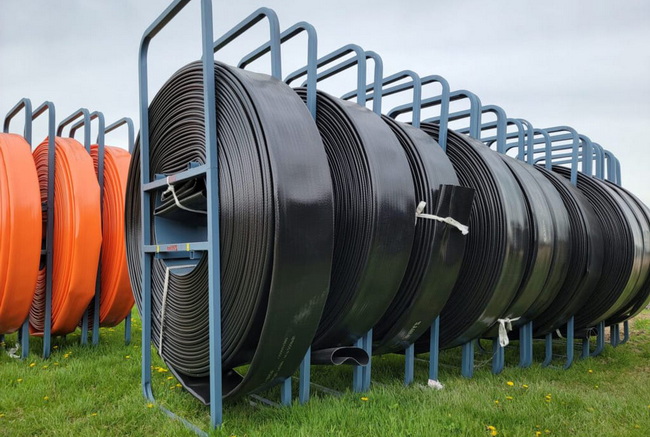
A hose is considered food grade only when its materials and construction are tested and documented against applicable food‑contact standards. Always request written declarations of conformity and supporting test data from the supplier instead of relying on generic marketing claims.
Standard garden hoses are usually not designed or certified for drinking water or food contact and may release plasticizers or other substances into the water. Only hoses explicitly described as suitable for potable water or food contact and backed by relevant approvals should be used for such applications.
Replacement intervals depend on temperature, pressure, media, cleaning methods, and mechanical stress, so a fixed time cannot cover every case. Many facilities define preventive replacement schedules based on hours in service, inspection findings, and risk level rather than waiting for visible failure.
TPU layflat hose can handle a defined temperature range and certain cleaning chemicals, which must be respected to avoid premature aging. For high‑temperature or steam‑in‑place procedures, users should confirm that the selected TPU formulation and hose design are rated for those conditions or consider alternative materials.
Important documents include declarations of compliance with relevant food‑contact regulations, material data, test reports, recommended operating limits, and cleaning instructions. For audited facilities, batch traceability information and certificates for food or potable water approvals are also recommended.


