

Views: 222 Author: Sunmoon Publish Time: 2026-05-26 Origin: Site


Frac water transfer operations are moving rapidly from rigid aluminum or HDPE pipe to TPU layflat hose, and that shift is redefining cost, safety, and deployment efficiency across shale plays worldwide. From my experience working with water transfer contractors and talking with field engineers, the choice between TPU frac water transfer hose and conventional water transfer systems is no longer a simple equipment decision—it is a strategic move that directly impacts uptime, crew safety, and project economics. [alienfrac]
In this guide, we will compare TPU layflat frac hose with conventional rigid pipe and legacy hose systems across design, performance, lifecycle cost, and real-world frac water operations. As a specialized Chinese manufacturer like Jiangsu Sunmoon Shale Gas High Pressure Hose Co., Ltd. (Sunmoon), our perspective combines field feedback from global shale basins with in‑house R&D and large‑scale custom production experience. [china-layflat-hose]
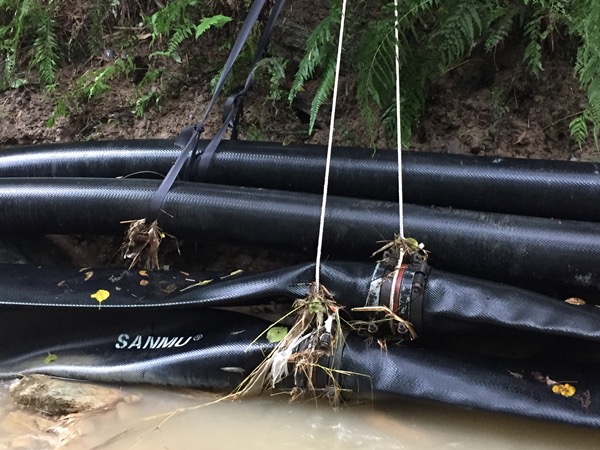
Thermoplastic polyurethane (TPU) layflat hose is a flexible, high‑pressure hose designed to transport large volumes of fresh, brine, or produced water over long distances in oilfield operations. It is extruded as a continuous tube and then reinforced (often with high‑tenacity fibers or aramid), giving it high tensile strength, abrasion resistance, and excellent chemical compatibility with typical frac water chemistries. [selectwater]
Key characteristics of TPU frac hose:
- High tensile strength in the range often above 20 MPa, enabling high working pressures while remaining flexible. [atpchem]
- Wide temperature range, typically from around -40°C up to 100–120°C, suitable for harsh climates and hot produced water streams. [dalboholdings]
- Excellent chemical and hydrolysis resistance, meaning TPU withstands oilfield brines, treatment chemicals, and H₂S‑containing produced water far better than many conventional plastics. [selectwater]
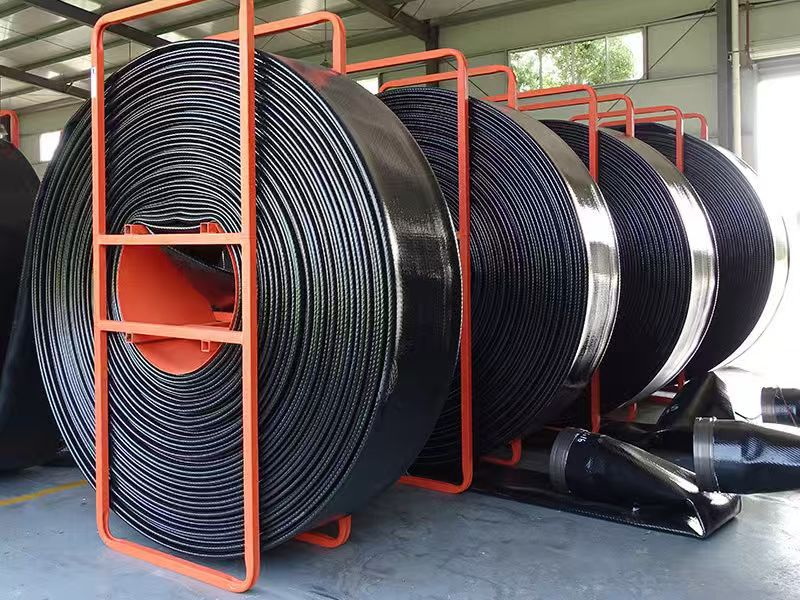
- Layflat design, which allows the hose to be reeled, transported, and deployed quickly in continuous lengths, often several kilometers per line. [sunmoonhose]
Sunmoon focuses on high‑pressure TPU layflat hoses in rolls, with advanced production technology and a track record in shale gas, coal mining, emergency drainage, and oilfield water transfer. This specialization allows us to customize wall thickness, diameter, reinforcement structure, and color coding for different basins and operating parameters. [china-layflat-hose]
When operators talk about "conventional water transfer systems," they usually mean rigid or semi‑rigid solutions such as:
- Aluminum or steel pipe assembled in 20–40 ft sections with flanged or hammer‑union connections.
- HDPE stick pipe or fusion‑welded line, often in 40–50 ft segments that need heavy equipment for handling. [midwesthose]
- Older generations of PVC or rubber layflat hose, with lower pressure ratings and weaker resistance to abrasion and oilfield chemicals than modern TPU. [made-in-china]
These systems can be robust, but they are labor‑intensive, slow to deploy, and difficult to route over uneven terrain, road crossings, or environmentally sensitive areas. Every connection adds potential leak points, safety risks, and testing requirements. [alienfrac]
| Dimension | TPU layflat frac hose | Conventional water transfer systems |
|---|---|---|
| Core material | Thermoplastic polyurethane (TPU) with textile or aramid reinforcement. selectwater | Aluminum / steel, HDPE stick pipe, PVC or rubber hose. alienfrac |
| Deployment | Rapid reel‑out in long continuous runs; minimal joints. alienfrac | Piece‑by‑piece assembly with many joints and fittings. alienfrac |
| Terrain adaptability | Highly flexible; follows ground contours and road crossings easily. alienfrac | Requires grading, supports, or bridging to handle uneven terrain. alienfrac |
| Pressure handling | High working pressures suitable for frac water and produced water transfer. selectwater | Pipe can handle high pressures; older hoses may be limited. alienfrac |
| Chemical resistance | Excellent resistance to oilfield brines, chemicals, and H₂S exposure. selectwater | Metals can corrode; some plastics swell or degrade in chemicals. atpchem |
| Abrasion & wear | Strong abrasion resistance and low expansion, reducing snaking under pressure. selectwater | Metal resists abrasion but is heavy; some plastics wear faster on rough ground. midwesthose |
| Leak & spill risk | Fewer joints and reusable crimped couplings reduce leak points. alienfrac | Many connections increase potential leak paths and maintenance. alienfrac |
| Labor & time | Lower crew count and faster mobilization/demobilization. alienfrac | Labor‑intensive setup and breakdown, especially for long lines. alienfrac |
| Transport efficiency | Layflat design maximizes meters per truckload. alienfrac | Pipe takes large volume; multiple truckloads for long runs. alienfrac |
| Lifecycle economics | Higher upfront hose cost but lower overall project cost due to speed and reuse. alienfrac | Lower per‑meter cost for some pipe, but higher labor and handling expenses. midwesthose |
Field data from oilfield water transfer providers show that TPU layflat hose can be deployed significantly faster than aluminum or HDPE pipe, mainly because crews can reel out hundreds or thousands of meters in one continuous operation. Fewer joints mean less time spent on aligning, tightening, and pressure‑testing individual connections. [dalboholdings]
From a project manager's perspective, this translates into:
- Shorter pre‑frac setup windows, allowing more flexibility in aligning water logistics with frac schedules. [alienfrac]
- Reduced night‑shift work in sensitive environments, improving safety and community relations.
- Lower overtime and equipment rental costs because pumps and crews are utilized more efficiently. [midwesthose]
Because TPU layflat hose is lightweight and flexible, it adapts to uneven ground, ditches, fence lines, and road crossings without complex civil work. In contrast, rigid pipe often requires additional supports, cribbing, or trenching, which adds time and exposes workers to more lifting and line‑of‑fire hazards. [dalboholdings]
Operators also appreciate that TPU hoses with controlled expansion exhibit less "snaking" under pressure, reducing movement that can damage equipment or pose tripping hazards. When combined with best‑in‑class crimped couplings, this creates a more stable and predictable water transfer line. [dalboholdings]
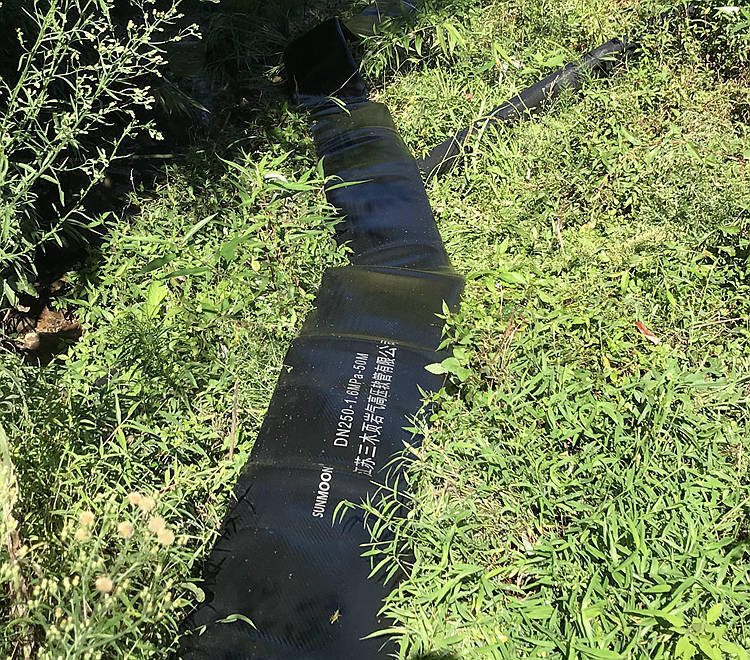
Modern TPU compounds combine durability, flexibility, and environmental resistance that surpass many conventional rubber and PVC materials used in older hoses. Laboratory and field testing by hose manufacturers have demonstrated: [atpchem]
- Tensile strength typically ranging from 20–60 MPa, far higher than many standard elastomers used in hoses. [atpchem]
- Temperature resistance from about -40°C to 120°C, maintaining performance in both winter conditions and hot battery or production environments. [atpchem]
- Outstanding chemical resistance and hydrolysis resistance, making TPU suitable for produced water with varying salinity, oils, and treatment chemicals. [selectwater]
These properties align directly with frac water transfer requirements, where hoses must handle abrasive fluids, pressure cycles, UV exposure, and aggressive chemistries across long campaigns. [continental-industry]
As a water logistics consultant or operations engineer, you do not buy hose; you buy delivered water at the lowest risk‑adjusted cost per barrel. TPU layflat hose often delivers comparable or slightly higher per‑meter purchase costs than HDPE, but realizes its value in labor, speed, and reuse. [midwesthose]
From industry reports and operator feedback:
- TPU hose provides major savings in deployment and retrieval, often cutting crew hours and equipment time substantially. [alienfrac]
- The ability to use long continuous runs reduces leak testing time and environmental risk management overhead. [alienfrac]
- Reusable couplings and robust hose construction extend usable life across multiple campaigns when properly inspected and stored. [continental-industry]
When you model full‑cycle economics—including manpower, trucking, mobilization windows, and spill prevention—TPU layflat systems often show a more attractive total cost of ownership than conventional stick pipe, especially for long, multi‑well pads or centralized water hubs. [midwesthose]
Sunmoon has supplied thousands of meters of high‑performance TPU layflat hose for large water transfer projects, demonstrating the scalability of layflat systems in demanding operations. In these deployments, continuous lengths of TPU hose were used to move high volumes of water between storage facilities and multi‑well pads over long distances, with performance verified under real operating pressures and terrain conditions. [sunmoonhose]
Such projects confirm three practical takeaways:
1. Standardized hose specifications and couplings are critical for efficient logistics between jobs. [sunmoonhose]
2. Proactive inspection and maintenance regimes extend hose life significantly, preserving ROI.
3. Collaboration between the hose manufacturer and water transfer contractor optimizes hose design for local geology, road layouts, and fluid chemistry. [selectwater]
From a decision‑maker's standpoint, you should align the system choice with your operational profile, regulatory environment, and capital strategy.
Choose TPU layflat frac hose when:
- You need rapid mobilization on multi‑well pads or short‑notice jobs.
- Terrain is uneven or environmentally sensitive, requiring minimal disturbance. [dalboholdings]
- You operate in regions with strict spill prevention and community impact standards.
- Your teams aim to standardize on flexible, reusable infrastructure with strong chemical resistance. [selectwater]
Conventional pipe systems may still be preferred when:
- Permanent or semi‑permanent transfer lines justify capital‑intensive infrastructure.
- You have abundant low‑cost local labor and existing pipe inventory.
- Regulatory frameworks favor buried or fixed piping in specific corridors.
In practice, many operators now adopt a hybrid strategy, using TPU layflat for dynamic, temporary segments and rigid pipe where fixed routing is locked in for several years. [midwesthose]
To successfully transition from conventional water transfer systems to TPU layflat hose, I recommend a structured approach:
1. Define your duty cycles and pressure envelope.
- Map expected flow rates, pressures, fluid types, and campaign durations.
- Share this data with your hose supplier to ensure correct hose class and reinforcement.
2. Standardize hose sizes and couplings.
- Align hose diameter with pump curve sweet spots.
- Select reusable crimped couplings with appropriate chemical and pressure ratings. [continental-industry]
3. Pilot a full pad with TPU.
- Start with one or two multi‑well pads to capture baseline labor, deployment, and leak‑rate data.
- Compare KPIs directly against previous pipe‑based jobs.
4. Develop SOPs and training.
- Train crews on proper handling, bending radius, and inspection of TPU layflat hose.
- Incorporate hose pressure‑testing and post‑job inspection into standard workflows. [selectwater]
5. Review lifecycle performance annually.
- Track hose failures, repairs, and reuse counts.
- Use this feedback to refine specifications or introduce higher‑grade TPU for harsh chemistries.
This step‑by‑step roadmap helps ensure that the efficiency gains of TPU layflat systems translate into measurable and repeatable operational improvements.
Choosing the right supplier is as critical as choosing the right material. Jiangsu Sunmoon Shale Gas High Pressure Hose Co., Ltd has specialized in high‑pressure TPU and PE layflat hoses, integrating R&D, production, and sales under one roof in Taizhou, China. The company serves demanding sectors such as shale gas exploitation, coal mining, emergency drainage, fire‑fighting, and oilfield water transfer worldwide. [china-layflat-hose]
Working with a focused manufacturer offers several advantages:
- Custom engineering of hose diameter, pressure rating, and reinforcement for specific frac basin conditions. [china-layflat-hose]
- Consistent quality control, backed by advanced production technology and ISO‑certified management systems. [made-in-china]
- Responsive technical support, from application engineering to after‑sales service, to help you design and maintain safe water transfer networks. [china-layflat-hose]
AI image prompt suggestion:
"Modern Chinese TPU layflat hose manufacturing facility interior, extrusion and weaving lines, bright clean factory, engineers inspecting blue layflat hoses on reels, ultra‑realistic photography."
If you are evaluating how to reduce water transfer costs, shorten mobilization time, and control environmental risk on your next frac campaign, now is the time to take a detailed look at TPU layflat frac water transfer hose. Sunmoon's engineering and sales teams can help you compare line designs, select optimal hose grades, and develop a standardized hose fleet tailored to your operating regions. [china-layflat-hose]
Reach out to discuss pressure ratings, diameters, and custom configurations, or to review pilot project designs where TPU layflat hose can replace conventional water transfer systems on your upcoming pads. [made-in-china]
Q1: Can TPU layflat hose fully replace rigid pipe for frac water transfer?
In many temporary or semi‑permanent water transfer applications, TPU layflat hose can replace rigid pipe while delivering equal or better pressure performance and greater deployment flexibility. For long‑term fixed corridors, some operators still choose buried or semi‑permanent pipe systems. [continental-industry]
Q2: How long does TPU frac hose typically last in the field?
Service life depends on pressure cycles, fluid chemistry, handling practices, and storage conditions, but TPU's high mechanical strength and chemical resistance allow multiple reuse cycles when inspected and maintained properly. Many operators track hose history to optimize replacement intervals. [atpchem]
Q3: Is TPU hose safe for produced water with H₂S and harsh chemicals?
Yes, TPU compounds used in high‑grade layflat hoses are formulated for chemical compatibility and mechanical wear resistance in produced water and treatment applications, including H₂S and common oilfield chemicals. Proper material selection and testing are essential. [atpchem]
Q4: What pressure ratings are available for TPU layflat frac hose?
Industrial‑grade TPU layflat hoses for water transfer are manufactured for high working pressures, with designs validated through cyclical fatigue and hydrostatic burst tests to meet or exceed operational specifications. Sunmoon can supply hoses in a range of diameters and pressure classes based on project requirements. [china-layflat-hose]
Q5: How does TPU layflat hose impact environmental and ESG performance?
By reducing leak points, speeding containment in the event of a failure, and lowering heavy equipment use, TPU layflat systems help minimize spill risk, emissions, and ground disturbance across water transfer operations. This supports operators' ESG commitments and regulatory compliance objectives. [alienfrac]
1. AlienFrac. "TPU Frac Hose vs Rigid Pipe: Which is Better for Shale Plays?" [Link]. [alienfrac]
2. Select Water Solutions. "Revolutionizing Layflat Hose Technology for Produced Water Applications." [Link]. [selectwater]
3. China TPU Layflat Hose Supplier – About Us, Jiangsu Sunmoon Shale Gas High Pressure Hose Co., Ltd. [Link]. [china-layflat-hose]
4. China TPU Layflat Hose Supplier – Company Profile, Jiangsu Sunmoon Shale Gas High Pressure Hose Co., Ltd. [Link]. [china-layflat-hose]
5. ATP. "TPU Compounds: Revolutionizing New Energy Vehicle Applications." (Material property data for TPU.) [Link]. [atpchem]
6. Dalbo Holdings Inc. "Water Transfer – Layflat Polyurethane Hose." [Link]. [dalboholdings]
7. Made‑in‑China. "Jiangsu Sunmoon Shale Gas High Pressure Hose Co., Ltd – Company Overview." [Link]. [made-in-china]
8. Sunmoon. "Delivering 8,000 Meters of High‑Performance TPU Layflat Hose for Large‑Scale Water Transfer." [Link]. [sunmoonhose]
9. Midwest Hose. "TPU Hose in Mining: A Smarter Alternative to Pipe." [Link]. [midwesthose]
10. Continental. "Industrial Hoses – Fluid Handling." [Link]. [continental-industry]


