

Views: 222 Author: Sunmoon Publish Time: 2026-04-17 Origin: Site


As someone who has stood on cold, muddy well pads watching water lines being laid out in the dark, I can tell you this: the hose you choose will decide your flow rate, your downtime, and your safety margin. Over the past decade, 10" TPU frac water hoses have quietly become the backbone of high-efficiency frac water transfer, replacing heavy, rigid pipe and older rubber or PVC systems in projects from North America to the Middle East. [jafirehose]
In modern hydraulic fracturing, operators must move millions of gallons of water from source ponds, rivers, or pipelines to multiple well pads—often over several kilometers. This is not just "pumping water"; it is a tightly controlled system where pressure, flow rate, terrain, and uptime must be balanced every hour of the job. [hondotx]
From an operations perspective, an ideal frac water transfer hose system must deliver:
- High, stable flow rates over long distances
- Minimal friction loss to reduce pump fuel and horsepower
- Fast deployment and retrieval with small crews
- Reliability under pressure cycles, UV exposure, chemicals, and rough ground
- Flexibility for frequent relocation between pads
This is exactly the environment where 10" TPU layflat frac water hoses have proven their value. Operators consistently report faster setup, better flow, and fewer failures than with conventional pipe strings or low-grade hoses. [midwesthose]
From an engineering standpoint, thermoplastic polyurethane (TPU) is purpose-built for harsh oilfield conditions. A 10" TPU frac water hose typically offers: [zyfireuae]
- High abrasion resistance for rocky, rutted or tracked terrain, often outperforming PVC by orders of magnitude in wear tests. [linkedin]
- High burst and working pressure, compatible with the 200–300+ psi ranges common in long-distance transfer. [hoseinc]
- Low elongation and twisting, which keeps the hose stable under load and reduces the risk of kinks and pressure spikes. [sunmoonhose]
- Excellent chemical and temperature resistance, allowing use with brackish water, produced water and additives from roughly -50 ℃ to +70 ℃, depending on construction. [jafirehose]
A 10" TPU layflat hose also has a smooth inner bore that significantly reduces friction loss compared with rougher rubber or composite liners. For transfer engineers, that translates into higher flow at the same pump pressure or the same flow with lower fuel consumption—both of which directly impact cost per barrel moved. [hondotx]
From a buyer's perspective, the key question is not "Is TPU better?" but "Where does TPU deliver better lifecycle cost and performance than rubber or PVC?" [irrigationsupplyparts]
| Hose type | Strength & pressure | Abrasion & terrain | Chemical & temp resistance | Weight & handling | Typical role |
|---|---|---|---|---|---|
| TPU layflat | High tensile and burst strength. (jafirehose) | Extremely abrasion resistant, ideal for rocky pads. (jafirehose) | Excellent resistance to many chemicals, wide temp range. (jafirehose) | Light for its size, easy to spool and redeploy. (midwesthose) | Long runs, repeated relocation, demanding frac transfer. |
| Nitrile / rubber layflat | High pressure, good toughness. (asoehose) | Good abrasion, but heavier. (asoehose) | Good oil resistance, solid at high temp. (asoehose) | Heavier to move, slower deployment. (midwesthose) | Hot desert, high-temp fluids, some injection lines. |
| PVC layflat | Lower pressure capacity. (jafirehose) | Poorer abrasion, prone to damage on rough ground. (jafirehose) | Limited temperature and pressure range. (zyfireuae) | Light and cheap, easy to handle at small sizes. (zyfireuae) | Light-duty, temporary or non-critical transfer. |
In shale gas and tight oil plays, operators have increasingly favored TPU layflat hoses for main water transfer lines because they combine high-pressure capability with long service life and lower maintenance downtime. Rubber remains important in extreme temperature zones or specialized service, but PVC is rarely suitable for serious frac operations due to durability limits. [asoehose]
Flow optimization is where 10" TPU frac water hoses truly stand out. In real projects, field teams have observed:
- Higher flow for the same pump power, thanks to smooth interiors and large diameter. [hondotx]
- Lower energy consumption per barrel transferred, due to reduced friction losses. [hondotx]
- Improved pressure consistency across long runs, especially when booster pump spacing is properly engineered. [4starhose]
1. Inner surface roughness
A smooth TPU liner reduces turbulence, meaning less pressure drop per kilometer than rougher materials or older hoses with internal scaling. [jafirehose]
2. Hose diameter and length
Moving from smaller diameters to a 10" main line can cut friction losses dramatically, allowing higher flow rates or longer distances between pumps. [asoehose]
3. Operating pressure and pump selection
High-efficiency transfer setups often combine 10–12" layflat hoses with modern high-capacity pumps that can boost flow by 30% or more compared with legacy fleets. [hondotx]
4. Elevation and terrain
TPU's low elongation and high strength allow hoses to climb moderate elevation changes with less risk of twisting or kinking, which can otherwise choke flow. [asoehose]
In practice, operators using large-diameter TPU systems in combination with optimized pump staging have reported significant reductions in setup time and pumping hours, often achieving multi-mile deployments in hours instead of days. [midwesthose]
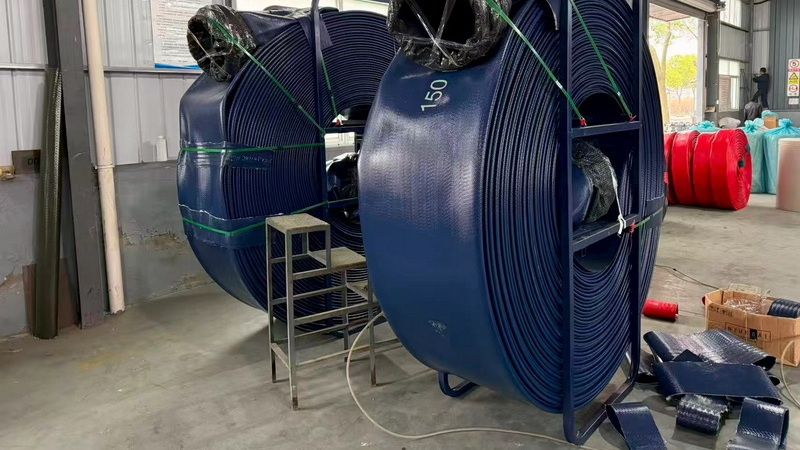
After reviewing multiple frac water transfer operations, a set of best practices consistently emerges. [4starhose]
1. Prioritize advanced layflat systems
Teams that standardize on high-quality TPU layflat hose generally see faster setup, fewer leaks, and smoother high-volume runs than those relying on mixed pipe-and-hose systems. [midwesthose]
2. Engineer the system, not just the hose
- Size the main line (commonly 8–12", with 10" a sweet spot) to support your peak frac demands.
- Use booster pumps at calculated intervals on long runs to maintain pressure and flow. [4starhose]
3. Standardize couplings and logistics
Using compatible couplings, quick-connects and well-planned hose reels reduces crew time and error risk, especially during rapid rig moves. [midwesthose]
4. Invest in training and inspection
Regular visual inspection of cover wear, coupling integrity, and pressure testing between jobs greatly extends hose life and prevents unplanned shutdowns. [irrigationsupplyparts]
As a China-based layflat hose manufacturer focused on oil and gas applications, Sunmoon designs its TPU frac water hoses around the same realities operators face on site: uptime, logistics, and lifecycle cost. [instagram]
Based on publicly available information and typical TPU frac hose specifications, Sunmoon's frac water hoses are engineered to provide:
- High-pressure TPU layflat construction with through-the-weave extrusion style technology similar to leading global designs, which minimizes delamination risk under pulsating loads. [sunmoonhose]
- Low elongation and high tensile strength, reducing the tendency to twist or snake when pressurized. [sunmoonhose]
- Robust abrasion-resistant cover for direct ground deployment, including on gravel, compacted soil, and access roads. [jafirehose]
- Compatibility with a wide range of transfer media, including freshwater, brackish water, and produced water with typical frac additives. [zyfireuae]
From a buyer's standpoint, Sunmoon positions itself as a factory-direct partner, supplying customized TPU layflat hoses from China while competing with US-warehouse-based brands on both performance and delivered cost. [instagram]
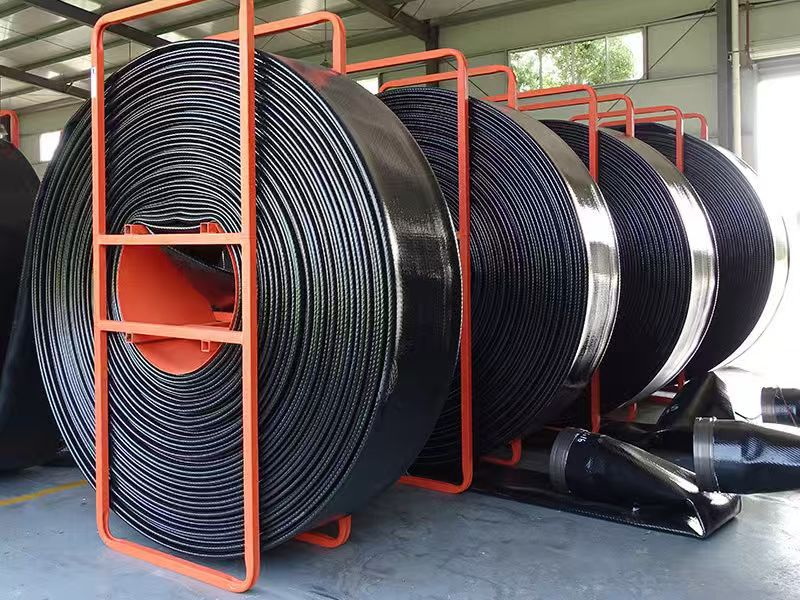
One of the practical advantages of working directly with a manufacturer like Sunmoon is project-specific customization. Instead of forcing your operations to adapt to a "standard" hose, the hose is engineered around your field. [instagram]
Typical customization dimensions include:
- Diameter: 8", 10", 12" and other sizes for main lines and laterals. [asoehose]
- Working pressure ratings: Tuned to your pump fleet and maximum pressure envelopes.
- Coil lengths: Shorter coils for tight access roads, or longer coils for rapid deployment with specialized reel trailers. [midwesthose]
- Coupling types and end fittings: Victaulic-style, flanged, or custom quick-connect systems to match your existing infrastructure. [austinhose]
- Color coding and branding: Hose color, stripe markings and printed data (pressure rating, date, logo) to simplify inspection and line identification.
Many international clients also request documentation support—such as test reports, ISO-related quality certifications, and traceability—so that corporate HSE teams can sign off on the equipment before first use. [hoseinc]

When talking directly with frac water transfer supervisors and project managers, their feedback tends to cluster around a few recurring themes, regardless of brand:
- "I need hoses that don't fail mid-job." Unplanned leaks or bursts during high-rate transfer can halt frac stages and incur significant cost. Reliable TPU hoses with full test data and a proven track record matter more than the absolute lowest purchase price. [irrigationsupplyparts]
- "Deployment speed is money." Crews value hoses that can be spooled, unspooled, and repositioned quickly with minimal manual handling, especially on large pads or multi-well projects. [hondotx]
- "Consistency across projects simplifies my life." Standardizing on a single, well-supported hose platform reduces spare parts, training complexity and troubleshooting time. [4starhose]
- "Factory support and customization matter." Being able to work with the manufacturer on coil length, fittings and performance tweaks is increasingly seen as a strategic advantage. [sunmoonhose]
Sunmoon's positioning—factory-direct TPU layflat frac hoses with global export experience—aligns with these priorities, particularly for operators and service companies who want competitive pricing without sacrificing technical performance. [instagram]
For engineers and procurement teams who want to get the most from 10" TPU frac water transfer hoses, the following step-by-step approach works well:
1. Define your peak flow rate and distance
- Establish maximum barrels per minute (or cubic meters per hour) and total transfer length across your field layout. [hondotx]
2. Select main line diameter and pressure class
- Use 10" TPU layflat as the primary trunk where flows justify it; consider 8" or 12" in scenarios with lower or higher volumes. [hondotx]
3. Model friction loss and pump requirements
- Work with your hose provider and pump vendor to calculate friction loss per 100 m / 100 ft and identify booster spacing. [jafirehose]
4. Standardize fittings and logistics
- Choose one or two coupling systems and reel formats, then standardize across your fleet to reduce downtime. [hondotx]
5. Build an inspection and replacement plan
- Set clear criteria for when hoses are pulled from service (cover wear, coupling damage, test results), and track runtime to predict replacement cycles. [irrigationsupplyparts]
Sunmoon can support this process with technical consultation, drawings and tailored specifications, helping global customers design systems around 10" TPU hoses rather than treating hoses as an afterthought. [sunmoonhose]
Based on current industry practice and published guidance, 10" TPU layflat frac water hoses are especially suitable when: [asoehose]
- Your frac program requires high, continuous flow rates over long distances.
- You operate in mixed or rough terrain where abrasion resistance is critical.
- You frequently move lines between pads and need fast deployment and retrieval.
- You need a solution with proven chemical compatibility and stable performance in a wide temperature range.
- You want to reduce total cost of ownership by extending hose life and cutting downtime, even if initial investment is higher than basic PVC options.
For many operators, these conditions describe everyday reality, which is why large-diameter TPU hoses have become the preferred standard in modern frac water transfer systems worldwide. [linkedin]
If you are planning a new frac water transfer project—or looking to upgrade from mixed pipe-and-hose systems—now is the time to evaluate 10" TPU layflat hoses as your main transfer backbone. Sunmoon can help you define the right diameter, pressure class, coil length, and fittings for your specific field layout, then supply factory-direct TPU frac hoses engineered for high flow rates and long service life. [instagram]
You can share your expected flow rates, transfer distances, and site conditions with Sunmoon's technical team and receive a tailored hose proposal that is optimized for performance, safety, and lifecycle cost.
1. Are 10" TPU frac water hoses compatible with produced water and common frac chemicals?
Yes. High-quality TPU hoses are designed with strong chemical resistance and are widely used for brackish and produced water containing typical frac additives, though compatibility for any special chemicals should always be confirmed with the manufacturer. [zyfireuae]
2. How long can a 10" TPU hose last in real frac operations?
Service life depends on pressure, terrain, handling, and inspection practices, but TPU hoses typically offer significantly longer service life than PVC and often comparable or better lifecycle cost than rubber, thanks to their abrasion resistance and structural integrity. [hoseinc]
3. Is a 10" hose always better than an 8" hose for frac water transfer?
Not always. A 10" TPU hose offers higher potential flow and lower friction per unit length, but 8" may be appropriate for shorter runs, lower flow rates, or specific pad layouts, so diameter should be chosen based on engineering calculations. [hondotx]
4. Can 10" TPU hoses replace rigid HDPE pipe in all scenarios?
In many frac water transfer applications, TPU layflat hoses are considered a smarter alternative to rigid pipe due to faster deployment, reduced labor, and strong performance, but specialized permanent or extreme-pressure systems may still favor pipe. [jafirehose]
5. What information does Sunmoon need to recommend the right 10" TPU frac hose?
Typically, Sunmoon will ask for target flow rate, transfer distance, elevation changes, fluid type, ambient temperature range, and existing pump details, then propose suitable diameter, pressure rating, coil length, and fittings. [4starhose]
1. Austin Hose – "10\" Mileflex Layflat Hose Assembly with Stainless Steel Vic Ends" – technical overview of 10" TPU layflat performance and construction.
https://www.austinhose.com/itemdetail/AH-10-TPU-660FT-M-SS [austinhose]
2. HoseInc – "10 Inch TPU Hose" – application fields and advantages of TPU layflat hoses in fracking water transfer.
http://www.hoseinc.com/10-inch-tpu-hose.html [hoseinc]
3. JA Fire Hose – "TPU Lay Flat Hose for Shale Gas Fracturing Water Transfer" – structural features, TPU vs nitrile/PVC comparisons, abrasion and friction performance.
https://www.jafirehose.com/news/industry-news/tpu-lay-flat-hose-shale-gas-fracturing-water-transfer.html [jafirehose]
4. Midwest Hose – "TPU Hose in Mining: A Smarter Alternative to Pipe" – deployment speed and labor savings of TPU hoses vs pipe.
https://www.midwesthose.com/tpu-hose-in-mining-a-smarter-alternative-to-pipe/ [midwesthose]
5. Hondo – "Top 11 Best Practices for Effective Frac Water Transfer" – best practices, durability, pump efficiency and operational benefits for frac water systems.
https://hondotx.com/blog/frac-water-transfer-best-practices/ [hondotx]
6. Orientflex – "Differences between PU hose and TPU hose" – definition and characteristics of TPU hose as a material.
https://www.orient-hose.com/differences-between-pu-hose-and-tpu-hose/ [orient-hose]
7. Sunmoon Hose – "Customized TPU Layflat Hose, Oil and Gas Hose, Dewatering Hose …" – overview of Sunmoon's high-pressure frac hose solutions and engineering focus.
https://www.sunmoonhose.com [sunmoonhose]
8. 4Star Hose – "Frac Hose Selection: Pressure, Temperature, and Media Considerations" – guidance on selecting frac hoses by pressure, temperature, and media.
https://4starhose.com/frac-hose-selection-pressure-temperature-and-media-considerations [4starhose]
9. Asoe Hose – "Frac Water Transfer Solution" – discussion of flat hose selection by climate/terrain and role of booster pumps in long-distance transfer.
https://www.asoehose.com/oil-gas/frac-water-transfer-solution/ [asoehose]
10. ZYfire – "What Is TPU Hose?" – comparison of TPU hoses with rubber and PVC in terms of flexibility, chemical and temperature resistance.
https://www.zyfireuae.com/What-Is-TPU-Hose-id49746296.html [zyfireuae]
11. Instagram – Sunmoon – short-form content on sourcing frac hose from China and cost-effectiveness of the right hose choice.
https://www.instagram.com/reel/DWi3y0Akf_b/ [instagram]
12. Hondo – "What Is Frac Water Supply? Understanding the Process" – description of tools (pumps, large-diameter hoses) used in frac water supply operations.
https://hondotx.com/blog/frac-water-supply/ [hondotx]
13. Irrigation Supply Parts – "Guide to Fracking Hoses and Their Applications" – key characteristics of fracking hoses including pressure, durability, flexibility, and chemical resistance.
https://irrigationsupplyparts.com/guide-to-fracking-hoses-and-their-applications/ [irrigationsupplyparts]
14. LinkedIn – "Fracflo Hose Leads the Future of Water Transfer" – TPU-based frac hose temperature range, abrasion resistance, and suitability for harsh operations.
https://www.linkedin.com/pulse/fracflo-hose-pioneering-future-water-transfer-rshec [linkedin]


