

Views: 208 Author: Sunmoon Hose Manufacturing Publish Time: 2026-07-17 Origin: Site


Content Menu
● Understanding the Hidden Risk: Static Electricity in Fuel Transfer
● Why TPU Anti-Static Layflat Hoses Are Critical in Oil & Gas Fracking
>> 1. Built-In Anti-Static Properties
>> 2. High Pressure and Abrasion Resistance
>> 3. Lightweight and Flexible Layflat Design
● What Operators Actually Experience
● Engineering Advantages of TPU Layflat Hose Construction
>> Temperature and Chemical Resistance
● Comparing TPU Anti-Static Hoses vs Traditional Alternatives
● The Role of Standards and Compliance
● Choosing the Right TPU Anti-Static Hose
● Maintenance and Safety Best Practices
● Large-Scale Fracking Operation
● Manufacturing Capability and Customization
● The Future of Fuel Transfer Safety
Fuel transfer safety in oil and gas operations is not a theoretical concern—it is a daily operational risk with real financial and human consequences. In high-flow environments such as hydraulic fracturing sites, the combination of volatile fuels, long-distance transfer, and harsh field conditions makes hose performance and electrostatic control critically important. Among the available solutions, TPU anti-static oil hoses—especially layflat designs—have emerged as a preferred choice for operators seeking both safety and efficiency.

Static electricity builds up when fluids move rapidly through pipelines or hoses, especially hydrocarbons with low conductivity. In fracking and fuel transfer operations, this charge accumulation can lead to electrostatic discharge (ESD)—a major ignition source.
Key risk factors include:
- High flow velocity during fuel transfer
- Dry environmental conditions
- Non-conductive hose materials
- Long-distance fluid transport
- Improper grounding or bonding
Even a small spark can ignite flammable vapors, leading to fires, explosions, equipment damage, and downtime.
From field experience across North America and the Middle East, incidents linked to static discharge are often traced back to inadequate hose material selection, not just operational error.
Thermoplastic Polyurethane (TPU) layflat hoses are engineered specifically to address both mechanical and electrostatic challenges.
Unlike conventional rubber or PVC hoses, TPU anti-static hoses are designed with:
- Conductive inner linings or embedded conductive materials
- Surface resistivity that safely dissipates static charges
- Compatibility with grounding systems
This ensures continuous charge dissipation, reducing ignition risk.
Fracking environments are unforgiving. TPU hoses provide:
- Working pressures suitable for high-flow fuel transfer
- Exceptional abrasion resistance against rough terrain
- Resistance to oil, chemicals, and UV exposure
This translates into longer service life and reduced replacement frequency.
Compared to rigid piping or traditional hoses:
- Layflat hoses are easy to transport and deploy
- They reduce labor intensity during setup
- They enable rapid deployment across large sites
For large-scale operations, this flexibility directly impacts operational efficiency and cost control.
In multiple field deployments, operators consistently report:
- Faster setup times (up to 40% reduction)
- Lower failure rates compared to rubber hoses
- Improved safety compliance due to anti-static design
- Reduced storage and transport costs
One drilling contractor in Texas noted that switching to TPU layflat hoses eliminated recurring hose failures during peak summer operations, where heat and static buildup were previously major issues.
To fully understand their value, it helps to look at how these hoses are built.
Typical TPU layflat hoses include:
- Inner TPU liner (oil-resistant and anti-static)
- Reinforced high-tenacity polyester or woven fabric
- Outer TPU coating (abrasion and UV resistant)
This structure provides:
- High tensile strength
- Resistance to kinking and twisting
- Stable performance under pressure fluctuations
TPU hoses perform reliably across a wide temperature range:
- Operating range: approximately -50∘C to +80∘C
- Resistant to hydrocarbons, fuels, and many industrial chemicals
This makes them suitable for extreme climates, from Middle Eastern deserts to Canadian oil fields.
When evaluating hose materials, decision-makers often compare TPU with rubber and PVC.
Key differences include:
- TPU hoses are lighter and more flexible than rubber
- TPU offers superior abrasion resistance compared to PVC
- Anti-static performance is more consistent and engineered in TPU
- TPU hoses typically have longer service life in harsh environments
In lifecycle cost analysis, TPU hoses often deliver lower total cost of ownership, despite higher upfront pricing.
A common oversight in fuel transfer systems is focusing only on the hose itself. In reality, system integration determines safety and efficiency.
A complete solution should include:
- Precision-engineered couplings to prevent leakage
- Anti-static continuity across hose and fittings
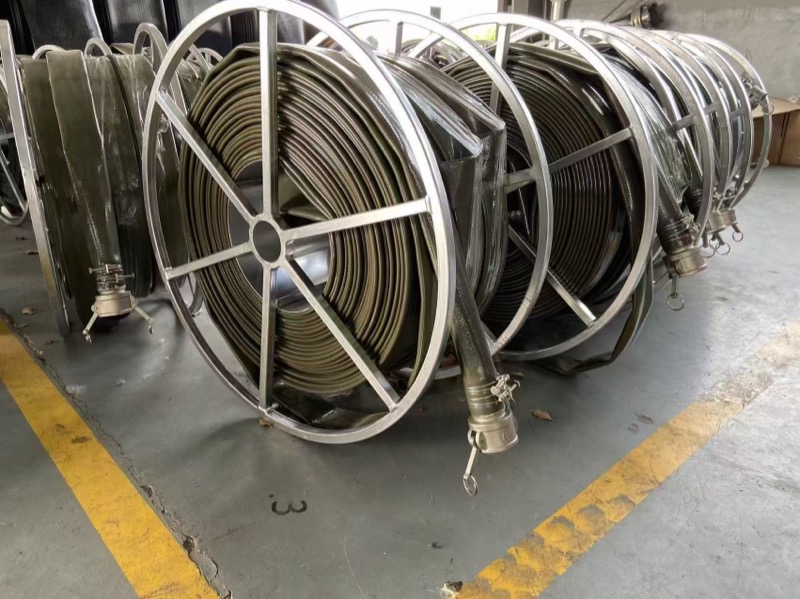
- Hose reels designed for safe deployment and retrieval
- Compatibility with existing pumping systems
Manufacturers like Sunmoon Hose Manufacturing provide integrated solutions, ensuring all components work together seamlessly rather than as isolated parts.
One of the biggest gaps in many discussions about fuel transfer hoses is compliance with international safety standards.
Key standards relevant to anti-static hoses include:
- ISO and EN standards for conductive hose materials
- ATEX directives for explosive environments
- API guidelines for oil and gas equipment
Choosing hoses that meet these standards ensures:
- Reduced liability
- Easier regulatory approval
- Higher operational confidence
Many incidents occur not because equipment fails mechanically, but because it fails to meet electrostatic safety requirements.
Selecting the correct hose involves more than just diameter and pressure rating.
Consider the following:
1. Application type: fuel transfer, fracking fluid, or chemical transport
2. Flow rate and pressure requirements
3. Environmental conditions (temperature, terrain, UV exposure)
4. Required hose length and deployment method
5. Compatibility with couplings and reels
6. Anti-static certification and conductivity level
A structured selection process reduces the risk of under-specifying or overpaying for unnecessary features.
Even the best hose requires proper handling and maintenance.
Recommended practices:
- Regular inspection for wear, cuts, or deformation
- Testing electrical continuity for anti-static performance
- Proper grounding during operation
- Cleaning after exposure to aggressive chemicals
- Correct storage to prevent UV and mechanical damage
Operators who implement routine checks often extend hose lifespan by 30–50%.
A large-scale shale operation in North America replaced traditional rubber hoses with TPU anti-static layflat hoses across multiple sites.
Results observed over 12 months:
- 35% reduction in hose-related incidents
- 25% lower maintenance costs
- Significant improvement in deployment speed
- Enhanced compliance with safety audits
The transition demonstrated that material choice directly impacts both safety and profitability.
Sunmoon Hose Manufacturing operates a 35,000 square meter production facility equipped with:
- 8 standardized automated production lines
- An 80-member technical team
- Custom engineering capabilities for specialized applications
Customization options include:
- Diameter and pressure rating adjustments
- Anti-static performance tuning
- Branding and color coding
- Integrated coupling and reel systems
This level of customization allows global clients to align hose performance with specific operational requirements.
As oil and gas operations become more complex and safety regulations tighten, the demand for advanced hose solutions continues to grow.
Emerging trends include:
- Smart hoses with monitoring capabilities
- Enhanced conductive materials for improved safety
- Greater emphasis on system-level integration
- Increased adoption of lightweight, high-performance materials like TPU
Companies that invest in these technologies are better positioned to reduce risk and improve operational efficiency.
1. What makes TPU hoses better than rubber hoses for fuel transfer?
TPU hoses offer superior abrasion resistance, lighter weight, longer lifespan, and integrated anti-static properties, making them more suitable for demanding environments.
2. How do anti-static hoses prevent explosions?
They dissipate static electricity safely through conductive materials, preventing charge buildup that could lead to sparks.
3. Are TPU layflat hoses suitable for extreme temperatures?
Yes, they typically operate between -50°C and +80°C, making them suitable for both cold and hot environments.
4. Do I need special fittings for anti-static hoses?
Yes, compatible conductive couplings are essential to maintain electrical continuity throughout the system.
5. How long do TPU layflat hoses last?
With proper maintenance, they can last significantly longer than traditional hoses, often several years in demanding applications.
6. Can these hoses be customized for specific industries?
Yes, manufacturers can tailor pressure ratings, diameters, and anti-static properties to meet specific operational needs.
1. https://www.osha.gov/oil-and-gas
2. https://www.api.org/products-and-services/standards
3. https://www.iso.org/standards.html
4. https://www.hse.gov.uk/fireandexplosion/electrostatic.htm
5. https://www.sciencedirect.com/topics/engineering/thermoplastic-polyurethane


