

Views: 232 Author: Sunmoon Hose Manufacturing Publish Time: 2026-07-12 Origin: Site


Content Menu
● Introduction: Why High-Pressure Frac Water Transfer Demands Engineered Solutions
● Understanding 300+ PSI Frac Operations
>> What Does 300+ PSI Really Mean in the Field?
>> Why Traditional Hose Materials Fall Short
● Engineered Polyurethane Layflat Hoses: A Performance Breakthrough
>> Material Advantage: Why Polyurethane?
>> Structural Engineering for High Pressure
● Field-Proven Benefits in Oil & Gas Operations
>> 1. Improved Operational Efficiency
>> 2. Reduced Downtime and Maintenance
>> 3. Enhanced Flow Performance
>> 4. Adaptability Across Terrain
● Integrated Hose Systems: Beyond the Hose Itself
● Lifecycle Cost Analysis of PU vs Traditional Hoses
● Best Practices for Managing 300+ PSI Hose Systems
>> Maintenance Recommendations
● Industry Case Example: High-Volume Frac Site Deployment
● Manufacturing Strength Matters: Why Production Capability Is Critical
● Choosing the Right Hose for Your Application
● Future Trends in Frac Water Transfer Technology
>> 1. What is the typical working pressure of frac water transfer hoses?
>> 2. How long do polyurethane hoses last in frac operations?
>> 3. Are layflat hoses suitable for long-distance transfer?
>> 4. What causes hose failure in high-pressure systems?
>> 5. Can these hoses handle chemically treated water?
>> 6. How do I choose the right hose diameter?
In modern hydraulic fracturing operations, high-pressure water transfer exceeding 300 PSI has become standard practice rather than an exception. As unconventional oil and gas extraction expands, operators require reliable, high-flow, abrasion-resistant hose systems capable of maintaining continuous performance under extreme field conditions.
From my experience working with B2B industrial buyers and field engineers, the biggest challenge is not just pressure tolerance—it is system reliability across long distances, variable terrain, and aggressive fluids. This is where engineered polyurethane layflat hoses stand out as a critical upgrade over traditional rubber or PVC alternatives.
Manufacturers like Sunmoon Hose Manufacturing, with large-scale automated production and engineering expertise, are increasingly shaping how global operators approach frac water transfer efficiency, safety, and lifecycle cost control.
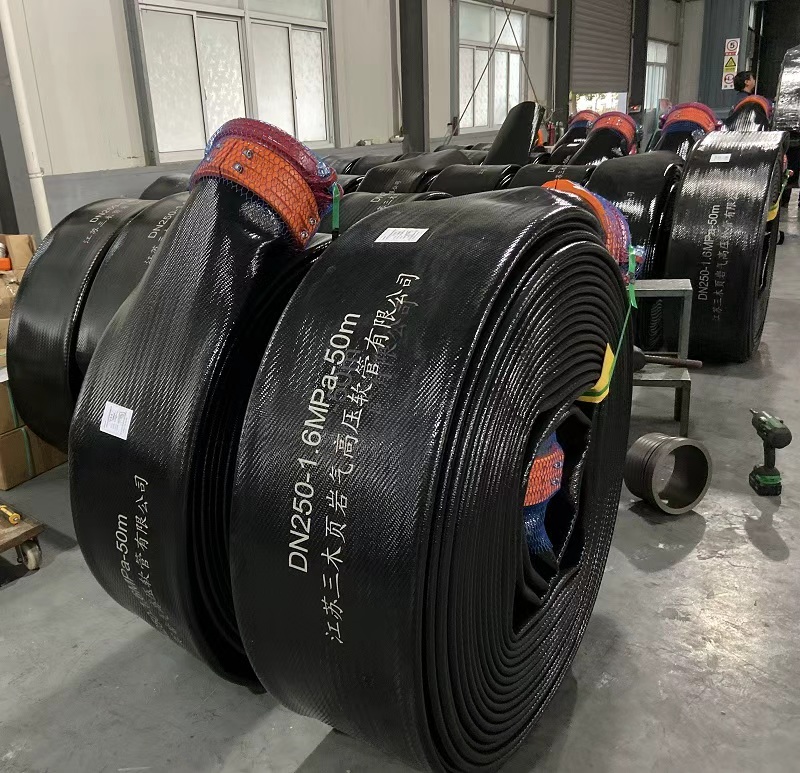
Operating above 300 PSI (≈2.07 MPa) introduces several technical challenges:
- Increased burst risk in lower-grade hoses
- Higher coupling stress and failure points
- Significant energy loss due to friction and elevation changes
- Accelerated wear from sand, chemicals, and turbulent flow
In practical applications, frac sites often require:
- Transfer distances exceeding 1–3 kilometers
- Continuous operation for 24/7 pumping cycles
- Compatibility with chemically treated water and proppant residue
Without engineered hose systems, these conditions can lead to frequent downtime and costly replacements.
Conventional materials such as rubber or standard PVC hoses struggle in high-pressure fracking environments due to:
- Poor abrasion resistance
- Limited pressure stability under fluctuating loads
- Heavy weight, reducing deployment efficiency
- Susceptibility to UV degradation and chemical attack
These limitations directly impact operational uptime and total cost of ownership.
Engineered polyurethane (PU) offers a unique combination of properties ideal for frac water transfer:
- Exceptional abrasion resistance (up to 5–10× higher than rubber)
- High tensile strength and elasticity
- Strong hydrolysis and chemical resistance
- Lightweight structure for easy handling and rapid deployment
This material allows hoses to maintain structural integrity even under continuous 300+ PSI loads.
High-performance frac hoses are not just about material—they rely on multi-layer reinforcement design, typically including:
- Inner TPU lining for fluid resistance
- High-strength polyester or aramid reinforcement
- Outer PU coating for abrasion and environmental protection
This layered construction ensures:
- Stable pressure containment
- Reduced risk of kinking or collapse
- Long service life in harsh environments
Engineered layflat hoses enable:
- Faster deployment and retrieval
- Reduced need for heavy equipment
- Lower labor costs
Operators report up to 30% faster setup times compared to rigid pipe systems.
Due to superior durability:
- Fewer hose failures
- Less frequent replacement cycles
- Lower repair costs
In high-intensity frac projects, this translates into significant cost savings over time.
The smooth inner lining of polyurethane hoses minimizes friction loss, resulting in:
- Higher flow rates
- Improved pumping efficiency
- Reduced energy consumption
Layflat hoses can easily conform to:
- Uneven ground
- Rocky surfaces
- Temporary site layouts
This flexibility is critical in remote or rapidly changing frac environments.
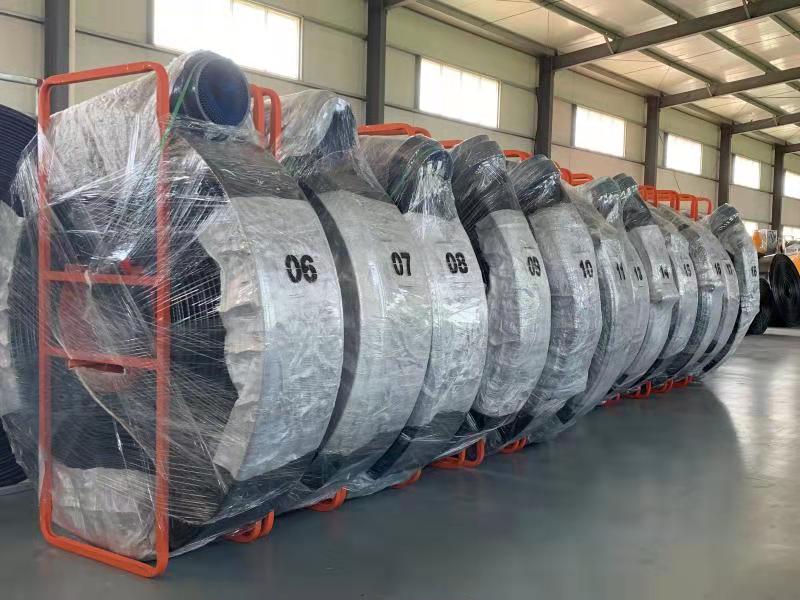
One of the most overlooked aspects of frac water transfer is system integration. A high-performance hose alone is not enough—connectors, reels, and deployment systems must be equally engineered.
- Quick-connect couplings: Ensure leak-free connections under pressure
- Heavy-duty hose reels: Improve transport and storage efficiency
- Manifold systems: Enable multi-line distribution
- Monitoring sensors (in advanced setups): Track pressure and flow in real time
Manufacturers offering complete system solutions help reduce compatibility issues and improve overall reliability.
A common misconception is that polyurethane hoses are "too expensive." However, a lifecycle cost perspective tells a different story.
- Initial cost: PU hoses are typically higher
- Replacement frequency: Significantly lower
- Downtime cost: Reduced due to reliability
- Maintenance: Minimal compared to rubber hoses
In long-term operations, PU hoses can deliver:
- 20–40% lower total ownership cost
- Higher ROI in continuous operations
This shift from upfront cost thinking to lifecycle value is becoming standard among experienced operators.
Based on field feedback and engineering guidelines, the following practices significantly improve performance and safety:
1. Avoid sharp bends and excessive twisting
2. Ensure proper alignment of couplings
3. Use protective sleeves in high-abrasion zones
4. Anchor hoses securely in high-flow areas
- Monitor pressure fluctuations regularly
- Avoid exceeding rated working pressure
- Flush hoses after exposure to aggressive chemicals
- Conduct visual inspections before each use
- Check for micro-cracks or wear points
- Store hoses in dry, shaded environments
These steps can extend hose lifespan by up to 50%.
In a North American shale operation, a contractor replaced traditional rubber hoses with engineered polyurethane layflat hoses for a 350 PSI water transfer system.
- Deployment time reduced by 25%
- Hose failure incidents dropped by over 60%
- Overall project cost reduced by approximately 18%
The operator highlighted that weight reduction and durability were the most impactful factors.
When sourcing high-pressure hoses, manufacturing capability directly impacts product consistency and reliability.
Sunmoon Hose Manufacturing demonstrates several key advantages:
- 35,000 m² production facility ensuring scalable output
- 8 automated production lines for consistent quality
- 80-person technical team supporting customization and engineering
This level of infrastructure allows for:
- Tight quality control
- Custom pressure ratings and specifications
- Faster delivery for global projects
For buyers, this reduces risk in large-scale procurement.
Selecting the correct hose involves evaluating several parameters:
- Working pressure and burst pressure rating
- Hose diameter and flow requirements
- Chemical compatibility
- Environmental conditions (UV, temperature, terrain)
- Connection and system integration needs
For a 300–350 PSI frac water transfer system:
- Recommended: Reinforced polyurethane layflat hose
- Diameter: Typically 6–12 inches depending on flow rate
- Couplings: High-strength aluminum or steel quick-connect
Matching these specifications ensures optimal performance and safety.
The industry is evolving toward more intelligent and efficient systems:
- Smart hose monitoring with embedded sensors
- Increased use of lightweight composite materials
- Greater demand for modular and reusable systems
- Focus on environmental sustainability and water reuse
Manufacturers investing in these areas are likely to lead the next phase of innovation.
Managing high-pressure fracking operations above 300 PSI requires more than just durable equipment—it demands engineered systems designed for reliability, efficiency, and long-term performance. Polyurethane layflat hoses, combined with integrated solutions, are redefining industry standards.
For operators aiming to reduce downtime, improve flow efficiency, and control lifecycle costs, upgrading to engineered hose systems is no longer optional—it is a strategic decision.
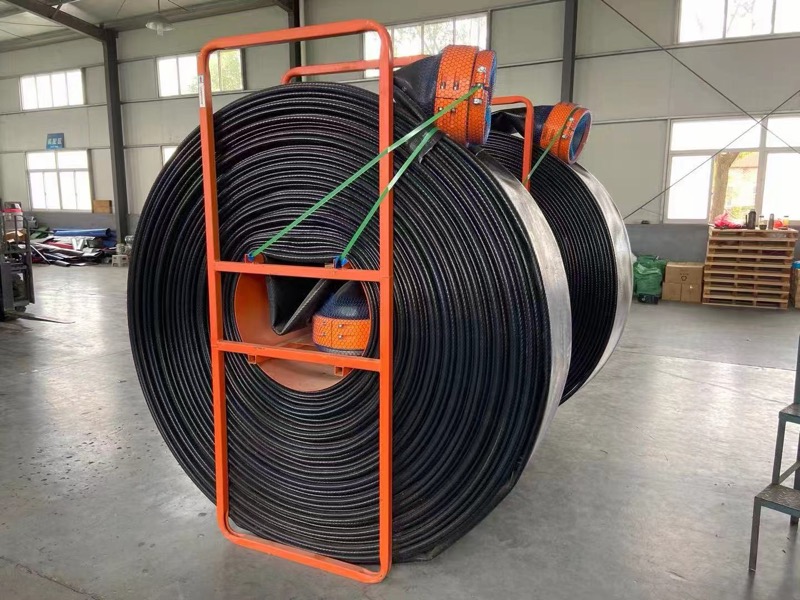
Most engineered polyurethane layflat hoses are designed for 150–300 PSI working pressure, with higher-rated options available depending on reinforcement design.
With proper maintenance, they can last 2–4 times longer than traditional rubber hoses.
Yes, they are widely used for kilometer-scale water transfer, thanks to their lightweight and flexible design.
Common causes include overpressure, abrasion, improper installation, and coupling failure.
Yes, polyurethane hoses offer strong resistance to many chemicals used in fracking fluids.
It depends on required flow rate and pump capacity; larger diameters reduce friction loss.
1. https://www.spe.org/en/industry/fracturing-technology-overview/ – Inferred category: Energy/Petroleum Engineering (based on path "fracturing-technology-overview")
2. https://www.energy.gov/fecm/hydraulic-fracturing – Inferred category: Energy/Government Policy (based on path "hydraulic-fracturing" and domain energy.gov)
3. https://www.offshore-technology.com/features/fracking-water-management/ – Inferred category: Environment/Water Management (based on path "fracking-water-management")
4. https://www.hoseandrubber.com/industrial-hose-selection-guide – Inferred category: Industrial Equipment/Materials (based on path "industrial-hose-selection-guide")
5. https://www.plasticstoday.com/materials/polyurethane-properties-and-applications – Inferred category: Materials Science/Polymer (based on path "polyurethane-properties-and-applications")


