

Views: 242 Author: Sunmoon Publish Time: 2026-06-28 Origin: Site


Content Menu
● Understanding Layflat Hose Technology
● High-Pressure Polyurethane Hose: Core Features
● Standard PVC Discharge Hose: Core Features
● Polyurethane vs. PVC: A Technical Comparison
● Real-World Application Scenarios
● Expert Insight: Lifecycle Cost and Risk Management
● Material Science Perspective: Polyurethane vs. PVC
● Customization and Global Sourcing Considerations
● Practical Selection Checklist for Buyers
● Industry Case Insight: Emergency Flood Response
● Sunmoon's Perspective as a Specialized Manufacturer
● When to Choose High-Pressure Polyurethane Hose
● When Standard PVC Discharge Hose Is Enough
● Action-Oriented Recommendations for Global Buyers
● Call to Action: Design Your Optimal Hose System with Sunmoon
● FAQs
High-pressure polyurethane layflat hose and standard PVC discharge hose each play a critical role in modern fluid transfer, but they offer very different performance, lifecycle cost and application suitability. Understanding these differences is essential if you are selecting hoses for demanding projects such as mining dewatering, shale gas operations, long-distance irrigation or emergency flood control. [sq.tpulayflatpipe]
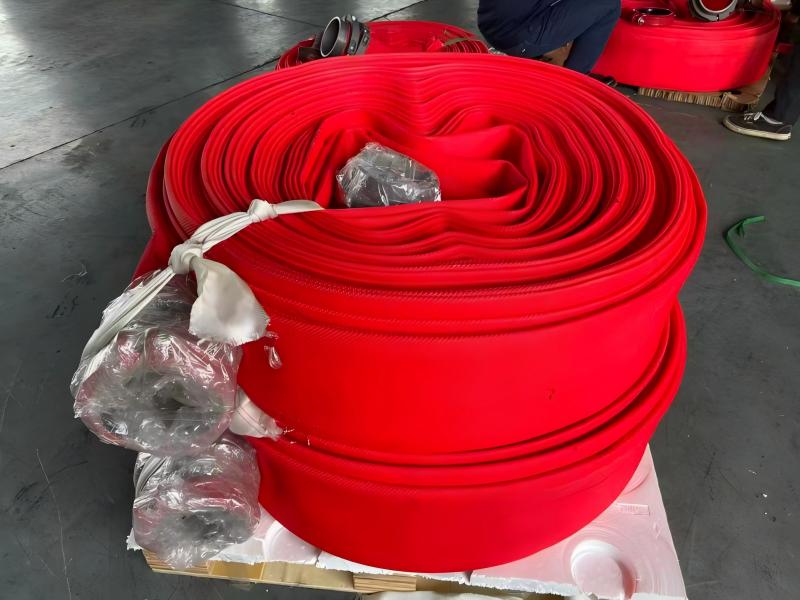
Layflat hoses are flexible pipes designed to remain flat when not pressurized and expand into a round cross-section under working pressure. Their collapsible design makes them easy to store, transport and deploy across long distances compared with rigid piping. [china-layflat-hose]
High-pressure polyurethane layflat hoses (often referred to as TPU layflat hose) use thermoplastic polyurethane as both tube and cover, reinforced with high-strength textile filaments. Standard PVC discharge hoses use polyvinyl chloride as the main material, usually reinforced with polyester yarns, and are commonly seen in agriculture, construction dewatering and general water transfer. [sq.tpulayflatpipe]
High-pressure TPU layflat hose is engineered for demanding, continuous-duty operations where pressure, abrasion and chemical exposure are all significant. As a Chinese manufacturer focused on TPU layflat hose and customized solutions for global users, Sunmoon typically designs these hoses with working pressures from 1 MPa up to about 3.5 MPa (10–35 bar), depending on diameter and wall thickness. [china-layflat-hose]
Key characteristics of high-pressure polyurethane layflat hose include: [china-layflat-hose]
- Higher working pressure and burst pressure than standard PVC discharge hose in comparable sizes.
- Excellent abrasion resistance, suitable for dragging over rough, rocky or construction ground.
- Good chemical resistance to oils, fuels and a range of industrial liquids, enabling use in shale gas, mining and industrial cleaning. [sq.tpulayflatpipe]
- Longer service life under cyclic loading and UV exposure when compared with many conventional PVC hoses. [sq.tpulayflatpipe]
Standard PVC layflat discharge hose is designed for cost-effective, medium-pressure water transfer applications. It typically operates at lower working pressures, often in the range of 0.2–1.0 MPa depending on construction, and is widely used for agricultural irrigation, construction site dewatering and general drainage. [sq.tpulayflatpipe]
Typical features of PVC discharge hose include: [sq.tpulayflatpipe]
- Lower cost per meter, making it attractive for short-term or budget-sensitive projects.
- Light weight and flexible handling, suitable for manual deployment and retrieval in small to mid-scale operations.
- Good performance for clean water and light-duty chemical solutions, but more limited resistance to fuels and aggressive chemicals.
- Adequate UV and weather resistance for standard outdoor use, though long-term durability may be lower than high-grade polyurethane under intense sun and heat. [sq.tpulayflatpipe]
The following table summarizes key differences between high-pressure polyurethane layflat hose and standard PVC discharge hose in practical use. [china-layflat-hose]
| Aspect | High-Pressure Polyurethane Layflat Hose | Standard PVC Discharge Hose |
|---|---|---|
| Core material | Thermoplastic polyurethane (TPU) tube & cover (china-layflat-hose) | Polyvinyl chloride (PVC) with polyester reinforcement (sq.tpulayflatpipe) |
| Working pressure range | Approx. 1–3.5 MPa, high-pressure duty (china-layflat-hose) | Approx. 0.2–1.0 MPa, medium duty (sq.tpulayflatpipe) |
| Abrasion resistance | Very high, suitable for dragging over abrasive ground (china-layflat-hose) | Moderate, more prone to wear in harsh terrain (sq.tpulayflatpipe) |
| Chemical resistance | Strong resistance to fuels, oils and many industrial liquids (china-layflat-hose) | Mainly suitable for water and mild chemicals (sq.tpulayflatpipe) |
| Temperature performance | Wide operating temperature range, better stability under heat/cold (china-layflat-hose) | More sensitive to extreme temperatures, especially low temperatures (sq.tpulayflatpipe) |
| Service life under heavy use | Longer, especially in continuous, high-duty cycles (china-layflat-hose) | Shorter when exposed to high pressure or mechanical abuse (sq.tpulayflatpipe) |
| Initial cost | Higher upfront investment per meter (china-layflat-hose) | Lower upfront cost per meter (sq.tpulayflatpipe) |
| Typical applications | Mining, shale gas, fuel and chemical transfer, high-flow dewatering (sq.tpulayflatpipe) | Agriculture irrigation, construction dewatering, general drainage (sq.tpulayflatpipe) |
From an industry practitioner's standpoint, the choice between high-pressure polyurethane and standard PVC discharge hose often comes down to risk, downtime and total cost of ownership rather than simple purchase price. [china-layflat-hose]
In mining and large-scale dewatering, hoses may need to transport high volumes of water over long distances across harsh terrain for months at a time. In these settings, polyurethane layflat hoses provide reliable performance with fewer leaks and failures, reducing downtime and replacement frequency. [china-layflat-hose]
In seasonal agricultural irrigation, many projects involve moderate pressure, relatively clean water and shorter operating cycles. Standard PVC discharge hose can deliver sufficient performance at a lower initial cost, making it a pragmatic choice for farmers and contractors who prioritize budget and flexibility. [sq.tpulayflatpipe]
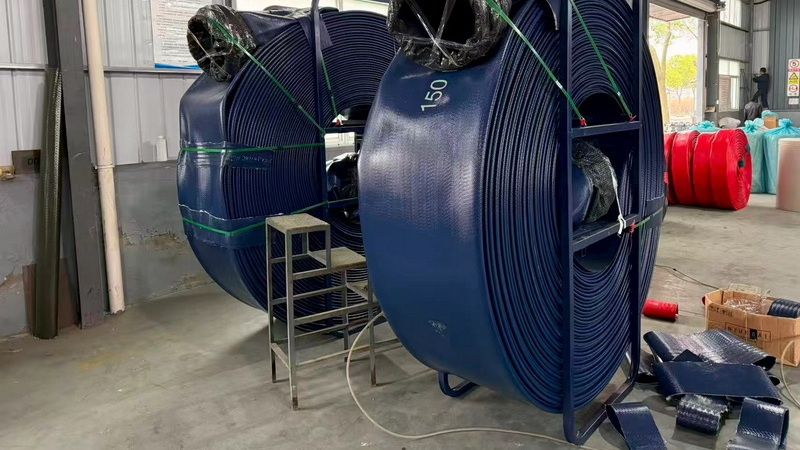
From a B2B purchasing perspective, lifecycle cost is often more critical than unit price, particularly for global buyers managing multi-site operations. When a hose bursts in a remote mining or shale gas project, the direct replacement cost is minor compared to the loss of production time, labor cost for repairs and potential environmental risks. [china-layflat-hose]
Industry experience indicates that: [china-layflat-hose]
- In high-duty environments, polyurethane hoses usually deliver better cost per operating hour, even if the initial purchase price is higher.
- In low-duty environments, PVC hoses often maximize budget efficiency when pressure, abrasion and chemical exposure are controlled.
This is why many industrial and energy-sector buyers adopt a dual-hose strategy, using polyurethane layflat hoses for critical lines and PVC hoses for peripheral or temporary runs. [sq.tpulayflatpipe]
From a materials engineering viewpoint, polyurethane and PVC differ in their molecular structure and mechanical behavior, and these differences directly translate into field performance. [china-layflat-hose]
- Polyurethane offers higher tensile strength and elasticity, so the hose can flex and recover under dynamic pressure changes and mechanical impacts. [china-layflat-hose]
- PVC is more rigid and may exhibit greater stiffness, which can be an advantage for shape retention but a disadvantage in extreme cold or when repeated bending occurs. [sq.tpulayflatpipe]
For high-pressure layflat hoses, polyurethane's resilience helps maintain structural integrity under repeated pressurization cycles, making it particularly suitable for continuous pumping systems. [china-layflat-hose]
As a Chinese manufacturer focused on TPU layflat hose and PVC layflat hose, Sunmoon provides customized diameters, wall thicknesses, lengths and colors to match global project specifications. International buyers can specify: [sunmoonhose]
- Working pressure and burst pressure requirements for high-pressure polyurethane hoses.
- Lengths such as 50 m, 100 m or 200 m per roll for efficient deployment on site.
- Specific inner diameters to fit existing pump and coupling standards.
For PVC discharge hose, customization also includes wall thickness, pressure rating and UV-stabilized formulations for outdoor irrigation and drainage systems. This flexibility allows procurement teams to align hose designs with project risk profiles, ensuring that each application uses the most suitable material and construction. [sunmoonhose]
When choosing between high-pressure polyurethane layflat hose and standard PVC discharge hose, procurement professionals can apply a simple, expert-level checklist based on real project parameters. [sq.tpulayflatpipe]
1. Define operating pressure.
- If regular operating pressure exceeds approximately 1.0 MPa or involves pressure fluctuations, prioritize polyurethane. [china-layflat-hose]
2. Assess terrain and handling.
- For hoses dragged over rock, concrete or compacted soil, choose polyurethane for enhanced abrasion resistance. [china-layflat-hose]
3. Identify fluid type.
- For fuels, oils or chemically aggressive liquids, polyurethane is the safer, more durable choice. [china-layflat-hose]
4. Consider project duration.
- Long-term, continuous-duty projects benefit from polyurethane; short-term or seasonal projects can often rely on PVC. [sq.tpulayflatpipe]
5. Balance budget vs. downtime risk.
- Where downtime cost is high, the premium on polyurethane is usually justified; where projects are small and flexible, PVC may be sufficient. [sq.tpulayflatpipe]
Using this checklist helps global buyers reach a more data-driven, risk-aware decision rather than focusing solely on initial price. [sq.tpulayflatpipe]
Recent emergency response operations in China have highlighted the importance of high-pressure polyurethane hoses in flood control and rapid dewatering. In one widely reported event, emergency rescue teams deployed polyurethane layflat hoses to drain heavily flooded urban areas, relying on their ability to withstand high pump pressure and abrasive ground conditions. [sq.tpulayflatpipe]
This type of scenario illustrates how material choice directly affects response speed and reliability: polyurethane hoses maintain flow under sustained high pressure, while more economical PVC hoses are better suited to non-critical, auxiliary tasks such as routing excess water to holding areas. [china-layflat-hose]
From the manufacturer's standpoint, designing both TPU and PVC layflat hose families enables project-specific recommendations based on real-world conditions rather than a one-size-fits-all approach. Sunmoon's engineering and sales teams typically guide customers through: [sunmoonhose]
- Pressure and flow rate calculations to match hose diameter and reinforcement with pump capacity.
- Material recommendations based on fluid type, operating environment and expected lifecycle.
- Custom branding and color schemes for easier hose identification across multi-site operations. [sunmoonhose]
This collaborative approach helps global buyers optimize their hose portfolios, using polyurethane where performance and durability are mission-critical and PVC where cost-effective versatility is sufficient. [sunmoonhose]
You should prioritize high-pressure polyurethane layflat hose when: [sq.tpulayflatpipe]
- Working pressures are high or vary frequently due to pump cycling.
- Hoses are dragged or laid over abrasive ground, rocks or construction debris.
- Fluids include fuels, oils, slurry or aggressive chemicals.
- Projects run continuously over long periods with strict uptime requirements.
In these environments, polyurethane's higher mechanical strength, abrasion resistance and chemical stability help ensure safer, more reliable operations. [china-layflat-hose]
Conversely, standard PVC discharge hose remains an excellent choice when: [sq.tpulayflatpipe]
- Operating pressures are moderate and stable.
- Fluids are primarily clean water or mild solutions.
- Projects are seasonal, short-term or involve frequent relocation.
- Budget constraints are tight and downtime risk is relatively low.
For many agriculture and small construction operations, PVC discharge hose provides practical performance at a lower cost, especially when handled carefully and stored properly. [sq.tpulayflatpipe]
For global buyers, project managers and engineers evaluating high-pressure polyurethane hose vs. standard PVC discharge hose, a practical strategy is to:
- Use polyurethane layflat hoses on critical, high-pressure lines and in harsh environments.
- Deploy PVC discharge hoses on non-critical, lower-pressure lines and temporary setups.
- Work with suppliers such as Sunmoon to customize hose specifications for each application, balancing cost, risk and performance. [sunmoonhose]
If your current hose portfolio relies heavily on PVC for demanding tasks, a phased upgrade to polyurethane in your most critical circuits can significantly reduce failure rates and lifecycle cost. [china-layflat-hose]
If you are planning a new dewatering, irrigation or industrial fluid transfer project—or if you want to audit your existing hose systems—it is the ideal time to compare high-pressure polyurethane layflat hose vs. standard PVC discharge hose in detail for your actual operating conditions. [sunmoonhose]
Contact Sunmoon's technical team to discuss your pressure, flow and terrain requirements and receive a customized proposal that integrates both TPU and PVC layflat hoses where they deliver the most value. By aligning hose selection with lifecycle cost, downtime risk and fluid characteristics, you can build a more resilient, efficient and cost-effective fluid transfer infrastructure. [sunmoonhose]
1. Is high-pressure polyurethane hose always better than PVC discharge hose?
No. Polyurethane offers superior performance in high-pressure, abrasive and chemically demanding environments, while PVC remains cost-effective and adequate for medium-pressure, clean-water applications. [china-layflat-hose]
2. Can standard PVC discharge hose handle fuel or oil transfer?
PVC discharge hoses are generally not recommended for continuous fuel or oil transfer because of limited chemical resistance and potential softening or degradation; polyurethane hoses are better suited for these fluids. [sq.tpulayflatpipe]
3. How do I estimate the right working pressure rating for my hose?
You should consider pump pressure, elevation differences, friction loss along hose length and safety margins; suppliers like Sunmoon can help calculate the appropriate working pressure and select suitable TPU or PVC hose constructions. [sunmoonhose]
4. What is the typical service life of polyurethane vs. PVC layflat hose?
Actual service life depends on operating conditions, but in continuous high-duty applications polyurethane hoses usually last significantly longer than PVC hoses subjected to the same pressure and mechanical stress. [china-layflat-hose]
5. Can I mix polyurethane and PVC hoses in one system?
Yes. Many industrial users combine polyurethane hoses on critical segments and PVC hoses on non-critical or temporary lines, optimizing cost and reliability while maintaining system flexibility. [sq.tpulayflatpipe]
1. China Layflat Hose – TPU Layflat Hose Product and Application Overview. https://china-layflat-hose.com/products/tpu-layflat-hose.html
2. Sunmoon Hose – TPU Lay Flat Hose Manufacturer Information. https://www.sunmoonhose.com/tpu-lay-flat-hose/
3. Jiangsu Sunmoon Shale Gas High Pressure Hose Co., Ltd – Blog and Product Descriptions for TPU and PVC Layflat Hoses. https://sq.tpulayflatpipe.com/blog/
4. China Layflat Hose – Company Profile and Contact Information. https://china-layflat-hose.com/index.html
5. Sunmoon Hose – Product Group Listings for TPU Layflat Hose. https://sunmoonhose.en.alibaba.com/productgrouplist-803209907/TPU_lay_flat_hose.html


