

Views: 222 Author: Sunmoon Publish Time: 2026-05-05 Origin: Site


High-rise construction projects rely on high pressure layflat hoses to deliver reliable water flow to upper floors safely, efficiently, and with tight control over pressure and leakage risk. When those hoses are upgraded to TPU layflat hose systems, contractors gain longer service life, higher burst pressure, and easier handling on crowded urban job sites, which directly reduces downtime and total installed cost. [flystablehose]
In this guide, I will walk you through how high-rise contractors actually move water vertically using high pressure layflat hoses, where TPU layflat hoses fit in, and what I have seen work best on real high-rise jobs. I will also share practical selection and operation checklists that our international clients use when specifying TPU layflat hose for high-rise construction water transfer. [papagenogroup]
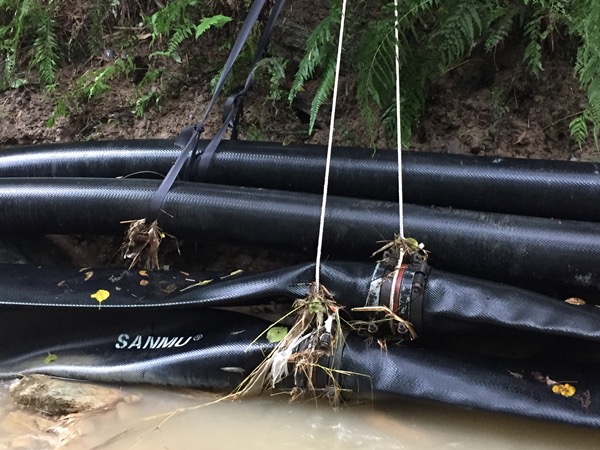
On any high-rise project, water is needed for concrete mixing, curing, dust suppression, equipment cooling, and emergency fire protection at multiple elevations simultaneously. As building height increases, gravity and friction losses make it harder to maintain stable pressure at upper floors, and traditional rigid piping becomes cumbersome and slow to install. [papagenogroup]
From an engineer and site manager perspective, the main challenges are:
- Maintaining adequate pressure at the top floors without over-pressurizing lower sections. [papagenogroup]
- Managing frequent relocation of lines as the structure climbs.
- Minimizing leakage, bursts, and safety incidents in tight, congested areas.
- Balancing equipment cost, hose life, and labor time across multiple projects.
This is where high pressure layflat hoses—especially TPU-based products—have become the preferred flexible solution for many contractors worldwide. [flystablehose]
High pressure layflat hoses are flexible, collapsible hoses designed to handle elevated working pressures while remaining lightweight and easy to deploy, retrieve, and store. In high-rise projects they are commonly used as temporary vertical risers or horizontal transfer lines from ground pumps to intermediate storage tanks or distribution manifolds. [flystablehose]
Well-designed construction-grade layflat hoses typically offer:
- High working and burst pressure ratings suitable for multi-story pumping.
- Reinforced textile or synthetic fiber layers for tensile strength.
- Abrasion-resistant outer covers to withstand dragging over concrete and rebar.
- Smooth inner bores to minimize friction losses, helping deliver more flow at height. [flystablehose]
While PVC layflat hoses are still used on some sites, many high-rise contractors are switching to TPU layflat hose for longer life and more stable performance under repeated pressure cycling. [selectwater]
From a materials and field-performance standpoint, TPU (thermoplastic polyurethane) layflat hoses address many pain points that project managers encounter with PVC or rubber hoses.
Compared with standard PVC layflat hose, TPU layflat hose provides:
- Higher abrasion resistance, reducing damage when dragged across sharp concrete edges or steel debris. [selectwater]
- Better flex fatigue resistance under repeated coiling, uncoiling, and pressure cycling.
- Excellent hydrolysis and microbial resistance, even in warm, wet environments.
- Improved UV resistance when formulated correctly, making it more stable during long outdoor exposure. [selectwater]
These characteristics translate into a hose that can be deployed for longer durations across multiple projects without frequent replacement.
As a specialized Chinese manufacturer, Sunmoon produces TPU layflat hoses with:
- TPU material body, with thickness options around 3–5 mm for strength and durability. [alibaba]
- Large diameters such as 10" and 12" for high-volume water transfer in demanding projects. [alibaba]
- Typical standard lengths such as 200 m per roll to minimize coupling points on tall or long runs. [alibaba]
- Production under quality management standards such as ISO9001 for consistent product performance. [alibaba]
For global high-rise contractors, this combination of large-diameter TPU layflat hose, extended lengths, and custom configurations allows the creation of highly efficient temporary water transfer systems tailored to each project.
Understanding the basic hydraulic behavior of high pressure layflat hoses helps you design safer and more efficient systems for high-rise construction.
A common setup includes:
1. Ground-Level Pump Station
- Draws water from municipal supply, onsite tanks, or nearby reservoirs.
- Uses booster pumps sized to overcome vertical head plus friction losses.
2. Vertical Layflat Hose Risers
- High pressure TPU layflat hose runs vertically along the building core or exterior scaffolding.
- Fixed with pipe clamps, cable ties, or dedicated hose supports at regular intervals to prevent kinking.
3. Intermediate Storage or Distribution
- At key floors, hoses feed temporary tanks or manifolds.
- From these, smaller hoses or piping distribute water to mixing stations, curing systems, or cleaning points.
4. Pressure Control Devices
- Pressure-reducing valves or staged pumps help maintain safe working pressure at each elevation.
Because layflat hoses collapse when not pressurized, they are easy to route around structural elements and require less storage space when the system is reconfigured as floors are added.
From my experience working with technical buyers and site engineers, a successful high-rise water delivery system using TPU layflat hose depends on a few core design decisions.
- Working and Burst Pressure
Choose a hose with a working pressure comfortably above the maximum system pressure at the lowest elevation, plus a suitable safety factor. [flystablehose]
- Diameter and Flow Rate
Larger-diameter hoses (e.g., 10"–12") carry more water with lower friction losses, which is critical in tall buildings. [alibaba]
- Hose Length and Couplings
Longer continuous lengths (up to 200 m) reduce coupling points, which are common leak and failure locations. [alibaba]
- Temperature and Chemical Compatibility
Ensure the TPU formulation is compatible with any admixtures, recycled water, or cleaning agents used on site. [selectwater]
- Support and Routing
Plan support intervals and route the hose away from sharp edges or hot surfaces to avoid localized damage.
On a typical 40–60 story concrete frame project:
- A high pressure pump station on the ground supplies water up to a 30th floor temporary tank via a 10" TPU layflat riser.
- From that tank, a secondary TPU or PVC layflat line feeds higher floors where concrete pours and curing are active.
- The contractor uses quick-connect couplings and hose reels, allowing the team to move lines two or three floors higher within one shift.
In practice, clients report that this setup reduces reconfiguration time and leakage incidents compared with heavier rigid pipe solutions, especially when weather or schedule changes require rapid adjustments. [papagenogroup]
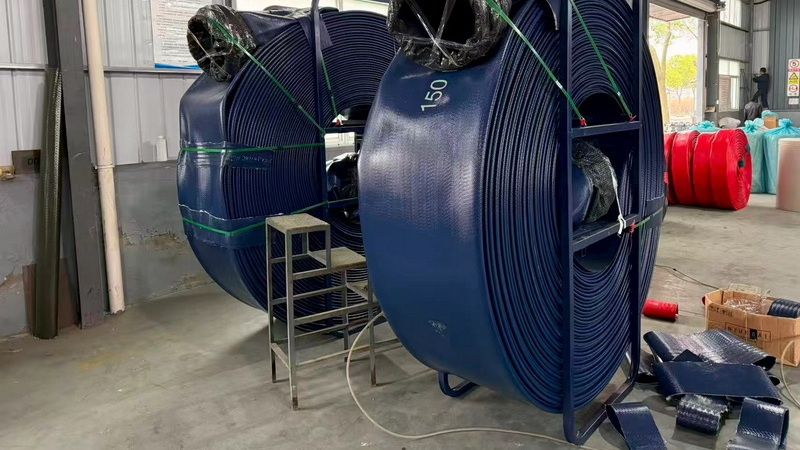
Many high-rise project owners and safety managers now scrutinize temporary water systems as closely as permanent fire protection installations. From an expert perspective, you should treat your layflat hose system as a safety-critical component.
Key safety best practices include:
- Regular visual inspection of the TPU layflat hose for cuts, bulges, and abrasion zones before every shift.
- Avoiding tight bends and kinks that can create localized over-stress.
- Using rated couplings and clamps that match hose specifications and working pressure.
- Storing hoses correctly (clean, dry, shaded) between projects to preserve material integrity. [selectwater]
If your layflat hoses are also part of the temporary fire water supply, coordinate standards with the fire safety plan and local code requirements to ensure sufficient flow and redundancy.
High-rise contractors rarely choose hoses on purchase price alone. In discussions with procurement and project managers, three cost drivers usually dominate:
1. Initial Hose Investment
2. Labor Cost for Handling and Reconfiguration
3. Unplanned Downtime Due to Failures
In many cases, TPU layflat hoses may cost more upfront than basic PVC alternatives, but they deliver significantly longer service life and lower failure rates in demanding conditions. This means the cost per meter per project often becomes lower once you factor in fewer replacements and reduced downtime. [selectwater]
A simple lifecycle view:
- PVC layflat hose: lower cost, higher risk of cracking, kinking, or bursting when used repeatedly at high pressure and exposed to UV.
- Rubber hose: robust, but heavy and harder to move; more labor-intensive for re-routing in high-rise projects.
- TPU layflat hose: optimized combination of high-pressure capability, flexibility, UV and abrasion resistance, and relatively low weight.
By combining these attributes, TPU layflat hose helps general contractors standardize on one hose platform for multiple projects and applications.
From recent industry case discussions and product application notes, three trends stand out in how global clients deploy TPU layflat hoses in tall-building projects: [papagenogroup]
- Multi-Use Across Phases
The same TPU layflat lines support early foundation dewatering, then concrete mixing and curing, and finally external façade cleaning.
- Integration with Smart Monitoring
Some operators integrate pressure gauges, flow meters, and even QR-code asset tracking on hose segments to monitor usage and plan maintenance. [selectwater]
- Hybrid Systems
TPU layflat hoses are used in combination with rigid steel risers, allowing flexible sections near pumps, bends, and temporary connections while keeping permanent sections in steel.
These application patterns show that TPU layflat hoses are no longer viewed as disposable consumables but as strategic assets in the equipment fleet.
Below is a practical decision sequence you can apply or adapt for your own project.
- Maximum building height and highest required outlet.
- Required flow rate at that outlet (e.g., m³/h or L/min).
- Available pump capacity and pressure.
- Expected ambient temperatures and UV exposure duration.
- Use your flow and height to select a hose diameter that maintains acceptable velocity and friction losses.
- Choose a working pressure that comfortably exceeds the maximum operating pressure plus safety margin.
- Decide on roll length (e.g., 100–200 m) to minimize connections while still allowing manageable handling.
- Verify TPU material properties for abrasion, UV, hydrolysis, and chemical compatibility.
- Check for relevant quality certifications (such as ISO9001) and manufacturer testing procedures. [alibaba]
- Define vertical routing, anchor points, and spacing between supports.
- Select coupling types and quick-connect systems compatible with your pumps and manifolds.
- Prepare contingency plans for draining, re-routing, and emergency shutdown.
- Establish pre-use and post-use inspection checklists.
- Document hose serial numbers or QR codes to track usage history. [selectwater]
- Train teams in safe handling, coiling, and storage procedures.
| Hose Type | Typical Use in High-Rise Construction | Key Strengths | Main Limitations |
|---|---|---|---|
| TPU Layflat Hose | High pressure vertical risers, long-distance transfer lines, multi-project reuse | High abrasion and UV resistance, strong flex fatigue, high working pressure, lighter handling, long continuous lengths (e.g., up to 200 m, large diameters like 10"–12") flystablehose | Higher initial purchase cost, requires quality manufacturer selection |
| PVC Layflat Hose | Lower-pressure water transfer, short-term tasks | Relatively low cost, widely available | Lower durability under repeated high-pressure cycles, more sensitive to UV and cold cracking, shorter service life in demanding projects papagenogroup |
| Rubber Hose | Short flexible connections, near pumps or in high-wear zones | Good mechanical robustness and temperature resistance | Heavy, harder to move on tall sites, shorter lengths, higher labor cost per reconfiguration |
If you are planning a high-rise or large infrastructure project, it is worth evaluating whether TPU layflat hose can improve your water delivery system's safety, efficiency, and lifetime cost. As a dedicated TPU layflat hose manufacturer, Sunmoon supports global customers with custom diameters, wall thicknesses, lengths, and branding options, plus technical guidance during sizing and system design. [alibaba]
For your next project, you can:
- Share your building height, flow requirements, and typical site conditions.
- Request a tailored TPU layflat hose configuration and pressure rating recommendation.
- Discuss branding, color-coding, and packaging options for your regional markets.
Contact Sunmoon's technical team to review your current setup and receive a custom TPU layflat hose proposal for high-rise water delivery systems.
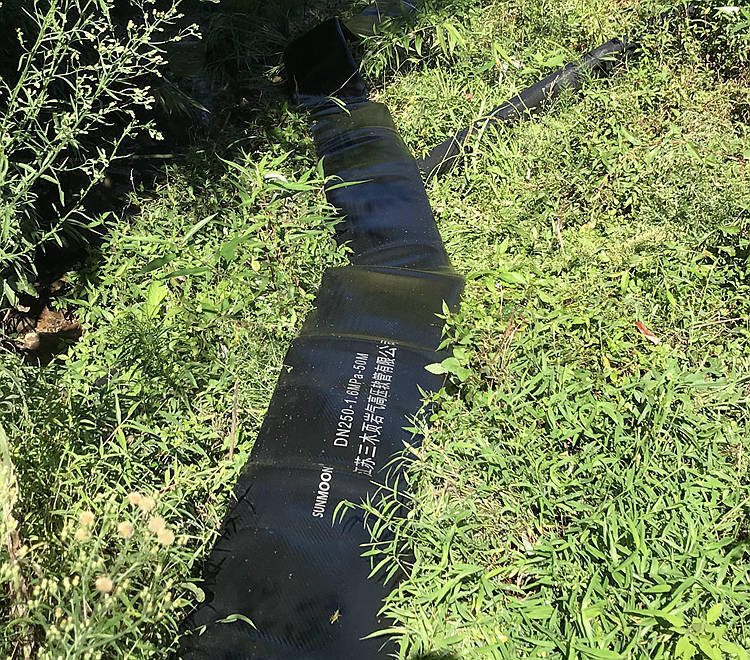
TPU layflat hoses offer better abrasion resistance, flex fatigue performance, and UV stability than standard PVC hoses, which means they last longer and fail less often under repeated high-pressure use. [flystablehose]
Yes, TPU layflat hoses designed for high pressure applications can operate safely within their rated working pressure range, provided that pump sizing, pressure control, and installation are correctly engineered. [flystablehose]
For high-volume water transfer on large projects, contractors often choose larger diameters such as 10" or 12" TPU layflat hoses, which help reduce friction losses and increase flow capacity. [alibaba]
Manufacturers like Sunmoon can supply TPU layflat hoses in standard lengths up to around 200 m per roll, allowing long vertical runs with fewer couplings and fewer potential leakage points. [alibaba]
Inspect for cuts, abrasions, bulges, kinks, damage near couplings, and any soft or discolored sections, and remove from service any hose that shows structural damage before pressurizing. [selectwater]
1. Hashmeta. "SEO for Manufacturing Companies: Complete Industrial Marketing Guide." [https://hashmeta.com/blog/seo-for-manufacturing-companies-complete-industrial-marketing-guide/] [hashmeta]
2. Konstruct Digital. "SEO for Manufacturers: How to Effectively Target Niche Audiences." [https://www.konstructdigital.com/seo/seo-manufacturers/] [konstructdigital]
3. wpDuo. "6 SEO Tips for Manufacturers | Industrial SEO." [https://wpduo.com/blog/seo-for-industrial-manufacturers/] [wpduo]
4. Fly Stable Hose. "Everything You Need to Know About High Pressure Layflat Hose." [https://flystablehose.com/blog/high-pressure-layflat-hose-guide/] [flystablehose]
5. Papageno Group. "The Applications of PVC Lay Flat Hose in Construction." [https://www.papagenogroup.com/news/The-Applications-of-PVC-Lay-Flat-Hose-In-Construction-178.html] [papagenogroup]
6. Alibaba. "SUNMOON High Precision Large Diameter 10\" 12\" TPU Layflat High …" [https://www.alibaba.com/product-detail/SUNMOON-high-precision-large-diameter-10_60750637941.html] [alibaba]
7. Select Water Solutions. "Layflat Hose for Oilfield Water Transfer." [https://www.selectwater.com/revolutionizing-layflat-hose-technology-for-produced-water-applications/] [selectwater]
8. Venntov. "Experience Matters: How to Write Content for Google's E-E-A-T Guidelines." [https://venntov.com/blogs/blog/experience-matters-how-to-write-content-for-googles-e-e-a-t-guidelines] [venntov]
9. Tiecas. "A Guide to Writing Industrial Blogs | Tips for Manufacturing Content." [https://www.tiecas.com/guide-to-writing-industrial-blogs/] [tiecas]
10. Mercury. "E-E-A-T Optimized Blog Post: A Guide for Humans & AI." [https://mtsoln.com/blog/research-726/how-to-write-an-e-e-a-t-optimized-blog-post-for-humans-ai-2268] [mtsoln]


