

Views: 222 Author: Loretta Publish Time: 2026-01-13 Origin: Site


Content Menu
● What Is Hose Failure Analysis?
● Why Hose Failures Are Critical for Safety and Cost
● Hose Construction and Its Role in Failure Modes
● Step‑by‑Step Process for Inspecting a Failed Hose
>> Step 1 – Make the System Safe
>> Step 2 – Cut and Prepare a Clean Cross Section
>> Step 3 – Inspect the Inner Tube
>> Step 4 – Inspect the Reinforcement
>> Step 5 – Inspect the Outer Cover
● Common Hose Failure Modes and What They Reveal
>> Typical Failure Modes in Practice
● Root Causes Behind Hose Failure
● Practical Checklists for Preventing Hose Failures
>> Installation and Routing Best Practices
>> Operating Controls and Monitoring
>> Maintenance, Documentation, and Replacement
● Turn Every Failed Hose into Actionable Insight
● FAQs About Hose Failure Analysis
>> 1. How often should hoses be inspected?
>> 2. Can a hose that has leaked once be safely repaired?
>> 3. What is the most common cause of hose failure?
>> 4. How can pressure surges be distinguished from normal wear?
>> 5. Does using a higher‑rated hose always prevent failure?
Understanding why a hose has failed is essential to improving safety, reducing downtime, and extending system life. This guide explains how to analyze a damaged hose—especially its cross section—to identify true root causes and define effective corrective actions.[1][2][3][4]
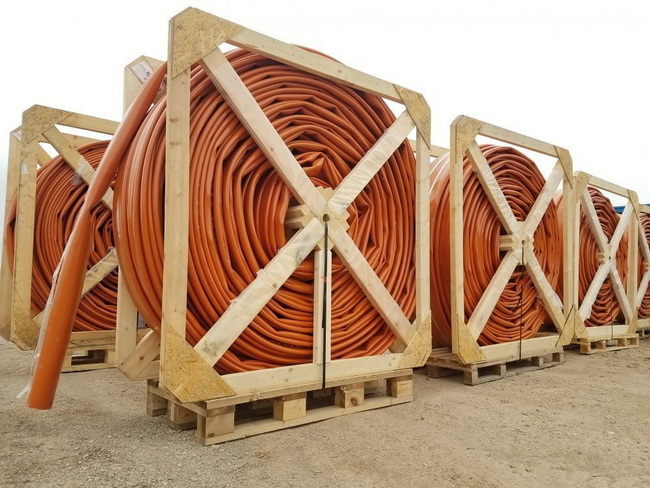
Hose failure analysis is a structured method of examining a damaged hose to determine the mechanical, chemical, or operational reasons behind its failure. It focuses on visible evidence in each layer of the hose and links that evidence to specific system conditions, such as pressure surges, fluid incompatibility, and improper installation.[2][4][5][6]
A consistent analysis process helps maintenance and engineering teams move away from simple part replacement and toward data-driven decisions that improve overall system reliability.[7][4]
A single hose failure can create serious safety hazards, including high-pressure fluid injection, slips, fire risks, and environmental contamination. At the same time, unplanned shutdowns, emergency service calls, and secondary damage to pumps or cylinders can dramatically increase operating costs.[3][1][2][7]
When failures are investigated systematically, the findings can be used to improve hose routing, material selection, and operating practices, reducing both risk and lifecycle cost.[4][3]
Most industrial and hydraulic hoses share a layered structure that directly influences how they fail under stress.[5][1]
- Inner tube: Carries the fluid and must resist chemical attack, temperature, and erosion.[5]
- Reinforcement: Provides mechanical strength against internal pressure and external loads.[8][6]
- Outer cover: Protects against abrasion, weathering, and environmental exposure.[1][3]
In thermoplastic polyurethane (TPU) layflat hoses, a TPU tube is combined with textile reinforcement and a protective outer TPU layer, designed to withstand high pressure, repeated deployment, and abrasive environments.[9][10]
A clear, repeatable inspection process improves the accuracy and consistency of hose failure analysis.[2][4]
Before touching any failed hose, ensure that all related systems are safely depressurized and isolated.[11][12]
1. Shut down the power source and lock out relevant equipment.[11]
2. Relieve residual pressure in the circuit and verify zero pressure using gauges where possible.[13][11]
3. Drain remaining fluid into appropriate containers and manage it according to environmental guidelines.[14][2]
In long hose runs, especially in mobile or temporary setups, verify that pressure has dissipated along the entire length to prevent unexpected discharge.[10][1]
A clean cross section makes it easier to see subtle changes in each layer.[6][15]
- Use a sharp cutter or saw that will not crush or burn the hose wall.[8][6]
- Cut a short ring near the most heavily damaged area and an additional ring from an apparently intact section for comparison.[15][2]
- Make a straight, single cut through each ring so the cross section stays as undisturbed as possible.[6][15]
Crushed or deformed cuts can hide or mimic crack patterns and may lead to incorrect conclusions about the failure mechanism.[16][15]
The inner tube provides direct evidence of how the conveyed fluid and temperature conditions affected the hose.[1][5]
Key indicators:
- Smooth, uniform surface: Generally consistent with proper fluid compatibility and normal operating conditions.[5]
- Longitudinal cracks or splits: Often linked to thermal aging, chemical attack, or repeated cyclical pressure and vacuum.[2][6]
- Swelling, softening, or blistering: Typical signs of fluid incompatibility, external contamination, or excessive temperature.[1][2]
- Erosion and grooves: Suggest high-velocity flow with abrasive particles or improper filtration.[17][1]
In hoses used for abrasive slurries or contaminated water, progressive erosion of the inner tube can precede wall perforation and sudden leakage.[17][2]
The reinforcement layer is responsible for resisting internal pressure and external mechanical loads, so its condition is central to failure analysis.[6][5]
Points to review:
- Uniform, undamaged reinforcement: Suggests that the main failure mechanism may originate in the inner tube or outer cover, not in overall pressure capacity.[5]
- Localized broken wires or frayed textile: Frequently tied to mechanical damage during installation, sharp bending, or twisting under load.[8][6]
- Clean, large-scale break in reinforcement: Often associated with pressure that exceeded the hose's rating, possibly due to pressure spikes or blocked flow.[3][2]
- Corrosion or discoloration in metallic reinforcement: Indicates moisture ingress or chemically aggressive fluid, reducing strength over time.[3][17]
If the reinforcement appears spirally distorted in the cross section, it may indicate torsional stress introduced during installation or operation.[8][6]
The outer cover records the interaction between the hose and its environment.[3][1]
Look for:
- Smooth surface with minor wear: Typically corresponds to non-aggressive environments and correct routing.[3]
- Abrasion and exposed reinforcement: Points to continuous rubbing against frames, supports, or neighboring hoses.[1][3]
- Longitudinal cracking and hardening: Suggests repeated bending beyond recommended radius or vibration over time.[6][8]
- “Alligator skin” or circular cracking: A common result of ozone or UV aging, particularly in outdoor applications.[1][3]
Localized cuts and gouges usually reflect contact with sharp edges, tools, or debris rather than internal pressure alone.[8][1]
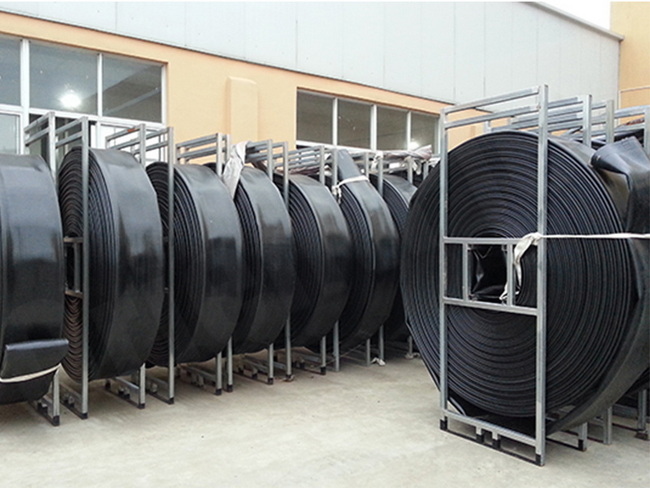
Different visual patterns in a damaged hose correspond to specific failure modes that can be traced back to operating conditions.[2][3]
Failure mode | Typical visual indicators in cross section | Likely underlying causes |
Explosive burst | Clean rupture, reinforcement flared outward, large opening in wall. | Excessive working pressure or sudden pressure surge beyond rating. |
Localized bulge then burst | Thin wall and damaged reinforcement in a restricted area. | Internal corrosion, local overheating, or concentrated mechanical damage. |
Progressive leakage without burst | Longitudinal cracks or pinholes in inner tube, intact reinforcement. | Fluid incompatibility, thermal aging, or minor particulate erosion. |
Failure at fitting or crimp | Deformation near fitting, clean reinforcement at end. | Incorrect crimp depth, wrong ferrule, or poor assembly practices. |
Bending fatigue | Breaks near fittings, outer cover wrinkled or cracked longitudinally. | Bend radius below minimum, vibration, or misrouted hose. |
Abrasion failure | Outer cover worn through, visible reinforcement, inner tube perforated. | Continuous rubbing on surfaces, missing guards, inadequate support. |
Temperature degradation | Hardened, brittle, or softened material with discoloration. | Operation outside temperature ratings or close proximity to heat sources. |
Properly identifying these patterns ensures that corrective measures address the true cause instead of treating only the symptoms.[4][2]
Visual evidence from the hose must be linked to real operating conditions to obtain meaningful root causes.[4][2]
Frequent root causes include:
- Misapplied hose specification: Pressure, temperature, or fluid requirements not aligned with hose capabilities.[11][3]
- Installation errors: Excessive bending, twisting, stretching, or incorrect crimping during assembly and routing.[6][8]
- Environmental exposure: Extended contact with UV, ozone, chemicals, or abrasive surfaces.[3][1]
- Poor maintenance and inspection: Lack of regular checks, operating beyond service life, and no follow-up after early warning signs.[7][1]
Connecting inspection findings to these categories allows engineers and technicians to implement targeted improvements in design and practice.[7][4]
Preventive actions are most effective when translated into simple, repeatable checklists for design, installation, operation, and maintenance.[7][1]
- Select hose types and sizes according to established standards and manufacturer data.[11][7]
- Respect minimum bend radius and avoid routing that forces sharp bends or kinks.[6][3]
- Prevent twist by aligning fittings correctly and allowing hoses to assume their natural shape.[18][8]
- Use clamps, saddles, or guides to keep hoses away from sharp edges and high-temperature components.[1][3]
When applicable, use protective sleeves or guards in locations with known abrasion risk.[3][1]
- Confirm that system pressure and temperature remain within hose ratings, including allowances for transient spikes.[19][3]
- Install pressure relief devices or accumulators in circuits with frequent rapid valve operations.[19][2]
- Maintain proper filtration and cleanliness to control particulate contamination and reduce internal erosion.[14][17]
- Monitor fluid condition with periodic analysis to detect water, oxidation, or chemical changes.[17][2]
Stable, well‑monitored operating conditions reduce mechanical and chemical stress on hose materials over their service life.[19][7]
- Conduct regular visual inspections for cracks, bulges, blisters, abrasion, and exposed reinforcement.[19][1]
- Replace hoses at or before recommended service intervals, especially in safety‑critical systems.[7][3]
- Record inspection results, failure locations, and observed modes in a maintenance log.[4][17]
- Use trends in failure data to refine specifications, routing guidelines, and maintenance intervals.[4][7]
Systematic documentation transforms individual failures into a continuous improvement tool rather than isolated incidents.[2][4]
Each damaged hose is an opportunity to understand what is really happening inside a system and to prevent similar problems in the future. By applying a clear inspection process, documenting cross‑section findings, and linking visible damage to operating conditions, maintenance and engineering teams can systematically reduce unplanned downtime and safety risk.[2][4][7]
For operations that rely heavily on hose performance, consider formalizing hose failure analysis as part of your maintenance strategy and working with experienced technical partners who can help interpret findings and optimize hose selection, routing, and service intervals.[20][2]
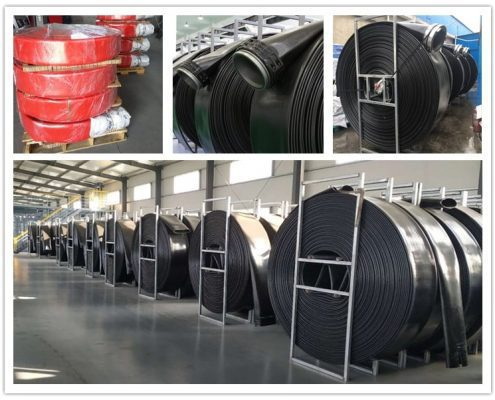
Inspection frequency depends on application severity, but many operations perform quick visual checks before each use or shift and schedule more detailed inspections based on operating hours or calendar intervals. Regular inspection helps detect early warning signs, such as minor abrasion or small leaks, before they evolve into major failures.[12][19][7][1]
In high‑pressure or safety‑critical applications, hoses that have already failed are usually removed from service rather than repaired, especially when reinforcement or fittings are involved. Replacement is preferred because internal damage may not be fully visible yet can significantly reduce residual strength.[11][8][2][6]
Many field studies point to misapplication and installation errors—such as incorrect routing, inadequate bend radius, and poor assembly—as leading contributors to hose failure. Proper selection, adherence to guidelines, and trained installers can prevent a large percentage of these issues.[11][2][7][3]
Failures related to pressure surges often show sudden, clean ruptures with reinforcement pushed outward, while wear‑related failures typically develop gradually, with clear signs of abrasion, cracking, or corrosion before final rupture. Comparing cross sections from the failure site with undamaged sections can help confirm whether the hose was generally sound or already weakened.[15][2][6][3]
Using a higher pressure or temperature rating can provide extra safety margin, but failure can still occur if routing, environment, fluid compatibility, or installation practices are poor. A complete solution combines correct specification with proper installation, operation, and maintenance rather than relying on rating alone.[7][11][1][3]
[1](https://www.allhose.com.au/preventing-hose-failures/)
[2](https://gushanrubber.com/hydraulic-hose-failure/)
[3](https://www.new-line.com/information/causes-of-hose-failure)
[4](https://www.penflex.com/news/basic-steps-in-hose-assembly-failure-analysis/)
[5](https://shotonhydraulic.com/hydraulic-hose-assembly-failure/)
[6](https://www.orient-hose.com/failure-mode-analysis-of-hydraulic-hose-assembly-ii/)
[7](https://marshall-equipement.com/blog/common-hydraulic-hose-failures-and-solutions/)
[8](https://www.linkedin.com/pulse/hydraulic-hose-assembly-failure-analysis-hydraulic-fittings)
[9](https://www.jafirehose.com/news/industry-news/the-ultimate-guide-to-tpu-lay-flat-hoses-benefits-uses-and-selection-tips.html)
[10](https://www.sinohose.com/precautions-when-using-a-tpu-layflat-hose.html)
[11](https://www.alfagomma.com/wp-content/uploads/2016/05/scelta_immagazzinamento_tubo_idraulico.pdf)
[12](https://jasonhosesolutions.com/guideline/sae-j1273-hydraulic-guidelines/)
[13](https://brightsunindustries.com/blog/hydraulic-hose-failure-warning/)
[14](https://comphydraulic.com/hydraulic-hose-failure-causes-prevention/)
[15](https://ureaknowhow.com/wp-content/uploads/2024/04/2012-Budinski-Failure-analysis-of-a-rubber-hose-in-anhydrous-ammonia-service.pdf)
[16](https://www.scientific.net/SSP.270.68)
[17](https://brightsunindustries.com/blog/hydraulic-hose-failures-and-prevention/)
[18](https://boahydraulics.com/articles/understanding-hydraulic-hose-failures)
[19](https://www.millerhydraulic.com/6-causes-of-hydraulic-hose-failure-and-how-to-prevent-them)
[20](https://www.strongflex.com/project/tpu-layflat-hose/)
[21](https://www.sciencedirect.com/science/article/abs/pii/S135063072500559X)
[22](https://journals.vilniustech.lt/index.php/Aviation/article/view/17751)
[23](https://www.sciencedirect.com/science/article/abs/pii/S1350630724005867)
[24](https://schauenburg-hose.com/media/12/50/0e/1732022544/SHT_Agriculture_Broschuere_EN_20241011_VIEW.pdf%3Fts=1732022544)
[25](https://www.semanticscholar.org/paper/Failure-analysis-of-a-metal-bellows-flexible-hose-Pierce-Evans/7c8900bf85943636a24951ecab52e2bcf32c4948)
[26](https://dspace.lib.cranfield.ac.uk/server/api/core/bitstreams/b8b91a90-8ca3-4df8-b46b-857d1bf8f6cc/content)
[27](https://www.strongflex.com/common-hydraulic-hose-failures-solution/)


