

Views: 222 Author: Sunmoon Publish Time: 2026-04-25 Origin: Site


A Frac Water Transfer Hose is a large-diameter, usually flat lay polyurethane hose used to move huge volumes of water from source ponds, pipelines, or storage to the frac site. Compared with rigid steel lines, modern thermoplastic and composite hose assemblies offer better corrosion resistance, lighter weight, and easier deployment, which is why operators worldwide are replacing metal lines with flexible hoses. [indexbox]
In the frac segment specifically, the global frac hose market is estimated around USD 1.2 billion in 2024 and projected to reach USD 2.5 billion by 2033, driven by more intensive hydraulic fracturing and higher pressure operations. This growth puts more focus on hose reliability, rapid leak response, and correct installation practices. [verifiedmarketreports]
> As a manufacturer (Sunmoon) specializing in frac water transfer hose and flat polyurethane hose, we see the same failure patterns every season—and most of them are preventable with the right design and operating habits. [rubberworxhose]
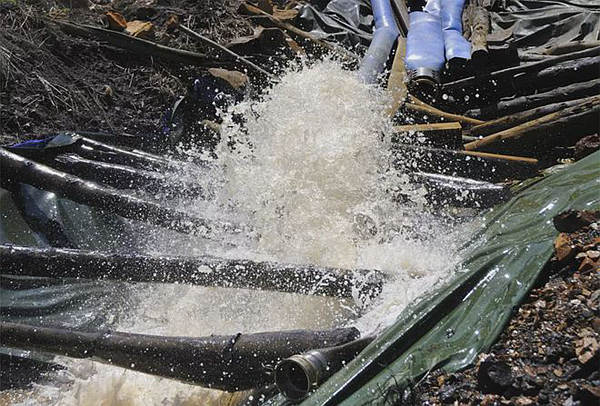
From both field experience and industry data, most frac water transfer hose failures trace back to a few root causes. [handcraftedhose]
Typical failure mechanisms include:
- Abrasion and external damage
Repeated traffic, sharp rocks, and unprotected road crossings wear through the hose outer layer and into the reinforcement. [handcraftedhose]
- Over‑pressure or pressure spikes
Systems that operate too close to maximum rating, or that see frequent surges during pump start-up and valve changes, can overstress the hose and cause sudden rupture. [millerhydraulic]
- Improper bend radius and kinking
Excessive bending, especially near fittings, separates or weakens reinforcement layers and leads to leaks or bulges. [rubberworxhose]
- Poor fitting or coupling design
Rough or poorly machined coupling sleeves can scratch the inner wall of a polyurethane hose; water migrates into the hose body and creates dangerous blisters near the coupling. [fescolo]
- Inadequate support near pumps
Near high‑vibration pumps, hoses may whip, twist, or rub against sharp surfaces, dramatically accelerating wear. [handcraftedhose]
Modern polyurethane hoses are designed to be tough—many ether-based PU hoses are highly abrasion‑resistant, kink‑resistant, and pressure‑resistant when used within their design envelope. But no hose survives long if it is crushed by trucks, over‑pressured, or installed on rough fittings. [hoseassemblytips]
Typical field scenario (Sunmoon case):
A frac water transfer hose crosses a road without proper protection. After repeated truck traffic, the hose is punctured and a large leak appears. Flow losses are severe and water may wash out the surrounding ground.
1. Shut down the pump immediately
- Stop the pump to eliminate flow and pressure in the damaged section.
- Confirm the line is fully depressurized before approaching the leak. [millerhydraulic]
2. Isolate the damaged hose segment
- Use shutoff or stop clamps to clamp the hose about 1 meter (3 ft) on each side of the damaged area.
- Verify that the clamps fully seal and no residual flow remains.
3. Cut out the damaged section
- Using appropriate cutting tools, remove the visibly punctured or badly abraded hose section.
- Inspect both cut ends; if the reinforcement looks crushed, melted, or delaminated, cut back to sound material.
4. Install new couplings on both sides
- Fit quick couplings on each of the two cut ends of the frac water transfer hose.
- Ensure:
- Coupling barbs or sleeves match the hose inside diameter and pressure rating. [beswick]
- No sharp edges remain on the coupling that could damage the PU inner wall.
5. Reconnect the hose line
- Connect the two quick couplings to restore a continuous flow path.
- Secure with appropriate clamps or locking mechanisms according to the manufacturer's instructions.
6. Remove clamps and re‑pressurize carefully
- Gradually release the shutoff clamps and slowly bring the pump back online.
- Check for leaks under low pressure first, then transition to full operating pressure while monitoring the repair area.
7. Add road‑crossing protection
- After restoring service, install protective covers, ramps, or steel plates at the road crossing to prevent future crush damage. [rubberworxhose]
> From our field projects, we see that well-planned road crossings dramatically reduce unplanned shutdowns and emergency repairs on frac water transfer hoses.
Typical field scenario (Sunmoon case):
The leak occurs very close to the pump, where pressure is highest and vibration is strongest. The hose may have stretched and bent during pressurization, causing the outer wall to rub on a sharp object and finally wear through.
In real operations, stopping the pump is not always immediately possible. In that situation:
- Lay a protective pad (rubber mat, wooden board, or purpose-made hose saddle) under the leaking area to isolate it from sharp or abrasive surfaces. [rubberworxhose]
- Use strong fixing bands or straps to secure the hose and reduce vibration and movement.
- Monitor the leak to ensure it remains stable and does not escalate into a rupture.
This is a temporary mitigation only. Continuing to run a leaking high‑pressure frac water transfer hose carries risk; plan a controlled shutdown as soon as the transfer duty allows. [millerhydraulic]
1. Shut down the pump and depressurize
- This must be done immediately if the hose jacket or reinforcement is visibly torn, or if the leak jets out under high energy.
2. Replace the damaged hose section
- Unlike small weeps, a severe near‑pump leak usually means the hose has seen excessive stress and should be replaced, not patched. [handcraftedhose]
3. Improve protection and support after replacement
After installing a new polyurethane frac hose:
- Re-route the hose to avoid sharp edges and tight bends near the pump suction or discharge.
- Install supports, clamps, or saddles to minimize bending and vibration.
- Verify operating pressure and anticipated pressure surges are well below the hose's rated working pressure. [millerhydraulic]
A significant share of pump‑side hose failures stem from improper layout and inadequate supports, not from the hose material itself.
Typical field scenario (Sunmoon case):
A bulge or blister forms near the coupling of the polyurethane frac hose. The hose looks swollen in a localized area, often just behind the coupling collar.
From a manufacturer's failure analysis perspective, this usually indicates:
- The coupling sleeve surface was not properly finished, and
- The sleeve has scratched the PU inner wall during installation, allowing water to migrate between the inner wall and reinforcement layers. [fescolo]
- The blister area experiences concentrated stress during pressurization and may burst without much warning. [handcraftedhose]
- If multiple hoses show similar blistering, it often points to a systemic coupling design or manufacturing problem.
1. Replace the affected coupling immediately
- Remove the coupling associated with the blistered area.
- Inspect the sleeve and barb surfaces for sharp edges, machining marks, or burrs.
2. Rework coupling surfaces
- Perform surface finishing (polishing, deburring) on the coupling sleeve to ensure all fluid-contact surfaces are smooth. [beswick]
- Check dimensional tolerances against the hose manufacturer's recommendations.
3. Replace any hose that has developed a significant blister
- Once water has migrated into the hose body, the structural integrity of that area is compromised.
4. Investigate if the entire coupling batch is defective
- If large numbers of couplings produce similar bulges, the coupling manufacturing process is likely non‑conforming.
- In many real projects, this occurs when the customer sources couplings independently from low‑cost suppliers without proper surface treatment.
At Sunmoon, our technical team routinely:
- Advises customers on surface finishing requirements for third‑party couplings.
- Inspects and guides coupling installation on site to ensure the polyurethane frac hoses will not be damaged during assembly.

Beyond emergency repairs, high‑performing frac operations focus on prevention. As a manufacturer and field support partner, we recommend the following best practices.
- Ensure the hose has:
- Adequate working pressure rating with margin for surges. [millerhydraulic]
- High abrasion resistance for ground or road use. [hoseassemblytips]
- Temperature and UV resistance suitable for local climate conditions (hot deserts, freezing winters, etc.). [fescolo]
- Confirm chemical compatibility with any additives present in the frac water.
- Use protective ramps, sleeves, or steel plates wherever hoses cross vehicle routes. [rubberworxhose]
- Maintain gentle bends without kinking; respect the hose's minimum bend radius. [rubberworxhose]
- Keep crossings visible and marked for truck drivers and equipment operators.
- Operate below the hose's rated working pressure and monitor for surges during start‑up, valve changes, or compressor/pump transients. [handcraftedhose]
- Install pressure relief devices where appropriate.
- Use control procedures (slow valve operation, soft starts) to limit transients.
- Confirm:
- Correct size match between hose ID and coupling barb/sleeve. [beswick]
- All surfaces are smooth, deburred, and free of sharp edges. [beswick]
- For third‑party couplings, request manufacturing and surface treatment documentation, or have them inspected by an experienced hose technician.
- Schedule daily visual inspections in active frac operations to look for:
- Damp or softened spots
- Abrasion marks
- Bulges or deformations near couplings
- Unusual noise or vibration near pumps
- Keep repair kits (clamps, couplings, hose sections) on site for rapid intervention.
Several market studies point to strong growth in industrial and frac hose demand through the 2030s, driven by:
- Increased hydraulic fracturing activity and unconventional oil & gas development. [intelmarketresearch]
- A broader industrial hose market expected to reach over US$ 35 billion by early 2030s, with annual growth rates above 10% in some segments. [coherentmarketinsights]
- A shift from metal lines to flexible thermoplastic and composite hoses to improve corrosion resistance and installation speed. [indexbox]
At the same time, asset owners and regulators are tightening expectations on:
- Operational safety
- Environmental protection (spill control)
- Total cost of ownership
This combination of higher volumes, higher pressures, and stricter compliance makes hose design, installation quality, and proactive leak management central to sustainable frac operations. [archivemarketresearch]
As a China-based manufacturer of frac water transfer hoses and flat polyurethane hoses, Sunmoon provides:
- Customized hose designs for different working pressures, temperatures, and chemical environments. [fescolo]
- Engineering guidance on:
- Layout design near pumps and road crossings
- Correct coupling selection and surface treatment
- Field assembly and installation best practices
- On-site technical support for key international projects, including:
- Inspection of third‑party couplings
- Supervision of hose installation and pressure testing
- Troubleshooting of early leaks or bulges
We build each project around the goal of reducing unplanned downtime, minimizing environmental risk, and extending hose life in demanding frac applications.
| Scenario | Typical Cause | Immediate Action | Long-term Prevention |
|---|---|---|---|
| Leak at road crossing (low pressure) | Traffic crush, puncture, poor protection (handcraftedhose) | Stop pump, clamp, cut out section, add couplings, restart | Install ramps/plates, avoid sharp edges, routine checks |
| Leak near pump (high pressure) | Vibration, bending, abrasion near pump (handcraftedhose) | If minor: pad & strap; if severe: stop pump, replace hose | Re-route, add supports, control pressure spikes |
| Bulge near coupling | Scratched inner wall from rough sleeve (rubberworxhose) | Replace hose and coupling; rework coupling surface | Specify coupling finish, inspect third‑party couplings |
If you are planning or operating a frac water transfer line and want fewer leaks, safer layouts, and longer hose life, reach out to Sunmoon's engineering team:
- Share your pressure, temperature, and fluid requirements.
- Ask for custom frac water transfer hose designs and coupling recommendations.
- Request on‑site or remote installation guidance for your next deployment.
By involving the manufacturer early, you move from emergency hose repairs to a predictive, engineered hose management strategy.

The safest immediate action is to shut down the pump and depressurize the system before approaching the leak. Then clamp the hose on both sides, cut out the damaged section if needed, and reinstall with appropriate quick couplings. [millerhydraulic]
Only as a short-term emergency measure and only if the leak is minor. Use pads and straps to stabilize the hose, but plan a controlled shutdown and permanent repair as soon as possible. [handcraftedhose]
Bulging (blistering) usually happens when a rough coupling sleeve scratches the inner wall, allowing water to migrate into the hose structure. Over time, pressure inflates this damaged zone, creating a bulge. [fescolo]
During active frac campaigns, we recommend daily visual inspections and more detailed checks before each new stage or major pressure change. Look for abrasion, damp spots, bulges, and any deformation near couplings. [rubberworxhose]
Polyurethane flat hoses are lighter, faster to deploy, more corrosion‑resistant, and easier to store than rigid steel lines. They also support modular layouts that can be reconfigured quickly as field conditions change. [intelmarketresearch]
1. IndexBox – *Oil and Gas Hose Assemblies Market Demand to 2035*
https://www.indexbox.io/blog/oil-and-gas-hose-assemblies-market-forecast-points-higher-toward-2035-driven-by-offshore-expansion/ [indexbox]
2. Verified Market Reports – *Global Frac Hose Market Size, Industry Share & Forecast 2026–2034*
https://www.verifiedmarketreports.com/product/frac-hose-market/ [verifiedmarketreports]
3. Coherent Market Insights – *Industrial Hose Market Size and Opportunities, 2026–2033*
https://www.coherentmarketinsights.com/industry-reports/industrial-hose-market [coherentmarketinsights]
4. Archive Market Research – *Frac Hose 2026 Trends and Forecasts 2033*
https://www.archivemarketresearch.com/reports/frac-hose-385995 [archivemarketresearch]
5. Beswick Engineering – *How to Install and Remove Polyurethane Tubing When Using Barbed-Style Fittings*
https://www.beswick.com/resources/how-to-install-and-remove-polyurethane-tubing-when-using-barbed-style-fittings/ [beswick]
6. Handcrafted Hose – *Industrial Hose Failures: Top Causes and Fixes*
https://www.handcraftedhose.com/post/industrial-hose-failures-top-causes-and-fixes [handcraftedhose]
7. Rubberworx Hose – *Hose Failure Analysis: Common Causes and Preventive Measures*
https://rubberworxhose.com/hose-failure-analysis-common-causes-and-preventive-measures [rubberworxhose]
8. Fescolo – *A Complete Guide to Polyurethane Tubing and Where to Use It*
https://www.fescolo.com/blog/a-complete-guide-to-polyurethane-tubing-and-where-to-use-it.html [fescolo]
9. Miller Hydraulic – *Hydraulic Hose Failures: 6 Common Causes and Prevention Tips*
https://www.millerhydraulic.com/6-causes-of-hydraulic-hose-failure-and-how-to-prevent-them [millerhydraulic]


