

Views: 222 Author: Loretta Publish Time: 2026-01-21 Origin: Site


Content Menu
● The Core Functions of Industrial Hoses
>> 3. Connection and Flexibility
● Main Types of Industrial Hoses and Applications
>> Key Application-Based Hose Types
>> Typical Industries Using Industrial Hoses
● Why Hose Material and Design Matter
● TPU Layflat Hoses: A High-Performance Industrial Solution
>> What Is a TPU Layflat Hose?
>> Key Advantages of TPU Layflat Hoses
● Where TPU Layflat Hoses Excel
>> Common TPU Layflat Applications
>> Indicative Performance Range
● TPU Layflat vs Traditional Rubber Layflat Hoses
● Practical Steps to Select the Right Industrial Hose
>> 1. Define the Application and Media
>> 2. Specify Pressure and Temperature
>> 3. Evaluate Environment and Mechanics
>> 4. Choose Material and Construction
>> 5. Define Length, Couplings, and Accessories
● Best Practices for Operating and Maintaining Industrial Hoses
>> Storage and Lifecycle Management
● Take Action: Optimize Your Industrial Hose System Today
● Frequently Asked Questions (FAQ)
>> 1. What is the main function of an industrial hose?
>> 2. When should TPU layflat hoses be used instead of rubber hoses?
>> 3. How do I determine the correct pressure rating for a hose?
>> 4. Are TPU layflat hoses suitable for chemicals and fuels?
>> 5. What maintenance do industrial hoses require?
Industrial hoses are critical components that keep modern factories, construction sites, and energy projects running safely and efficiently by enabling power transmission and material transfer across complex systems. For engineering-driven TPU layflat hose manufacturers like Sunmoon, optimizing hose performance, safety, and lifecycle cost has a direct impact on customers' productivity and profitability.
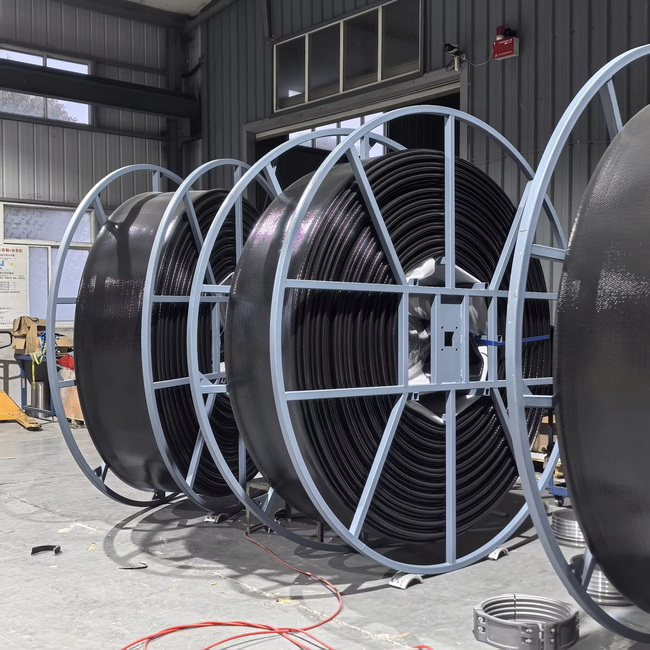
Industrial hoses are flexible connectors designed to convey liquids, gases, slurries, and small solids between equipment, storage points, and process units in industrial environments. Unlike rigid piping, hoses absorb movement, vibration, and misalignment, providing a safer and more adaptable transfer solution.
- Common media: water, steam, oil, fuel, chemicals, air, abrasive slurries, food-grade products, and powders.
- Common environments: petroleum and chemical plants, construction sites, agriculture, mining, food and beverage plants, shipyards, and firefighting systems.
Industrial hoses fulfill several mission-critical functions within fluid and material handling systems. Selecting the correct hose for each function is essential for safety, reliability, and regulatory compliance.
In hydraulic and pneumatic systems, hoses transmit energy in the form of pressurized fluids.
- Hydraulic hoses carry high-pressure oils or other fluids to actuators, motors, and cylinders, enabling lifting, pressing, and motion control.
- Pneumatic hoses supply compressed air to tools, control valves, and actuators, often in mobile or vibrating equipment where rigid pipes are impractical.
Industrial hoses also serve as transport pipelines for diverse media across short and long distances.
- They transfer water, chemicals, crude oil, fuels, slurries, and powders between tanks, trucks, pipelines, and process units.
- Specialized designs for suction and discharge allow both drawing in and discharging liquids and slurries under varying pressure conditions.
Hoses bridge static and moving equipment, ensuring continuity where rigid lines cannot cope with movement.
- They absorb vibration, thermal expansion, and misalignment between pumps, manifolds, storage tanks, and mobile equipment.
- They provide flexible connections for temporary lines, rental systems, and emergency bypass operations.
Well-designed hoses act as a safety barrier, preventing leaks, spills, and uncontrolled releases of hazardous media.
- Correct hose and fitting selection reduces the risk of bursting, chemical attack, and joint failure under pressure or temperature extremes.
- In industries such as chemical processing and oil and gas, hose integrity helps meet environmental and occupational safety regulations.
Different industries use specialized hose types engineered for specific media, pressure, and temperature ranges. Selecting a hose by application is the fastest way to narrow down suitable constructions.
- Water and irrigation hoses: General water transfer, dewatering, irrigation lines, and pump discharge in construction and agriculture.
- Air and pneumatic hoses: Compressed air supply for tools, spray systems, and automation equipment.
- Hydraulic hoses: High-pressure hoses for hydraulic machinery, mining equipment, and mobile construction equipment.
- Chemical hoses: Special linings for acids, solvents, and aggressive fluids to ensure chemical resistance and long service life.
- Oil and petroleum hoses: Designed for crude oil, refined fuels, and petroleum derivatives in loading, unloading, and transfer systems.
- Material handling hoses: Thick, abrasion-resistant designs for sand, slurry, gravel, powders, and bulk solids.
- Food-grade hoses: Formulated for hygienic transport of beverages and food products, often with smooth, non-toxic inner tubes.
- Agriculture and irrigation
- Construction and infrastructure
- Mining and mineral processing
- Oil, gas, and petrochemical
- Chemical processing
- Food and beverage manufacturing
These sectors rely on hoses for day-to-day operations, from simple water transfer to complex multi-phase fluid handling.
The material system of an industrial hose, including tube, reinforcement, and cover, drives performance, compliance, and lifetime cost. Matching hose design to the media and environment significantly reduces downtime, leaks, and replacement frequency.
- Tube (inner layer): Directly in contact with the medium and selected for chemical compatibility, temperature resistance, and cleanliness, such as rubber, thermoplastics, PTFE, or TPU.
- Reinforcement: Textile, synthetic yarn, or steel wire structures providing strength against internal pressure and external forces.
- Cover (outer layer): Protects against abrasion, weather, ultraviolet radiation, and chemicals in the operating environment.
- Working pressure and burst pressure
- Temperature range, both media and ambient
- Abrasion, ultraviolet, and weather resistance
- Flexibility and minimum bend radius
- Compatibility with chemicals, oils, fuels, or potable water
For engineering-driven manufacturers, optimizing these layers allows tailor-made hoses that align with each customer's duty cycle, media, and safety standards.
For many transfer applications, especially long-distance water, slurry, or chemical transfer, TPU layflat hoses offer clear performance and lifecycle advantages over conventional rubber layflat designs.
A TPU layflat hose is a flat-coiled, flexible hose made from thermoplastic polyurethane with high-strength textile reinforcement. It remains flat and compact during storage, then becomes round and rigid under pressure when media flows through it.
- Construction: TPU tube and cover with circular woven polyester or similar synthetic reinforcement.
- Typical temperature range: approximately −46 °C to +80 °C, suitable for many outdoor and industrial environments.
- Lightweight design: Lower density and thin linings reduce hose weight compared with rubber, decreasing handling effort and logistics costs.
- Higher pressure capability: TPU layflat hoses can achieve significantly higher burst pressures than conventional rubber layflat hoses in similar sizes.
- Superior abrasion resistance: TPU provides excellent wear resistance when dragged over rough ground or used with abrasive media.
- Chemical and ultraviolet resistance: Suitable for many fuels, oils, and chemicals, and stable under prolonged sunlight in outdoor installations.
- Compact storage and easy deployment: Flat-coil design allows long lengths that are quick to deploy and retrieve in the field.
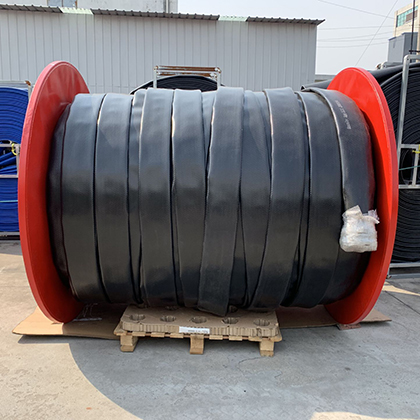
TPU layflat hoses have become a preferred option in demanding, mobile, or long-distance transfer scenarios across multiple industries. Their combination of durability, flexibility, and pressure capability directly supports higher uptime and lower total cost of ownership.
- High-volume water transfer for agriculture, irrigation, and municipal projects
- Mine dewatering and slurry transport over long distances and rough terrain
- Oil, fuel, and chemical transfer lines for temporary or semi-permanent installations
- Emergency or temporary pipeline bypass during maintenance and shutdowns
According to typical specifications, TPU layflat hoses can cover a wide range of diameters and pressures.
Size (inch) | Approx. ID (mm) | Typical working pressure (bar) | Typical burst pressure (bar) | Typical length per coil (m) | Notes |
1–3 | 25–76 | 10–16 | 30–48 | 20–200 | Lightweight, easy handling for water and general fluids. |
4–6 | 102–152 | 16–42 | 48–84 | 20–200 | High-pressure water and fluid transfer in industrial sites. |
8–12 | 203–305 | 10–20 | 30–60 | 20–200 | Long-distance transfer for mining and energy projects. |
These values are indicative ranges and can be customized by engineering-driven manufacturers according to project requirements.
Choosing between TPU and rubber layflat hoses has a direct impact on weight, pressure rating, and service life. TPU designs often deliver a better performance-to-weight ratio for demanding field applications.
Aspect | TPU layflat hose | Rubber layflat hose |
Weight | Significantly lighter with thinner lining. | Heavier due to thicker rubber lining and structure. |
Pressure capability | Higher burst pressures in comparable sizes. | Lower burst pressures in similar duty conditions. |
Abrasion resistance | Excellent for dragging over abrasive ground. | Good, but generally lower than TPU at similar duty. |
Flexibility and storage | Rolls compactly and is easy to handle. | Bulkier coils and more effort to move and deploy. |
Chemical and UV resistance | Strong resistance to many chemicals and sunlight. | More dependent on rubber compound and may age faster outdoors. |
Typical applications | High-pressure water, mining, fuel, and chemical transfer. | General water discharge and lower-pressure tasks. |
For heavy-duty, high-pressure transfer, a TPU layflat solution often lowers long-term operating and maintenance costs.
A structured selection process helps avoid mismatch and premature failures in industrial hose systems. Using a clear checklist ensures that engineering, procurement, and safety teams converge on the right specification.
- Identify the medium, such as water, oil, slurry, chemical, air, steam, or food-grade fluid.
- Clarify whether the duty is suction, discharge, or a combination of both.
- Determine maximum working pressure and required safety margin compared with burst pressure.
- Confirm operating temperature range, considering both fluid and environment.
- Check for abrasion, ultraviolet exposure, chemical splash, or mechanical impact along the hose route.
- Review required flexibility, bend radius, and installation constraints, especially in mobile or confined spaces.
- For high pressure and long runs, prioritize reinforced designs such as TPU layflat or steel-reinforced rubber hoses.
- For aggressive chemicals or food applications, select specialized tube materials with proven compatibility and certifications.
- Optimize hose length to minimize connections without creating handling problems.
- Select compatible fittings, clamps, and protective sleeves that match the hose's pressure and media.
Even high-quality hoses require correct handling and maintenance to reach their full service life. Clear operating procedures significantly reduce unplanned downtime and leak incidents.
- Avoid twisting, kinking, or exceeding the recommended minimum bend radius during installation.
- Use proper supports, guides, and clamps to prevent chafing or sharp-edge contact along the hose path.
- Inspect hoses regularly for cuts, blisters, soft spots, or exposed reinforcement, especially in high-pressure service.
- Implement replacement schedules based on operating hours, cycles, and media aggressiveness, not just visible damage.
- Store hoses flat or neatly coiled, away from direct sunlight and aggressive chemicals when not in use.
- For TPU layflat hoses, ensure they are clean and fully drained before coiling to prevent microbial growth and internal damage.
Industrial, energy, and infrastructure projects need more than standard products; they require an engineering partner who understands real operating conditions and can customize TPU layflat hoses for global applications. By sharing key data such as media, pressure, temperature, length, and environment, you can obtain tailored hose solutions that improve safety, efficiency, and lifecycle cost. Contact a specialized TPU layflat hose manufacturer now, discuss your next project in detail, and secure a high-performance, reliable hose system that supports your long-term operational goals.
Contact us to get more information!
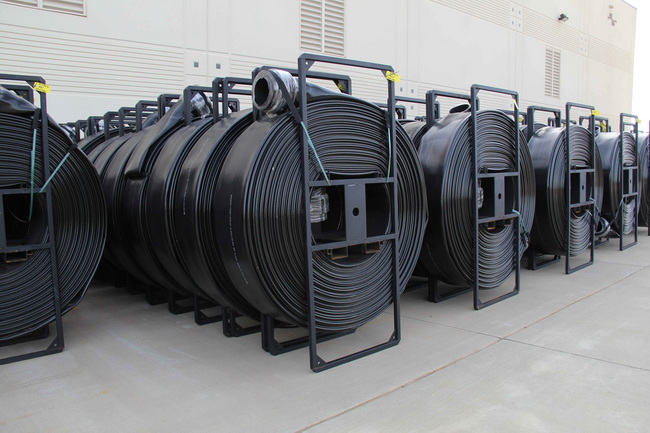
The main function of an industrial hose is to safely transfer media and power between equipment, enabling fluid handling, power transmission, and flexible connections in industrial systems.
TPU layflat hoses are ideal when projects demand high pressure, long distances, frequent deployment, and reduced weight, such as mining dewatering, large-scale irrigation, or temporary fuel and chemical transfer lines.
Define the system's maximum operating pressure, add an appropriate safety margin, and select a hose with a working pressure comfortably below its certified burst pressure for that size.
Many TPU layflat designs are compatible with a wide range of chemicals, oils, and fuels, but each application should be checked against the manufacturer's chemical resistance data and recommendations.
Industrial hoses should be inspected regularly for external damage, checked for leaks or soft spots, protected from unnecessary abrasion, and stored clean and dry when not in service.
1. https://www.strongflex.com/the-main-functions-of-industrial-hoses/
2. https://www.strongflex.com/industrial-hose/
3. https://jasonhosesolutions.com/types-of-industrial-hoses-and-their-applications/
4. https://www.globalspec.com/learnmore/flow_control_fluid_transfer/pipe_tubing_hose_fittings_accessories/industrial_hose
5. https://www.sunhose.com/tpu-layflat-hose/
6. https://www.strongflex.com/project/chemical-hose/
7. https://www.orient-hose.com/tpu-layflat-hose-has-huge-advantages/
8. https://binkelman.com/knowledge-center/types-of-industrial-hoses-and-their-applications/


