

Views: 268 Author: Sunmoon Publish Time: 2026-06-29 Origin: Site


Content Menu
● Introduction: Why Internal Surface Smoothness Matters
● Understanding TPU and NBR Layflat Hose Structures
● Internal Surface Smoothness: Material-Level Differences
>> TPU Layflat Hose Inner Bore Characteristics
>> NBR Layflat Hose Inner Bore Characteristics
● Flow Efficiency Analysis: How Smoothness Impacts Pressure Loss
>> Hydraulic Behavior in Long-Distance Transfer
>> Example Scenario: Frac Water Hose vs. Oil Transfer Hose
● Durability, Abrasion, and Long-Term Smoothness
>> TPU: Maintaining Smoothness Under Harsh Abrasion
>> NBR: Balancing Chemical Resistance and Surface Stability
● Application-Based Comparison: TPU vs. NBR Layflat Hose
>> Practical Selection Criteria for Engineers
>> TPU vs. NBR: Internal Smoothness and Efficiency Table
● Expert Insights: How Sunmoon Engineers Evaluate Flow Efficiency
>> Internal Surface Profiling and Quality Control
>> Field Case: Logistics Complexity and Custom TPU Performance
● Practical Steps: How Buyers Can Assess Hose Smoothness and Efficiency
>> Five-Step Buyer Checklist for TPU and NBR Layflat Hose
● Why Global Buyers Choose Sunmoon for TPU and NBR Layflat Hose
● Call to Action: Optimize Your Flow Efficiency with Sunmoon
● FAQ
For engineers, project owners, and procurement teams, internal surface smoothness is not a minor detail—it directly impacts flow efficiency, energy consumption, and lifecycle cost of fluid transfer systems. In long-distance layflat hose operations such as frac water transfer, mining dewatering, and industrial fluid handling, even small differences in inner bore roughness can translate into significant pressure loss and pumping costs. [china-layflat-hose]
In this article, we will compare TPU layflat hose and NBR layflat hose from the perspective of internal surface smoothness and real-world flow efficiency, based on Sunmoon's engineering and manufacturing experience as a specialized Chinese layflat hose producer serving global projects. The goal is to give you a practical, expert-level guide to selecting the right hose for high-volume fluid transfer with predictable performance and total cost of ownership. [sunmoonlayflathose]
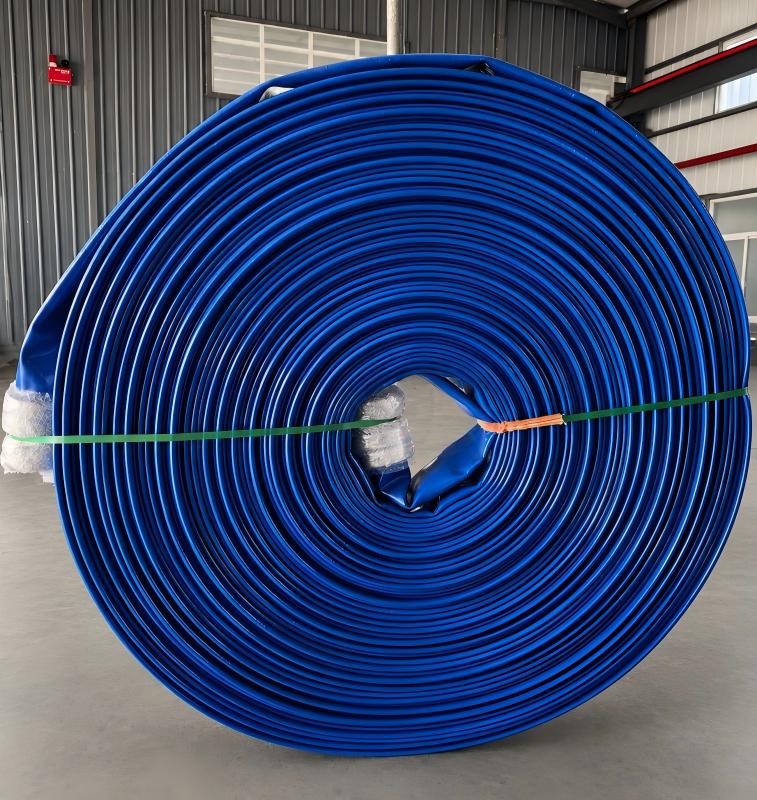
TPU (thermoplastic polyurethane) and NBR (nitrile butadiene rubber) layflat hoses share a similar composite structure: a flexible inner tube, textile reinforcement, and an outer protective layer. However, the base polymer, extrusion process, and adhesion characteristics are different, which strongly influence the smoothness of the inner bore and its stability over time. [china-layflat-hose]
Sunmoon's TPU layflat hoses are produced using melt-extrusion combined with through-the-weave reinforcement, which stabilizes wall thickness and locks the inner surface profile to tight tolerances. Our NBR layflat hoses use a rubber-based construction engineered for oil, fuel, and chemical resistance, with high flexibility at working pressure but a different surface behavior under thermal and mechanical cycling. [sunmoonlayflathose]
The inner bore of a TPU layflat hose is designed to be consistently smooth, with low micro-roughness and strong adhesion to the textile reinforcement. This smoothness results from controlled melt-extrusion and rapid cooling, which reduce surface waviness and internal micro-defects that can disturb laminar flow. [sunmoonhose]
Key TPU inner surface features:
- Low friction coefficient compared to many rubber-based hoses, helping reduce turbulence and pressure loss.
- Stable inner diameter with tight wall-thickness tolerance, minimizing localized flow constrictions. [sunmoonhose]
- High resistance to abrasion from sand, silt, and suspended solids, which helps maintain smoothness over the hose's service life. [china-layflat-hose]
In high-volume frac water transfer and mining dewatering, this combination supports high flow rates over long runs with predictable and repeatable hydraulic performance. [sunmoonhose]
NBR layflat hose uses nitrile rubber as the primary inner tube material, optimized for oil, fuel, and chemical resistance. The internal surface is generally smooth at the time of production, but its micro-texture and long-term behavior differ from TPU. [sunmoonlayflathose]
Core NBR inner surface traits:
- Good chemical compatibility with hydrocarbons, fuels, and many industrial fluids, protecting the bore from swelling and softening. [sunmoonlayflathose]
- Slightly higher surface friction and potential micro-texturing compared with high-grade TPU, especially under repeated flexing and thermal cycling.
- Robust performance under moderate to high pressures, but with more sensitivity to mechanical wear in highly abrasive, long-run drag situations. [sunmoonhose]
For industrial and municipal fluid transfer involving oils and mixed chemicals, NBR's surface smoothness is still adequate, but its flow profile can be more affected by aging, deposits, and oil-rich media than TPU's in clean-water, high-distance applications. [china-layflat-hose]
From a hydraulic engineering standpoint, internal surface smoothness directly influences the friction factor used in pressure-loss calculations, especially in long layflat hose runs with continuous pumping. A smoother inner bore reduces turbulence, stabilizes velocity profiles, and can support smaller pump sizes or lower energy consumption for the same flow rate. [china-layflat-hose]
In Sunmoon's projects, TPU layflat hoses are often selected for:
- Long-distance frac water transfer with high flow rates and minimal joints. [sunmoonhose]
- Mine dewatering where quick deployment and lower friction losses are critical. [sunmoonhose]
- Emergency flood relief and firefighting systems where high throughput and rapid response matter. [sunmoonhose]
NBR layflat hoses, with slightly different inner surface behavior, are preferred when:
- Medium includes oils, fuels, or chemicals that demand nitrile compatibility. [sunmoonlayflathose]
- Flow efficiency must be balanced with specific chemical resistance and flexibility in industrial or municipal settings. [sunmoonhose]
Consider two typical Sunmoon applications:
1. TPU Frac Water Transfer Hose
- Long drag runs across harsh terrain. [sunmoonhose]
- High-volume water with suspended solids. [sunmoonhose]
- Requirement: low lifecycle cost and minimized pump energy for continuous operation. [sunmoonhose]
Here, TPU's smoother inner bore and abrasion resistance allow the hose to maintain a nearly constant friction factor over time, reducing unexpected pressure spikes as the system ages. [china-layflat-hose]
2. NBR Industrial Oil Transfer Hose
- Shorter to medium distances in plants or municipal systems. [sunmoonlayflathose]
- Fluids include oils, fuels, and chemicals. [sunmoonhose]
- Requirement: stable chemical resistance, flexible handling, and reliable pressure performance. [sunmoonhose]
In this case, NBR's inner bore smoothness is sufficient, and chemical resistance becomes the dominant decision factor. Flow efficiency is optimized by proper sizing and layout rather than material alone. [sunmoonhose]
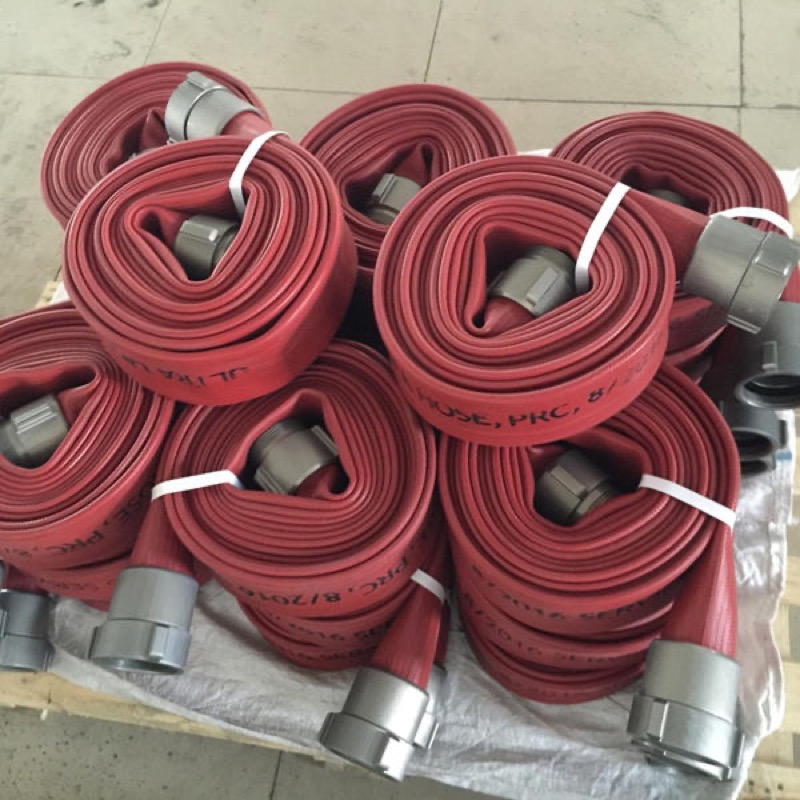
In abrasive environments—such as sand-laden frac water, mining slurry, or long drag operations—TPU performs particularly well in preserving internal smoothness. The polymer's high abrasion resistance and strong interlayer adhesion protect the bore from scoring and gouging that would increase friction and energy loss. [china-layflat-hose]
From Sunmoon's field cases:
- High-pressure TPU hose used in mine rescue dewatering delivered faster emergency response, partly because the internal bore remained smooth enough to sustain high flow under a demanding operating profile. [sunmoonhose]
- 16-inch high-pressure TPU hoses deployed in Chilean mining projects demonstrated stable hydraulic performance over repeated cycles, supporting large-volume transfer with minimal performance drift. [sunmoonhose]
These examples highlight how a smooth TPU inner surface is not just an initial production feature but a long-term performance factor.
NBR's inner surface smoothness must be evaluated alongside chemical exposure, temperature, and mechanical flexing. While nitrile rubber is known for its oil and fuel resistance, prolonged exposure to aggressive media can change surface texture, hardness, and deposit formation. [sunmoonlayflathose]
For NBR layflat hoses:
- Proper fluid compatibility assessment and cleaning routines are essential to keep the bore as smooth as possible over time.
- When used mainly in industrial water or mild chemicals, NBR can maintain good internal smoothness with regular inspection and replacement cycles.
- In highly abrasive or long-run applications, TPU often becomes the preferred choice for efficiency, while NBR is reserved for more specialized chemical environments. [china-layflat-hose]
When choosing between TPU layflat hose and NBR layflat hose, engineers should weigh the following criteria:
- Fluid type (clean water, slurry, oil, chemicals).
- Required distance and typical flow rates.
- Energy cost sensitivity and pump sizing strategy.
- Abrasion level and mechanical drag conditions.
- Regulatory requirements or industry standards for specific media.
Sunmoon works with global buyers to tailor hose configuration—diameter, working pressure, wall thickness, and coupling systems—to the performance envelope of each project. [sunmoonhose]
The table below summarizes key differences relevant to internal surface smoothness and flow efficiency:
| Factor | TPU Layflat Hose | NBR Layflat Hose |
|---|---|---|
| Inner bore smoothness (initial) | Very smooth, tight tolerance for diameter and wall thickness (sunmoonhose) | Smooth, but more dependent on rubber compounding and curing (sunmoonhose) |
| Long-term smoothness in abrasion | High resistance, maintains internal profile under sand and drag runs (sunmoonhose) | More susceptible to wear and micro-roughness in heavy abrasion (sunmoonhose) |
| Flow efficiency in long-distance transfer | Excellent; reduced friction losses and energy savings for high-volume water (sunmoonhose) | Good; efficiency more influenced by fluid type and chemical exposure (sunmoonhose) |
| Chemical/oil resistance | Strong resistance to many chemicals; optimized for water and industrial media (sunmoonhose) | Superior resistance to oils, fuels, and specific chemicals (sunmoonhose) |
| Typical core applications | Frac water, mining dewatering, flood relief, firefighting, long-run transfer (sunmoonhose) | Industrial and municipal oil/fuel transfer, chemical handling, general industrial fluids (sunmoonhose) |
At Sunmoon, our engineering and QA teams treat internal surface smoothness as a measurable performance parameter, not just a visual inspection item. Production lines are designed to: [sunmoonhose]
- Control melt-extrusion and cooling to stabilize TPU inner bore geometry. [sunmoonhose]
- Ensure strong adhesion between inner tube and reinforcement to avoid micro-waves and delamination. [sunmoonhose]
- Validate pressure performance and flow behavior through sample testing before large-volume deliveries. [sunmoonhose]
This process allows us to deliver hoses where the hydraulic behavior—including pressure loss, flow rate, and response to dynamic loading—matches the design expectations of engineering teams.
In one documented case, Sunmoon delivered custom-colored 6-inch and 12-inch TPU layflat hoses under severe regional logistics disruptions. Despite the challenging timeline, maintaining controlled inner surface quality and flow performance remained non-negotiable. [sunmoonhose]
The client's urgent project required:
- Rapid deployment and high flow efficiency over long runs.
- Confidence that custom specifications (color, length, pressure rating) would not compromise internal smoothness.
- Engineering transparency through technical documentation and sample testing. [sunmoonhose]
The result was a successful deployment where flow performance matched expectations, reinforcing how internal surface smoothness must be protected from both manufacturing and supply chain risks.
For procurement and technical buyers evaluating TPU vs. NBR layflat hose, we recommend the following practical checklist:
1. Define the primary fluid and distance. Clarify whether the system is dominated by clean water, slurry, or oil/fuel, and the expected run length.
2. Request detailed technical data. Ask for inner diameter tolerance, wall-thickness tolerance, and recommended flow rate range from the manufacturer.
3. Evaluate abrasion and drag conditions. Consider terrain, handling method (drag vs. static), and expected solids in the fluid.
4. Check certifications and case studies. Review the supplier's application cases in similar industries, such as mining, frac water, or industrial oil transfer. [sunmoonhose]
5. Plan lifecycle and energy costs. Include pump sizing, expected pressure loss, and replacement cycles in your total cost of ownership analysis.
Following these steps helps ensure that internal surface smoothness and flow efficiency are fully integrated into your specification, rather than treated as an afterthought.
Sunmoon, founded in 2011 with an engineering-driven focus on TPU layflat hoses, has become a trusted partner for global fluid transfer projects in mining, oil and gas, municipal, and industrial operations. Our lean, disciplined manufacturing approach emphasizes product integrity over scale, enabling high-pressure TPU solutions and reliable NBR hoses tailored to demanding specifications. [sunmoonhose]
Key reasons buyers partner with Sunmoon:
- Deep specialization in TPU layflat hose technology and through-the-weave reinforcement. [sunmoonhose]
- Proven track record in high-pressure, large-diameter hoses for international mining and industrial projects. [sunmoonhose]
- Customization capabilities (color, diameter, pressure rating, coupling systems) aligned with project-specific flow and efficiency needs. [sunmoonlayflathose]
If your next project requires precise control over internal surface smoothness, pressure performance, and long-run efficiency, working with a specialized manufacturer like Sunmoon significantly reduces technical and operational risk. [sunmoonhose]
If you are planning a new frac water transfer, mining dewatering, industrial fluid system, or municipal emergency response project, now is the right time to evaluate whether TPU layflat hose or NBR layflat hose offers the best balance of internal surface smoothness, flow efficiency, and chemical resistance for your application. [sunmoonlayflathose]
Reach out to Sunmoon's engineering team to:
- Discuss your fluid, distance, and pressure requirements.
- Compare TPU and NBR options for internal smoothness and energy cost optimization.
- Configure customized layflat hose solutions that match your project's technical and commercial targets. [sunmoonhose]
Q1: Is TPU always better than NBR for flow efficiency?
No. TPU usually offers smoother internal surfaces and lower friction for long-distance water transfer, while NBR can be more appropriate when oil and chemical resistance is the primary requirement. [sunmoonlayflathose]
Q2: How does internal surface smoothness affect pump sizing?
A smoother inner bore reduces friction losses, allowing engineers to either achieve higher flow rates with the same pump or use smaller, more energy-efficient pumps for the same duty. [china-layflat-hose]
Q3: Can NBR layflat hose handle abrasive media?
NBR can handle moderate abrasion, but TPU is generally preferred for highly abrasive, long drag applications where maintaining inner surface smoothness over time is critical. [china-layflat-hose]
Q4: What industries most benefit from TPU's smooth inner bore?
Frac water transfer, mining dewatering, flood control, and firefighting operations benefit significantly from TPU's combination of smooth bore, abrasion resistance, and high-pressure capability. [sunmoonhose]
Q5: Does Sunmoon offer customization for both TPU and NBR layflat hoses?
Yes. Sunmoon provides customized TPU and NBR layflat hose solutions, including diameter, working pressure, length, color, and coupling options to meet global buyers' specific project requirements. [sunmoonlayflathose]
1. Sunmoon Hose Manufacturing – "Your Reliable Customized Layflat Hose Manufacturer in China"
[https://www.sunmoonhose.com] [sunmoonhose]
2. Sunmoon – TPU Layflat Hose Product and Application Information
[https://www.sunmoonhose.com] [sunmoonhose]
3. Sunmoon – NBR Layflat Hose Product Information
[https://sunmoonlayflathose.com/products/nbr-layflat-hose] [sunmoonlayflathose]
4. China Layflat Hose – TPU Layflat Hose Technical Overview
[https://china-layflat-hose.com/products/tpu-layflat-hose.html] [china-layflat-hose]
5. Sunmoon Case Studies – High-Pressure TPU Hose in Mining and Frac Water Transfer


