

Views: 222 Author: Sunmoon Publish Time: 2026-06-01 Origin: Site


Content Menu
● How Iron Ore Slurry Damages Layflat Hoses
● Material Basics – What Are TPU and NBR Layflat Hoses?
● TPU vs. NBR Hoses – Core Performance Comparison for Iron Ore Slurry
● Expert View – When TPU Outperforms NBR in Iron Ore Slurry Pumping
● Expert View – When NBR Is the Better Choice in Iron Ore Mines
● Real‑World Iron Ore Mining Scenario (Field‑Style Case Study)
● Practical Selection Checklist – TPU vs. NBR for Abrasive Iron Ore Slurry Pumping
● Sunmoon's Perspective as a TPU & NBR Layflat Hose Manufacturer
● Installation and Maintenance Best Practices to Maximize Hose Life
● Environmental and Sustainability Considerations in Iron Ore Mines
● Conclusion – How to Decide Between TPU and NBR for Your Iron Ore Slurry Lines
● FAQs: TPU vs. NBR Hoses for Iron Ore Slurry
When you move iron ore slurry, you are essentially pumping a controlled "sandpaper" mixture at high velocity through a flexible pipeline. In this context, TPU layflat hoses and NBR layflat hoses are the two most common choices for mobile pipelines, bypass lines and temporary slurry transfer on mine sites. As a Chinese manufacturer focused on NBR layflat hose and TPU layflat hose, Sunmoon sees both materials in the field every day, from mine dewatering to high‑solids slurry transfer. [esrubbers]
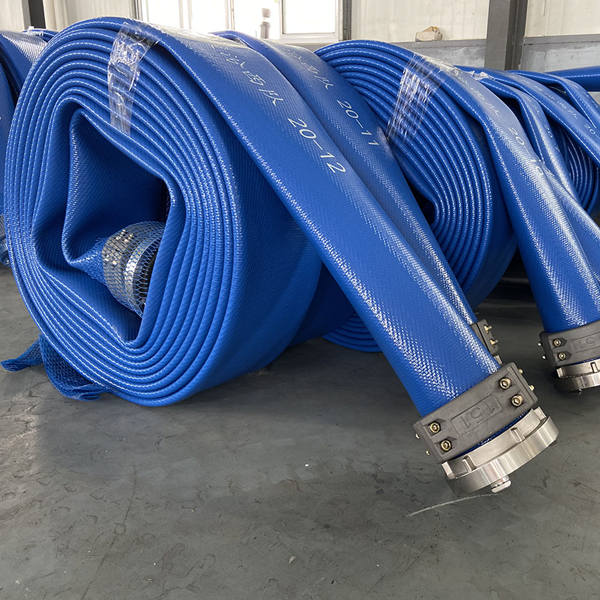
Iron ore slurry is not just dirty water; it is a high‑density, abrasive, sometimes chemically active fluid that attacks hose walls from inside and outside. In open‑pit and underground mines, hoses are dragged over rocks, kinked around corners, pressurized and depressurized repeatedly, and exposed to UV and temperature swings. [thepumpexpert]
Key wear mechanisms in iron ore slurry pumping:
- Internal abrasion from sharp ore fines and coarse particles. [coastalnews.com]
- Turbulent flow at elbows, couplings, and reducers accelerating wall wear. [esrubbers]
- External abrasion as hoses are dragged over haul roads or rough ground. [jafirehose]
- Chemical and temperature effects from process water, additives, and climate. [rubberandspecialties]
A TPU layflat hose typically uses thermoplastic polyurethane as the inner and outer layer, reinforced with high‑tenacity polyester yarn via an "extrusion‑through‑weave" process. This structure delivers high tensile strength, excellent abrasion resistance, and very low weight per meter compared with traditional rubber hoses. [sinohose]
Core TPU properties that matter in iron ore mining:
- Very high abrasion resistance, especially when dragged over rough terrain. [sinohose]
- Wide temperature window with good low‑temperature flexibility. [th.jafirehose]
- Good resistance to hydrolysis and many chemicals in process water. [rubberandspecialties]
NBR (nitrile butadiene rubber) layflat hose uses a nitrile rubber compound (often blended with PVC) bonded to a synthetic fiber reinforcement, extruded as a unified "through‑the‑weave" hose. Compared with standard rubber hoses, NBR layflat remains much lighter and more compact while offering strong oil and fuel resistance. [tpulayflatpipe]
Key NBR properties relevant to iron ore slurry:
- Excellent oil and fuel resistance, ideal where slurry carries hydrocarbons. [sinohose]
- Good abrasion resistance, especially in rubber‑rich compounds. [sinohose]
- Robustness against cuts and impacts when properly reinforced. [rubberandspecialties]
From an engineer's perspective, selection is a trade‑off between abrasion resistance, oil/chemical resistance, weight, and total cost of ownership. The table below summarizes how TPU vs. NBR hoses for abrasive iron ore slurry pumping typically compare in mining operations. [thepumpexpert]
| Aspect | TPU layflat hose | NBR layflat hose |
|---|---|---|
| Internal abrasion with iron ore slurry | Very high resistance for clean or low‑oil slurries (jafirehose) | High, but usually slightly lower than TPU in pure abrasion (sinohose) |
| External abrasion on mine ground | Excellent when dragged over rocks or roads (jafirehose) | Good, but cover can cut or gouge more easily (sinohose) |
| Oil and fuel in slurry or environment | Moderate; TPU tolerates some oils but not as well as NBR (sinohose) | Excellent, best when hydrocarbons are present (sinohose) |
| Weight & handling | Very light, easy for crews to deploy long runs (jafirehose) | Heavier, slightly more effort to handle (sinohose) |
| Temperature & UV stability | Very good low‑temp flexibility, strong UV with right grade (sinohose) | Good, depends on compound and cover thickness (sinohose) |
| Typical working pressure range | 5–60 bar in mining‑grade hoses (tpulayflatpipe) | Similar ranges achievable with proper design (tpulayflatpipe) |
| Best fit in iron ore mining | Long‑distance abrasive slurry or dewatering lines (jafirehose) | Slurries or water with oil, fuel, or chemicals (sinohose) |
Speaking as an industry practitioner, TPU layflat hose is usually my first choice when the iron ore slurry is mainly water plus ore solids, with minimal hydrocarbon contamination. TPU's high strength‑to‑weight ratio allows you to run long continuous hose strings with fewer couplings, reducing leak points and internal turbulence that accelerate wear. [th.jafirehose]
Scenarios where TPU hoses shine:
- Long overland slurry or dewatering lines where hoses are repeatedly dragged. [jafirehose]
- High‑frequency deployment and retrieval, such as temporary bypass lines. [jafirehose]
- Cold climates where flexible hose deployment at low temperature is critical. [th.jafirehose]
From a maintenance perspective, mining teams often report longer service life and fewer unplanned failures with correctly specified TPU hoses in abrasive but low‑oil applications. This translates into lower downtime and a better total cost per ton of iron ore moved. [coastalnews.com]
NBR hoses become the preferred solution when oil, fuel, or chemical additives are a significant part of the fluid system. In many iron ore operations, diesel, hydraulic oil, or flotation reagents can contaminate water or slurry streams, and standard polyurethane may swell or degrade faster under such conditions. [rubberandspecialties]
Typical use cases where NBR hoses win:
- Slurry or water transfer containing hydrocarbons from leaks or process streams. [sinohose]
- Fuel transfer or multi‑purpose lines around mining equipment. [sinohose]
- Firewater or foam lines where oil resistance is essential. [rubberandspecialties]
While NBR's pure abrasion performance can be slightly below TPU, a high‑quality, rubber‑rich NBR layflat hose still achieves strong wear life in abrasive service, particularly where the slurry is fine and well‑controlled. For mixed‑duty lines that must handle both slurry and oil‑contaminated water, NBR often gives the best compromise. [thepumpexpert]
Consider a mid‑size iron ore mine with two critical hose applications:
1. Pit dewatering and process return water – mainly water plus fine sediments, minimal oil.
2. Workshop and crusher area drainage – water mixed with oil, diesel, and fine ore slurry.
In similar operations, engineers often standardize on TPU layflat hoses for long pit dewatering lines, where hundreds of meters of hose must be dragged behind loaders or light vehicles. For the oily drainage flows near workshops and crushers, they deploy NBR layflat hoses, which tolerate hydrocarbon exposure much better over time. [th.jafirehose]
This mixed strategy reduces failure risk in oily zones while maximizing hose life and handling efficiency in clean‑water and low‑oil slurry applications. Mines that adopt such a material‑by‑application approach typically report lower annual hose spend and fewer emergency shutdowns. [coastalnews.com]
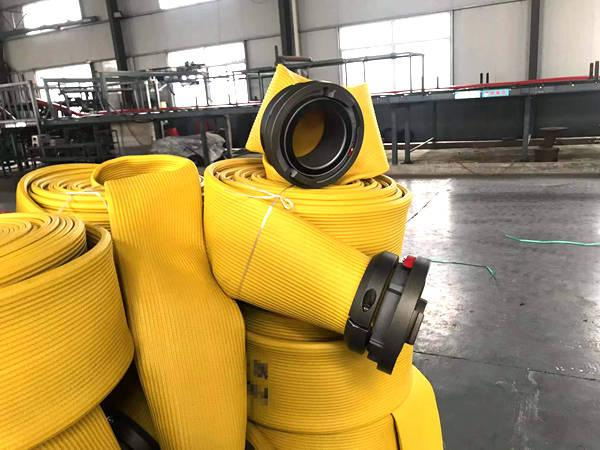
From a user‑experience standpoint, most mine operators do not want polymer theory; they need a clear, actionable checklist. The following steps summarize how to choose between TPU and NBR layflat hoses for iron ore slurry.
1. Define your fluid
- Solids type and size: coarse vs fine iron ore, percentage solids. [esrubbers]
- Oil/chemical content: hydrocarbon presence changes everything. [rubberandspecialties]
2. Check pressure and distance
- Required working pressure, surge pressure, and pump curve. [esrubbers]
- Total line length and elevation changes affecting hose grade choice. [coastalnews.com]
3. Assess deployment method
- Will hoses be dragged frequently? TPU usually handles this better. [jafirehose]
- Are hoses mostly static on supports? NBR can perform equally well. [coastalnews.com]
4. Evaluate environment
- Temperature range, UV exposure, and risk of mechanical damage. [th.jafirehose]
- Proximity to fuel storage, workshops, or process chemicals. [sinohose]
5. Match to material
- Mainly abrasive, low‑oil iron ore slurry → bias toward TPU layflat. [jafirehose]
- Slurry or water with oils/fuels → bias toward NBR layflat. [rubberandspecialties]
6. Confirm certifications and testing
- Ask for abrasion, pressure, and hydrolysis/chemical resistance data from the supplier. [th.jafirehose]
- Ensure full‑length hydrostatic testing and quality control are in place. [linkedin]
Sunmoon specializes in TPU layflat hose and NBR layflat hose from 50 mm up to 500 mm, with working pressures typically ranging from 5 bar to 60 bar for industrial and mining duty. By controlling reinforcement weaving, extrusion, and full‑length pressure testing in‑house, the company can tailor hose constructions to specific iron ore slurry conditions and pressure profiles. [sunmoonhose]
From project experience in mining, Sunmoon engineers often recommend:
- TPU layflat hose for long‑distance pit dewatering, tailings water return, and mobile slurry lines with frequent repositioning. [tpulayflatpipe]
- NBR layflat hose where hydrocarbon presence is significant or where hoses may sometimes handle fuels and process chemicals alongside water or slurry. [tpulayflatpipe]
This dual‑material capability allows global customers to design complete hose systems rather than one‑off hoses, optimizing each section for its actual duty while using one supplier for consistency and documentation. [linkedin]
Even the best‑chosen material will fail early if installation and maintenance are poor. Simple practices can extend hose life significantly in abrasive iron ore slurry service. [esrubbers]
Key best practices:
- Deploy fully flat, remove twists and sharp bends before pressurizing. [esrubbers]
- Avoid tight radius bends; respect the minimum bend radius to reduce internal wear. [coastalnews.com]
- Use protective sleeves or ramps where hoses cross roads or sharp edges. [esrubbers]
- Drain, clean, and store hoses away from direct sunlight and chemicals when not in use. [th.jafirehose]
- Inspect coupling zones regularly; these are common failure points in slurry service. [coastalnews.com]
From an expert UX viewpoint, building these practices into standard operating procedures (SOPs) and training reduces variability between shifts and keeps hose life predictable. [esrubbers]
Environmental teams in iron ore operations increasingly focus on leak prevention, spill reduction, and lifecycle waste. A hose failure in slurry service can cause significant contamination and cleanup costs. By choosing a material that matches the application – TPU for clean to slightly dirty slurries, NBR where oils are present – you reduce the probability of rupture and chronic seepage. [thepumpexpert]
Longer hose service life means fewer discarded hoses and less transport and handling of replacement stock, which indirectly lowers the operation's carbon and waste footprint. Some mines now include hose lifecycle metrics in their ESG reporting, making material selection part of broader sustainability strategy. [thepumpexpert]
For abrasive iron ore slurry pumping, TPU layflat hoses generally offer the best combination of abrasion resistance, low weight, and handling efficiency where hydrocarbon content is low. NBR layflat hoses are the stronger choice wherever slurry or process water may be contaminated with oil, fuel, or aggressive chemicals, even if that means accepting slightly lower pure abrasion performance. [thepumpexpert]
If you are planning or upgrading slurry lines, the optimal strategy often mixes both materials, assigning TPU or NBR to each hose run based on fluid composition, pressure, and deployment method. Partnering with a manufacturer like Sunmoon that produces both NBR and TPU layflat hoses – and can customize diameter, wall thickness, and reinforcement – makes it easier to design a balanced, long‑life system. [sunmoonhose]
If you are currently comparing TPU vs. NBR hoses for iron ore slurry pumping, share your slurry data (solids %, oil content, pressure, distance) with Sunmoon's engineering team to get a customized hose specification and service‑life estimate before your next procurement cycle. [sunmoonhose]

Q1. Which lasts longer in abrasive iron ore slurry, TPU or NBR?
In clean or low‑oil iron ore slurry, TPU layflat hose typically delivers longer life thanks to its superior abrasion resistance and high strength‑to‑weight ratio. In oily or chemically contaminated slurries, NBR may outlast TPU because it resists swelling and degradation from hydrocarbons. [jafirehose]
Q2. Can one hose type handle both abrasive slurry and diesel‑contaminated water?
Most operations can use TPU for abrasive slurry and switch to NBR where diesel or oil is present; no single material is perfect for all conditions. Some mines run NBR on mixed‑duty lines as a compromise when hydrocarbon exposure is frequent. [sinohose]
Q3. What pressure rating should I choose for iron ore slurry hoses?
Select a working pressure that comfortably covers normal operation plus surges, leaving a safety margin below the hose's burst pressure. Mining‑grade TPU and NBR layflat hoses from Sunmoon typically span 5–60 bar working pressures, depending on diameter and reinforcement. [tpulayflatpipe]
Q4. How often should I replace layflat hoses in iron ore slurry service?
Replacement intervals depend on slurry abrasiveness, pressure, and handling, but many mines adopt preventive replacement based on operating hours and wear inspections rather than waiting for failures. Regular visual checks and thickness measurements in high‑wear zones are crucial for safe planning. [coastalnews.com]
Q5. Why choose a specialist manufacturer like Sunmoon instead of a generic water hose supplier?
Iron ore slurry and mining environments demand purpose‑built hoses with tested abrasion resistance, pressure capability, and consistent manufacturing quality. Sunmoon focuses specifically on TPU and NBR layflat hoses for heavy‑duty industrial and mining applications, with in‑house design, extrusion, and full‑length testing to match real site conditions. [linkedin]
1. Jafire Hose. "TPU Lay Flat Hose vs Nitrile Rubber for Mining Dewatering." [Link]. [jafirehose]
2. Tubes International. "Table of Hose Material Chemical Resistance." [Link]. [tubes-international]
3. Sinohose. "TPU vs. Nitrile Rubber: Which Material Offers Better Abrasion Resistance for Firefighting?" [Link]. [sinohose]
4. ES Rubbers. "Industrial Hose for Slurry and Abrasive Materials: A Comprehensive Guide." [Link]. [esrubbers]
5. The Pump Expert. "What Materials Are Best for Abrasive Slurries?" [Link]. [thepumpexpert]
6. Jafire Hose. "Procurement Guide: TPU Layflat Hose in Mining and Agriculture." [Link]. [th.jafirehose]
7. Rubber & Specialties. "Hose Material Guide: Types & Chemical Resistance Properties." [Link]. [rubberandspecialties]
8. Coastal News. "Slurry Hose Solutions Built for High‑Wear Industrial Applications." [Link]. [coastalnews.com]
9. Sunmoon TPU Layflat Hose – Company Website. [Link]. [tpulayflatpipe]
10. SUNMOON – Customized TPU Layflat Hose, Oil and Gas Hose, Dewatering Hose. [Link]. [sunmoonhose]
11. Sunmoon Hose Manufacturing – Company Overview. [Link]. [linkedin]


