

Views: 222 Author: Loretta Publish Time: 2026-01-14 Origin: Site


Content Menu
>> Design Features of JIC Fittings
>> Performance Characteristics of JIC
>> Design Features of NPT Fittings
>> Performance Characteristics of NPT
● JIC vs NPT: Key Technical Differences
>> Technical Comparison of JIC and NPT
● Typical Application Scenarios
>> Where JIC Fittings Are Commonly Used
>> Where NPT Fittings Are Commonly Used
● Common Failure Modes and Prevention
● On‑Site Identification: JIC vs NPT
>> Visual and Dimensional Checks
>> Practical Rule: Never Force Engagement
>> Best Practices for JIC Assembly
>> Best Practices for NPT Assembly
● Cost and Reliability Considerations
>> Short‑Term vs Long‑Term Cost Impact
>> Reliability and Safety Factors
● How to Build a Simple Selection Framework
>> Practical Selection Checklist
● Take the Next Step: Get Expert Fitting Support for Your System
>> 1. Can JIC and NPT fittings be connected directly?
>> 2. Why do NPT fittings often leak over time?
>> 3. Are JIC fittings suitable for very high‑pressure systems?
>> 4. Do JIC fittings need thread sealant?
>> 5. How can I distinguish between NPT and JIC ports in the field?
Selecting between JIC fittings and NPT fittings is a critical design decision that affects leak risk, operating pressure, long‑term reliability, and maintenance cost in hydraulic and industrial fluid systems. This guide offers a clear, structured comparison and practical selection framework to help engineers, buyers, and maintenance teams make confident choices for real‑world hose applications.

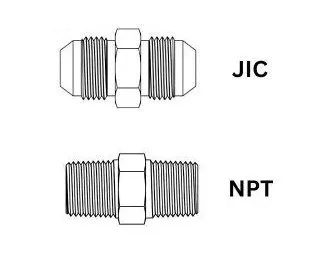
JIC fittings (Joint Industry Council fittings) are 37° flare fittings defined by the SAE J514 standard and widely used in medium‑ to high‑pressure hydraulic systems. They provide a metal‑to‑metal seal at the flare surface, which is especially valuable in systems exposed to pressure pulsation and vibration.
JIC fittings use straight UNF threads combined with a 37° conical seat at the end of the fitting. The seal occurs between the male flare and the female seat, rather than along the threads, which simplifies leak troubleshooting.
- 37° flare cone seat for metal‑to‑metal sealing.
- UNF straight threads manufactured to 2A/2B tolerances for interchangeability.
- Common materials: carbon steel, stainless steel, brass, and nickel‑plated alloys for corrosion resistance.
The geometry and material options of JIC fittings support demanding hydraulic environments where stability and precision are essential. When correctly specified and assembled, they deliver reliable sealing with good reusability.
- Typical pressure range: approximately 7–34.5 MPa (1000–5000 psi), depending on size and material.
- Good leak performance due to controlled contact at the flare seat.
- Repeated disconnection is possible if sealing surfaces remain undamaged and clean.
NPT (National Pipe Thread) fittings use a 60° tapered pipe thread form and are commonly used in low‑ to moderate‑pressure fluid and gas systems. They are popular in general plumbing, utility air lines, and many industrial service connections.
NPT fittings rely on thread interference and sealant to create a pressure‑tight joint. This structure is simple and cost‑effective but more sensitive to torque and assembly technique.
- 60° tapered male and female threads that wedge together when tightened.
- Seal achieved through metal thread interference plus PTFE tape or liquid sealant.
- Materials include black iron, brass, steel, and stainless steel for a range of environments.
NPT fittings are widely accepted where pressure is moderate, minor weeping is manageable, and high‑end hydraulic performance is not mandatory. They are, however, more vulnerable to damage from incorrect installation practices.
- Well suited for low‑ to moderate‑pressure applications without severe vibration.
- Lower component cost, but long‑term leakage is more likely if sealant and torque are not carefully controlled.
- Over‑tightening can cause cracked ports and distorted threads, especially in softer metals and cast components.
Understanding the structural and functional differences between JIC and NPT fittings is essential for designing safe and reliable systems. The following table summarizes their main characteristics to support quick selection and specification.
Aspect | JIC Fittings | NPT Fittings |
Seal type | 37° metal-to-metal flare seat seal | Tapered thread interference plus sealant |
Thread type | UNF straight thread (2A/2B) | 60° tapered pipe thread |
Typical pressure use | Medium to high pressure hydraulic systems | Low to moderate pressure systems |
Sealant required | No additional sealant in normal design | PTFE tape or liquid sealant typically required |
Vibration resistance | Good, well suited to mobile hydraulics | Lower; threads may loosen under vibration |
Reusability | High if flare surfaces stay intact | Limited; threads can gall or deform |
Over-tightening risk | May damage flare seat | Higher risk of cracked ports and thread damage |
Cost | Generally higher unit cost | Generally lower unit cost |
Common applications | Hydraulic machinery, aerospace, industrial equipment | Plumbing, air lines, general utility piping |
Interchangeability | Not interchangeable with pipe threads | Not interchangeable with flare threads |
Application requirements often determine whether JIC or NPT is the more appropriate option. Considering system pressure, vibration level, media type, and maintenance strategy helps reduce lifetime cost and risk.
JIC fittings are selected in systems where stable sealing and precise performance are required under demanding operating conditions. They are especially useful in environments subject to strong mechanical stress or frequent service activities.
- Mobile hydraulic machinery such as construction and agricultural equipment.
- Industrial presses, injection molding, and other equipment with high system pressures.
- Aerospace and automotive hydraulic subsystems requiring robust and repeatable assembly.
NPT fittings are often specified for general‑purpose services where pressures are moderate and cost sensitivity is high. Their broad availability and installer familiarity are major practical advantages.
- Utility air, water, and non‑critical process lines in industrial facilities.
- General plumbing and building services where code‑compliant NPT connections are standard.
- Static piping runs with limited vibration and relatively low maintenance frequency.
Recognizing how fittings fail helps engineers and technicians create more reliable systems and service procedures. Preventive measures are often simple but highly effective.
JIC fittings primarily fail when the flare seal is damaged or incorrectly loaded during assembly. Small surface imperfections or excessive torque can significantly reduce sealing reliability.
- Over‑tightening flattens or distorts the 37° cone, reducing contact quality and causing leaks over time.
- Scratches, contamination, or misalignment on the flare surfaces interfere with full metal‑to‑metal seating.
NPT fittings mainly fail due to improper torque, unsuitable or degraded sealants, or thread damage. Their tapered design makes them more sensitive to over‑tightening than many straight‑threaded alternatives.
- Cracked ports and fittings when excessive torque is applied to tapered threads.
- Chronic seepage at joints when sealant is missing, incompatible, or incorrectly applied.
Accurate identification in the field prevents cross‑threading, damaged ports, and unsafe assemblies. A simple combination of visual inspection and measurement is usually enough to distinguish the standards.
Technicians can quickly narrow down the thread type using a few basic inspection steps. This approach avoids trial‑and‑error assembly attempts that often damage components.
- JIC fittings show straight threads and a visible 37° conical seat at the end of the male fitting.
- NPT fittings show tapered threads that change diameter along their length and do not have a flare seat.
- Using calipers and thread gauges verifies whether the thread is straight UNF (JIC) or tapered pipe (NPT).
Attempts to engage mismatched standards are a frequent cause of leaks and component failures. Applying excessive torque to start a connection is a strong indication that the thread types are not compatible.
- If a fitting does not start easily by hand, stop and confirm the standard before proceeding.
- Use dedicated adapters designed to transition between different standards when required.
Correct assembly is as important as correct selection when targeting leak‑free and maintainable systems. Simple procedural controls significantly improve service life and safety.
JIC connections benefit from controlled torque and clean, undamaged sealing surfaces. Attention to basic preparation often prevents long‑term leakage issues.
- Inspect flare surfaces for scratches, dents, and contamination, and clean them with lint‑free materials before assembly.
- Tighten to manufacturer torque recommendations, typically using a “finger‑tight plus flats” method rather than guesswork.
NPT connections rely heavily on proper sealant application and torque control. Small deviations from recommended practices lead to leaks or mechanical damage.
- Apply the correct sealant type in a controlled amount, keeping excess out of the fluid flow path.
- Tighten gradually, respecting recommended turns beyond finger‑tight to avoid cracking ports or deforming threads.
Evaluating fittings solely on unit price can hide significant lifetime costs. A broader view that includes downtime, fluid loss, and maintenance labor gives a more accurate picture.
Each fitting choice balances initial expenditure against ongoing service requirements. Different applications will justify different trade‑offs.
- Lower‑cost fittings may increase expenses over time if leaks and rework are frequent.
- Higher‑performance fittings can reduce unplanned shutdowns and spill‑related costs, especially in critical hydraulic circuits.
Fluid leakage is not only a maintenance issue; it can also pose safety and environmental risks. Connection standards with controlled, inspectable sealing surfaces help mitigate these risks.
- Robust sealing and better vibration resistance reduce the likelihood of sudden failures in demanding environments.
- Consistent standards across equipment fleets simplify stocking of spares and streamline service procedures.
A structured decision process reduces guesswork and supports consistent specification across projects. The following points can be translated into a clear in‑page flow or checklist for designers and buyers.
- Define operating pressure and maximum surge conditions.
- Assess vibration, shock loading, and duty cycle characteristics.
- Confirm fluid type and compatibility with metals and sealants.
- Consider accessibility for inspection, tightening, and reassembly.
- Compare lifetime cost and risk rather than focusing only on component price.
Applying this checklist helps align fitting choice with performance, safety, and budget requirements for each specific system.
If your team is planning, upgrading, or troubleshooting a hydraulic or fluid system and needs a clear, application‑specific recommendation on fittings, now is the ideal time to involve a specialist partner. Reach out to a technical team that can review your pressure, media, environment, and maintenance requirements, then help you specify the most appropriate fittings, adapters, and hose assemblies for safe, efficient, and leak‑resistant operation.
No, these fittings use different thread forms and sealing concepts, so they are not designed to connect directly. Adapters specifically engineered to transition between standards should be used whenever a system includes both types.
NPT fittings rely on tapered threads plus sealant, so leaks can occur if torque is incorrect, sealant is degraded, or threads are damaged. Vibration and temperature cycling accelerate wear on the joint, increasing the likelihood of seepage.
JIC fittings are widely used in medium‑ and high‑pressure applications within their rated limits. Extremely high‑pressure systems may justify alternative connection technologies with different safety margins depending on the design requirements.
The primary seal in JIC connections is the metal‑to‑metal contact at the 37° flare seat, so additional thread sealant is typically unnecessary. Introducing sealants where they are not required can interfere with proper seating or contaminate hydraulic circuits.
Check whether the thread is straight or tapered and whether there is a visible conical seat. Straight threads with a 37° seat indicate JIC, while tapered threads without a flare seat indicate NPT; gauges and calipers provide further confirmation.


