

Views: 222 Author: Sunmoon Publish Time: 2026-06-04 Origin: Site


Content Menu
● What Is Heap Leaching Leachate Collection?
● Why TPU Layflat Hoses for Leachate Collection?
● TPU Layflat Hoses vs. Conventional Leachate Piping
>> Performance Comparison in Heap Leaching
● Inside a TPU Layflat Hose: Structure and Material Science
● Real‑World Use in Mining and Leachate Management
● Specifying TPU Layflat Hoses for Heap Leach Leachate
>> 1. Diameter and Flow Capacity
>> 2. Wall Thickness and Pressure Rating
>> 3. Chemical, Abrasion, and Temperature Resistance
>> 4. Length, Couplings, and Layout
● Best Practices for Deployment and Maintenance
● Market Trends: Why TPU Layflat Is Gaining Share
● Sunmoon's Role as a TPU Layflat Hose Manufacturer
● Practical Selection and Design Checklist for Heap Leach Teams
● Call to Action: Optimize Your Leachate Collection with TPU Layflat
● Frequently Asked Questions (FAQ)
TPU layflat hoses have become a preferred solution for leachate collection in heap leaching operations because they combine chemical resistance, flexibility, and long continuous lengths that reduce leakage risk and downtime compared with traditional rigid pipes or rubber hoses. For a heap leach engineer or procurement manager, the key question is no longer "if" TPU layflat hoses work, but how to specify and deploy them correctly to maximize recovery and lower life‑cycle cost. [biaohuihose]
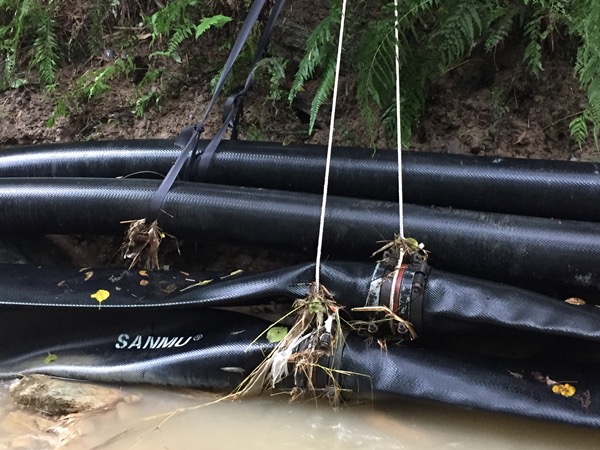
Heap leaching is a hydrometallurgical process where ore is stacked on a lined pad and irrigated with leaching solution (often cyanide for gold or sulfuric acid for copper) to dissolve valuable metals. The resulting leachate (pregnant solution) drains by gravity through the heap and must be collected and transferred safely for metal recovery and environmental protection. [th.jafirehose]
In a typical heap leach pad, leachate collection involves several elements: perforated collection pipes or drains in the pad, solution ponds, pump stations, and long-distance transfer lines carrying acidic or metal‑laden fluids. Any failure or leakage in this system directly affects metal recovery, pad stability, environmental compliance, and operating cost. [th.jafirehose]
Thermoplastic polyurethane (TPU) layflat hoses are reinforced flat hoses produced by extrusion (often through‑the‑weave technology) that provide a smooth inner bore, high pressure capability, and excellent abrasion and chemical resistance. For heap leaching leachate collection, they offer distinct advantages over rigid HDPE, PVC hoses, or traditional rubber lines. [biaohuihose]
Key benefits in leachate service include:
- Long continuous lengths that reduce the number of couplings and potential leak points. [th.jafirehose]
- High working pressure and burst pressure with relatively thin walls, enabling long-distance pumping on uneven terrain. [biaohuihose]
- Excellent flexibility that allows rapid deployment, retrieval, and repositioning as the leach pad expands. [biaohuihose]
- Chemical and abrasion resistance suitable for acidic and solids‑containing solutions. [ijaet]
From a user‑experience perspective on site, operators appreciate that TPU layflat can be rolled up, moved, and re‑deployed with light equipment, minimizing traffic on sensitive pads and reducing safety risks compared to dragging rigid pipe sections. [th.jafirehose]
Below is an at‑a‑glance comparison that heap leach operations teams often use when evaluating TPU layflat hoses vs. rigid HDPE or rubber hose systems for leachate collection lines.
| Dimension | TPU layflat hose (Sunmoon style) | HDPE / rigid pipe | Traditional rubber hose |
|---|---|---|---|
| Flexibility & handling | Highly flexible, can be reeled, easy to deploy on uneven pads. (biaohuihose) | Rigid, requires fittings and alignment; challenging on steep or irregular terrain. (th.jafirehose) | Flexible but heavier; more difficult manual handling at long lengths. (biaohuihose) |
| Length & joints | Long continuous runs reduce couplings and leak points. (th.jafirehose) | Shorter sections with frequent welded or mechanical joints. (th.jafirehose) | Typically shorter sections, many clamps or couplings. (biaohuihose) |
| Pressure rating | High working and burst pressures with reinforced construction. (biaohuihose) | Very high pressure capability; depends on SDR. (th.jafirehose) | Good pressure but prone to fatigue at bends and couplings. (biaohuihose) |
| Abrasion & solids | TPU liner resists abrasion from fine ore particles and slurry. (biaohuihose) | Good abrasion resistance, but elbows and joints wear faster. (th.jafirehose) | Abrasion‑resistant grades available, but heavier and bulkier. (biaohuihose) |
| Chemical resistance | Excellent resistance to many mining chemicals; TPU grades can be selected for specific leach solutions. (biaohuihose) | Good resistance to acids, bases, and process solutions. (th.jafirehose) | Dependent on rubber compound; may swell or harden over time. (biaohuihose) |
| Installation speed | Very fast: unroll, connect, and pressurize; minimal trenching or welding. (th.jafirehose) | Slower: requires trenching, welding, or mechanical joints. (th.jafirehose) | Moderate: multiple sections to connect and align. (biaohuihose) |
| Mobility & re‑use | Highly mobile, ideal for temporary or expanding pads; can be redeployed to new cells. (th.jafirehose) | Low mobility; designed as fixed infrastructure. (th.jafirehose) | Some mobility but limited by weight and segment length. (biaohuihose) |
| Storage & transport | Compact rolls reduce storage footprint and transport cost. (th.jafirehose) | Bulky pipe stacks; higher transport volume. (th.jafirehose) | Bulky coils; heavier than TPU for equivalent duty. (biaohuihose) |
| Life‑cycle cost | Lower installation and maintenance costs, strong total cost of ownership when well specified. (th.jafirehose) | Long asset life but higher upfront capex and installation cost. (giiresearch) | Moderate capital cost; higher maintenance and downtime risk. (biaohuihose) |
For many heap leach sites, this balance of operational flexibility, lower leakage risk at joints, and easier expansion makes TPU layflat hoses a compelling choice for leachate collection and transfer lines outside the pad liner itself. [giiresearch]
Modern mining‑grade TPU layflat hoses typically use a three‑layer co‑extruded construction: an inner TPU tube, a circular woven polyester or aramid reinforcement layer, and an outer TPU cover. This extrusion‑through‑weave process bonds all layers into a unified structure, improving pressure performance and resistance to delamination. [biaohuihose]
From a materials perspective:
- The inner TPU layer can be formulated using polyether TPU for better hydrolysis resistance in continuous water and chemical exposure. [pmc.ncbi.nlm.nih]
- The reinforcement layer provides tensile strength and controls elongation under pressure. [biaohuihose]
- The outer TPU cover protects against abrasion, UV, and mechanical damage from rocks, equipment, and dragging. [th.jafirehose]
Research on thermoplastic polyurethane shows that TPU can maintain physical and thermal stability through mechanical processing and reprocessing when properly controlled, which supports its use in demanding industrial environments and aligns with recycling and sustainability initiatives. [publikace.k.utb]
TPU layflat hoses are already used in mining for pit dewatering, drainage, and hydraulic transport, where high pressure, long distance, and harsh terrain are the norm. These same conditions exist in heap leaching when leachate must be transferred across uneven topography from pad to process ponds and plant. [th.jafirehose]
Industry field experience indicates that:
- TPU layflat hoses withstand frequent deployment and retrieval in narrow spaces and complex mine environments without significant damage, improving emergency response and routine operations. [biaohuihose]
- High pressure resistance and light weight contribute to faster rescue and dewatering operations, which translates in heap leaching to faster commissioning of new cells and reduced downtime when re‑routing leachate lines. [th.jafirehose]
For leachate collection, this means less time waiting for welding crews or heavy equipment and more time pipelines are available for solution circulation and metal recovery.
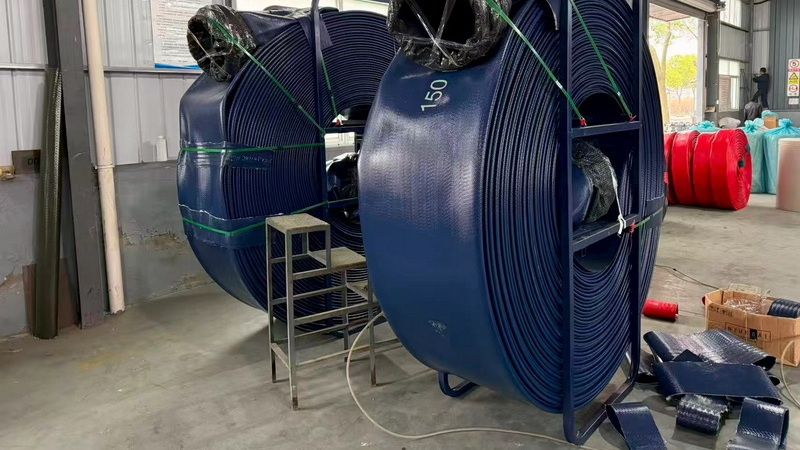
From a heap leach engineer's perspective, correct specification is the difference between a hose that performs for years and one that fails prematurely. The following checklist draws on mining and agricultural TPU layflat best practices. [biaohuihose]
- Match internal diameter (ID) to the required flow rate, pump curve, and allowable friction loss. [th.jafirehose]
- Larger diameters reduce friction but increase hose weight; smaller diameters increase pressure and may require higher pressure rating. [th.jafirehose]
- For main leachate headers, continuous large‑diameter TPU layflat hoses can minimize the number of parallel lines and couplings. [biaohuihose]
- Wall thickness directly affects working and burst pressure; always verify manufacturer data. [biaohuihose]
- Ensure an adequate safety factor between pump discharge pressure and hose working pressure, accounting for elevation changes and transient surges. [biaohuihose]
- For heap leach slopes or high static heads, choose mining‑grade TPU with higher pressure ratings and abrasion‑resistant outer covers. [th.jafirehose]
- Confirm that the TPU compound is compatible with your leach solutions (e.g., cyanide, sulfuric acid, chloride‑rich brines). [ijaet]
- Request material test results (abrasion, hydrolysis, chemical resistance) from the supplier, especially for high‑solids or hot solutions. [ijaet]
- Check the temperature range; mining‑grade TPU hoses can typically handle from sub‑zero ambient conditions to elevated process temperatures. [biaohuihose]
- Use long continuous lengths to reduce the number of couplings and potential leak points across the pad and between ponds. [th.jafirehose]
- Select coupling materials compatible with the fluid and environment, ensuring robust clamping that does not damage the hose wall. [th.jafirehose]
- Plan routing to avoid sharp bends, kinks, and sharp edges that can concentrate stress and accelerate wear. [th.jafirehose]
Even the best hose fails early if mishandled. Good operations teams treat TPU layflat hoses as critical infrastructure for leachate management.
Deployment steps: [th.jafirehose]
1. Inspect the hose for manufacturing damage, cuts, or defects before first use.
2. Lay the hose fully flat without twists or kinks along the planned route.
3. Align and secure couplings, testing for leaks at low pressure before full operation.
4. Keep the hose clear of sharp rocks, steel edges, and vehicle traffic where possible.
Routine maintenance: [biaohuihose]
- After shutdowns, drain the hose completely to prevent standing solution and scaling.
- Roll or coil the hose without tight kinks and store it away from direct sunlight and aggressive chemicals when idle.
- Inspect regularly for wear, localized bulges, abrasions, or coupling damage, and replace segments proactively.
These simple practices extend service life, prevent unplanned downtime, and improve overall heap leach reliability and safety. [th.jafirehose]
The global TPU layflat hose market—for oil transfer, mining, agriculture, and water management—has been growing steadily, driven by the need for lightweight, high‑performance, and mobile fluid transfer solutions. Market research indicates that TPU layflat hoses for oil transfer alone were valued in the hundreds of millions of USD in 2025 and are projected to expand further through 2032. [giiresearch]
Several trends support the shift to TPU layflat in heap leaching leachate collection:
- Higher environmental and regulatory pressure, increasing demand for leak‑free, traceable solution handling. [giiresearch]
- Expansion of heap leaching into more remote and topographically challenging sites where mobile hoses outperform rigid infrastructure. [th.jafirehose]
- Growing emphasis on total cost of ownership, not just initial capex, favoring solutions with lower installation cost and faster redeployment. [giiresearch]
These industry dynamics align closely with the capabilities of TPU layflat hoses for flexible leachate collection and transfer. [giiresearch]
Jiangsu Sunmoon Shale Gas High Pressure Hose Co., Ltd is a China‑based hose manufacturer integrating R&D, production, and sales, with a focus on high‑pressure flat TPU and PE hoses in rolls. The company also produces common PVC and nitrile rubber hoses, but its advanced technology in TPU and aramid‑reinforced flat hoses has positioned it as a specialist supplier in high‑demand applications. [china-layflat-hose]
Sunmoon's hoses are used in fields such as shale gas and oil exploitation, coal mines, emergency drainage, firefighting, and hydraulic transport, which share many technical requirements with heap leaching leachate collection: high pressure, long distance, harsh environments, and reliability under continuous operation. With a wide range of specifications, competitive pricing, and detailed after‑sales service, Sunmoon is able to provide customized TPU layflat solutions tailored to specific leachate chemistry, terrain, and flow conditions. [china-layflat-hose]
To bring the above points together, heap leach operations and project engineers can follow this practical checklist when selecting TPU layflat hoses for leachate collection:
1. Define the application envelope
- Leach solution type (cyanide, acid, chloride, pH range).
- Flow rate, total dynamic head, and pump type.
- Ambient and solution temperatures and exposure time. [th.jafirehose]
2. Select hose type and construction
- Mining‑grade TPU layflat with extrusion‑through‑weave reinforcement. [biaohuihose]
- Appropriate ID, wall thickness, and working pressure.
- Outer cover optimized for abrasion and UV resistance. [biaohuihose]
3. Design layout and couplings
- Longest possible continuous lengths to minimize joints. [th.jafirehose]
- Robust, chemically resistant couplings and clamps.
- Routing that avoids severe bends, traffic, and sharp edges. [th.jafirehose]
4. Plan deployment and maintenance procedures
- Standard operating procedures (SOPs) for inspection, deployment, retrieval, and storage. [th.jafirehose]
- Training for operators on safe handling and leak checks.
- Regular condition monitoring and replacement planning.
Working closely with a specialized supplier like Sunmoon, engineers can quickly iterate through these steps and arrive at a fit‑for‑purpose TPU layflat configuration for leachate lines, pregnant solution headers, or barren return lines.
If you are responsible for heap leach design, commissioning, or operations, upgrading your leachate collection lines to TPU layflat hoses can deliver tangible gains in uptime, flexibility, and environmental performance.
Sunmoon can support you by:
- Reviewing your heap leach process data (flows, pressures, chemistry, terrain).
- Recommending custom TPU layflat specifications and compatible couplings.
- Providing large‑volume, consistent production and responsive after‑sales support for multi‑site deployments. [china-layflat-hose]
To explore a solution optimized for your site, you can prepare basic process information (flow, head, solution chemistry, route length) and contact a TPU layflat specialist at Sunmoon for a tailored proposal.
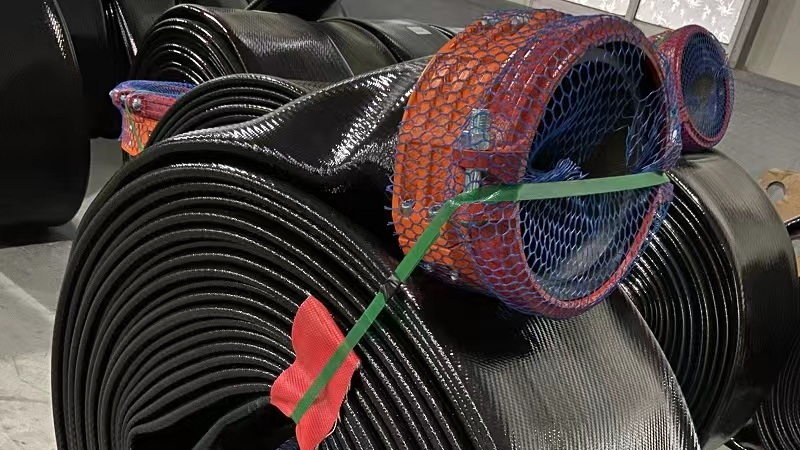
Q1. Are TPU layflat hoses suitable for acidic or cyanide leachate solutions?
Yes, properly formulated TPU layflat hoses offer excellent chemical resistance and can be tailored to handle acidic or cyanide‑bearing leachate, provided the specific solution chemistry and temperature are evaluated with the supplier. [ijaet]
Q2. How long can TPU layflat hoses be supplied for heap leach lines?
TPU layflat hoses can be produced in long continuous runs, significantly reducing the number of couplings and leak points compared with rigid pipes or short rubber hose sections. [biaohuihose]
Q3. What pressure rating should I choose for leachate transfer?
You should select a working pressure rating that exceeds your maximum pump discharge pressure plus static head and surge allowance, using manufacturer data on wall thickness and burst pressure as a guide. [biaohuihose]
Q4. How do TPU layflat hoses compare with HDPE pipes in total cost?
While detailed cost depends on site conditions, TPU layflat hoses typically offer lower installation and redeployment costs and reduced downtime, which can result in competitive or lower total cost of ownership versus HDPE for mobile or semi‑permanent lines. [giiresearch]
Q5. Can TPU layflat hoses be reused when the heap leach pad expands?
Yes, a key advantage of TPU layflat hoses is their mobility; they can be drained, rolled, transported, and redeployed to new pads or extended lines, supporting staged mine development and heap expansion. [th.jafirehose]
1. Hebei Biaohui Rubber Products Co., Ltd. "TPU Layflat Hose for Mining Drainage – Structure and Technical Parameters."
https://www.biaohuihose.com/pro/154.html [biaohuihose]
2. Jiangsu Sunmoon Shale Gas High Pressure Hose Co., Ltd. "Company Profile – China TPU Layflat Hose Supplier."
https://china-layflat-hose.com/about/company-profile/ [china-layflat-hose]
3. Jiangsu Sunmoon Shale Gas High Pressure Hose Co., Ltd. "About Us – China TPU Layflat Hose Supplier."
https://china-layflat-hose.com/about/ [china-layflat-hose]
4. Industry article. "Procurement Guide: TPU Layflat Hose in Mining and Agriculture."
https://th.jafirehose.com/news/industry-news/procurement-guide-tpu-layflat-hose-mining-agriculture.html [th.jafirehose]
5. Market Research Report. "TPU Layflat Hose for Oil Transfer Market by Material Type, Pressure Rating, Hose Diameter, Wall Construction, End Use – Global Forecast 2026–2032."
https://www.giiresearch.com/report/ires1950273-tpu-layflat-hose-oil-transfer-market-by-material.html [giiresearch]
6. Bugin, L. A. K., & Cândido, L. H. A. "Recycling Cycle of Materials Applied on Thermoplastic Polyurethane." IJAET, Vol. 12, Issue 1.
https://www.ijaet.org/media/1I49-IJAET1201203-v12-i1-pp1-10.pdf [ijaet]
7. Polachova, A., et al. "Recyclability of Thermoplastic Polyurethane under Mechanical Reprocessing."
http://publikace.k.utb.cz:8080/bitstream/handle/10563/1012787/Preprint_1012787.pdf [publikace.k.utb]
8. Polymers (Basel). "Recycling and Reprocessing of Thermoplastic Polyurethane."
https://pmc.ncbi.nlm.nih.gov/articles/PMC7564349/ [pmc.ncbi.nlm.nih]


