

Views: 222 Author: Sunmoon Publish Time: 2026-06-08 Origin: Site


Content Menu
● Understanding Microbe Resistance in Agricultural Hoses
● What Is a Standard Agricultural Hose?
● Why Microbe Resistance Matters in Manure & Slurry Systems
● Core Material Differences: TPU vs. Standard Hose Materials
>> TPU Drag Hose Material Properties
>> Standard Agricultural Hose Materials
● Microbe Resistance: TPU Drag Hose vs. Standard Agricultural Hose
>> 1. Inner Surface Smoothness and Biofilm Formation
>> 2. Chemical and Disinfection Compatibility
>> 3. Moisture and Nutrient Retention
>> 4. Structural Integrity under Microbial and Chemical Stress
● Microbe Resistance Comparison Table
● Industry Case Insight: Umbilical Drag Systems
● Practical Design & Operation Tips to Maximize Microbe Resistance
● Expert Perspective: When to Choose TPU Drag Hose
● How Sunmoon Custom TPU Drag Hoses Support Microbe‑Resistant Systems
● Step‑by‑Step Selection Guide: TPU Drag Hose vs. Standard Hose
● Call to Action: Design Your Microbe‑Resistant Hose Solution with Sunmoon
● FAQs: Microbe Resistance and Drag Hoses
TPU drag hose generally offers significantly better microbe resistance than standard agricultural hose, especially in demanding slurry and manure handling applications where biofilm, algae, and odor control directly impact system hygiene and service life. [bh-layflathose]
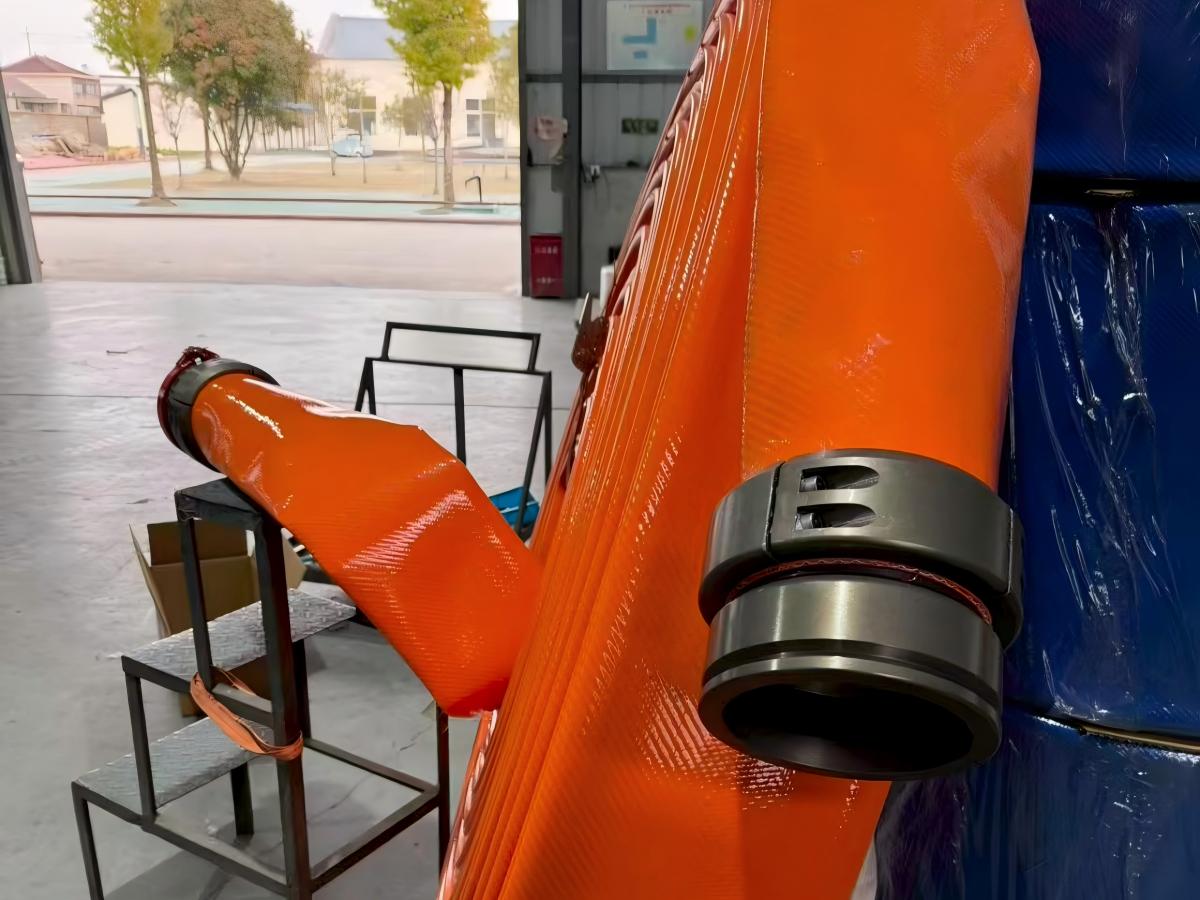
In modern irrigation and slurry spreading systems, microbial growth inside hoses is a hidden cost driver—it affects flow efficiency, contamination risk, odor, and hose longevity. Microbes such as bacteria, fungi, and algae thrive in nutrient-rich agricultural media like manure and sludge, forming biofilms that cling to inner hose walls. [orient-hose]
From a field engineer's perspective, I have seen farms struggle with clogging, slime buildup, and unpleasant odors in conventional hoses when pumping slurry or recycled water over long distances. In this context, the choice between a TPU drag hose and a standard agricultural hose is not just about pressure rating—it is about how well the hose resists microbial attack over repeated use. [layflat-hose]
A TPU drag hose is a thermoplastic polyurethane layflat hose reinforced with high‑strength textile layers, designed for continuous dragging across fields while transferring slurry, manure, or irrigation water. It is commonly used in umbilical drag systems that connect slurry reservoirs or lagoons to tractors and applicators in large agricultural operations. [biaohuihose]
Key construction features include:
- TPU lining and cover with smooth internal surfaces. [bh-layflathose]
- High‑tensile polyester or polyamide reinforcement, giving strong tensile and burst resistance. [biaohuihose]
- Layflat design, which collapses when not pressurized for easier storage and transport. [layflat-hose]
These structural characteristics make TPU drag hose fundamentally different from many standard agricultural hoses, which are often made from PVC or rubber blends with less abrasion and chemical resistance. [layflat-hose]
"Standard agricultural hose" is a broad category, but in most farms it refers to:
- General‑purpose PVC layflat hose for low to medium pressure irrigation. [layflat-hose]
- Reinforced rubber or PVC hoses used for water transfer, light slurry, or fertilizer solutions. [rubber-pvc-hose]
Such hoses are designed primarily for cost efficiency and basic handling, not for being dragged long distances across rough ground while carrying abrasive and microbe‑rich media. Many of these standard hoses have: [rubber-pvc-hose]
- Softer or rougher inner surfaces.
- Lower abrasion resistance.
- Limited chemical and UV resistance compared with high‑grade TPU. [layflat-hose]
These differences have significant implications for microbial resistance, especially under intensive manure management.
From both a hygiene and equipment cost perspective, microbe resistance in hoses directly influences:
- Biofilm buildup and internal roughness, which reduce flow and increase pumping energy demand. [orient-hose]
- Contamination risk, especially when hoses are used with treated wastewater or fertigation systems.
- Odor generation, as anaerobic microbe activity intensifies inside stagnant sections. [orient-hose]
- Hose degradation, when microbes, moisture, and chemicals jointly attack the hose material over time. [bh-layflathose]
For manufacturers like Sunmoon that specialize in drag hoses for global clients, delivering microbe‑resistant internal surfaces and stable TPU compounds is now a differentiating factor for customers who run high‑throughput drag systems season after season. [bs.tpulayflatpipe]
Thermoplastic polyurethane (TPU) is widely recognized in industrial hose applications for its:
- High abrasion resistance, especially critical when hoses are dragged over rough terrain. [biaohuihose]
- Excellent chemical resistance to many oils, fuels, and agricultural chemicals. [bh-layflathose]
- Low moisture absorption and stable mechanical properties over a broad temperature range. [alibaba]
Because TPU is dense, smooth, and less prone to swelling, it creates less favorable conditions for microbes to attach and colonize compared with some porous or softer polymers. [bh-layflathose]
Standard agricultural hoses commonly use:
- PVC (polyvinyl chloride) with plasticizers for flexibility.
- Rubber or rubber‑PVC blends with textile braids. [rubber-pvc-hose]
These materials may:
- Have more microscopic surface roughness, giving bacteria and algae niches to attach.
- Be more susceptible to plasticizer leaching, which can slightly change surface properties over time.
- Have lower abrasion and chemical resistance, leading to micro‑cracks where biofilms can grow. [rubber-pvc-hose]
This does not mean all standard hoses are "unsafe"; rather, they are typically optimized for cost and general use, not for microbe‑rich slurry and long‑distance dragging. [layflat-hose]
From a field performance and materials engineering view, TPU drag hose offers several microbe‑resistance advantages compared to typical standard agricultural hoses. [orient-hose]
- TPU drag hose:
- Typically features a smooth, extruded TPU lining, which reduces turbulence zones and limits attachment sites for bacteria and algae. [bh-layflathose]
- The smoother surface facilitates faster flushing and cleaning, which reduces residual organic matter where microbes thrive. [layflat-hose]
- Standard agricultural hose:
- May have more internal roughness or slight seams, especially in cheaper PVC layflat products. [layflat-hose]
- This accelerates biofilm formation, making hoses harder to clean and more prone to clogging in long runs. [rubber-pvc-hose]
- TPU drag hose:
- Often exhibits robust resistance to disinfectants and cleaning chemicals used in agriculture, such as diluted alkaline cleaners or certain oxidizing agents. [orient-hose]
- This allows more aggressive cleaning protocols without rapidly degrading the hose.
- Standard agricultural hose:
- Some PVC and rubber hoses can be more sensitive to repeated disinfectant exposure, leading to hardening, cracking, or loss of flexibility. [rubber-pvc-hose]
- As a result, cleaning intensity may be reduced, indirectly encouraging microbial persistence.
- TPU drag hose:
- TPU's relatively low moisture absorption helps reduce long‑term dampness inside the hose wall, limiting microbial colonization within micro‑defects. [bh-layflathose]
- When drained, TPU layflat hoses collapse, expelling more residual fluid and lowering nutrient retention.
- Standard agricultural hose:
- Some materials may absorb slight moisture or retain micro‑pockets of slurry in cracks or rough areas, extending the time that nutrient‑rich films remain. [rubber-pvc-hose]
- TPU drag hose:
- Designed for high tensile strength and heavy dragging loads, it maintains structural stability even when frequently exposed to microbe‑laden slurry, fertilizers, or recycled water. [biaohuihose]
- This stability means fewer cracks or delaminated zones where microbes can colonize.
- Standard agricultural hose:
- Under more severe operating conditions than originally intended, standard hoses can develop micro‑cracks or separations that trap microbial films. [rubber-pvc-hose]
| Aspect | TPU Drag Hose (TPU Layflat) | Standard Agricultural Hose |
|---|---|---|
| Core material | Thermoplastic polyurethane (TPU) (bh-layflathose) | PVC, rubber, or blends (rubber-pvc-hose) |
| Typical application | Dragging slurry, manure, high‑duty irrigation (bh-layflathose) | General water, light fertilizer use (layflat-hose) |
| Inner surface smoothness | High, extruded TPU lining (bh-layflathose) | Varies; often rougher or seamed (layflat-hose) |
| Biofilm buildup tendency | Lower, easier flushing (bh-layflathose) | Higher in long‑term use (rubber-pvc-hose) |
| Disinfectant tolerance | Generally higher (bh-layflathose) | Moderate; depends on material (rubber-pvc-hose) |
| Moisture absorption | Low (bh-layflathose) | Material‑dependent; may be higher (rubber-pvc-hose) |
| Abrasion resistance | Excellent, drag‑optimized (bh-layflathose) | Moderate to low on rough ground (rubber-pvc-hose) |
| Typical service life in drag use | Higher under proper operation (bh-layflathose) | Lower when misused for drag systems (rubber-pvc-hose) |
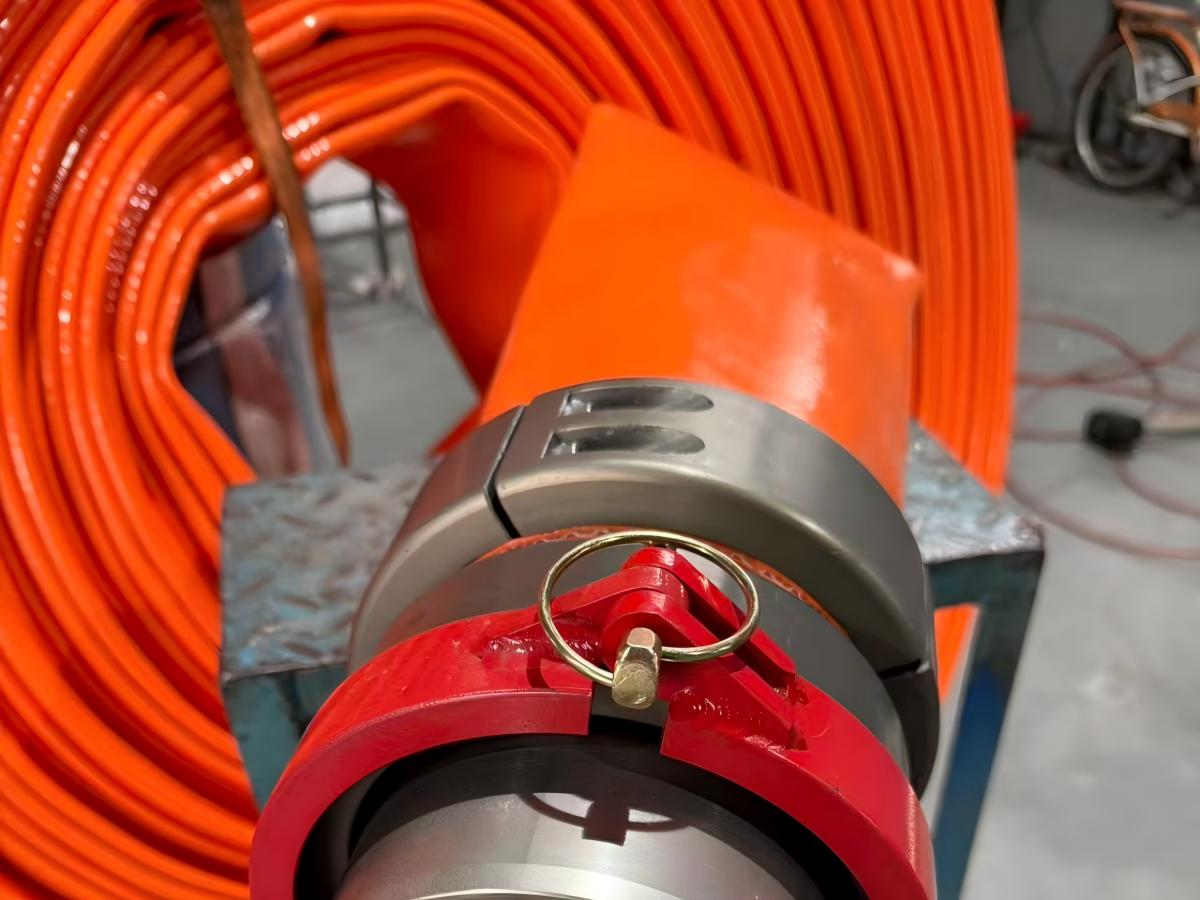
In many European and North American slurry spreading systems, farmers deploy umbilical drag hoses to move liquid manure from centralized lagoons to applicators in large fields. In such setups, constant reuse, high solids content, and warm conditions create ideal environments for microbes. [orient-hose]
Operators report that:
- Standard water hoses used temporarily in slurry lines often show rapid internal fouling, odor, and flow reduction.
- Dedicated TPU drag hoses, by contrast, maintain more stable internal conditions and are easier to flush, which helps manage microbe loads and biofilm thickness over time. [orient-hose]
For a Chinese manufacturer like Sunmoon, supplying TPU drag hoses to these markets means not only meeting pressure and abrasion requirements but also ensuring material purity and smoothness that support microbe‑resistant performance in real farms. [bs.tpulayflatpipe]
Even with a microbe‑resistant TPU drag hose, operational practices play a major role in overall hygiene.
1. Implement regular flushing cycles
- After each slurry or manure application session, run clean water through the TPU drag hose to remove residual solids and shorten microbial dwell time. [orient-hose]
- Use moderate pressure flushing to fully expand the layflat hose and sweep the inner surface.
2. Optimize draining and storage
- Store TPU drag hoses in a fully drained, layflat position to minimize stagnant pockets where microbes can continue to multiply. [bh-layflathose]
- Avoid leaving nutrient‑rich slurry in the hose during long idle periods.
3. Use compatible disinfectants periodically
- Select cleaning solutions that are compatible with TPU, based on supplier guidelines, to control microbial load without damaging the hose lining. [bh-layflathose]
- Avoid harsh chemicals that are known to degrade PVC or rubber if standard hoses are still in use.
4. Inspect and replace standard hoses used in microbe‑rich duty
- If standard agricultural hoses are still used temporarily for slurry or recycled water, implement frequent visual and tactile inspection for roughness, cracks, or odor.
- Replace sections that show significant internal fouling or structural degradation to prevent cross‑contamination.
From an industry expert viewpoint, TPU drag hose is a strategic upgrade when your operation involves:
- High‑frequency slurry or manure pumping across large fields.
- Long hose runs where friction and biofilm can significantly impact flow.
- Frequent dragging over rough terrain, where abrasion and impact are severe. [biaohuihose]
- Mixed use with recycled water, fertilizers, and chemicals, requiring both chemical and microbe resistance. [orient-hose]
Standard agricultural hoses still make sense for:
- Low‑pressure clean water irrigation.
- Short, static connections where hoses are not dragged.
- Budget‑constrained areas where microbe load is low and cleaning frequency is limited.
However, once you cross into continuous, high‑solids, microbe‑rich flows, the combination of TPU's material advantages and a smooth layflat design delivers more consistent microbe control and system reliability. [layflat-hose]
As a specialized Chinese manufacturer of drag hoses and flat hoses, Sunmoon provides customizable TPU drag hoses tailored to different global markets and operating conditions. By adjusting parameters such as TPU formulation, wall thickness, reinforcement pattern, and inner diameter, Sunmoon can align hose design with your specific microbe exposure profile and cleaning practices. [bs.tpulayflatpipe]
From a B2B buyer's perspective, this customization is crucial:
- A dairy farm with warm, high‑N manure may prioritize maximum inner smoothness and chemical stability.
- A contractor running long umbilical systems may focus on tensile strength, abrasion resistance, and easy draining, which indirectly supports microbe control. [biaohuihose]
Working directly with a manufacturer also simplifies compliance with local hygiene and environmental regulations around manure management and wastewater reuse. [bs.tpulayflatpipe]
Use this simple decision path when configuring your next system:
1. Identify the main media
- Slurry/manure, recycled wastewater, fertilizer solution, or clean water.
2. Evaluate microbe risk
- High risk for manure and warm recycled water; moderate for fertilizer; lower for clean water.
3. Assess mechanical duty
- Dragging across fields vs. static positioning; high vs. low abrasion.
4. Match hose type
- High microbe + high drag → TPU drag hose.
- Moderate microbe + low drag → High‑quality TPU or reinforced hose, depending on budget.
- Low microbe + static use → Standard agricultural hose may suffice.
5. Define cleaning protocol
- If you plan regular flushing and disinfection, favor materials like TPU that tolerate these treatments. [bh-layflathose]
If your current hoses show biofilm buildup, clogging, or odor issues when handling slurry, manure, or recycled water, upgrading to a TPU drag hose solution is one of the most effective ways to reinforce microbe resistance at the system level. [orient-hose]
Sunmoon can support you with:
- Custom TPU drag hose specifications for your exact media, flow, and field conditions. [bs.tpulayflatpipe]
- Guidance on operational and cleaning practices that maximize microbe resistance and hose life.
- Flexible OEM/ODM cooperation for global agricultural equipment brands. [bs.tpulayflatpipe]
You can share your current hose type, operating pressure, media, and field layout with Sunmoon's engineering team to receive a tailored TPU drag hose proposal that improves both microbe control and overall system reliability. [bs.tpulayflatpipe]

1. Is TPU inherently antibacterial?
TPU itself is not automatically antibacterial, but its smooth, low‑porosity surface and chemical stability make it less hospitable to microbes compared with some softer or rougher polymers. [bh-layflathose]
2. Can I use standard agricultural hose for slurry instead of TPU drag hose?
You can, but standard hoses are not optimized for microbe‑rich slurry or heavy dragging, so they may foul more quickly, be harder to clean, and wear out faster under these conditions. [rubber-pvc-hose]
3. How often should I clean a TPU drag hose used with manure?
Cleaning frequency depends on usage, but many operators flush with clean water after each spreading session and perform periodic chemical cleaning according to hose and chemical supplier recommendations. [orient-hose]
4. Does higher pressure improve microbe resistance inside the hose?
Pressure alone does not kill microbes, but higher, stable operating pressure in smooth TPU hoses can maintain better flow velocities, which help reduce sediment and biofilm buildup. [bh-layflathose]
5. Can Sunmoon customize drag hoses for different climates and regulations?
Yes, manufacturers like Sunmoon provide customized TPU drag hose designs for different climates, regulatory environments, and equipment interfaces to ensure reliable and hygienic operation in global markets. [bs.tpulayflatpipe]
1. Biaohui Rubber & Plastics – "TPU Drag Hose" (product description and applications, including manure and slurry transfer).
https://www.biaohuihose.com/pro/98.html [biaohuihose]
2. Hebei Biaohui Rubber & Plastic Products – "TPU Drag Hose" (material, reinforcement, and application details).
https://www.bh-layflathose.com/pro/172.html [bh-layflathose]
3. Orientflex – "TPU drag hose" (drag system use, slurry distribution, and hose design).
https://www.orient-hose.com/project/tpu-drag-hose/ [orient-hose]
4. LayFlat Hose Co., Ltd – "TPU Drag Hose" (TPU layflat hose overview and typical use).
https://www.layflat-hose.com/product/TPU-Lay-Flat-Hose/TPU-Drag-Hose/ [layflat-hose]
5. Sample TPU layflat drag hose listing (working temperature and general performance data).
https://www.alibaba.com/product-detail/High-Quality-Agriculture-Irrigation-Hose-Supplier_1600191316585.html [alibaba]
6. Industrial hose manufacturer resources on PVC, rubber, and general agricultural hose structures and uses.
https://www.rubber-pvc-hose.com/project/tpu-drag-hose/tpu-drag-hose-3/ [rubber-pvc-hose]
7. Jiangsu Sunmoon Shale Gas High Pressure Hose Co., Ltd – Company and blog overview (manufacturer background).
https://bs.tpulayflatpipe.com/blog/ [bs.tpulayflatpipe]


