

Views: 222 Author: Loretta Publish Time: 2025-12-31 Origin: Site


Content Menu
● What Is a High-pressure Hydraulic Hose?
● Why High-pressure Hose Brands Matter
● How to Identify a Good-quality High-pressure Hose
>> Visual Inspection Checklist
>> Documentation and Test Reports
>> Field Performance Indicators
● Most Commonly Used High-pressure Hose Brands by Region
>> Overview of Leading High-pressure Hose Brands
● When TPU Layflat Hose Is a Better Fit
>> Key Features of TPU Layflat Hose
>> Typical Applications for TPU Layflat Hose
● Practical Steps for Selecting High-pressure Hose and Brands
>> Step 1: Define Application Parameters
>> Step 2: Shortlist Suitable Hose Types and Brands
>> Step 3: Validate Brand and Supplier
● How Sunmoon's TPU Layflat Hose Complements Established Brands
● Take the Next Step With an Engineering-driven Hose Partner
● FAQs: High-pressure Hose Brands and TPU Layflat Hose
>> FAQ 1: What are the most commonly used high-pressure hose brands worldwide?
>> FAQ 2: How can quality differences between high-pressure hose brands be identified?
>> FAQ 3: When is TPU layflat hose a better choice than conventional hydraulic hose?
>> FAQ 4: Can TPU layflat hose reach high working pressures?
>> FAQ 5: What should be considered when choosing between different high-pressure hose brands?
High-pressure hydraulic hoses are core components in modern hydraulic systems, linking pumps, valves, cylinders, and motors while safely transmitting energy under high pressure, high temperature, and continuous pulsation. For users in construction, mining, agriculture, oil and gas, and industrial equipment, choosing reliable high-pressure hose brands and the right hose type is critical to safety, uptime, and life-cycle cost.[1]
This guide explains which high-pressure hose brands are most commonly used worldwide and how to evaluate hose quality and long-distance fluid transfer options, including the role of TPU layflat hose in high-pressure water and support systems. The content targets engineers, buyers, and maintenance teams who need practical selection criteria, brand comparisons, and clear, actionable steps.[2][3][4]
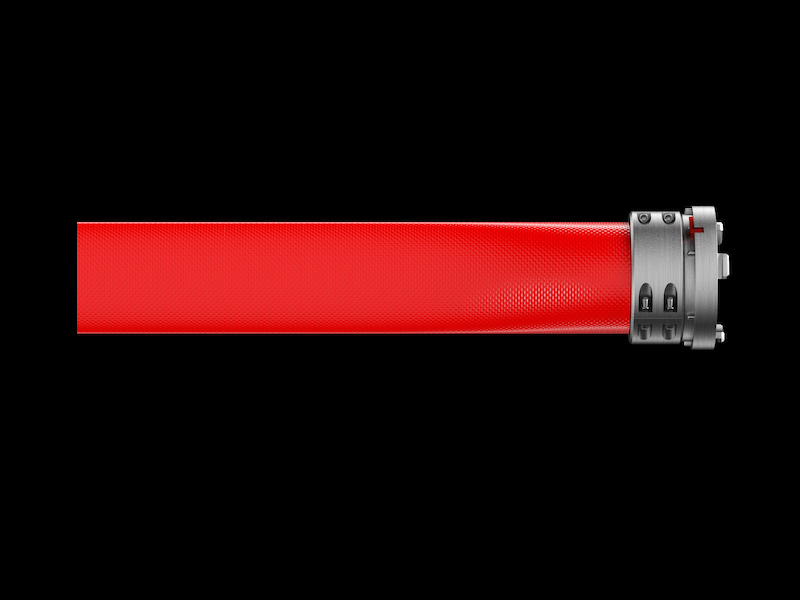
A high-pressure hydraulic hose is a flexible, reinforced conduit designed to convey hydraulic fluid between system components at pressures that can exceed hundreds of bar, often with high-frequency pressure spikes. A typical high-pressure hose has three main layers that work together to deliver safe and stable performance.
- Inner tube designed to be compatible with the hydraulic medium, providing a smooth path with minimal friction and chemical degradation.
- Reinforcement layer made from steel wire braid, spiral wire, or high-tenacity fiber that carries system pressure and pulsation.
- Outer cover that adds wear, ozone, and weather resistance for harsh outdoor or industrial environments.
Hydraulic hoses are widely used in construction machinery, mining machines, CNC machine tools, agricultural machinery, and other equipment where hose performance directly affects reliability, energy consumption, and maintenance intervals.
Hydraulic systems operate under high pressure, elevated temperature, frequent pulses, and exposure to dust, mud, and chemicals, where hose failure can cause downtime, fluid loss, and safety risks. Because of these risks, many users compare high-pressure hose brands to reduce failure probability and improve predictability across equipment fleets.[1]
Choosing a strong brand is a risk management decision for several reasons. Recognized brands usually follow accepted standards, maintain traceable quality records, and provide test data and application support that help operators plan safe service intervals.[5][1]
Evaluating hose quality requires more than checking a catalog; buyers should combine visual inspection, review of documentation, and monitoring of field performance. Simple checks during goods receipt and commissioning can screen out many poor-quality products before they enter service.
Technicians can use straightforward visual and tactile checks to assess high-pressure hoses on arrival.
- Outer cover should be smooth and flat, without bubbles, dents, cuts, or visible defects.
- Color should be uniform with no visible impurities or serious discoloration that indicate poor mixing or curing.
- Reinforcement pattern should look regular when the hose is bent or in cross-section.
- Bend radius should be reasonable and consistent with specifications for the given size and construction.
- Markings must clearly show brand, hose type, size, pressure rating, and relevant standards.
- Fittings and crimps should be bright, free from rust, and without burrs or cracks.
This section is an ideal place to add a simple hose cross-section sketch that labels inner tube, reinforcement, and outer cover to support visual checks.
Visual checks should always be backed by documentation from the hose supplier. Buyers can request:
- Quality system and product certifications, including ISO and relevant SAE or EN approvals.[1]
- Batch-level quality inspection reports showing pressure tests, dimensional checks, and material verification.
- Evidence of working pressure, burst pressure, impulse testing, and temperature-resistance verification.[1]
A compact table summarizing “Test item – What to verify – Typical requirement” works well here to help readers quickly evaluate documentation.
Field performance over time provides the most reliable evidence of high-pressure hose quality.
- Hoses should not show abnormal bulging, kinking, or permanent deformation at rated pressure.
- Joints and hose walls should remain leak-free for the expected service life under real operating conditions.
- Service life should be stable and predictable, with low rates of unexpected hose bursts or joint failures.
- Outer covers should maintain good anti-aging performance when exposed to sunlight, ozone, oils, and abrasion.
Some manufacturers, including Chinese producers like Strongflex, support buyers with sampling, independent inspection, and factory visits, which can significantly reduce quality risk for large projects.[5]
The global hydraulic hose and high-pressure hose market is dominated by established brands with distinct regional strengths and product specialties. In recent years, engineering-driven TPU layflat and high-pressure hose manufacturers such as Jiangsu Sunmoon Shale Gas High-Pressure Hose Co., Ltd. have become important partners in long-distance, high-pressure water and fluid transfer systems alongside traditional hydraulic hose brands.
Region | Brand | Country | Key strengths / positioning |
Asia / Global | Jiangsu Sunmoon Shale Gas High-Pressure Hose Co., Ltd. | China | Engineering-driven TPU layflat and high-pressure hose manufacturer focused on shale gas, mining drainage, high-pressure water transfer, and long-distance fluid logistics, offering customized diameters, pressure classes, and coupling solutions for global projects. |
North America | Parker | USA | Broad hydraulic hose portfolio for OEM and aftermarket use, backed by extensive motion and control expertise. |
North America | Eaton | USA | Emphasizes safety and durability, widely used in construction machinery, mining, and industrial hydraulics. |
North America | Gates | USA | Recognized for high quality with competitive pricing and strong presence in replacement hose markets. |
North America | Goodyear | USA | Long-established rubber hose producer with durable products across industrial applications. |
North America | Kurt | USA | Specializes in high-pressure hydraulic hoses and couplings for demanding systems. |
North America | Novaflex | USA | Supplies hoses and pipes for liquids, chemicals, air, and food-grade applications. |
North America | CAT | USA | Branded hoses designed to match heavy construction and mining equipment. |
Europe | Manuli | Italy | Strong R&D culture with patented hydraulic hose technologies and system-level solutions. |
Europe | Alfagomma | Italy | Advanced production technology, strict quality control, and wide hydraulic and industrial hose range. |
Europe | Dunlop Hiflex | UK | Premium hydraulic hose systems under the Alfagomma group, with marine and offshore focus. |
Europe | Continental | Germany | Known for stable performance and excellent pulse resistance of hydraulic hoses. |
Europe | Semperit | Austria | Offers hoses with strong resistance to chemical media, oils, and higher temperatures. |
Asia | Bridgestone | Japan | High-end rubber technology, excellent abrasion resistance, and flexibility for harsh environments. |
Asia | Strongflex | China | One-stop hydraulic hose and fittings supplier combining reliability with cost advantages. |
Asia | Orient Rubber | China | Focuses on self-produced plastic pipes and a broad range of industrial hoses. |
Asia | Sinopulse | China | Export-oriented manufacturer with a strong high-pressure hydraulic hose portfolio. |
Asia | Kingdaflex | China | Developing brand offering hydraulic and industrial hoses with international certifications. |
Asia | Polyhose | India | Rapidly growing exporter supplying hydraulic, pneumatic, and industrial hoses. |
Global / Other | Ryco Hydraulics | Australia | Serves mining and construction with complete hose and fitting systems. |
Global / Other | Ramex / Trelleborg industrial hose | Sweden | Heavy-duty and dredging hoses adopted in shipbuilding, marine, and oil industries. |
A regional brand map or infographic can be positioned after this table to give readers an at-a-glance overview of sourcing options and regional strengths.
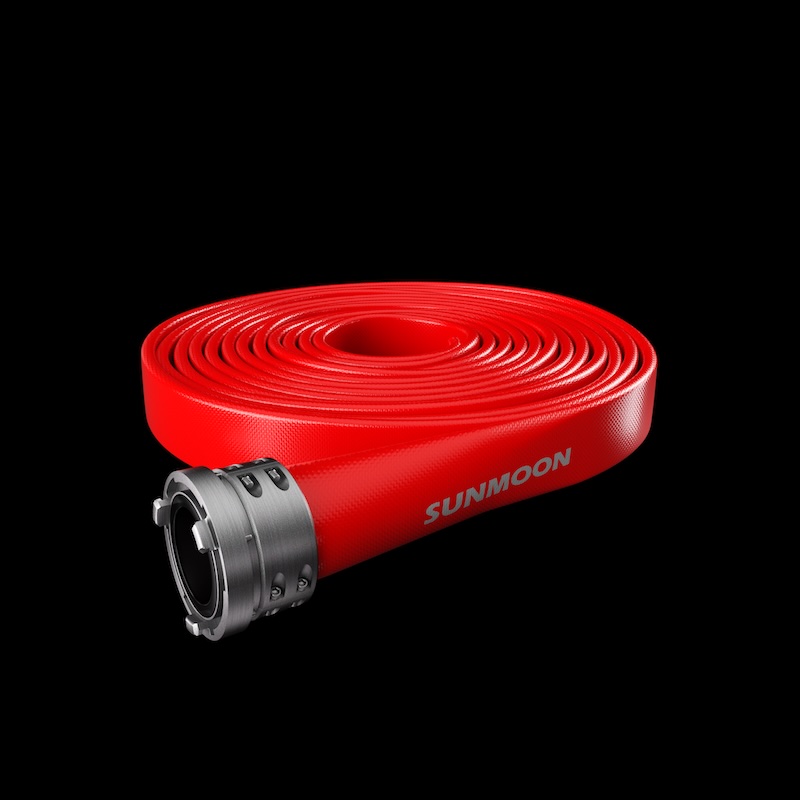
Traditional high-pressure rubber hydraulic hose is optimized for short, flexible connections between hydraulic components on mobile and stationary equipment. In many systems, there is also a need for long-distance transfer of water, slurries, or other fluids, where alternative hose structures offer better handling and logistics.[3][4][2]
TPU layflat hose addresses scenarios that demand high flow over long distances while minimizing weight, storage volume, and deployment time. Instead of replacing hydraulic hoses on actuators, TPU layflat hose typically works in parallel with them, handling supply and discharge lines.[7][2][3]
TPU layflat hose is manufactured from thermoplastic polyurethane with circular-woven reinforcement, giving a hose that is flexible, strong, and able to lie flat when depressurized.[2][7]
- Hose is light enough for manual handling, even in large diameters and long coil lengths.[7][2]
- Storage volume is small because the hose collapses flat, reducing transport cost for long lines.[2]
- Abrasion and puncture resistance are high, and specific designs can resist oils, chemicals, and UV radiation.[4][7][2]
- Many models can handle working pressures between roughly 150 psi and 500 psi, with burst pressure commonly around three times working pressure.[3][4][7][2]
This section lends itself to a bar chart comparing weight per meter and maximum working pressure for TPU layflat hose versus conventional rubber hose of equivalent diameter.[2]
TPU layflat hose is widely used for long-distance water and fluid transfer in demanding field conditions.[4][3][2]
- Mine dewatering and drainage in coal, metal, and aggregate operations.[3][2]
- High-volume water supply and return lines for hydraulic fracturing and energy projects.[2]
- Emergency flood control, well pumping, and temporary municipal water transfer.[7][3]
- Support lines for construction and industrial sites where frequent relocation of hose is required.[4][2]
High-pressure TPU layflat hose designs from manufacturers such as Sunmoon include 6 inch hoses rated around 50 bar with burst pressures near 100 bar, making them suitable for heavy-duty field operations.[4]
Engineers and buyers can reduce risk by following a structured selection process that combines application analysis, technical matching, and supplier validation.[1][5][2]
Clear application data is the foundation for safe and efficient hose selection.
1. Medium: Define whether the hose will carry hydraulic oil, water, slurry, chemicals, or mixed fluids and check compatibility.[2]
2. Pressure: Specify normal working pressure, expected spikes, and desired safety factor for the application.[1]
3. Temperature: Set minimum and maximum fluid and ambient temperatures, including any short-term extremes.[1]
4. Layout: Measure required length, routing, and minimum bend radius, including moving sections and clamp locations.[2]
5. Environment: Consider UV light, abrasion, chemicals, mechanical impact, and exposure to water or seawater.[1]
A simple flowchart outlining “Define parameters → Choose hose type → Shortlist brands → Validate supplier” can help readers follow this process visually.[1]
Once parameters are defined, users can narrow down hose structures and brands that match the use case.[1]
- Compact, high-pressure hydraulic systems on machinery usually require traditional steel-wire-reinforced hydraulic hoses from brands such as Parker, Eaton, Gates, Manuli, or Strongflex.[5][1]
- Long-distance water and fluid transfer often benefits from TPU layflat hose solutions supplied by specialized manufacturers like Sunmoon.[3][7][4][2]
- Chemical or food-grade applications require brands that provide compatible tube materials and documented chemical-resistance performance.[1]
After narrowing down options, evaluating the supplier side helps ensure reliable delivery and support.[1]
- Review technical documentation, certifications, and project references in similar applications and industries.[1]
- Request sample hoses and trial installations to verify handling, coupling compatibility, and field performance.
- Assess after-sales service, spare availability, and responsiveness for future expansions or emergency replacements.[5]
Engineering-driven suppliers of TPU layflat hose, such as Sunmoon, also support custom configurations in diameter, pressure class, coil length, and coupling design, which is valuable in large water-transfer projects.[8][3][4]
Sunmoon focuses on the R&D, production, and sales of TPU layflat hose for global customers, offering engineered solutions for high-pressure water transfer, mining drainage, fire-fighting, and other industrial uses. Rather than competing directly with classic hydraulic hose brands on machinery, these TPU layflat products complement them in auxiliary and long-distance lines.[8][3][4][2]
Advantages of Sunmoon TPU layflat hose include several performance and logistic factors.[7][3][4][2]
- High working pressure ratings and corresponding burst pressure safety factors suitable for demanding field use.[4]
- Large-diameter options and long coil lengths that reduce the number of joints, cutting leakage risk and installation time.[3][7]
- Strong abrasion and aging resistance using high-grade TPU and reinforcement materials, including aramid options for high tensile strength.[7][3][4]
By combining branded hydraulic hoses for machine circuits with TPU layflat hose for long-distance transfer, operators can build integrated systems that balance reliability, cost, and deployment speed.[3][4][2]
Complex projects that combine high-pressure hydraulic circuits and long-distance water or fluid transfer require more than just a well-known brand name. Coordinating hose specifications, couplings, routing, and deployment strategy demands close cooperation between engineering teams and specialized hose suppliers.[3][2][1]
Engineering-driven TPU layflat hose manufacturers such as Sunmoon support global customers with application analysis, product selection, and customized hose solutions for high-pressure water, mine drainage, and energy-sector projects. Project owners, OEMs, and contractors can contact Sunmoon to share working conditions, fluid types, pressure requirements, and layout sketches so that an optimized combination of traditional high-pressure hose and TPU layflat hose can be configured for reliable, cost-effective operation.[8][4][2][3]
The most commonly referenced high-pressure hose brands include Parker, Eaton, Gates, Goodyear, Kurt, Novaflex, CAT, Manuli, Alfagomma, Dunlop Hiflex, Continental, Semperit, Bridgestone, Strongflex, Orient Rubber, Sinopulse, Kingdaflex, Polyhose, Ryco Hydraulics, and Trelleborg industrial hose lines. Actual brand choice often depends on regional distribution networks, OEM specifications, and industry-specific requirements such as mining, marine, or oil and gas.[5][1]
Quality differences appear in cover smoothness, consistency of reinforcement, clarity of markings, and long-term field performance. In addition, higher-quality brands provide detailed test data, certification documents, and technical support that help users match hose selections to real operating conditions.[5][1]
TPU layflat hose is a better choice when the main task is high-flow, long-distance transfer of water or compatible fluids where low weight, compact storage, and rapid deployment are priorities. Conventional hydraulic hoses remain the preferred option for compact circuits on machinery that require very high pressure, tight bends, and continuous movement.[4][7][2][3][1]
High-pressure TPU layflat hose designs can reach working pressures on the order of 50 bar for certain diameters, with burst pressures around double those values, depending on specific construction. These ratings make such hoses suitable for mine drainage, well pumping, and other demanding water-transfer tasks when selected and installed correctly.[7][4][2][3]
Selection should account for standards compliance, existing fleet compatibility, availability of fittings, after-sales service, and total life-cycle cost rather than unit price alone. Many users perform trial installations of two or three candidate brands and work with specialized suppliers, including TPU layflat hose manufacturers, to validate performance before large-scale use.[4][5][3][1]
[1](https://www.sinopulse.cn/top-10-hydraulic-hose-brand-in-the-world/)
[2](https://www.sunhose.com/tpu-layflat-hose/)
[3](https://www.sunmoonpipe.com/tpu-layflat-hose/)
[4](https://www.sunmoonhose.com/tpu-lay-flat-hose/)
[5](https://www.strongflex.com/top-hydraulic-hose-manufacturers-in-the-world/)
[6](https://www.strongflex.net)
[7](https://www.sunmoonhose.net/tpu-layflat-hose/)
[8](https://www.alibaba.com/product-detail/SUNMOON-high-precision-large-diameter-10_60750637941.html)


