

Views: 259 Author: Sunmoon Hose Manufacturing Publish Time: 2026-07-19 Origin: Site


Content Menu
● A practical hose solution for offshore bunkering
● Why offshore bunkering needs engineered hose systems
● What makes TPU layflat hoses suitable
● Sea-to-shore transfer requirements
● Sunmoon engineering approach
● Where the value is delivered
● Latest operational priorities
● How to choose the right hose
● Field-tested deployment steps
● FAQ
>> 1. What is offshore bunkering?
>> 2. Why use TPU layflat hoses for bunkering?
>> 3. Are TPU layflat hoses suitable for fuel and oil?
>> 4. What should be checked before bunkering starts?
>> 5. Can Sunmoon customize hose systems?
Offshore bunkering is a high-stakes operation. When fuel must move safely from sea to shore, the hose system has to handle pressure, motion, weather, and operational risk at the same time. TPU layflat hoses are increasingly chosen for this job because they combine flexibility, abrasion resistance, and fast deployment with a lightweight structure that is easier to manage than many rigid transfer alternatives.
For operators in marine fuel transfer, the real question is not whether a hose can move liquid. It is whether it can keep performance stable under changing vessel positions, shifting weather, and strict safety procedures. That is where an engineered TPU layflat hose system becomes a practical advantage.
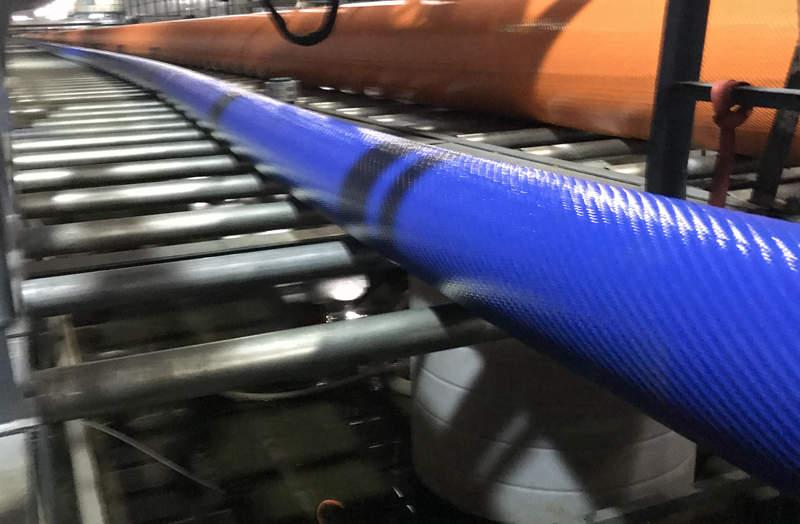
Bunkering is not a simple pumping task. It is a controlled transfer operation that requires hoses to be suitable for petroleum products, properly supported, pressure tested, securely connected, and continuously monitored during use. Safety guidance consistently emphasizes inspection, correct rigging, leak observation, and immediate shutdown if integrity is in doubt.
In offshore environments, these requirements become even more important. The hose must tolerate movement between vessel and shore, resist mechanical wear, and maintain a safe flow path with enough slack and bending radius for the actual installation. A layflat hose format is useful here because it is easy to deploy, coil, transport, and recover after service.
TPU layflat hoses offer a strong balance of mechanical toughness and operational convenience. Industrial TPU layflat products are widely used for fuel and oil discharge, offshore supply, ship-to-shore unloading, ship-to-ship refueling, and other demanding transfer applications.
Key advantages include:
- Lightweight handling. Crews can deploy and retrieve hoses faster than heavy rigid pipe systems.
- Good abrasion resistance. Useful when hoses move across deck surfaces or are handled repeatedly.
- Strong flexibility. Helps in offshore setups where vessel motion matters.
- Compact storage. Layflat construction saves space on reels and decks.
- Customization potential. Diameter, color, pressure rating, fittings, and length can be adapted to project needs.
For buyers, this matters because offshore bunkering often demands a hose that performs well not only in lab conditions, but also during real handling, repeated loading cycles, and variable weather exposure.
Sea-to-shore fuel transfer has a few non-negotiable requirements. The hose must be suitable for petroleum service, pressure-rated for the operating condition, and supported so it will not be damaged by vessel movement or deck contact. The transfer setup should also include proper couplings, seals, spill control measures, and a clear emergency stop procedure.
A robust offshore bunkering hose package should address the following:
1. Correct media compatibility. Fuel, oil, or hydrocarbon service must match the hose construction.
2. Working pressure margin. The hose should be selected above the expected operating pressure.
3. End fittings. Couplings must match the ship and shore interfaces.
4. Handling method. The hose should be supported and protected from kinking and abrasion.
5. Inspection plan. Pre-use checks and post-use inspections should be documented.
6. Emergency response readiness. The crew must be able to stop transfer quickly if leakage is observed.
This is why the hose itself is only one part of the solution. The full system includes fittings, reels, support hardware, operating procedure, and quality control discipline.
Sunmoon Hose Manufacturing is built around engineering-grade layflat hose production for demanding industrial applications. The company states that it operates a 35,000 m² production base, with 8 standardized automated production lines and an 80-person technical team, and it has focused on TPU layflat hoses since 2011.
That scale matters for offshore and oil-related buyers because project supply is not just about buying hose length. It is about consistent manufacturing, stable quality, and the ability to customize hose specifications for each operating environment. Sunmoon also positions its product range around oil and gas, dewatering, mining, agriculture, and other heavy-duty transfer scenarios, which supports its relevance for marine fuel handling projects.
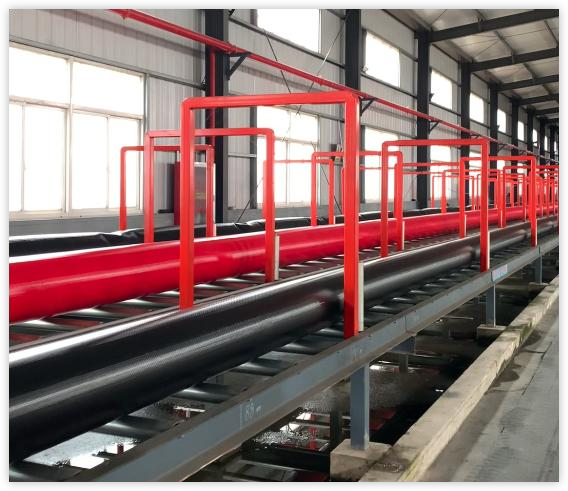
The value of a TPU layflat bunkering hose is not just durability. It is the combination of safety, speed, and lifecycle efficiency. A well-designed hose system can reduce handling time, simplify deck logistics, and lower the burden of storage and repositioning compared with bulkier alternatives.
For operators, that creates practical benefits:
- Faster mobilization during port calls.
- Easier hose routing across variable deck layouts.
- Better adaptability for temporary or seasonal transfer operations.
- Lower downtime caused by heavy handling or complex installation.
- Improved consistency when the same hose spec is used repeatedly across projects.
In real operations, these benefits can be more important than the initial purchase price. Bunkering teams usually care about total operational reliability, not just material cost.
Modern bunkering buyers are placing more emphasis on risk control, documentation, and traceability. Safety guidance repeatedly highlights inspection records, pressure testing, correct hose marking, and supervision during transfer. That means a supplier who can support technical documentation and custom configuration has a stronger market position than a commodity-only seller.
Three trends are especially relevant:
- Higher demand for customization. Buyers want the hose, fittings, and reel system to match site conditions.
- Greater attention to auditability. Records, test marks, and quality management are becoming standard expectations.
- Preference for system solutions. End users increasingly want integrated hose-and-coupling packages rather than hoses alone.
For exporters and OEM buyers, this is an opportunity to move the conversation from "hose supply" to "complete transfer solution." That is where technical authority becomes a selling point.
Choosing the right offshore bunkering hose starts with the operating profile. The wrong hose spec can create unnecessary risk, while the right spec makes the transfer easier to control and maintain.
Use this selection checklist:
| Selection factor | What to confirm |
|---|---|
| Media | Fuel type, oil type, or mixed hydrocarbon service |
| Diameter | Match flow rate and manifold interface |
| Working pressure | Confirm safe margin above operating pressure |
| Length | Allow vessel movement and proper reach |
| Fittings | Match flange, coupling, and reel requirements |
| Temperature range | Confirm service conditions on deck and offshore |
| Handling | Check whether the hose will be reeled, dragged, or suspended |
| Compliance | Ask for testing, inspection, and documentation records |
A good supplier should be able to discuss each of these points clearly. If they cannot, that is a warning sign for mission-critical offshore use.
A practical offshore bunkering workflow should be simple enough for crews to follow under pressure. The general sequence below reflects common safety expectations in bunkering guidance documents.
1. Inspect the hose and fittings before deployment.
2. Confirm pressure rating, length, and media compatibility.
3. Rig the hose with adequate support and slack.
4. Verify all connections and spill precautions.
5. Maintain visual watch during the entire transfer.
6. Stop immediately if any leak, strain, or abnormal movement appears.
7. Drain, blank, and re-check the hose after completion.
This sequence improves safety and also extends hose life. In practice, many hose failures are caused not by material weakness, but by poor handling, poor support, or incomplete post-use care.
For international buyers, Sunmoon's appeal is not only product variety. The company presents itself as a specialized manufacturer with industrial hose experience, ISO-based quality positioning, and a project-oriented approach to custom production and delivery.
That makes Sunmoon relevant for buyers who need:
- Custom hose construction for marine or oil service.
- Integrated hose + coupling + reel solutions.
- Stable production capacity for bulk orders.
- A manufacturer that understands export workflows and technical communication.
- A supplier that can support long-term sourcing rather than one-time sales.
In offshore bunkering, suppliers are judged by whether they reduce friction in the buyer's operation. Sunmoon's engineering positioning fits that expectation well.
If your project involves offshore bunkering, sea-to-shore fuel transfer, or marine hydrocarbon handling, a TPU layflat hose system can deliver the flexibility, durability, and handling efficiency that modern operations require. The best results come from choosing a hose partner that can combine product engineering, customization, and documentation support.
Contact Sunmoon Hose Manufacturing to discuss your offshore bunkering hose specification, pressure requirement, fitting type, reel solution, and customization needs. A technical consultation is the fastest way to match your transfer system to real site conditions.
Offshore bunkering is the transfer of fuel or marine oil between sea and shore, or between vessels, using controlled transfer equipment and procedures.
TPU layflat hoses are valued for flexibility, abrasion resistance, compact storage, and easier handling in marine transfer environments.
Yes. Industrial TPU layflat hose products are used in fuel, oil, offshore supply, ship-to-shore unloading, and similar hydrocarbon transfer applications.
The crew should confirm hose condition, pressure rating, fittings, support, spill protection, and the ability to stop the operation quickly if needed.
Yes. Sunmoon presents custom TPU layflat hose solutions and related industrial transfer products, including OEM/ODM-oriented support.
1. Kuriyama Europe, "Lay Flat Hose / OROFLEX Offshore" – https://kuriyama.eu/products/layflat-hose/oroflex-offshore.php
2. Sunmoon Hose Manufacturing official website – https://www.sunmoonhose.com/
3. ISO 1823 PDF sample – https://cdn.standards.iteh.ai/samples/55912/2935210560e7442c8fc8d9d290ae0402/ISO-1823-2015.pdf
4. Sunmoon Hose Manufacturing LinkedIn page – https://www.linkedin.com/company/sunmoon-layflathose-manufacturing
5. EN 1474-2:2020 overview – https://standards.iteh.ai/catalog/standards/cen/b363cd02-d5df-422d-81bf-e2ea80089cbc/en-1474-2-2020
6. Petrol and Oil Transfer Hose overview – https://www.shipssp.com/petrol-and-oil-transfer-hose/
7. 33 CFR § 156.120 – https://www.law.cornell.edu/cfr/text/33/156.120
8. Bulk Hose Best Practice Guidelines – http://marinesafetyforum.org/wp-content/uploads/2018/08/Step_Change_in_Safety-Integra_Bulk-Hose-Handling_Guidance.pdf
9. Marine Operations Manual – Section 11 Bunkering Code of Practice – https://maritimesafetyinnovationlab.org/wp-content/uploads/2022/03/Copy-of-Section-11-Bunkering-Code-of-Practice-9800-1016633-1-...
10. HELCOM bunkering guidance – https://archive.iwlearn.net/helcom.fi/Recommendations/en_GB/rec24_6/index.html
11. Bunkering Guidelines & Regulations – https://rakports.ae/wp-content/uploads/2021/06/bunkering-guidelines.pdf
12. SGMF LNG hose bunkering guidance – https://safety4sea.com/wp-content/uploads/2020/02/SGMF-gas-as-a-marine-fuel-LNG-bunkering-with-hose-bunker-systems-2020_02.pdf
13. LNG bunkering guidelines for marine fuel – https://prs.pl/wp-content/uploads/2024/04/p116p_en.pdf
14. Sunmoon product page – https://www.sunmoonhose.com/products.html
15. Sunmoon TPU layflat hose product page – https://www.sunmoonpipe.com/tpu-layflat-hose/tpu-lay-flat-hose.html
16. Sunmoon TPU layflat hose page – https://www.sunmoonpipe.com/tpu-layflat-hose/


